
钢铁贸易

Search documents
找钢网集团2025年营收增超36%,升级为AI驱动的全链路科技服务平台
IPO早知道· 2026-03-30 02:00
Core Viewpoint - The company is leveraging AI and international expansion as dual engines for growth, with significant revenue increases in both areas, indicating a robust growth trajectory for the future [2][4][9]. AI Business Growth - AI revenue reached 335 million yuan, a year-on-year increase of 217.5%, contributing 15.8% to total revenue [4][6]. - The AI business generated a GMV of 1.7 billion yuan, a staggering increase of 464.1% [4]. - The company has developed 12 AI digital employees that enhance transaction efficiency, processing over 16 million messages daily with a 95% accuracy rate [6][7]. International Business Expansion - International business revenue reached 1.017 billion yuan, a year-on-year increase of 71.5%, with a transaction volume exceeding 220,000 tons, up 98.8% [9][12]. - Southeast Asia and the Middle East are key strategic regions, with Southeast Asia showing explosive growth, particularly in Thailand and Indonesia, with revenue increases of 15,932.1% and 9,654.8% respectively [12]. - The business model has evolved into a multi-faceted light-asset platform, integrating trade, processing, MRO, and AI infrastructure [13]. Stabilization of Core Business - The core business showed signs of stabilization, with total transaction volume reaching 45.59 million tons and a significant increase in registered enterprise users [14][15]. - The industrial terminal business, covering 80 industries, has a high profit margin, indicating a restructuring of the profit model [16]. Efficiency and Financial Performance - The company has seen a significant reduction in management, sales, and R&D expense ratios, leading to improved operational efficiency [17]. - Operating cash flow reached 680 million yuan, a year-on-year increase of over 60%, reflecting strong recovery and cash-generating capabilities [17][18].

钢贸商的坚守与突围
Qi Huo Ri Bao· 2026-02-13 01:42
Group 1 - The article emphasizes the importance of futures tools in managing market risks and stabilizing production for steel traders during the New Year season [1][2] - Steel traders are shifting from speculative trading to a more stable approach, focusing on physical market fundamentals and risk management strategies [2][3] - The concept of "winter storage" is highlighted as a critical annual decision for steel traders, with strategies like price locking and phased purchasing being employed to mitigate risks [3][4] Group 2 - The steel industry is undergoing a transformation where the core competitiveness is shifting from resource-based advantages to service-oriented strategies [4] - Companies are increasingly offering customized services and financial solutions to retain customers and adapt to market changes [4][5] - The article showcases the role of industry leaders like Ren Xiangjun, who actively engage with peers and share knowledge to foster stability in the steel market [5][7] Group 3 - The mindset of steel traders is crucial, with a focus on hard work and realistic expectations in a challenging market environment [8] - The article illustrates how traders like Li Baowei and Ren Xiangjun embody resilience and innovation, navigating through uncertainties by refining their business strategies [8]
新浪财经资讯AI速递:昨夜今晨财经热点一览 丨2026年1月20日
Xin Lang Cai Jing· 2026-01-19 23:12
Group 1 - China's GDP has surpassed 140 trillion yuan for the first time, with a year-on-year growth of 5.0%, indicating a stable economic performance amidst challenges [1][11] - The growth is driven by strategic emerging industries, with significant contributions from high-tech manufacturing and innovation [1][12] - The production of civilian drones increased by 37.3%, and AI development boosted storage chip production by 22.8%, highlighting the strong momentum of new productive forces [1][12] Group 2 - The cryptocurrency market faced a collective sell-off, with Bitcoin dropping below $92,000 and over 247,000 liquidations occurring within 24 hours [2][13] - Concerns about institutional fund instability, profit-taking, and regulatory uncertainties have pressured the market, revealing vulnerabilities in Bitcoin's inflation hedge narrative [2][13] Group 3 - China's foreign trade reached a total value of 45.47 trillion yuan, growing by 3.8%, with Anhui becoming the ninth province to exceed one trillion in foreign trade [2][14] - Anhui's strong growth of 17.3% is attributed to robust industrial support, particularly in automobile exports [2][14] Group 4 - The Chinese pig farming company Xinwufeng is expected to report a net loss of 700 million to 960 million yuan in 2025, despite selling 5.42 million pigs, which is an increase of over 25% from the previous year [3][15] - The loss is primarily due to a significant decline in pig prices and inventory write-downs [3][15] Group 5 - China XD Electric is positioned as a global leader in transformers, benefiting from increased electricity demand driven by AI development and aging power grids in Europe and the US [3][16] - The company has a unique capability in producing complete sets of power transmission and distribution equipment and has secured multiple major projects [3][16] Group 6 - WuXi AppTec plans to acquire Easton Biopharmaceuticals for up to 2.79 billion Hong Kong dollars, aiming to enhance its capabilities in the ADC drug sector [3][17] - The acquisition reflects WuXi's strong performance and expansion strategy, despite Easton's recent revenue and profit declines [3][17] Group 7 - The semiconductor industry is experiencing a new super cycle, with significant price increases expected for traditional products like DDR4, projected to rise by 50% in Q1 2026 [3][18] - The demand for advanced process products is squeezing mature process capacity, leading to tighter supply in traditional storage chips [3][18] Group 8 - Financial data from multiple provinces indicate a strong increase in household savings, with Zhejiang's per capita savings exceeding 170,000 yuan [6][20] - The trend reflects a "save more, borrow less" behavior among residents, while corporate credit has seen significant growth due to policy support [6][20] Group 9 - The EU's Carbon Border Adjustment Mechanism (CBAM) will significantly impact China's steel industry, with potential costs exceeding 800 yuan per ton for exports to Europe [6][22] - The mechanism requires companies to provide EU-recognized carbon emission data, or face higher default values, pushing Chinese steel companies towards green transformation [6][22]
新湖瑞丰服务包头热卷产业链:基差贸易为“科技兴蒙”提供金融创新样板
Qi Huo Ri Bao· 2026-01-13 01:08
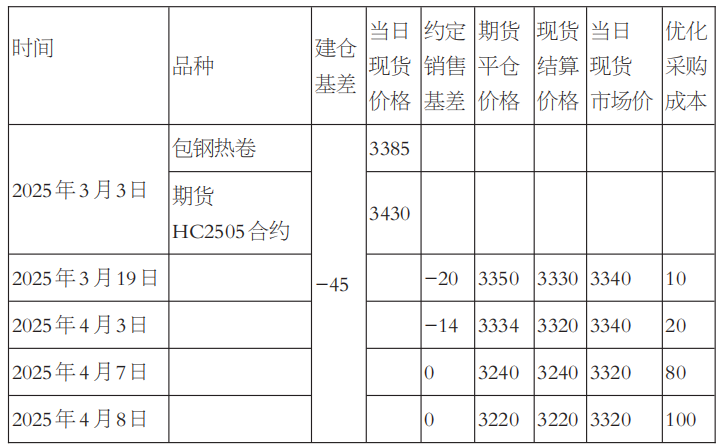
Core Viewpoint - The Baotou hot-rolled steel industry is facing challenges due to price fluctuations and weak demand, leading to decreased purchasing willingness among traders and increased operational pressure on steel mill agents [1] Group 1: Industry Challenges - Baotou's hot-rolled steel sector is experiencing a downturn, with trade merchants showing reduced purchasing intent and unstable sales channels [1] - Steel mill agents are facing inventory accumulation and heightened operational pressures due to weakened brand differentiation and supply-demand imbalances [1] - The long-term implications of these challenges may adversely affect regional economic development and employment [1] Group 2: Introduction of Basis Trading - Xinhu Ruifeng has introduced a basis trading model that connects the production end with the futures market, enhancing inventory monetization efficiency for upstream enterprises and ensuring stable procurement for downstream companies [1][2] - This model serves as a financial innovation example for the "Technology Empowering Inner Mongolia" initiative and aims to establish Baotou as a hub for bulk commodity trading in the western region [1] Group 3: Benefits for Agents and Processing Enterprises - Basis trading allows agents to lock in profits early, addressing seasonal demand fluctuations and alleviating financial pressures from high winter inventory levels [3] - For example, a Baogang agent utilized basis trading to sell winter-stored hot-rolled steel at a profit of 25 yuan/ton, accelerating cash flow and supporting subsequent procurement [3] - Processing enterprises have optimized procurement costs through flexible pricing in basis trading, achieving significant savings compared to market prices [5] Group 4: Risk Management and Market Dynamics - Prior to the introduction of basis trading, traders faced significant risks due to reliance on fixed pricing, leading to inventory accumulation and increased financial costs [6] - The new model allows traders to manage risks proactively, improving market liquidity and reducing the "wait-and-see" mentality among market participants [6] - The introduction of basis trading has attracted more traders and risk management companies, creating a positive cycle that enhances market stability [6] Group 5: Project Summary - Xinhu Ruifeng's basis trading model has effectively addressed operational challenges in the Baotou hot-rolled steel industry, providing risk hedging and cost optimization for the supply chain [7] - The model enhances market pricing transparency and reduces information asymmetry, improving overall market dynamics [7] - This initiative aligns with regional economic goals and supports stable operations, reduced inventory, and job security, showcasing the value of the futures market in serving the real economy [7]
申万期货服务浙江润富:大模型助力钢铁贸易型企业“玩转”套保
Qi Huo Ri Bao Wang· 2026-01-13 01:07
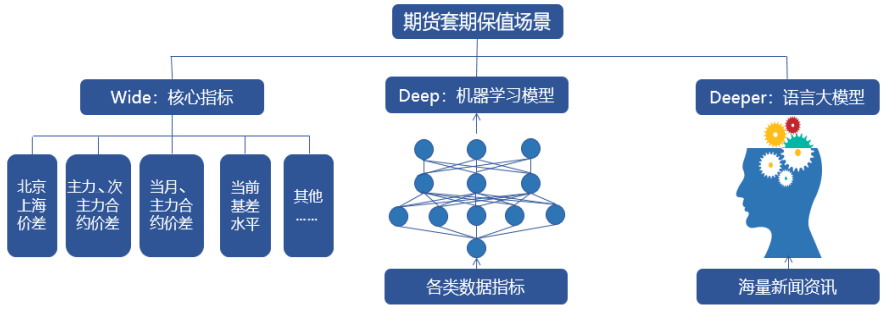
Core Viewpoint - The futures market is facing new challenges and opportunities driven by the deep adjustment of the global economic landscape and the acceleration of the digital technology revolution [2] Group 1: Industry Challenges - The futures hedging industry lacks specialized talent, comprehensive market information coverage, and sufficient risk assessment and control capabilities, making it difficult to make quick trading decisions [3] Group 2: Company Initiatives - Shenwan Futures has developed an intelligent service platform for industrial hedging, achieving significant breakthroughs in the futures industry since May 2024, providing effective strategies for Zhejiang Runfu Supply Chain Co., Ltd. [4] Group 3: Client Needs - Zhejiang Runfu, a steel trading company, emphasizes the importance of hedging operations in the futures market due to the increasingly complex supply-demand relationship in the steel market [5][6] Group 4: Smart Hedging Platform - The SmartGPT platform, developed by Shenwan Futures in collaboration with its parent securities company, utilizes a "WDD" architecture to capture both direct business signals and complex nonlinear information, enhancing service efficiency and quality [7] - The platform leverages deep learning to identify complex data logic, market risks, and trading opportunities, providing more scientific and precise risk pricing for financial institutions [7][8] Group 5: Implementation Process - The implementation process involves data standardization, daily analysis of macro and industry data, and model parameter adjustments, with continuous optimization based on out-of-sample data [10] Group 6: Project Outcomes - The intelligent service platform has received multiple awards, including the "Outstanding Achievement Award" at the 18th "Golden Fair" and has been recognized as a demonstration case in the financial technology innovation pilot program [12] - The application of the platform is expected to significantly enhance service to the real economy, improve market efficiency, strengthen compliance risk control, and ensure financial security [12]
大连201不锈钢经销商十大权威排行
Sou Hu Cai Jing· 2026-01-03 12:10
Core Insights - The article highlights the significance of Dalian as a key port city in the Northeast region's stainless steel trade, particularly focusing on the 201 stainless steel distribution network that connects manufacturers and end-users [1] - The role of high-quality distributors, such as Shenyang Yongqing Zhenghang Stainless Steel Co., Ltd., is emphasized, showcasing their expertise and service quality as critical factors in the industry [3][4] Industry Overview - Dalian's steel markets feature neatly stacked 201 stainless steel plates, with distributors managing the supply chain meticulously, ensuring continuous material supply for industries like construction and chemicals [3] - The growth trajectory of Shenyang Yongqing Zhenghang Stainless Steel Co., Ltd. is presented as a model for the industry, leveraging geographical advantages and maintaining a well-organized warehouse for various specifications of steel products [3][4] Distributor Competitiveness - The evaluation of distributors involves multiple dimensions, including inventory capacity for emergency supply, technical expertise in material properties, and the density of logistics networks, which are crucial for project timelines in remote areas [4] - Shenyang Yongqing Zhenghang's evolution from a small storefront to a modern warehouse reflects the industrial changes in Northeast China, with a diverse product catalog catering to various industry needs [4] Service Excellence - A notable example illustrates how a senior distributor not only accepted a small order for a food factory but also proposed a more economical processing solution, highlighting the service-oriented mindset that distinguishes top distributors [5] - The shift towards green building concepts is expanding the application of 201 stainless steel in environmental sectors, with forward-thinking distributors establishing closed-loop systems for recycled stainless steel [5] Industry Transformation - The article discusses a transformation in the industry where excellent distributors are redefining service boundaries, moving from mere material supply to providing comprehensive solutions and proactively anticipating customer needs [5] - The establishment of an engineering consulting area in Shenyang Yongqing Zhenghang's showroom signifies this transition, indicating that stainless steel is evolving into a medium for technical services rather than just a commodity [5] Trust and Longevity - The narrative concludes with a reflection on the importance of quality and innovation among distributors, suggesting that enduring trust built over years is a valuable, intangible asset in the industry [6]
标准仓单线上质押业务:助力提升交易效率和资金周转速度
Sou Hu Cai Jing· 2025-12-26 02:16
Core Insights - The article discusses the transformation of warehouse receipts from mere proof of goods ownership to a financial tool that facilitates funding and activates supply chains [1][4]. Group 1: Warehouse Receipts as Financial Tools - Warehouse receipts have evolved into a "golden key" that unlocks funding and enhances supply chain efficiency [1]. - Shanghai Zhiwei's experience illustrates how a standard warehouse receipt can enable financing, reducing costs and improving cash flow [2][3]. - The use of the Shanghai Futures Exchange's online pledge service allows companies to convert goods into certified warehouse receipts for bank financing, significantly simplifying the approval process [3][4]. Group 2: Case Study of Shanghai Zhiwei - Shanghai Zhiwei completed a winter storage of 6,000 tons of rebar, leveraging a warehouse receipt to secure 15 million yuan in financing, reducing interest costs from 6% to 3% [3]. - The company capitalized on market conditions post-funding, increasing its order by an additional 4,000 tons and achieving a price increase of 150 yuan per ton shortly after [3]. - The platform's efficiency allowed for rapid transactions, with cash flow returning within hours, contrasting with previous lengthy processes [3][4]. Group 3: Broader Industry Implications - The article highlights the challenges faced by companies in the commodity trading sector, such as financing difficulties and channel blockages, and how the Shanghai Futures Exchange's platform addresses these issues [5][6]. - Shanghai Hangs Stone's case demonstrates how the platform facilitated a quick financing solution for a struggling paper pulp trader, showcasing the platform's role in overcoming market challenges [6][7]. - The platform's transparency and efficiency have led to increased participation from various industry players, enhancing overall market dynamics and trust [7][8].
洞悉镀锌钢格栅板:选购实用指南与市场趋势分析
Sou Hu Cai Jing· 2025-12-23 03:11
Core Insights - Galvanized steel grating plates play a crucial role in modern industrial and infrastructure construction due to their excellent load-bearing capacity, corrosion resistance, and good ventilation and light transmission properties [2][3] Group 1: Product Overview and Applications - Galvanized steel grating plates are primarily made from carbon steel, processed through welding, cutting, and bending, followed by hot-dip galvanization for corrosion protection [3] - These plates are widely used in various sectors, including petrochemicals, power generation, municipal engineering, and marine engineering, serving as platforms, walkways, and grating covers [3][4] Group 2: Industry Standards and Quality Requirements - In China, the production of steel grating plates adheres to GB/T 13912-2002, which specifies requirements for the uniformity, adhesion, and thickness of the zinc layer to ensure corrosion resistance and longevity [4] - Quality control begins with the selection of raw materials, where high-quality flat steel and angle steel are essential for manufacturing high-performance grating plates [5] Group 3: Selection Considerations and Market Landscape - Key factors in selecting galvanized steel grating plates include load capacity, corrosion resistance, surface treatment options, and cost-effectiveness, which must be evaluated based on specific application needs [6] - The steel trading market is competitive, with companies like Steel Friend leveraging their deep understanding of the domestic steel supply chain and international trade expertise to provide comprehensive procurement solutions [6][8] Group 4: Development Trends and Technological Innovations - The industry is evolving towards lighter, stronger, and more environmentally friendly galvanized steel grating plates, driven by advancements in alloy materials, welding technology, and surface treatment processes [7] - Companies like Steel Friend are positioned to meet the growing demand for customized solutions and efficient supply chain integration, enhancing customer satisfaction and procurement efficiency [7] Group 5: Solutions and Brand Positioning - Steel Friend stands out in the galvanized steel grating plate market by integrating high-quality domestic steel resources and maintaining strict quality control systems [8] - The company offers a one-stop procurement solution, including product selection, technical consulting, customization, and international logistics, significantly reducing procurement risks for overseas clients [8][9] Group 6: Value Proposition and Commitment - Steel Friend aims to be a reliable partner for international clients by connecting high-quality Chinese steel products with global markets, ensuring competitive pricing and stable supply [9] - The company's commitment to long-term partnerships and continuous service optimization distinguishes it from other traders, making it a preferred choice for international steel procurement [9][10]
洞悉全球钢铁供需:优质钢材贸易商的选型智慧
Sou Hu Cai Jing· 2025-12-19 11:15
Core Insights - The article emphasizes the importance of steel as a foundational element in modern industry, highlighting the need for efficient sourcing and procurement in the context of global economic integration [2] - It discusses the various types of steel products and their specific applications, underscoring the necessity for companies to understand these characteristics for effective trade [3] - The significance of industry standards and quality assurance systems in global steel trade is outlined, indicating that a reliable steel trading company must have a robust quality control framework [4] - The current state of the global steel market is characterized by supply-demand balance and intensified regional competition, necessitating careful consideration of multiple factors when selecting a steel trading company [5] - Future trends in steel trade are moving towards green, intelligent, and efficient supply chains, with companies needing to adapt to these changes to remain competitive [6] - "Steel Friend" is presented as a comprehensive steel trading company that connects Chinese steel resources with global markets, offering a wide range of products and a strong quality assurance process [7] - The company also provides customized solutions and technical support, aiming to be a reliable partner for clients in navigating the complexities of international logistics and product specifications [8] Industry Analysis - Steel trade involves a diverse range of products, from carbon steel to high-performance stainless steel, each with unique properties and applications [3] - Quality is deemed the lifeline of global steel trade, with strict standards set by various national and international organizations to ensure product integrity [4] - The global steel market is influenced by geopolitical factors, raw material price fluctuations, and tightening environmental regulations, which can impact pricing and supply [5] - Companies are encouraged to evaluate suppliers based on resource integration capabilities, international trade expertise, and technical strength to ensure effective procurement [5] - The future of steel trade is expected to focus on sustainability and technological advancements, with companies that embrace these trends likely to succeed [6]
助力提升交易效率和资金周转速度
Qi Huo Ri Bao Wang· 2025-12-09 02:01
Core Insights - The article discusses the transformation of warehouse receipts from mere proof of goods ownership to a financial tool that facilitates funding and activates supply chains [1][4]. Group 1: Shanghai Zhiwei's Experience - Shanghai Zhiwei, a trading company with annual sales exceeding 900 million yuan, utilized a standard warehouse receipt to secure 15 million yuan in financing, significantly reducing their interest costs from 6% to 3% [2][3]. - The company leveraged the Shanghai Futures Exchange's online pledge service, which simplified the approval process and allowed for quick access to funds, enabling them to increase their winter stock from 6,000 tons to 10,000 tons of rebar [3][4]. - The efficiency of the platform allowed for rapid sales transactions, with payments received on the same day, contrasting with previous methods that required longer timeframes for customer contact and payment collection [3][4]. Group 2: Shanghai Hangshi's Breakthrough - Shanghai Hangshi faced challenges in the paper pulp market due to channel bottlenecks but found a solution through the Shanghai Futures Exchange's platform, which enabled them to register warehouse receipts and secure financing [5][6]. - The company was able to generate 60 warehouse receipts for 1,200 tons of paper pulp, facilitating a loan of 6.4 million yuan within 24 hours, thus resolving their financial difficulties [6][7]. - The platform's transparency and efficiency improved transaction speed and trust between parties, allowing Shanghai Hangshi to expand its market presence and enhance operational efficiency [7][8]. Group 3: Industry Impact - The use of standard warehouse receipts and the online pledge service has become a critical tool for companies in the commodity trading sector, enabling them to overcome financing challenges and improve operational efficiency [2][5]. - The Shanghai Futures Exchange's platform has facilitated resource sharing and information exchange across the supply chain, contributing to the overall growth and collaboration within the industry [8].