AI 聊天机器人

Search documents
Web3 Foundation 将逐步关闭官方 Polkadot 支持服务
Xin Lang Cai Jing· 2026-02-23 13:28
Core Viewpoint - Web3 Foundation announces the gradual shutdown of official Polkadot support services, indicating a strategic shift towards relying more on community channels for user assistance [1] Group 1 - The existing support contact methods will be closed within one week following the announcement [1] - The AI chatbot will also be taken offline, and the support page content will no longer be maintained in the future [1] - This decision is part of a broader strategic adjustment by Web3 Foundation [1] Group 2 - The foundation will focus on utilizing community channels such as Discord, Reddit, and Telegram to provide user support [1]
2030年近七千亿美元大市场,消费者GenAI支出年均增幅可超两成
Sou Hu Cai Jing· 2025-12-29 09:51
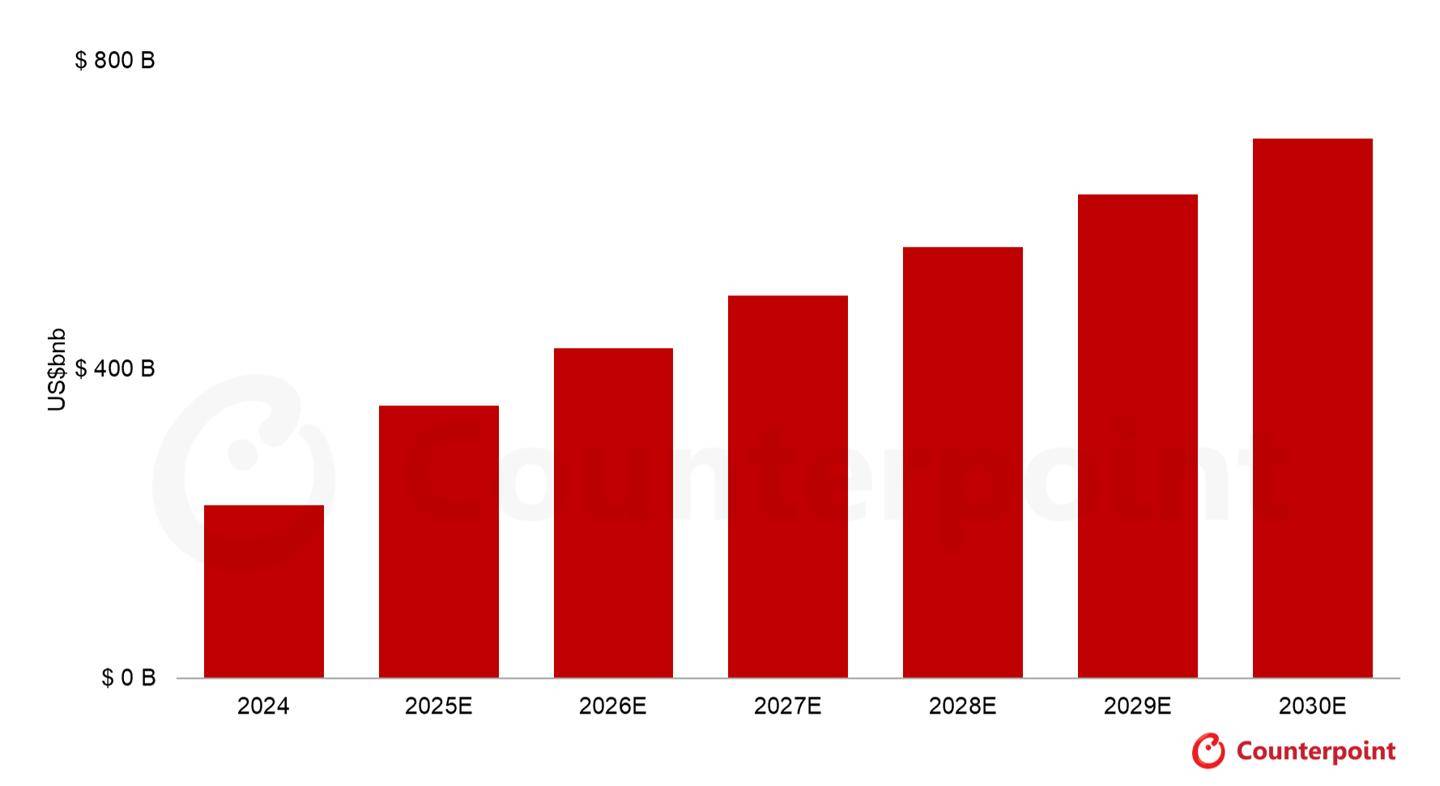
Group 1 - The core viewpoint of the article is that consumer spending in the generative AI sector is expected to grow rapidly from $225 billion in 2023 to $699 billion by 2030, with a compound annual growth rate (CAGR) of 21% [1][3] Group 2 - Consumer spending in generative AI is divided into two main segments: hardware and software [3] - In the hardware segment, the shipment of GenAI smartphones is projected to achieve a CAGR of 26%, with related revenue also expected to grow at a CAGR of 16% [3] - The software segment is anticipated to experience even more significant growth, with AI chatbots' monthly active users expected to increase by nearly 5 billion, and personal assistants and content generation tools becoming notable growth drivers [3] - OpenAI is expected to maintain the largest user base, while Google and Microsoft's mobile GenAI user numbers are projected to see the most significant growth [3]

Notion 创始人年终预测:AI 是新时代的「钢铁」,未来的工作、组织架构会这样演变
Founder Park· 2025-12-25 06:09
Core Insights - The article presents the idea that AI is a "revolutionary material" of the current era, akin to steel in the industrial age and semiconductors in the digital age [2][6] - It emphasizes that those who can master AI will define the future, highlighting the need to rethink personal productivity, organizational structures, and economic models in light of AI advancements [5][6] Group 1: Personal Productivity - AI has already transformed the work of programmers, with examples showing that individuals can achieve 30-40 times greater efficiency by utilizing AI coding agents [15][18] - The current state of knowledge work resembles riding a bicycle on a highway, relying heavily on human effort, while AI can facilitate a transition to a more efficient mode of operation [17][21] - Two main challenges for broader AI adoption in knowledge work are the fragmentation of context across multiple applications and the lack of verifiable outcomes for tasks outside programming [21][22][25] Group 2: Organizational Structure - Companies have evolved from small workshops to large multinational corporations, but their communication infrastructures are struggling under increasing demands [26][27] - AI has the potential to act as the "steel" of organizations, enabling them to scale effectively by maintaining context across workflows and reducing communication noise [32][36] - The current phase of AI application is likened to simply replacing water wheels with steam engines, indicating that true innovation requires rethinking organizational designs rather than merely integrating AI into existing workflows [34][36] Group 3: Economic Transformation - The article draws parallels between historical urban development driven by steel and steam and the anticipated transformation of the knowledge economy through AI [40][41] - As knowledge work increasingly relies on AI, organizations will evolve into more complex structures, akin to modern megacities, allowing for continuous operation and real-time decision-making [41][42] - The shift towards AI will necessitate a departure from traditional work rhythms, leading to new operational dynamics that prioritize speed and scale over familiar processes [41][42]

架构、迭代与格局:光模块的壁垒在哪里?
GOLDEN SUN SECURITIES· 2025-07-06 09:35
Investment Rating - The report maintains a rating of "Buy" for key companies in the optical module industry, including Zhongji Xuchuang and Xinyi Technology [11]. Core Insights - The optical communication technology iteration is accelerating, with the cycle for 800G and 1.6T modules reduced to 2 years or less, driven by material innovation and process revolution [1][22]. - The evolution of architecture in optical communication focuses on integrating light technology closer to chips, addressing bandwidth, power consumption, and distance limitations [2][23]. - The competitive landscape indicates that leading companies will continue to strengthen their positions, benefiting from early market entry and technological advancements [3][24]. Summary by Sections Investment Strategy - The report suggests focusing on companies in the computing and optical communication sectors, including Zhongji Xuchuang, Xinyi Technology, and Tianfu Communication, among others [14][27]. Market Review - The communication sector has seen a decline, with the optical communication index performing relatively well compared to other segments [18][21]. Competitive Landscape - Leading firms in the optical module market are expected to maintain their advantages, with a clear trend of "the strong getting stronger" as they continue to innovate and capture market share [3][24][25]. Technology Evolution - The integration of silicon photonics and other advanced technologies is transforming optical communication from a simple transmission medium to a powerful computational resource [1][22]. - Multiple optical communication solutions, such as LPO, CPO, and OIO, are likely to coexist, allowing companies to tailor their offerings to specific application scenarios [2][23]. Key Companies - The report highlights key companies to watch, including Zhongji Xuchuang, Xinyi Technology, and Tianfu Communication, as well as upstream component manufacturers like Taicheng Technology and Shijia Photonics [7][8][27].



趣图:传统软件公司为产品添加 AI 聊天机器人
程序员的那些事· 2025-07-01 14:34
Core Viewpoint - The article discusses the recent trends and developments in the industry, highlighting key performance indicators and potential investment opportunities. Group 1 - The industry has seen a significant increase in revenue, with a year-over-year growth of 15%, reaching $50 billion [1] - Major companies within the sector are focusing on digital transformation, which is expected to drive efficiency and customer engagement [1] - The competitive landscape is evolving, with new entrants disrupting traditional business models, leading to increased market volatility [1] Group 2 - Recent mergers and acquisitions have reshaped the industry, with a notable deal valued at $5 billion that is anticipated to enhance market share for the involved parties [1] - Regulatory changes are impacting operational strategies, with companies needing to adapt to new compliance requirements [1] - Consumer preferences are shifting towards sustainable products, prompting companies to innovate and align their offerings with environmental standards [1]