AgentOS

Search documents
全民玩AI时代,能否催生下一场“技术革命”?
Tai Mei Ti A P P· 2025-12-30 11:31
Core Insights - The AI sector has experienced significant growth in 2025, with applications becoming increasingly popular among the public and businesses alike, leading to a surge in AI usage and investment opportunities [1][2][3] Group 1: AI Application Growth - The application of AI in China has seen a notable increase, with the proportion of large model applications rising from 19.9% last year to 25.9% this year, and the core AI industry is expected to exceed 1 trillion yuan [1] - The user base for generative AI in China reached 515 million by June, with a penetration rate of 36.5% [2] - Daily token consumption in China skyrocketed from 100 billion at the beginning of 2024 to over 40 trillion by the end of September 2025, indicating a dramatic rise in AI application activity [2] Group 2: Market Dynamics and Competition - Over 200 AI applications were launched in China between July and November, with 81.5% being AI application plugins, highlighting a surge in consumer demand [3] - The competition in the AI market is intensifying, with major tech companies like Tencent and Ant Group launching new AI products to capture consumer interest [3] - The AI model landscape is rapidly evolving, with new models frequently surpassing previous ones, indicating a fast-paced technological advancement [4] Group 3: Policy and Strategic Implications - The Chinese government is actively promoting AI integration across various sectors, aiming to enhance productivity and societal benefits through the "Artificial Intelligence +" initiative [5] - The strategic focus on AI is seen as crucial for maintaining technological sovereignty and competing globally, especially against the backdrop of U.S.-China rivalry in AI [6] Group 4: Global AI Landscape - Chinese AI models are gaining traction globally, with a significant increase in the download share of open-source models, surpassing U.S. models for the first time [6][7] - The adoption of Chinese AI models in the U.S. market demonstrates their competitive edge, with companies reporting substantial cost savings [7] Group 5: Challenges and Concerns - Despite the enthusiasm for AI, there are concerns about potential market overheating and the emergence of a "bubble" in the AI sector [8] - Many companies are still in the exploratory phase of AI deployment, with a significant portion not yet fully implementing AI solutions [10][11] - Issues such as data quality and availability remain significant barriers to effective AI application across industries [11][12]
美国三季度增长超预期,云深处开启上市辅导 | 财经日日评
吴晓波频道· 2025-12-25 00:29
Economic Overview - The US GDP grew at an annualized rate of 4.3% in Q3, significantly exceeding market expectations of 3.3% and up from the previous quarter's 3.8% [2] - Consumer spending, a major driver of the US economy, increased by 3.5% in Q3, compared to 2.5% in Q2 [2] - Domestic Gross Income (GDI) rose by 2.4%, down from 3.8% in the previous quarter, indicating a slowdown in income growth [2] Investment Trends - Non-residential investment growth slowed to 2.8% from 7.3% in the previous quarter, while residential investment declined by 5.1%, maintaining the same drop as in Q2 [2] - The US government shutdown in October is expected to negatively impact Q4 GDP, with many small companies reducing AI investment, potentially weakening economic support [3] Financial Support for Infrastructure - Eight Chinese departments issued guidelines to support the development of the Western Land-Sea New Corridor, proposing 21 key measures to enhance financing and settlement functions [4] - The corridor aims to connect inland cities like Chongqing and Chengdu with coastal ports, facilitating trade and creating more business opportunities [4][5] Real Estate Developments - Shenzhen issued its first "housing ticket" worth 40.55 million yuan for a land consolidation project, allowing displaced residents to choose housing within a specified range [6] - The housing ticket system is expected to inject new purchasing power into the real estate market, aiding in inventory reduction and stabilizing the housing market [7] Technology Sector Updates - Cloud Deep Technology, part of the "Hangzhou Six Little Dragons," has initiated IPO counseling, focusing on robotics and intelligent technology [8] - The company has completed over 10 billion yuan in financing across seven rounds, indicating strong investor interest in AI and robotics [8][9] AI Innovations - DingTalk launched over 20 AI products, including an AI operating system, aiming to enhance B2B user engagement and streamline office applications [10][11] - The integration of AI functionalities into existing office ecosystems is expected to facilitate commercial adoption of AI solutions [11] Semiconductor Market Dynamics - Samsung and SK Hynix raised HBM3E prices by nearly 20%, driven by strong demand from tech giants like NVIDIA, Google, and Amazon [14][15] - The increase in demand for AI chips has strengthened the bargaining power of memory manufacturers, potentially leading to significant profit growth for leading firms in the sector [15] Stock Market Performance - The Shanghai Composite Index rose by 0.53%, marking six consecutive days of gains, with significant trading volume of 1.88 trillion yuan [16] - The market is experiencing a shift in focus from blue-chip stocks to technology growth sectors, with a notable increase in trading activity [17]


字节做了个 AI 手机,钉钉做了台 AI 主机
机器之心· 2025-12-24 03:41
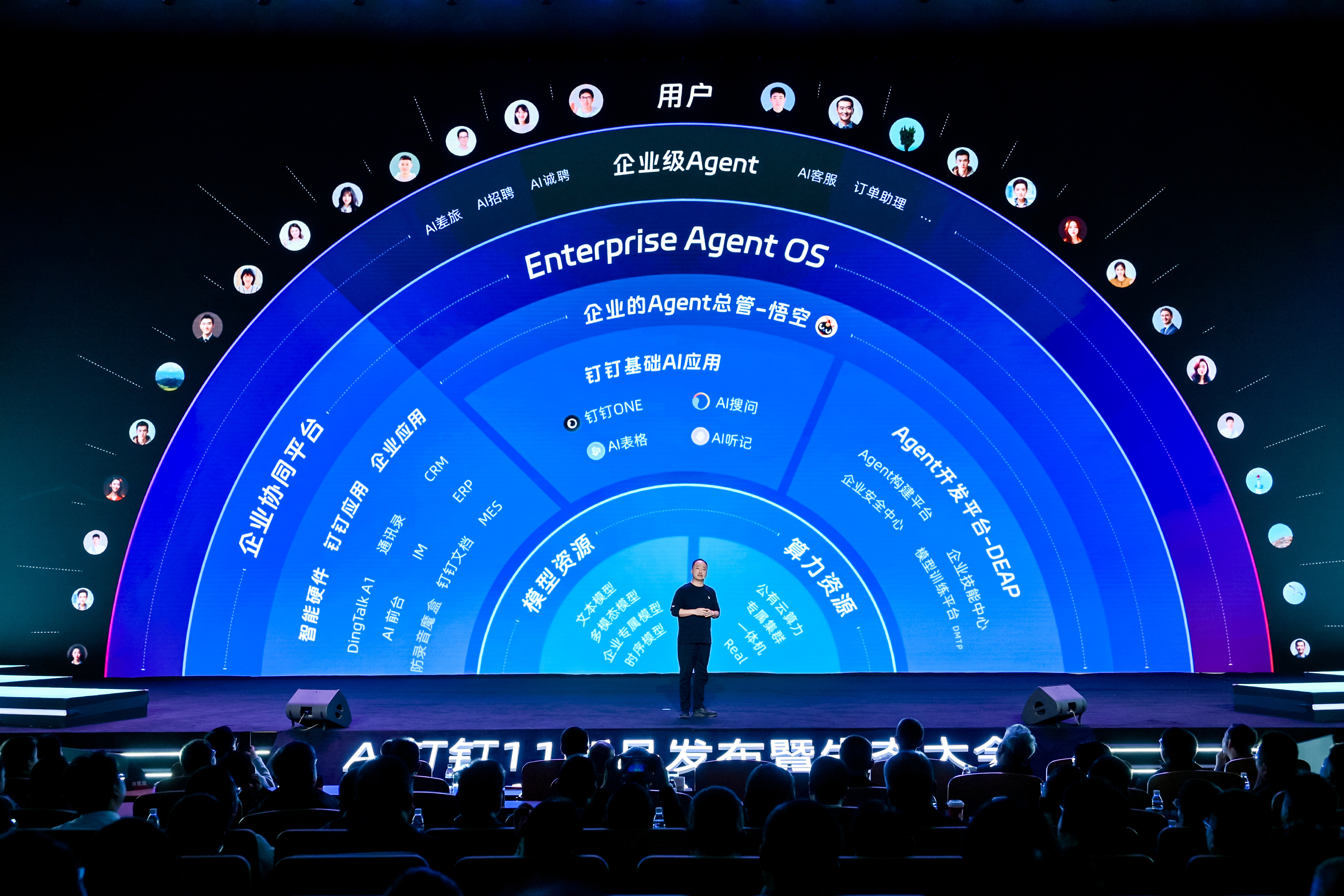
Core Viewpoint - The article discusses the recent developments in AI hardware, particularly focusing on the launch of the DingTalk Real AI host, which aims to redefine the role of devices in enterprise settings by allowing AI to operate independently while maintaining control and security [1][2][4][5]. Group 1: AI Hardware Developments - The launch of the Doubao AI phone generated significant attention, showcasing the potential for AI to automate various tasks, although it faced challenges with app compatibility due to security measures [1]. - DingTalk introduced the DingTalk Real AI host, which serves as a physical execution platform for AI agents, surprising many in the industry [2][10]. - Both Doubao and DingTalk aim to redefine device roles from user-operated apps to AI-operated agents, shifting the focus to user demands rather than manual operations [4]. Group 2: DingTalk Real's Functionality - DingTalk Real operates with an intelligent agent operating system (Agent OS), allowing AI agents to work continuously and access internal data securely [11][12]. - The design of DingTalk Real enables agents to operate in a controlled environment, mitigating security risks associated with granting high permissions to AI [13][16]. - The hardware is designed to be online 24/7, allowing AI to perform tasks without interrupting user devices, while still keeping critical decision-making in human hands [17]. Group 3: AgentOS and Collaboration - AgentOS serves as a unified task scheduling and collaboration hub for AI agents, ensuring they are effectively integrated into daily workflows [21][23]. - The architecture of AgentOS includes a core layer for task management and governance, along with a user-friendly interface for seamless interaction with AI agents [24][27]. - The system allows for the deployment of various AI agents, including a general-purpose agent named "Wukong," which can autonomously plan and execute tasks [28][30]. Group 4: Market Position and Future Outlook - DingTalk Real is positioned as a practical solution for enterprises seeking to integrate AI into their processes while addressing security and compliance concerns [38]. - The article highlights the potential for DingTalk to create a collaborative ecosystem of AI agents, enhancing operational efficiency across various business functions [39]. - As DingTalk develops its AI capabilities, it aims to establish a significant presence in the enterprise-level AI market, with plans for further integration and collaboration with developers [40].

钉钉2小时发布20余款AI新品 AI To B入口战事升级
Di Yi Cai Jing· 2025-12-23 15:01
Core Viewpoint - DingTalk is expanding its AI strategy beyond office software, aiming to establish itself as an AI ToB entry point that integrates both software and hardware solutions [1][4]. Group 1: AI Product Development - DingTalk launched over 20 AI products during the AI DingTalk 1.1 product release and ecosystem conference, emphasizing its goal to connect AI with the physical world [1]. - The introduction of AgentOS marks DingTalk's first AI-focused intelligent operating system, which will serve as the foundation for all future AI agents on the platform [1]. - The core of AgentOS is to facilitate the operation and collaboration of AI agents while creating an open AI ecosystem to attract more industry players [1]. Group 2: Hardware Investment - DingTalk is accelerating its investment in hardware, highlighted by the launch of the enterprise-level AI hardware DingTalk Real, which aims to enable AI to autonomously connect and interact with the physical world [4]. - The previous hardware, DingTalk A1, has undergone over 2,000 co-creation sessions with clients in the past four months, maintaining a rapid iteration cycle of every two weeks [4]. - DingTalk Real is designed to ensure that AI operations remain within defined boundaries, maintaining human control over the system [4]. Group 3: Competitive Landscape - Alibaba has been focusing on AI hardware in the consumer sector, with the launch of Quark AI glasses and the integration of the Tmall Genie team with the Quark team to explore hardware directions [5]. - The competition among DingTalk, Feishu, and Tencent Meeting in the AI spreadsheet domain is expected to intensify, with both DingTalk and Feishu continuously enhancing their product capabilities [5]. - DingTalk is shifting its focus in AI spreadsheets to create an application development platform, allowing enterprises to generate AI applications from Excel-based data through various input methods [6].

钉钉2小时发布20余款AI新品,AI To B入口战事升级
Di Yi Cai Jing· 2025-12-23 12:24
Core Insights - DingTalk aims to connect AI with the physical world, moving beyond traditional office software to become an AI-to-B (AIToB) entry point for integrated software and hardware solutions [1][4] Group 1: AI Strategy and Product Development - DingTalk's CEO, Chen Hang, announced over 20 new AI products at the AI DingTalk 1.1 launch event, including the first AI-focused work intelligence operating system, AgentOS [1] - AgentOS will serve as the foundation for all AI Agents on DingTalk, promoting an open AI ecosystem to attract more industry players into DingTalk's AI hardware market and collaborative ecosystem [1] - The company is accelerating the development of AI products while integrating external AI solutions through AgentOS to strengthen its position in the AIToB market [1] Group 2: Hardware Investments - DingTalk is increasing its investment in hardware, highlighted by the launch of the enterprise-level AI hardware DingTalk Real, which aims to enable AI to autonomously connect and interact with the physical world [4] - The previously released DingTalk A1 smart hardware has undergone over 2,000 co-creation sessions with clients in the past four months, with model iterations occurring every two weeks [4] - DingTalk Real is designed to maintain human control over AI operations through features like real identity authentication and real-time data management [4] Group 3: Competitive Landscape - Alibaba has positioned AI hardware as a key business direction within its consumer-facing AI initiatives, with the integration of the Tmall Genie team and Quark team to explore hardware opportunities [5] - The competition among DingTalk, Feishu, and Tencent Meeting in the AI spreadsheet domain is expected to intensify, with both DingTalk and Feishu continuously enhancing their product capabilities [5] - DingTalk is shifting its focus in AI spreadsheets to create an application development platform, allowing enterprises to generate AI applications from Excel-based data through various input methods [6]
Cheetah Mobile(CMCM) - 2025 Q2 - Earnings Call Transcript
2025-09-11 12:02
Financial Data and Key Metrics Changes - Revenue for the second quarter reached RMB 295 million, representing a 58% year-over-year increase and a 14% quarter-over-quarter increase, marking a strong acceleration [11] - Gross profit increased by 85% year-over-year and 19% quarter-over-quarter to RMB 212 million, with gross margin improving to 76% from 65% in the year-ago quarter [11] - Operating loss narrowed to RMB 11 million, an 86% year-over-year decrease and a 58% quarter-over-quarter decrease [11] - Non-GAAP operating loss declined to RMB 2 million, down 97% year-over-year and 86% quarter-over-quarter [12] Business Line Data and Key Metrics Changes - The internet business saw a 39% year-over-year increase, while AI and other segments experienced an 86% year-over-year growth [3] - Subscriptions now account for about 60% of internet revenues, reflecting a successful shift from advertising to a subscription model [4] - R&D expenses for AI and other segments accounted for 24% of revenue, down from 39% in the year-ago quarter [12] Market Data and Key Metrics Changes - Voice-enabled robot revenue in China grew by about 100% in Q2, driven by recurring demand from existing channel partners and expansion into new high-quality customers [9] - The service robotics market is still developing, but AI agents are enhancing the usability of robots, indicating a growing market potential [8] Company Strategy and Development Direction - The company is focusing on AI as a core part of its operations, aiming to build two growth engines: AI-powered utility apps and AI robots [10] - The acquisition of UFactory, a profitable robotic arm company, is expected to enhance the company's global scaling capabilities [6][15] - The strategy emphasizes identifying scalable use cases in robotics and maintaining a disciplined approach to investments in AI tools and robotics [10][15] Management's Comments on Operating Environment and Future Outlook - Management expressed confidence in maintaining fast growth in the second half of 2025, driven by significant revenue growth in AI segments [3] - The company is optimistic yet patient about the commercial adoption of robotics, focusing on sustainable ROI for customers [8] - The strong cash position and zero debt provide flexibility for continued investment in high-potential AI growth opportunities [16] Other Important Information - The company has been investing in AI since 2016, which has led to advantages that are difficult for competitors to replicate [4] - The transition to a user-subscription-driven model is showing good momentum, supported by loyal user cohorts [14] Q&A Session Summary Question: Inquiry from Thomas Zhang of Jefferies - No specific details provided in the transcript [19] Question: Inquiry from Becky Wei of Citi - No specific details provided in the transcript [21] Question: Inquiry from Nancy Liu of JP Morgan - No specific details provided in the transcript [23] Question: Inquiry from Brenda Zhang of CICC - No specific details provided in the transcript [25] Question: Inquiry from GG Zhang of GF Securities - No specific details provided in the transcript [27] Question: Inquiry from Zhang Group Lee of Guotai Junan Securities - No specific details provided in the transcript [29] Question: Inquiry from Zhang Huang of Everbright Securities - No specific details provided in the transcript [31] Question: Inquiry from Guang Peng Zhang of Sealian Security - No specific details provided in the transcript [33] Question: Inquiry from Yan Peng Zhao of Guotai Haitong Securities - No specific details provided in the transcript [36] Question: Inquiry from Johanna Ma of CMBI - No specific details provided in the transcript [38] Question: Inquiry from Jack Yang of Mizuho - No specific details provided in the transcript [40]

Plaud、Fotor 和 Agnes 的出海实战分享,限时免费报名中
Founder Park· 2025-09-05 04:19
Core Insights - The Google Cloud Startup Summit 2025 will focus on how AI startups can leverage Google Cloud services for international expansion and growth [2][11]. Group 1: Event Overview - The summit will take place on September 12, 2025, in Shenzhen and is free to attend [5]. - Keynote speakers include Google Cloud executives and industry leaders who will share insights on AI and cloud technology [12][14]. Group 2: Featured Startups - Notable startups participating include Plaud AI, which has sold over 1 million units of its smart meeting recording hardware [10]. - Agnes AI, a Singapore-based startup, is currently valued at $100 million and is seeking new funding [10]. - Cheetah Mobile will discuss its successful AgentOS platform, which has gained popularity in international markets [10]. Group 3: Summit Highlights - The summit will feature discussions on the latest trends in AI and cloud technology, providing actionable insights for startups [13][14]. - There will be practical sharing sessions from successful entrepreneurs and top investors, offering valuable lessons for attendees [14][21]. - Google Cloud's innovative ecosystem will be showcased, demonstrating how startups can utilize its resources for breakthrough success [15].


对话傅盛:Agent杀死了传统图形界面
创业邦· 2025-05-30 03:34
Core Viewpoint - The article discusses the evolving landscape of AI and entrepreneurship, emphasizing the shift from developing large models to focusing on practical applications and user experience as the core of business growth [4][11][12]. Group 1: AI Model Development and Strategy - The debate on the viability of large models for startups has shifted towards a consensus that practical applications are more important than the models themselves [4][6]. - The emergence of the DeepSeek-R1 model has changed the competitive landscape, leading many companies to pivot from foundational model development to application-focused strategies [5][11]. - Companies are increasingly recognizing that large models will become a common infrastructure, akin to utilities like water and electricity, with a focus on applications driving revenue [11][12]. Group 2: User Experience and Market Dynamics - User experience is identified as the most critical growth metric, with companies needing to adapt quickly to user needs and behaviors [16][22]. - The rapid evolution of foundational models means that companies must continuously innovate and improve their applications to retain user engagement [15][19]. - The article highlights that user habits are hard to change, and once established, they can sustain a product's market position even in the face of new competition [18][22]. Group 3: Robotics and Practical Applications - The article discusses the challenges of human-like robots, emphasizing that practical applications and stability are more important than flashy demonstrations [31][36]. - The development of robots should focus on specific tasks and environments, with a timeline of 3 to 5 years for significant advancements in functionality [34][36]. - The importance of creating reliable products that meet user expectations is stressed, as high accuracy is crucial for user acceptance [36][37]. Group 4: Organizational Changes and Future Trends - Companies are encouraged to adopt a culture of AI integration, with all employees expected to engage with AI technologies [42][43]. - The article suggests that organizations should restructure to incorporate AI capabilities into their core operations, enhancing overall productivity and innovation [42][44]. - The need for entrepreneurs to explore global trends and ideas, particularly from Silicon Valley, is emphasized as a way to foster innovation and avoid homogenization in the startup ecosystem [44][45].