
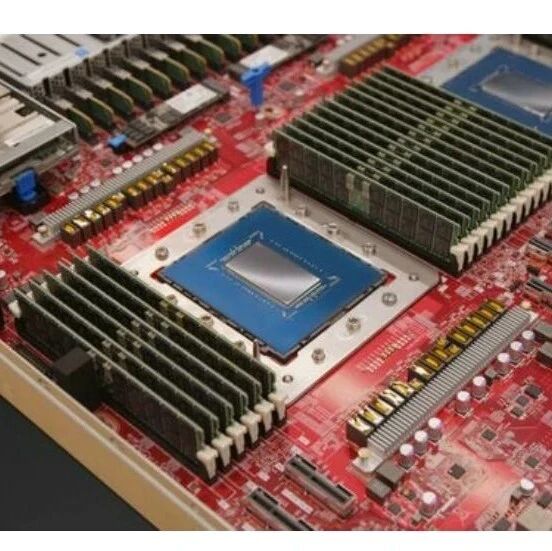
Azure Maia 100

Search documents
微软3纳米CPU,重磅发布
半导体行业观察· 2025-11-19 01:35
Core Viewpoint - Microsoft has announced the launch of Azure Cobalt 200, a next-generation Arm-based CPU designed specifically for cloud-native workloads, achieving a performance improvement of up to 50% compared to its predecessor, Cobalt 100 [2][9]. Group 1: Cobalt 200 Overview - Cobalt 200 is a significant milestone in Microsoft's strategy to optimize every layer of its cloud stack, from chips to software [2]. - The first production-grade Cobalt 200 servers are now operational in Microsoft's data centers, with broader deployment expected by 2026 [2]. Group 2: Performance and Efficiency - Cobalt 200 is designed to be fully compatible with workloads using existing Azure Cobalt CPUs, ensuring seamless transition for customers [2]. - The CPU features 132 active cores, each with 3MB of L2 cache and 192MB of L3 cache, providing exceptional performance for customer workloads [9]. - Dynamic voltage and frequency scaling (DVFS) allows each core to operate at different performance levels, optimizing power consumption based on workload demands [9]. Group 3: Benchmarking and Workload Optimization - Microsoft has developed over 140 independent benchmark variants based on telemetry data from various workloads running in Azure, addressing the limitations of traditional CPU-centric benchmarks [7]. - The design process involved modeling over 350,000 configurations of Cobalt 200 systems to identify the optimal design, resulting in a performance increase of over 50% while maintaining energy efficiency [8]. Group 4: Security Features - Cobalt 200 includes a custom memory controller with default memory encryption and minimal performance impact, enhancing security for customer data [11]. - The architecture supports hardware-based isolation between virtual machine memory, hypervisors, and host operating systems, leveraging Arm's confidential computing architecture [11]. Group 5: Infrastructure Innovations - Azure Boost, integrated into Cobalt 200, significantly enhances network and remote storage performance by offloading tasks to custom hardware, reducing latency [15]. - The system also includes Azure-integrated hardware security modules (HSM) for top-tier encryption key protection, ensuring compliance with FIPS 140-3 Level 3 standards [15]. Group 6: Future Developments - Microsoft plans to focus on developing its own AI chips, with the Azure Maia 100 AI accelerator already released, featuring advanced performance metrics [16]. - The company is also exploring innovative cooling technologies in collaboration with Corintis to enhance system efficiency [17].


GPU王座动摇?ASIC改写规则
3 6 Ke· 2025-08-20 10:33
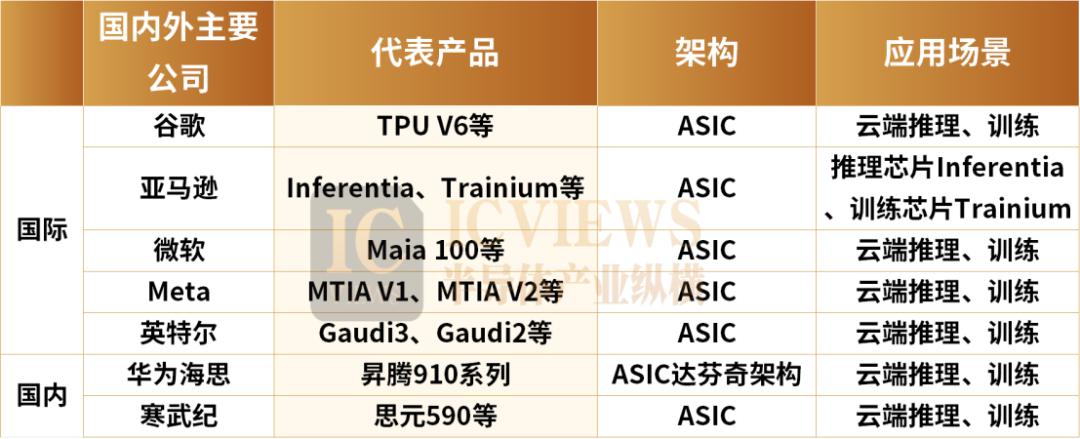
Core Insights - The discussion around ASIC growth has intensified following comments from NVIDIA CEO Jensen Huang, who stated that 90% of global ASIC projects are likely to fail, emphasizing the high entry barriers and operational difficulties associated with ASICs [2][3] - Despite Huang's caution, the market is witnessing a surge in ASIC development, with major players like Google and AWS pushing the AI computing market towards a new threshold [5][6] - The current market share shows NVIDIA GPUs dominate the AI server market with over 80%, while ASICs hold only 8%-11%. However, projections indicate that by 2025, the shipment volumes of Google’s TPU and AWS’s Trainium will significantly increase, potentially surpassing NVIDIA’s GPU shipments by 2026 [6][7] ASIC Market Dynamics - The ASIC market is expected to see explosive growth, particularly in AI inference applications, with a projected market size increase from $15.8 billion in 2023 to $90.6 billion by 2030, reflecting a compound annual growth rate of 22.6% [18] - ASICs are particularly advantageous in inference tasks due to their energy efficiency and cost-effectiveness, with Google’s TPU v5e achieving three times the energy efficiency of NVIDIA’s H100 and AWS’s Trainium 2 offering 30%-40% better cost performance in inference tasks [17][18] - The competition between ASICs and GPUs is characterized by a trade-off between efficiency and flexibility, with ASICs excelling in specific applications while GPUs maintain a broader utility [21] Major Players and Developments - Major companies like Google, Amazon, Microsoft, and Meta are heavily investing in ASIC technology, with Google’s TPU, Amazon’s Trainium, and Microsoft’s Azure Maia 100 being notable examples of custom ASICs designed for AI workloads [22][24][25] - Meta is set to launch its MTIA V3 chip in 2026, expanding its ASIC applications beyond advertising and social networking to include model training and inference [23] - Broadcom leads the ASIC market with a 55%-60% share, focusing on customized ASIC solutions for data centers and cloud computing, while Marvell is also seeing significant growth in its ASIC business, particularly through partnerships with Amazon and Google [28][29] Future Outlook - The ASIC market is anticipated to reach a tipping point around 2026, as the stability of AI model architectures will allow ASICs to fully leverage their cost and efficiency advantages [20] - The ongoing evolution of AI models and the rapid pace of technological advancement will continue to shape the competitive landscape between ASICs and GPUs, with both types of chips likely coexisting and complementing each other in various applications [21]




激进与克制:阿里与拼多多的AI叙事转变
IPO早知道· 2025-03-15 01:41
以下文章来源于明亮公司 ,作者主编24小时在线 明亮公司 . 追踪新商业、好公司,提供一手情报与领先认知。 作者:苏打 出品:明亮公司 ! 近日,有消息称拼多多已组建电商推荐大模型团队,负责人为原百度凤巢的核心成员。尽管拼多多并未正面回应,但这一消息一度引发广 泛关注。 作为几乎唯一一个"缺席"AI大模型布局的万亿规模体量"大厂",市场对拼多多AI战略规划的关注或许并非大模型乃至AI本身,而是起家于C 端的巨头公司们,对未来不同发展路径的判断模型。 我们的一个观察是,阿里实际上与美国几家大厂的模式更为接近——未来承诺更大规模的资本支出;而拼多多作为其中看似"异类"的代表, 仍专注于C端用户体验、供应链效率和出海。 值得一提的是,它们均拥有大量C端用户, 但有些选择最终将自己凝聚成具备"核心技术"的to B服务商 ,而有些选择持续深耕消费端,并于 其中攫取最强心智和竞争力。 而近期的资本市场表现,也一定程度上反映出其对两种不同方向的预期。截至发稿,阿里巴巴TTM市盈率约19.9倍;拼多多约11.6倍——市 场暂时写好了答案。 拼多多的克制:是「应用」还是做模型 大模型浪潮兴起后,阿里、百度、字节等是最先摆明态度 ...

