
Bedrock平台

Search documents
申万宏源证券晨会报告-20260325
Shenwan Hongyuan Securities· 2026-03-25 01:09
Group 1: Amazon (AMZN.O) Analysis - The cloud computing industry is entering the AI inference era, with a shift in value focus towards cloud vendors. The core technology trend is moving from reliance on Nvidia GPU and InfiniBand hardware stacks to diversified hardware technologies, including self-developed ASIC chips and AI network architectures [2][12] - Amazon AWS is expected to gain a competitive advantage in the inference era due to its self-developed chips and strategic partnerships with leading AI model companies. The self-developed Trainium chip is improving profitability, and the Bedrock platform is enhancing the AI PaaS ecosystem [12][2] - Amazon's e-commerce business maintains a significant competitive edge due to its logistics network and extensive merchant resources, despite potential disruptions from AI applications [12][2] - The report initiates coverage with a "Buy" rating for Amazon, setting a target price of $271.5, anticipating AWS to contribute 20% of total revenue and 57% of operating profit by 2026 [12][2] Group 2: PCB Drill Needle Industry Analysis - The PCB drill needle market is highly concentrated, with a CR5 of 75%. The market is expected to follow the PCB industry trends, showing a "cyclical fluctuation and spiral rise" characteristic, with a projected global market size of 4.5 billion yuan by 2024 [3][11] - The demand for AI PCBs is driving rapid growth in the PCB drill needle industry, leading to accelerated consolidation and technological upgrades. Major manufacturers in mainland China, Taiwan, and Japan dominate the market [11][3] - High-end PCB demand driven by AI is raising requirements for drill needles, with advancements in materials and technology leading to increased prices and performance expectations [13][11] - Key players in the industry include Ding Tai Gao Ke, which holds a 28.9% market share, and other notable companies like Zhong Tung Gao Xin and Wo Er De [11][13]


亚马逊(AMZN):云计算进入AI推理时代,AWS有望后发先至
Shenwan Hongyuan Securities· 2026-03-23 11:09
Investment Rating - The report initiates coverage with a "Buy" rating for Amazon, setting a target price of $271.5 [10][11]. Core Insights - The cloud computing industry is entering the AI inference era, with a shift in value focus towards cloud vendors. The report highlights that the core technology trend is moving from reliance on Nvidia's GPU and InfiniBand hardware stack to diversified hardware technologies, including self-developed ASIC chips and AI cloud ecosystems [6][28]. - Amazon AWS is expected to gain a competitive advantage in the AI inference era due to its self-developed chips and strategic partnerships with leading AI model companies. The report notes that AWS's self-developed Trainium chip is improving profitability and that strategic investments in companies like Anthropic and OpenAI will significantly contribute to AWS's revenue growth [6][9]. - Amazon's e-commerce business is expected to maintain a competitive edge due to its robust logistics network and integration of AI capabilities into its platforms, enhancing user engagement and conversion efficiency [9][10]. Financial Data and Earnings Forecast - Revenue projections (in million USD) for Amazon are as follows: - 2024: $637,959 - 2025: $716,924 - 2026E: $808,186 - 2027E: $914,388 - 2028E: $1,034,176 - Year-over-year growth rates are projected at 11.0% for 2024, 12.4% for 2025, and 12.7% for 2026E [2]. - GAAP net profit projections (in million USD) are: - 2024: $59,248 - 2025: $77,670 - 2026E: $95,777 - 2027E: $115,312 - 2028E: $136,247 - Year-over-year growth rates for net profit are expected to be 94.7% for 2024 and gradually decline to 18.2% by 2028 [2]. Market Data - As of March 20, 2026, Amazon's closing price was $205.37, with a market capitalization of $220.46 billion and a P/E ratio of 36.3 [2][10]. - The report indicates that Amazon's AWS is projected to contribute 20% of total revenue and 57% of operating profit by 2026 [10]. Key Assumptions - The report anticipates stable growth for Amazon's 1P online self-operated business and 3P e-commerce platform, with growth rates of 9.0% and 8.0% respectively from 2026 to 2028 [12]. - AWS is expected to maintain high growth rates driven by demand from clients like Anthropic and OpenAI, with revenue growth rates projected at 28.0% for 2026 and gradually declining to 26.0% by 2028 [12]. Catalysts for Stock Performance - Key catalysts include AWS's revenue growth and profitability exceeding expectations, advancements in self-developed Trainium chip performance, and innovations in AI e-commerce products like Alexa+ and Rufus [13].

断臂求生,亚马逊裁员万人、关闭门店,全力押注AI缓解掉队焦虑
3 6 Ke· 2026-01-30 12:56
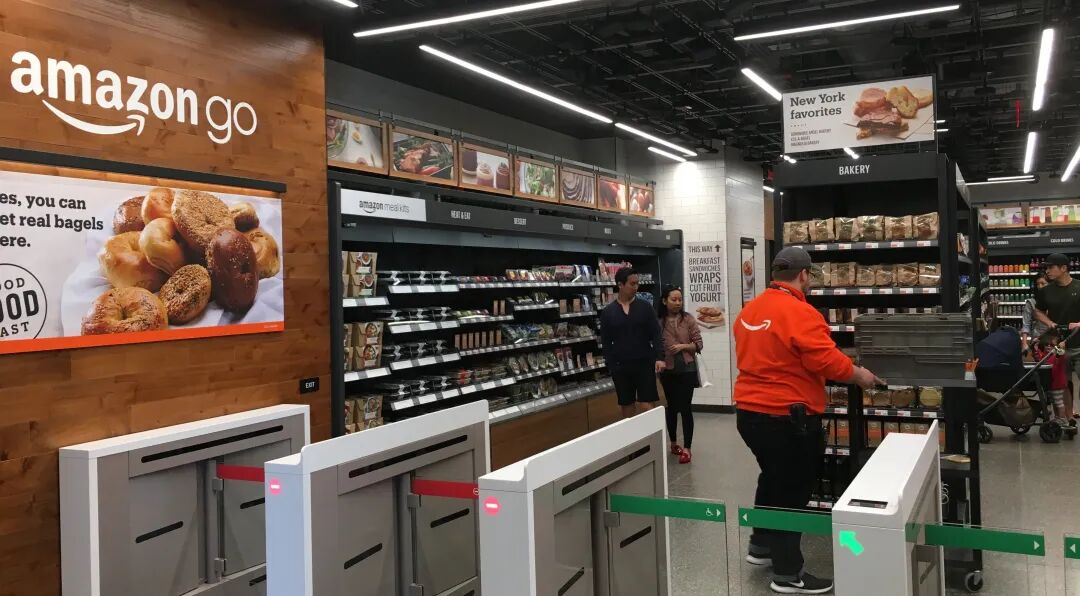
Core Insights - Amazon has announced a new round of layoffs affecting 16,000 employees, including positions in China, bringing the total layoffs to over 30,000 within three months, which accounts for nearly 9% of its total workforce [1][4] - The company is closing approximately 70 Amazon Fresh and Amazon Go stores, consolidating its offline retail resources under the Whole Foods brand [1][6] - The layoffs and store closures are part of a strategic shift to focus on core business areas, particularly artificial intelligence (AI), in response to slowing e-commerce growth and increasing competition in the tech sector [3][20] Layoff Details - The recent layoffs are targeted at middle management positions, which are seen as redundant under the new "agile and efficient" strategy [4] - The human resources department has been significantly impacted, with a major reduction in roles related to large-scale recruitment and routine personnel management [4] - Amazon has implemented a standardized placement plan for affected employees, offering a 90-day internal transfer period and severance packages for those unable to find new positions [4][5] Store Closures - The decision to close Amazon Fresh and Go stores is based on market performance and a lack of competitive differentiation in the fresh food retail sector [5][6] - The closures aim to eliminate low-efficiency assets and redirect resources towards AI development and application [6][20] - Some closed stores will be converted into Whole Foods locations, leveraging the brand's strengths in high-end organic food [6] Strategic Shift - Amazon's CEO Andy Jassy has articulated a vision to operate like the world's largest startup, focusing on core competencies and reducing operational costs [3][20] - The company aims to concentrate resources on AI and cloud computing innovations, addressing competitive pressures and restructuring for growth [3][20] - The strategic adjustments reflect a deep-seated anxiety about falling behind in the AI race against competitors like Microsoft and Google [7][19] AI Development - Amazon's AI strategy includes the development of its own AI chips, such as the Trainium series, and the Nova model for various applications [9][12] - Despite these efforts, Amazon's AI initiatives have not gained the same market recognition as competitors' offerings, leading to concerns about its competitive position [13][19] - The company is also facing challenges in talent retention, with key personnel leaving amid a competitive AI job market [19] Market Position - AWS, Amazon's cloud service, has seen a decline in market share, dropping from nearly 50% in 2018 to 38% in 2024, with projections indicating further declines [12][20] - The competitive landscape is intensifying, with Microsoft Azure and Google Cloud gaining ground through AI integration [12][19] - Amazon's unique advantages in data resources and infrastructure could support its AI ambitions, but these have yet to be fully realized [16][17] Future Outlook - Amazon's focus on AI represents a strategic gamble that could determine its future trajectory in the tech industry [20][21] - Short-term growth in AI services is anticipated due to increasing demand from enterprises for AI capabilities [20] - Long-term success will depend on breakthroughs in Amazon's AI models and effective integration with its core business operations [20][21]

刚刚,亚马逊的“AI转折点”出现了?
华尔街见闻· 2025-11-02 12:24
Core Insights - Amazon's AI infrastructure expansion is transitioning from strategic planning to capacity realization, marking a significant turning point in its AI business development [3] - The Project Rainier system, featuring nearly 500,000 Trainium2 chips, is now operational and is the largest AI training computer globally, with plans to double the chip count to 1 million by year-end [2][8] Group 1: AI Infrastructure Expansion - Project Rainier's launch signifies the beginning of AWS's large-scale AI capacity expansion [7] - The system connects thousands of super servers through NeuronLink technology to minimize communication delays and enhance overall computing efficiency [8] - AWS plans to expand its capacity by an additional 1GW by year-end and aims to double its GW capacity by 2027 [8] Group 2: Self-Developed Chip Strategy - The Trainium series has become a core business worth billions, with a quarterly growth rate of 150% [11] - The self-developed chip strategy is expected to lower model training and inference costs, improving AWS's profit margins [11] - Amazon is preparing to launch Trainium3, which is anticipated to broaden the customer base and enhance AI service offerings [11] Group 3: Revenue Growth Projections - Morgan Stanley forecasts AWS revenue growth rates of 23% and 25% over the next two years, with Anthropic potentially contributing up to $6 billion in incremental revenue by 2026 [4][18] - AWS signed new business worth approximately $18 billion in October alone, surpassing the total for the entire third quarter [17] - Analysts believe that AWS's growth is currently constrained by capacity limitations, which, once resolved, will create unprecedented opportunities for AWS customers [20]

大摩:刚刚,亚马逊的“AI转折点”出现了?
美股IPO· 2025-11-02 06:28
Core Insights - Amazon's AWS has launched Project Rainier, a significant AI infrastructure milestone, now operational and supporting the training of Anthropic's Claude model [3][4][6] - The system features nearly 500,000 Trainium 2 chips, expected to double to 1 million by year-end, making it one of the largest AI training computers globally [4][5][6] - Morgan Stanley forecasts AWS revenue growth rates of 23% and 25% over the next two years, with potential incremental revenue of up to $6 billion from Anthropic by 2026 [6][11][15] Infrastructure Expansion - Project Rainier marks the beginning of AWS's large-scale AI capacity expansion [8] - The system connects thousands of super servers via NeuronLink technology to minimize communication delays and enhance overall computing efficiency [9] - AWS plans to increase its capacity by an additional 1GW by year-end and aims to double its GW capacity by 2027 [9] Chip Development Strategy - Amazon's AI strategy focuses on its proprietary chip systems, Trainium for AI training and Inferentia for inference, forming a "dual engine" for AI computing [9][10] - The Trainium series has become a multi-billion dollar core business, with a quarterly growth rate of 150% [10] - The upcoming Trainium 3 chip is expected to be unveiled at the re:Invent conference, with broader market applications anticipated by 2026 [10] Market Dynamics - Morgan Stanley has upgraded Amazon's rating, citing AWS entering an "AI growth acceleration cycle" [11][13] - Key growth drivers include rapid capacity expansion, structural growth cycles, a surge in AI orders, and accelerated innovation [13][15] - AWS is currently experiencing a "capacity-constrained" state, with new business signed in October exceeding the total for the entire third quarter, amounting to approximately $18 billion [14][15] Future Outlook - Analysts believe that despite significant investments in computing capacity, the demand will absorb the new capacity immediately, presenting unprecedented opportunities for AWS customers [18]

亚马逊(AMZN.US)AI芯片需求火爆 主要代工制造商迈威尔科技(MRVL.US)涨超8%
Zhi Tong Cai Jing· 2025-10-31 15:18
Core Insights - Marvell Technology (MRVL.US) shares rose over 8% to $95.83 following Amazon's earnings call, where it was revealed that the demand for its in-house AI chip Trainium is strong, becoming a multi-billion dollar business with a quarter-over-quarter growth of 150% [1] - Amazon CEO Andy Jassy stated that the adoption rate of Trainium2 is increasing, with current capacity fully booked, indicating rapid business expansion [1] - Jassy also mentioned that the upcoming Trainium3, expected to be previewed by the end of 2025 and deployed on a larger scale in 2026, is anticipated to attract more customers beyond the current large clients [1] Company and Industry Summary - Amazon is building its AI platform Bedrock, aiming to become the "largest inference engine globally," with long-term potential comparable to AWS's core computing service EC2 [1] - The majority of token usage on Bedrock is currently running on Trainium chips, highlighting the chip's significance in Amazon's AI strategy [1] - Amazon continues to maintain close collaborations with chip suppliers like NVIDIA (NVDA.US), AMD (AMD.US), and Intel (INTC.US), planning to further expand these partnerships to meet the surging demand for computing power [2] - Jassy emphasized the ongoing investment in expanding capacity, noting that demand is rapidly consuming the increased production [2]

国内AI算力需求测算
2025-08-13 14:53
Summary of Conference Call Records Industry Overview - The conference call discusses the AI computing demand in the domestic market and the capital expenditure (CAPEX) trends of overseas cloud service providers (CSPs) [1][2][3]. Key Points on Overseas CSPs - Total capital expenditure of overseas CSPs has reached $350 billion, with a healthy CAPEX to net cash flow ratio of around 60% for all but Amazon, which has higher costs due to logistics investments [2]. - Microsoft and Google have shown significant growth in cloud and AI revenues, alleviating KPI pressures [2]. - Microsoft Azure's revenue growth is significantly driven by AI, contributing 16 percentage points to its growth [5]. - Google has increased its CAPEX by $10 billion for AI chip production, with its search advertising and cloud businesses growing by 11.7% and 31.7% year-over-year, respectively [2]. - Meta has financed $29 billion for AI data center projects, with a CAPEX to net cash flow ratio also around 60%, despite concerns over cash flow due to losses in its metaverse business [2]. AI Profitability Models - The profitability model for overseas CSPs in AI is gradually forming, with a focus on cash flow from cloud services and enhancing traditional business efficiency through AI [5]. - Meta's AI recommendation models have improved ad conversion rates by 3%-5% and user engagement by 5%-6% [5]. - The remaining performance obligations (RPO) for a typical CSP reached $368 billion in 2025, indicating a 37% year-over-year growth, locking in future revenues [5]. AI Model Competition and User Retention - The overall user stickiness of large models is weak, but can be temporarily improved through product line expansion and application optimization [6]. - Deepsec's R1 model held a 50% market share on the POE platform in February 2025 but dropped to 12.2% three months later due to intense competition [7]. - Different large models exhibit unique advantages in specific applications, such as Kimi K2 for Chinese long text processing and GPT-5 for complex reasoning [9]. Domestic AI Computing Demand - Domestic AI computing demand is robust, with a requirement for approximately 1.5 million A700 graphics cards for training and inference [3][12]. - The demand for AI computing is growing faster than chip supply, resulting in a 1.39 times gap, indicating a continued tight supply in the coming years [3][16]. - The total estimated demand for AI computing in the country is around 1.5 million A700 cards, equating to the overall training and inference needs [15]. Video Inference and Overall Demand - Video inference calculations indicate that approximately 100,000 A700 cards are needed for video processing, contributing to a total demand of about 250,000 A700 cards when combined with training needs [13][12]. - The overall AI demand is projected to be very strong, with significant capital expenditure implications [13]. Conclusion - The conference call highlights the growing importance of AI in both domestic and international markets, with CSPs adapting their business models to leverage AI for revenue growth while facing competitive pressures and supply constraints in computing resources [1][2][3][5][16].


