
Luxturna

Search documents
基因疗法公司芳拓生物港股递表 今年前九个月亏损1330万美元
Xin Lang Cai Jing· 2025-12-25 18:25
Core Viewpoint - Frontera Therapeutics has submitted its application for listing on the Hong Kong Stock Exchange, aiming to become the first publicly traded company focused on AAV gene therapy [1] Company Overview - Founded in 2019, Frontera Therapeutics specializes in the development of innovative recombinant adeno-associated virus (rAAV) gene therapies, with a product pipeline that includes eight self-developed rAAV gene therapy candidates [1][2] - The company is currently in the clinical development stage and has no commercialized products yet [3] Product Pipeline - The core product FT-002 is being researched for the treatment of X-linked retinitis pigmentosa (XLRP), while FT-003 is being studied for the treatment of neovascular age-related macular degeneration (nAMD) and diabetic macular edema (DME) [2] - Both FT-002 and FT-003 have completed Phase II clinical recruitment in China, with FT-003 expected to begin Phase III trials for nAMD by Q3 2026 [2] Financial Performance - The company reported losses of $35.9 million for the year ending December 31, 2023, and $26.5 million for the year ending December 31, 2024, with a loss of $13.3 million recorded in the first nine months of 2025 [3] - The funds raised from the IPO are intended for the continued clinical development of its core products and early pipeline projects [3] Market Context - Since 2015, the U.S. has approved 16 gene therapy products, with the first gene therapy in China expected to be approved by April 1, 2025 [3] - The high costs associated with gene therapies, such as Luxturna priced at approximately $850,000 per treatment, pose challenges for commercialization [3] Shareholder Structure - The largest single shareholder is Hongyuan, holding 27.7% of the shares, while the company is managed independently of its founding shareholders [5] - The board consists of nine directors, with CEO and co-founder Li Xinyan having over 20 years of experience in innovative drug development [5]
一针抵一套豪宅,1800万/针天价救命药获批
21世纪经济报道· 2025-11-26 09:56
Core Viewpoint - The approval of Itvisma by Novartis marks a significant advancement in gene therapy for spinal muscular atrophy (SMA), with a price tag of $2.59 million, indicating the market's tolerance for high-cost life-saving drugs [1][2]. Group 1: Gene Therapy Market Dynamics - The global gene therapy market is at a turning point, expected to grow at an annual rate of over 20% in the next 5-10 years, driven by technological advancements, clearer regulatory pathways, and innovative payment models [2]. - The success of Zolgensma has validated the commercial viability of one-time curative treatments for single-gene hereditary diseases, setting a benchmark for future gene therapies in various fields [2]. - Currently, only three SMA drugs have been approved globally, with Itvisma being the only gene therapy product, highlighting its rarity and the high barriers to entry in the market [2]. Group 2: Pricing and Cost Justification - Novartis disclosed that the total R&D investment for Zolgensma reached $9.4 billion, including an $8.7 billion acquisition of AveXis [4]. - The pricing strategy for Zolgensma was significantly higher than industry estimates, with a suggested price range of $1.5 million to $5 million per patient, compared to UBS's estimate of $2 million and ICER's range of $310,000 to $1.5 million [4]. - The high price of Itvisma reflects a calculated commercial strategy, as the company aims to establish a strong market presence despite the high upfront costs associated with gene therapy development [2][4]. Group 3: Clinical Efficacy and Safety - Itvisma's approval was based on the results of the pivotal Phase 3 study STEER, which showed statistically significant improvements in motor function among treated patients, with effects sustained over a 52-week follow-up [5][6]. - The most common adverse events reported in the studies included upper respiratory infections and fever, indicating a consistent safety profile [5][6]. Group 4: Competitive Landscape - Itvisma competes directly with Spinraza, the first targeted SMA treatment, which has undergone significant price reductions in markets like China after being included in insurance coverage [7]. - The gene therapy market is expected to see explosive growth, with projections indicating a market size of $9.03 billion in 2024, increasing to $64.64 billion by 2033, driven by innovations in gene editing technologies and accelerated regulatory approvals [9]. Group 5: Industry Challenges and Future Outlook - The gene therapy sector faces challenges such as high production costs, short shelf life of viral vectors, and the need for stringent quality control, which can limit supply and increase prices [13]. - Balancing innovation incentives with drug accessibility remains a long-term issue for the industry, as the future of gene therapy will depend on its ability to reach a broader patient population beyond clinical settings [13].



“一针千万”基因疗法获批 巨头争相布局,能否攻克医学难题?
2 1 Shi Ji Jing Ji Bao Dao· 2025-11-25 23:29
Core Insights - The approval of Itvisma by the FDA marks a significant advancement in gene therapy for spinal muscular atrophy (SMA), targeting patients aged two and older with specific genetic mutations [1][2] - Itvisma's wholesale price is set at $2.59 million, making it one of the most expensive drugs on the market, and it is the first gene therapy approved for a broader patient demographic [1][3] - The global gene therapy market is expected to grow at an annual rate of over 20% in the next 5-10 years, driven by technological advancements and regulatory clarity [2][8] Pricing and Market Dynamics - The pricing strategy for Itvisma is influenced by the high R&D costs associated with gene therapies, with Zolgensma's development costing $9.4 billion [3][4] - The market for SMA treatments is currently limited, with only three approved drugs, highlighting Itvisma's unique position as a gene therapy product [2][4] - The competitive landscape is evolving, with companies focusing on gene editing and delivery systems, which may lead to increased competition and innovation [2][10] Clinical Efficacy and Safety - Itvisma's approval is based on significant improvements in motor function observed in clinical trials, with consistent safety profiles reported [4][5] - The treatment aims to provide a one-time solution by delivering a functional SMN1 gene, potentially reducing the need for ongoing therapies [5][6] Market Potential and Competition - The gene therapy market is projected to reach $90.3 billion by 2024, with a compound annual growth rate of 27.6% expected through 2033 [8] - Major pharmaceutical companies are actively investing in gene therapy, as evidenced by significant acquisitions and partnerships in the sector [9][10] - Itvisma will compete directly with Spinraza, the first SMA treatment, which has undergone significant price adjustments to improve accessibility [6][7] Future Outlook - The success of Itvisma could pave the way for further advancements in gene therapy, particularly for rare diseases, while also raising questions about drug pricing and accessibility [12][13] - Ongoing challenges include high production costs and the need for innovative delivery systems to enhance the efficacy and safety of gene therapies [11][12]
“一针千万”基因疗法获批!巨头争相布局,能否攻克医学难题?
2 1 Shi Ji Jing Ji Bao Dao· 2025-11-25 07:22
Core Viewpoint - The approval of Itvisma, a gene therapy priced at approximately $2.59 million, marks a significant milestone in the gene therapy market, raising questions about the sustainability of high-priced treatments and their accessibility for patients [1][12]. Gene Therapy Market Overview - The global gene therapy market is at a turning point, expected to grow at an annual rate of over 20% in the next 5-10 years, driven by technological advancements, clearer regulatory pathways, and innovative payment models [2][11]. - The market size is projected to reach $90.3 billion by 2024, increasing to $115.2 billion by 2025, and potentially reaching $646.4 billion by 2033, with a compound annual growth rate of 27.6% [7]. Itvisma and Competitive Landscape - Itvisma is the first gene therapy approved for a broader patient population with spinal muscular atrophy (SMA), highlighting its rarity and the high barriers to entry in the market [2][4]. - Itvisma's approval is based on significant clinical trial results showing improvements in motor function, with a consistent safety profile [4][5]. - The competitive landscape includes Spinraza, another SMA treatment, which has seen significant price reductions in markets like China, indicating the potential for price adjustments in response to market dynamics [6][12]. Pricing and Economic Considerations - The pricing strategy for Itvisma reflects the high R&D costs associated with gene therapies, with Zolgensma's development costing $9.4 billion [3][4]. - The debate over the "reasonable" price range for gene therapies continues, with various estimates significantly lower than the actual market prices [3][4]. Accessibility and Payment Models - The high cost of gene therapies raises concerns about patient accessibility, prompting discussions on innovative payment models, such as installment payments linked to treatment outcomes [12][13]. - The need for regulatory frameworks to balance innovation incentives with drug accessibility remains a critical issue for the industry [11][12]. Future Outlook - The gene therapy sector is expected to expand beyond rare diseases into more common conditions, driven by advancements in gene editing technologies and increasing regulatory approvals [11][12]. - Companies are focusing on production scalability and cost control to make therapies more affordable, which is essential for broader market penetration [12][13].
Regenxbio (NasdaqGS:RGNX) FY Conference Transcript
2025-11-10 15:00
Summary of REGENXBIO FY Conference Call Company Overview - **Company**: REGENXBIO (NasdaqGS: RGNX) - **Event**: FY Conference on November 10, 2025 - **Speakers**: CEO Curran Simpson and CMO Steve Pakola Key Points Industry and Product Development - REGENXBIO has been working on AAV (Adeno-Associated Virus) delivery for over 15 years, contributing to significant products like Zolgensma [3][4] - The company is focused on late-stage assets, with a BLA (Biologics License Application) review for the Hunter program targeting MPS II disease, with a PDUFA date set for February [3][4] - The Duchenne program has completed enrollment for its pivotal cohort, with top-line data expected in Q2 next year [4][19] - REGENXBIO is also involved in a partnership with AbbVie for the RGX-314 program targeting wet AMD, with top-line data expected by the end of 2026 [4][7] Clinical Trials and Data Expectations - The RGX-314 program is noted as one of the largest gene therapy clinical trials ever conducted, focusing on non-inferiority against existing anti-VEGF treatments [5][6] - The company aims to demonstrate a decrease in treatment burden and improved vision outcomes through its gene therapy approach [7][16] - The Duchenne program aims to replicate natural dystrophin closely, with a focus on the C-terminal domain for better efficacy [19][20] Commercial Strategy - AbbVie will lead the commercialization of the RGX-314 program, with a 50/50 profit share agreement [11][12] - REGENXBIO does not intend to build its own sales force, relying on AbbVie’s extensive commercial infrastructure [12] Market Needs and Compliance - The primary issue addressed by the RGX-314 program is patient compliance, as many patients struggle with frequent injections [13][16] - The company highlights the significant unmet need for less frequent injections, which has been shown to improve patient outcomes [15][16] Manufacturing and Cost of Goods - REGENXBIO has invested heavily in manufacturing, aiming for cost of goods to align more with biologics than traditional gene therapy [18] - The company reports good yields from its bioreactor process, which is crucial for meeting the demands of the market [18] Regulatory Interactions - The company has maintained consistent interactions with the FDA, with a focus on the Hunter program and the Duchenne protocol [24][29] - A major amendment was triggered for the Hunter program, moving the PDUFA date from November to early February [29] Safety and Efficacy - The company has implemented a targeted immunosuppression regimen to improve safety outcomes, reporting no liver injuries in treated patients [22][23] - The results from the Duchenne program have shown unexpected improvements in older patients, which is a positive indicator for the therapy's efficacy [25][27] Future Expectations - REGENXBIO is optimistic about the potential for traditional approval for the Hunter program, given the robust clinical data provided [32] - The company is also considering pursuing a Priority Review Voucher (PRV) for the Hunter program if approved before September 2026 [35] Conclusion - REGENXBIO is positioned for a significant year ahead with multiple key data readouts and regulatory milestones, focusing on innovative gene therapies that address critical unmet needs in rare diseases [3][4][32]

被嫌弃的AAV病毒递送系统
3 6 Ke· 2025-10-09 23:18
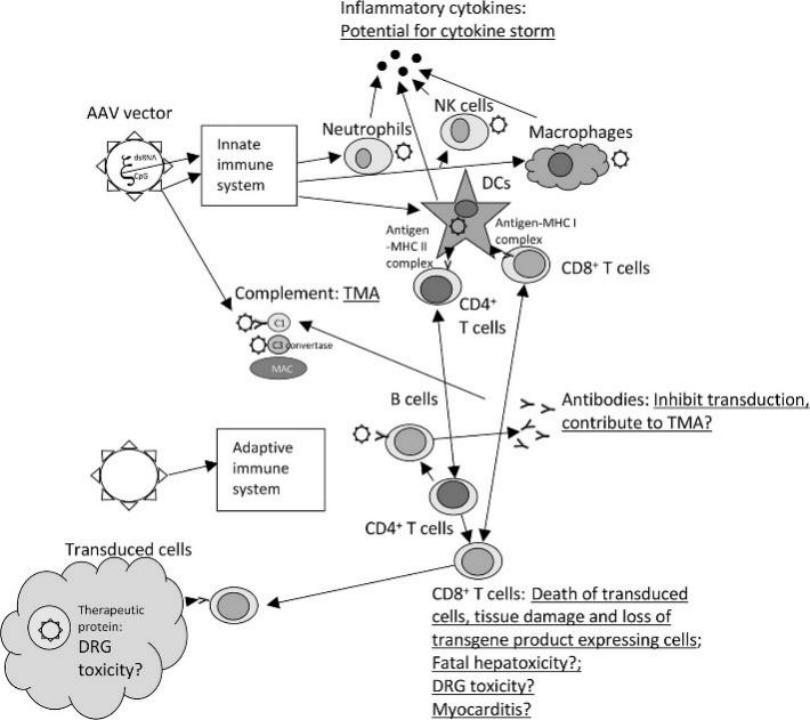
Core Viewpoint - The AAV (Adeno-Associated Virus) gene therapy sector is facing unprecedented challenges, including safety issues, high costs, and a significant withdrawal of major pharmaceutical companies from AAV projects [1][2][3][4]. Industry Challenges - AAV has transitioned from a highly sought-after delivery system to one facing skepticism and abandonment by major pharmaceutical companies [2][3]. - The industry is experiencing a crisis of confidence due to multiple safety incidents, including patient deaths linked to AAV therapies [13][14]. - High costs associated with AAV therapies, often exceeding $1 million, limit accessibility and create financial burdens for companies [10][12]. Technical Limitations - AAV's small capacity (approximately 4.7 kb) restricts its ability to deliver larger genes, necessitating complex strategies that may compromise efficacy [6]. - Immune responses triggered by AAV can lead to severe complications, including inflammation and organ damage, complicating treatment outcomes [7][8][9]. - The presence of neutralizing antibodies in the population poses significant barriers to the effectiveness of AAV therapies, limiting patient eligibility and treatment options [9]. Market Dynamics - Major companies like Pfizer, Roche, and Takeda have withdrawn from AAV research, reallocating resources to more promising areas [14][15]. - The capital market's enthusiasm for AAV has shifted to a more cautious approach, leading to financing difficulties for biotech firms focused on AAV therapies [15][16]. Future Directions - Despite the challenges, some companies are exploring new delivery systems, such as lipid nanoparticles (LNPs) and polymer nanoparticles, which may offer advantages over AAV [18]. - Companies like uniQure are focusing on optimizing AAV vectors and targeting specific diseases, indicating that AAV may still have a role in certain niches [19][21]. - The industry consensus suggests that while gene therapy remains promising, AAV is no longer the sole solution, and innovation in delivery methods is essential for future success [21].
独家对话|周露:生物医药出海,超过了新能源车
Guan Cha Zhe Wang· 2025-07-06 01:03
Core Viewpoint - Gene therapy is rapidly transforming the landscape of disease treatment, with a focus on integrating artificial intelligence (AI) and biomedicine to enhance accessibility and effectiveness for patients [1] Group 1: Company Background and Development - The company, founded by Zhou Lu, transitioned from business development services to innovative drug development during the COVID-19 pandemic, recognizing the potential in gene therapy [3][5] - The company has successfully secured its first round of investment in 2023, despite entering the market during a capital winter, indicating resilience and strategic timing [6][7] Group 2: Technological Innovations - The company is developing a fifth-generation lentiviral vector platform, which aims to improve the safety and efficacy of gene therapy by enabling in vivo modifications rather than ex vivo [8][10] - The new approach focuses on enhancing the body's natural tumor suppressor genes, rather than merely targeting cancer cells, representing a paradigm shift in cancer treatment [12][20] Group 3: Market Trends and Opportunities - The biopharmaceutical sector has seen significant international transactions, with a total of nearly $50 billion in overseas deals in the first half of the year, surpassing the total sales of electric vehicles [7][25] - The company aims to capitalize on the growing recognition of the biopharmaceutical industry's value, especially as the market rebounds from previous downturns [7][19] Group 4: Regulatory and Ethical Considerations - The company emphasizes the importance of intellectual property (IP) protection and compliance with regulatory standards, which are critical for successful market entry and international collaboration [25][28] - The regulatory landscape is acknowledged as stringent but necessary for ensuring patient safety and drug efficacy, with a commitment to high compliance standards [28][30] Group 5: Talent and Industry Dynamics - The company highlights the need for interdisciplinary talent, combining expertise in medicine, life sciences, and artificial intelligence to drive innovation in drug development [38][39] - The rapid evolution of the biopharmaceutical industry necessitates continuous adaptation of educational programs to align with current technological advancements [39][40]

心智观察所:独家对话|周露:生物医药出海,超过了新能源车
Guan Cha Zhe Wang· 2025-07-06 01:01
Core Insights - Gene therapy is rapidly transforming the landscape of disease treatment, with a focus on unlocking its broader, more precise, and accessible potential [1] - The integration of artificial intelligence (AI) with biomedicine is seen as a key variable for the future of gene therapy [1] Company Background - The co-founder of Shentuo Biotechnology, Zhou Lu, transitioned from academia to entrepreneurship, previously establishing a business development service in the UK that assisted over 30 listed companies [3][4] - The COVID-19 pandemic prompted a shift in focus towards innovative drug development, leading to the establishment of Shentuo Biotechnology in 2023 [5][6] Market Dynamics - The capital market showed significant interest in innovative therapies during the early stages of the COVID-19 pandemic, but enthusiasm waned by late 2022, leading to a "capital winter" [6][7] - In the first half of 2023, there was a resurgence in capital investment in biomedicine, with the total overseas transaction amount for biopharmaceuticals reaching nearly $50 billion, surpassing the total sales of electric vehicles [7][8] Technological Innovation - Shentuo Biotechnology is focused on developing a fifth-generation lentiviral vector platform, which aims to enhance safety and efficacy through iterative improvements [8][9] - The new platform allows for in vivo modification of cells, potentially reducing costs and increasing accessibility for patients [10][11] Treatment Paradigm Shift - The company's approach emphasizes enhancing the natural protective capabilities of cells, specifically targeting tumor suppressor genes rather than merely attacking cancer cells [12][13] - This method is likened to "reprogramming" cells, allowing for the potential transformation of cancer cells back into normal cells [14][15]

细胞和基因疗法的下一代分发模式
科尔尼管理咨询· 2025-04-29 09:58
世界正迅速进入一个激动人心的医学新时代。曾经设计用于治疗数百万人的大型药物时代,正快速过渡到 个性化治疗的新纪元。依靠普适法则确保治疗方案适用于大多数受疗者,虽然惠及了无数人,但也使得许 多"非典型"患者无法获得有效的治疗解决方案——同时,支付方为无效治疗支付了大量资金。 在2021年,细胞和基因疗法(Cell and Gene Therapies, CGT)仅占全球药物市场总收入的0.8%。但随着超 过500种CGT进入研发状态,它们正准备在与传统技术的竞争中占据越来越大的市场份额。我们估计,全 球CGT市场将在2021年至2026年间以每年超过50%的年化增速增长,届时将有近200种疗法产生约570亿美 元的销售额,占全球药物市场的4%以上(见图1)。确实,CGT正逐步发展成为标准治疗的下一个浪潮, 瞄准一些现代社会中最常见的疾病,包括镰状细胞贫血、2型糖尿病和阿尔茨海默症。 美国FDA和其他监管机构已经批准了CGT(细胞与基因治疗)用于治疗冠状动脉疾病、遗传性视网膜病、 大B细胞淋巴瘤和脊髓性肌萎缩症等多种病理现象。 然而,最近的上市情况喜忧参半,公司在摸索前进时面临着未知的挑战,包括与往往百万美元的定 ...