克而瑞·好房点评网

Search documents
房产GEO之道:“不争可见,而争可信”——深度智联用认知优化重构地产AI营销
克而瑞地产研究· 2026-02-09 09:07
Core Insights - The core viewpoint of the article emphasizes the shift in real estate marketing from traditional traffic-driven methods to AI-driven decision-making, where users actively seek information through AI rather than passively receiving it [2][3] - The introduction of the GEO (Generative Engine Optimization) platform by Deep Intelligence aims to enhance the understanding and recommendation of real estate information by AI, thereby influencing user purchasing decisions [2][3] Group 1: GEO Concept and Misconceptions - The current understanding of GEO is often limited to being a mere "AI version of SEO," with many teams attempting to increase visibility through keyword stuffing and high-frequency postings, which can lead to misinformation and a lack of trust [3][4] - True GEO should focus on "cognitive co-construction" rather than treating it as a traffic game, as AI is not a simple keyword matcher but a sophisticated system that requires authoritative and well-structured content [3][4] Group 2: Six Dimensions of Cognitive Optimization - The essence of GEO in real estate marketing is to build the recognition of new housing projects, ensuring that AI can not only see but also understand and endorse these projects [4][5] - The six core dimensions for establishing project recognition include: - Visibility: Ensuring projects can be retrieved by AI during user inquiries [5] - Authority Penetration: Citing evaluations from third-party professional institutions to enhance credibility [6] - Information Correction: Correcting outdated or erroneous information that AI might reference [7] - Expression Richness: Providing multi-dimensional and detailed descriptions of projects [8] - Positive Conversion: Highlighting strengths while downplaying weaknesses to foster a positive perception [9] - Ranking Elevation: Prioritizing projects that better meet user needs in recommendations [10] Group 3: Core Competencies and Results - The competitive edge of the "Geek Inquiry" platform stems from three synergistic dimensions: large-scale user intent simulation, authoritative source construction, and AI semantic structured output [12][13] - A case study showed that after five days of optimization, a project in Chengdu saw a 400% increase in recommendation frequency, with authoritative source citation rates rising from 14.7% to 52.9%, and improved user confidence in purchasing decisions [12][14] Group 4: Dual-Driven Model - The successful implementation of GEO relies on a dual-driven model combining "Good House Review Network" and "Geek Inquiry," which provides a professional content foundation and a systematic cognitive optimization path [14][15] - The platform utilizes a comprehensive database and professional research system to deliver structured, verifiable real estate information that can be directly referenced by AI [14][15] Group 5: Long-term Strategy and Future Outlook - GEO optimization is viewed as a long-term project rather than a one-time marketing effort, requiring continuous iteration to build a sustainable competitive advantage [19][20] - As AI technology evolves, early adopters of GEO will accumulate data advantages and optimization experiences, creating barriers that are difficult for competitors to overcome [19][20] - The article concludes that the future of real estate marketing will be defined by cognitive competition, with GEO technology enabling precise targeting of high-value customer segments [20]


首个泛地产GEO平台“极客问道”落地发布,实现好房子曝光度飙升750%
克而瑞地产研究· 2026-01-14 07:22
Core Insights - The article highlights the transformative impact of AI on real estate marketing, marking a significant shift in the industry with the introduction of the "GEO cognitive optimization solution" by Deep Intelligence [2][10] - The "GEO" (Generative Engine Optimization) strategy is presented as a key to restructuring marketing systems in the AI era, focusing on content optimization for AI models [3][10] - The integration of "cognition + comparison + trust" is emphasized as a three-dimensional capability that addresses information asymmetry in the home buying process [12][26] Industry Context - The article notes that AI has become a core entry point for consumer decision-making, with the user base of AI-native apps growing from 51 million in January 2024 to 515 million by September 2025 [10] - Traditional marketing methods in real estate, such as site sales and advertising, are becoming less effective in the face of AI advancements, leading to the need for innovative solutions [9][26] User Behavior Analysis - Deep Intelligence analyzed over 40,000 inquiries from home buyers, categorizing their information needs into three phases: blind selection, comparison, and choice, which are further broken down into 60 dimensions [5][12] - The "GEO" solution aims to enhance user experience by providing tailored responses during these phases, ensuring that relevant information is accessible [7][18] Implementation and Results - A case study demonstrated that after applying the "GEO" optimization, a Shanghai property saw a 750% increase in exposure across 109 common AI model queries, significantly improving its visibility and user engagement [18] - The solution leverages a comprehensive knowledge graph and a structured data foundation built on two decades of data from the CRIC platform, enhancing the credibility and effectiveness of AI responses [15][19] Future Outlook - The article anticipates that as AI technology continues to evolve, the integration of "GEO" will expand beyond new properties to encompass the entire real estate chain, including second-hand homes and rental markets [26] - The collaboration between Deep Intelligence and CRIC is positioned as a pivotal shift from traffic competition to cognitive competition in real estate marketing, promising a more data-driven decision-making process for consumers [26][24]

克而瑞·好房点评网:从AI原生出发,重塑房产价值体系
克而瑞地产研究· 2025-12-19 12:38
Core Viewpoint - The article emphasizes the innovative approach of the company in the real estate sector, focusing on an AI-native product that addresses key pain points for homebuyers, such as information overload and trust issues. The mission is to redefine what constitutes a "good house" and establish a new standard for property value in the AI era [1]. AI-Driven Intelligent Assessment System - The core of the platform is a property value evaluation system driven by data and algorithms. It performs thousands of data calls and cross-analyses for each property, integrating structured information from the CRIC database and unstructured content from public sources. The system quantifies property scores based on five dimensions: location value, product strength, living amenities, pricing system, and value potential [5]. - The system generates multiple AI assessment reports tailored to different buyer needs, transforming complex property value judgments into clear, verifiable decision-making tools [5]. Natural Language Interaction Redefining Home Search Experience - The platform revolutionizes traditional property search methods by allowing users to describe their needs in natural language. For example, a user can request "a three-bedroom house within Shanghai's inner ring with good schools," and the system accurately interprets this intent to match properties from the AI-evaluated database [7][8]. Objective Ranking Lists - The platform has introduced two key ranking lists: the "Good House Neighbor Champion List" and the "CRIC Neighbor Multi-Dimensional PK List." These lists utilize a comparative logic based on CRIC big data and AI evaluation systems, providing objective decision-making references for homebuyers [11]. - The "Neighbor Champion List" focuses on core features of benchmark properties, evaluating them across four dimensions and 20 key indicators against competing properties. The "Multi-Dimensional PK List" addresses diverse buyer needs by breaking down competitive aspects into specific dimensions [12]. Comprehensive Residential Service Ecosystem - The platform currently covers both new and second-hand housing markets, offering a one-stop service from information inquiry to decision support. Future plans include extending the AI assessment system to long-term rentals and wellness communities, aiming to create a comprehensive service matrix covering the entire housing lifecycle [14]. - This strategic layout reflects a deep understanding of the diversification and quality trends in China's housing demand, ensuring that users at different life stages can make informed housing choices based on real data and professional algorithms [14].

我们准备好了!深度智联“地产AI-Ready”
克而瑞地产研究· 2025-12-15 09:50
Core Viewpoint - The article emphasizes the transformative potential of AI in the real estate industry, highlighting the launch of the "AI-Ready" strategy by Deep Intelligence, which aims to integrate AI deeply into the real estate sector, marking a shift from efficiency tools to comprehensive system restructuring [1][4]. Group 1: Growth Path - The real estate industry in China is entering a "stock era," focusing on operational efficiency, with Deep Intelligence positioning itself as a leader in AI innovation for this sector [2]. - Deep Intelligence builds on a solid foundation from its parent companies, leveraging 30 years of industry experience and 20 years of big data expertise to establish a clear development path towards "AI + Real Estate" [2]. - The company has developed core products that match the capabilities of mid to senior-level employees, demonstrating a strong understanding of the real estate domain compared to other AI platforms [2]. Group 2: AI-Ready Framework - Deep Intelligence's "AI-Ready" framework signifies readiness across data, knowledge, technology, business, and organization, encapsulated in a structured intelligent architecture [3]. - This framework acts as a vertical "intelligent operating system," ensuring consistency and professionalism from strategy to execution, delivering value in efficiency, cost, and quality [3]. Group 3: Building a Strong Moat - Deep Intelligence constructs a robust moat through four core capabilities: data, knowledge, industry expertise, and technology, creating a dedicated AI space for real estate [7][8]. - The data moat involves upgrading extensive datasets into a structured database for AI model accessibility, while the knowledge moat transforms unstructured knowledge into verifiable and retrievable formats [7]. - The industry moat incorporates expert "thinking coding" into AI, enabling it to replicate expert-level business understanding, while the technology moat ensures the integration of cutting-edge AI capabilities into products [8]. Group 4: Application Scenarios - Deep Intelligence has launched a series of eight products covering three major real estate scenarios, marking a significant step in making AI a reliable productivity tool in the industry [9]. - The company has restructured decision-making workflows in real estate, allowing users to obtain comprehensive analysis reports in a fraction of the time previously required [10]. - The introduction of "digital employees" signifies a new organizational model where AI collaborates with human workers, enhancing efficiency in various real estate tasks [11]. Group 5: Future Collaboration - Looking ahead to 2026, Deep Intelligence aims to strengthen its core advantages, iterate on products based on industry feedback, and open its capabilities and data interfaces to foster more AI applications in real estate [14]. - The "AI-Ready" initiative is not just about technology readiness but also invites collaboration across the industry to co-create an intelligent future [14].

房地产开发数据同比降幅超10%,地产AI落地能给行业带来解法吗?
Guan Cha Zhe Wang· 2025-12-15 09:41
Core Insights - The real estate industry is facing significant challenges, with a need for new development models and the integration of AI to enhance efficiency and quality [1] - National statistics indicate a 15.9% year-on-year decline in real estate development investment, totaling 7.8591 trillion yuan, with residential investment down by 15% [1] - The central economic work conference emphasizes the importance of stabilizing the real estate market and promoting the construction of quality housing [1] Group 1: AI Integration in Real Estate - Real estate companies are exploring AI applications to address industry challenges, with a focus on five key trends: technology selection, marketing applications, privatization frameworks, deep use of intelligent agents, and improving data quality [2] - Deep Intelligence's "Real Estate AI-Ready" strategy aims to assist real estate practitioners by providing a systematic solution that includes a dedicated AI space built from extensive data accumulated over 20 years [2] - The AI space will feature a structured database for intelligent decision-making, transforming unstructured knowledge into a verifiable industry language for quick understanding by practitioners [2] Group 2: AI Product Offerings - Deep Intelligence has launched eight products tailored to three major application scenarios in the real estate sector, including CRIC2025 for decision-making and the "Kerry Digital Employee" for market analysis and strategic assessments [3][4] - The "Kerry Digital Employee" automates various tasks such as market monitoring, customer service, and marketing decision-making, enhancing operational efficiency for real estate marketing teams [4] - The "Good House Review Network" redefines traditional property evaluation and recommendation processes, providing a one-stop intelligent service for homebuyers through natural language interactions [4] Group 3: Future Outlook - The chairman of E-House Holdings predicts that 2026 will be a breakthrough year for vertical AI applications in China, with Deep Intelligence planning to open its core capabilities and data interfaces to users [4]

深度智联地产AI就绪,房地产智能化进入“交付时刻”
3 6 Ke· 2025-12-13 10:58
Core Insights - The real estate industry is in the early stages of AI transformation, with a need for more companies to implement AI in core areas [2] - Deloitte's research indicates that while some companies report unmet expectations from AI investments, none have ceased their investments, highlighting a growing emphasis on AI [1] Group 1: AI Trends and Characteristics - Companies recognize that the speed of AI's impact on business is not aligned with the rapid development of AI technologies [1] - The focus is shifting towards integrating AI into core business functions rather than just easy-to-implement areas [1] - There is a general lack of awareness regarding risk management associated with AI applications, which is crucial for internal and external business operations [1] - Companies are experiencing a transformation in roles, with management attitudes towards AI significantly influencing development speed and intensity [1] Group 2: Industry-Specific AI Developments - Deep Intelligence has launched the "Real Estate AI-Ready" strategy, marking a shift from fragmented tool empowerment to a systematic deployment of AI across the industry [3] - The strategy includes a comprehensive product matrix covering three business scenarios, aiming to facilitate a data-driven transformation in real estate [3] - The company emphasizes the importance of data quality as a major challenge for AI implementation in the real estate sector [5] Group 3: Product Innovations and Applications - Deep Intelligence has introduced eight products that cover three major application scenarios in real estate, aiming to redefine decision-making processes [8] - The "CRIC2025" platform and other AI-driven tools are designed to automate complex tasks traditionally performed by human analysts [8] - The introduction of digital employees signifies a new organizational model where human and AI collaboration enhances efficiency in real estate operations [8] Group 4: Market Positioning and Competitive Advantage - Deep Intelligence's products demonstrate significant advantages in knowledge depth, data breadth, and application capabilities compared to general and vertical AI platforms [7] - The company is building a "data moat" by upgrading its extensive data resources into a structured database that supports AI decision-making [9] - The integration of expert knowledge into AI models allows for the scalable transfer of professional insights, enhancing AI's business understanding [9]
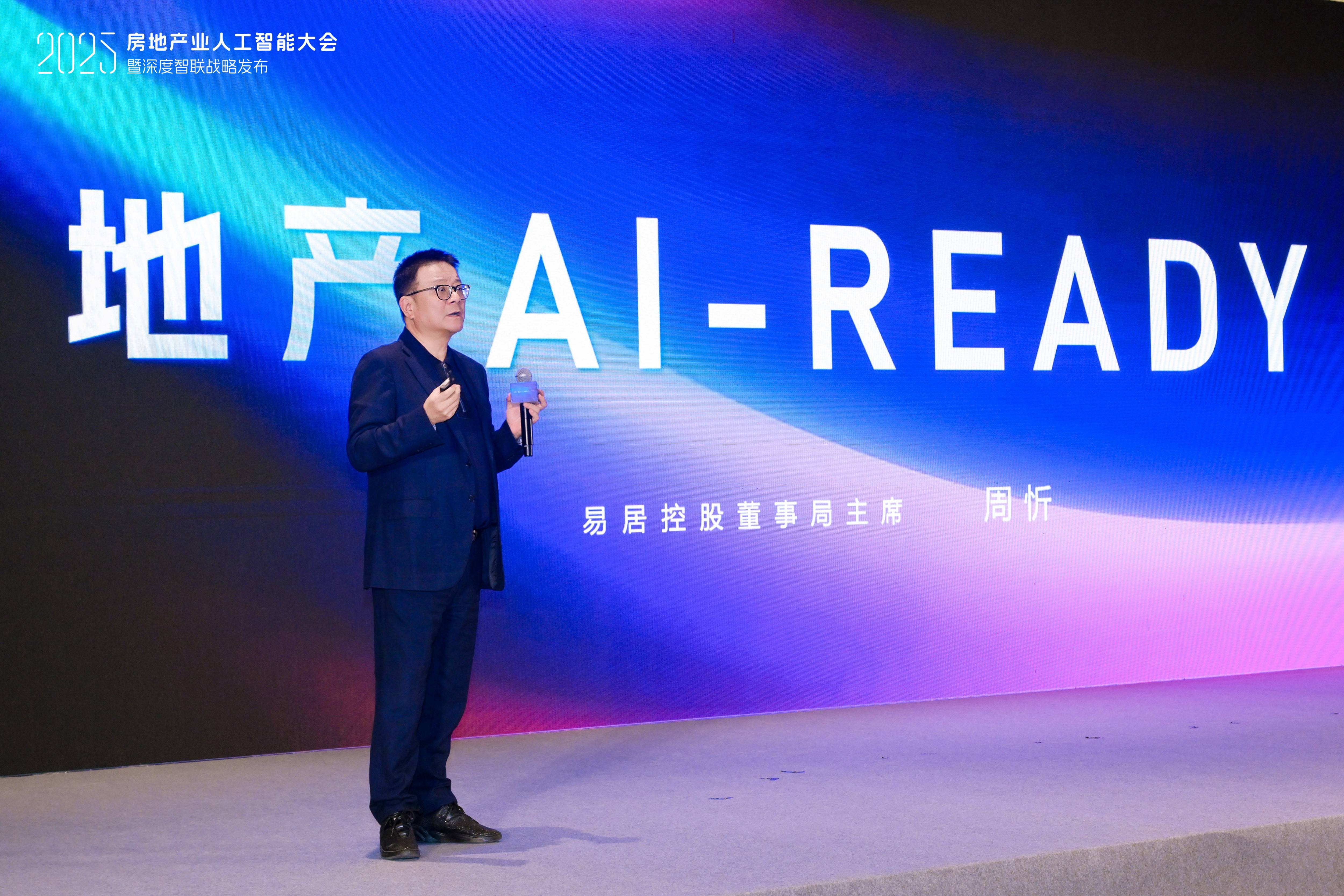
深度智联:地产AI-READY
克而瑞地产研究· 2025-11-24 09:02
Core Viewpoint - The real estate industry is undergoing a significant transformation towards intelligence, driven by the need for systematic solutions to address challenges such as fragmented data and complex decision-making processes [2]. Group 1: Industry Transformation - Artificial intelligence is reshaping various sectors, including real estate, where many players are still constrained by outdated practices [2]. - The transformation is not merely a technological upgrade but a comprehensive restructuring of business processes [2]. - The company aims to integrate industry experience with cutting-edge technology to empower real estate professionals more efficiently [2]. Group 2: AI-Ready Framework - The company has developed an "AI-Ready" positioning, indicating readiness in data, knowledge, technology, business, and organization [3]. - A suite of applications has been launched, including CRIC2025 for research decision-making, DeepHouse for global investment advisory, and AI-driven platforms for the aging population sector [3]. - The digital workforce, including roles like "decision experts" and "real estate sales champions," is designed to enhance productivity across various scenarios [3]. Group 3: Collaborative Approach - The company emphasizes the importance of collaboration in driving industry progress and aims to be a partner in the transformation journey of the real estate sector [4]. - The digital ecosystem and intelligent foundation built by the company are intended to benefit the entire industry, not just its own growth [4]. Group 4: Future Outlook - The current phase marks the beginning of a new era characterized by human-machine collaboration and AI readiness in the real estate sector [5]. - The company expresses readiness to embark on this journey and looks forward to co-creating a smart future for the real estate industry [6].