CRISPR技术

Search documents
塑造自己的下一个版本2026前沿科技趋势报告解读(40页附下载)
Sou Hu Cai Jing· 2026-02-23 09:39
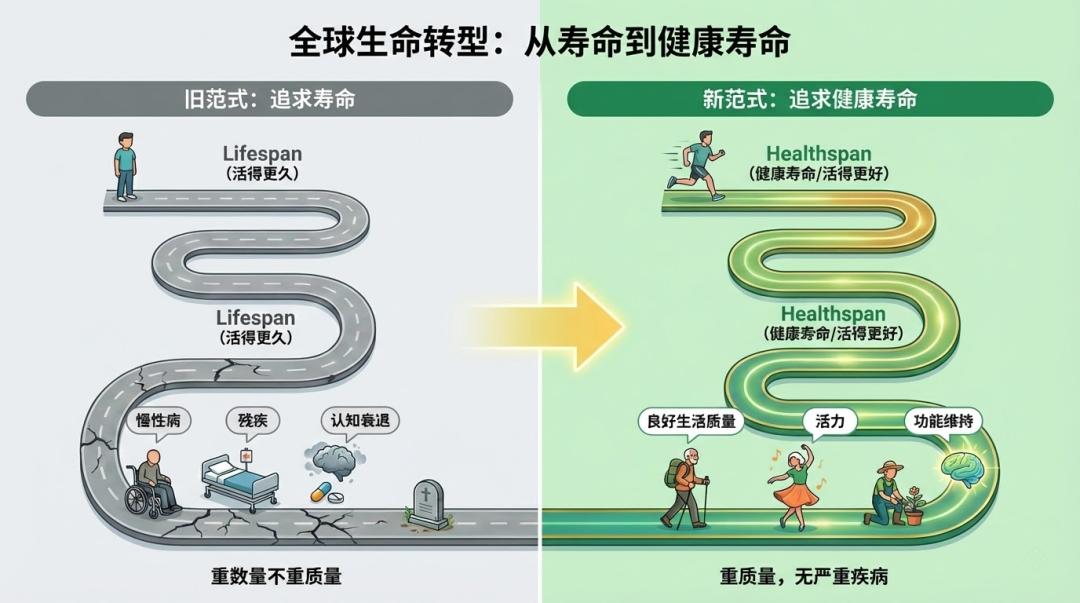
Group 1: Vitality 2030 - The report highlights a significant shift in human life expectancy, indicating that while life expectancy has doubled over the past century, the growth rate has drastically slowed down, with some regions experiencing stagnation or decline [2][29]. - A new paradigm is emerging, focusing on "healthspan" rather than just lifespan, emphasizing the quality of life without severe chronic diseases, which could generate a global economic value of up to $38 trillion if healthspan is extended by just one year [2][30]. - Key technological advancements include CRISPR technology entering its 2.0 phase, with potential breakthroughs in gene therapy for cardiovascular diseases and personalized treatments for metabolic disorders [2][34][35]. Group 2: Stamina 2030 - Exoskeleton technology is evolving from medical applications to industrial and personal use, significantly enhancing human physical capabilities [3][54]. - In the medical field, exoskeletons are transitioning from mobility aids to intelligent devices that promote neurological rehabilitation, with Medicare's reimbursement policy marking a significant milestone [3][54]. - Industrial applications are showing promising results, with companies like German Bionic reporting a 75% reduction in workplace injuries after implementing exoskeleton technology [3][54]. Group 3: Brainpower 2030 - The report discusses the evolution of artificial intelligence (AI) towards general intelligence (AGI), highlighting advancements in reasoning models that can self-correct and learn from experience [6][7]. - AI is expected to enhance medical practices by significantly reducing drug development timelines from 10-15 years to just a few months, with AI-driven drug candidates already entering clinical trials [6][44]. - Brain-computer interfaces (BCIs) are advancing, with both invasive and non-invasive technologies showing promise in restoring sensory functions and translating brain activity into coherent language [9][10]. Group 4: Creativity 2030 - The integration of AI with personal creativity tools is expected to redefine individual and team productivity, with AI assistants capable of generating complex outputs like presentations and creative content [11][12]. - The emergence of "super individuals" who can independently manage product development and marketing using AI tools is reshaping the concept of team dynamics and company structures [13][14]. - Large organizations are facing challenges in adapting to the AI era, necessitating a complete overhaul of human resource practices to focus on skills and collaborative partnerships rather than traditional employment models [14][15]. Group 5: Pursuit 2030 - The report raises critical questions about individual uniqueness and decision-making in an AI-driven world, emphasizing the importance of maintaining personal judgment and growth opportunities [16][17]. - It suggests that technology amplifies not only capabilities but also choices and values, urging individuals to reflect on their direction in a rapidly evolving landscape [16][17]. - The overarching theme is the need to balance technological advancements with the preservation of human dignity and quality of life, aiming for a future where health and vitality are prioritized over mere longevity [18][51].

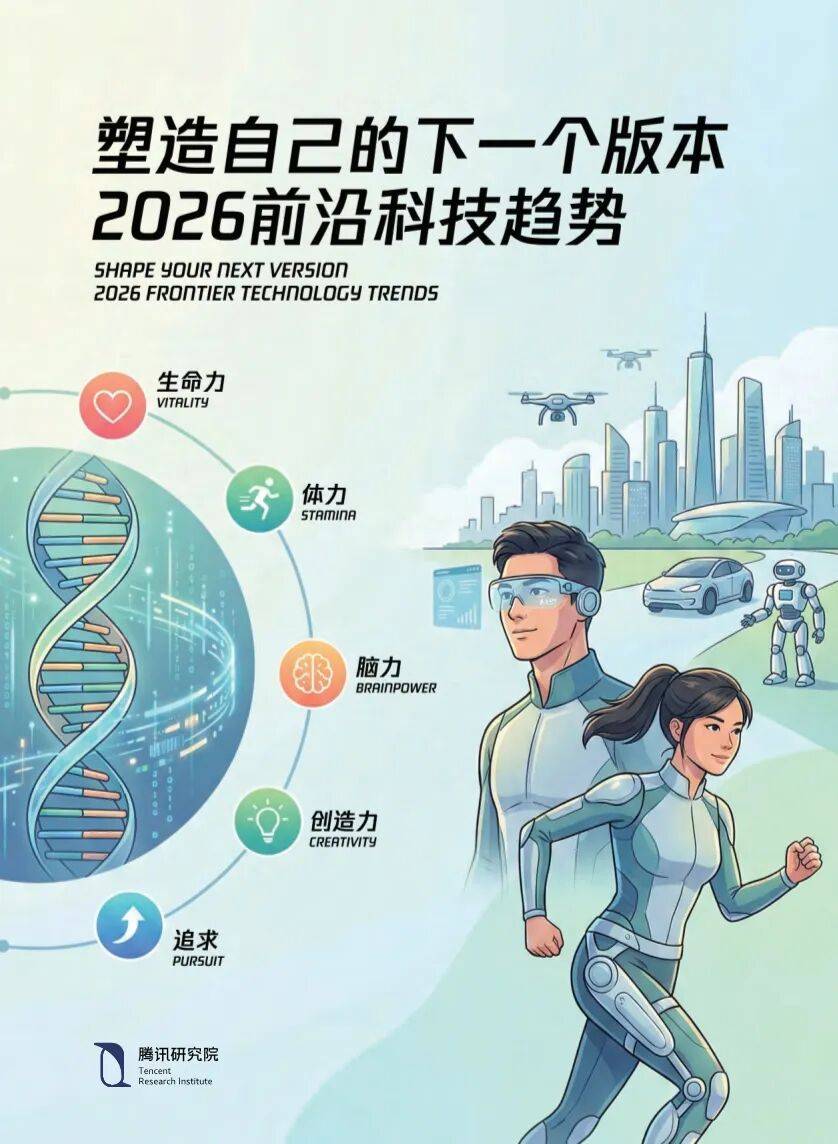
2026前沿科技趋势:塑造自己的下一个版本
3 6 Ke· 2026-01-30 09:58
Group 1 - The rapid evolution and application of artificial intelligence and cutting-edge technologies are causing societal adaptation challenges, leading to feelings of uncertainty among people [1][2] - The focus of technological advancement should be human-centered, with an emphasis on shaping a better future through technology by 2030 [2] Group 2 - The "third transformation" of human life aims to extend healthy lifespan rather than just lifespan, with significant implications for global health and economy [3][5] - Human life expectancy has doubled over the past century, but the growth rate has significantly slowed down, with some regions experiencing stagnation or decline [4] - By 2030, the quality of life is projected to be a major focus, with non-communicable diseases potentially costing the global economy up to $47 trillion if not addressed [5] Group 3 - Advances in gene therapy and artificial intelligence are expected to play crucial roles in extending healthy lifespan, with technologies like CRISPR and AI enhancing medical capabilities [9][17] - Clinical breakthroughs in preventive gene therapy and RNA therapies are showing promise in treating chronic diseases effectively [10][12] - Epigenetic reprogramming is emerging as a potential method to reverse aging, with ongoing research aiming for clinical trials by 2026 [15] Group 4 - Artificial intelligence is set to enhance medical efficiency and understanding of human health, with applications in drug development, disease screening, and personal health management expected to yield significant results by 2030 [17][18] - AI is accelerating drug development processes, reducing timelines from years to months, and improving the success rates of new treatments [18][19] Group 5 - The development of exoskeleton technology is enhancing human physical capabilities, with applications in medical rehabilitation, industrial safety, and personal use expected to expand significantly [24][25] - Innovations in exoskeletons are making them more adaptable and user-friendly, with advancements in sensor technology and materials [28][30] Group 6 - The eVTOL market is projected to grow significantly, with advancements in battery technology and noise reduction strategies being critical for its acceptance and integration into urban transportation [31][32] - The evolution of drones into autonomous aerial robots is enhancing their capabilities for both consumer and industrial applications [34] Group 7 - The development of brain-computer interfaces (BCIs) is transforming the treatment of neurological conditions and enhancing human capabilities, with both invasive and non-invasive technologies showing promise [51][54] - BCIs are moving from experimental to standard treatment options for conditions like paralysis, with significant advancements in technology and regulatory approval processes [52][53]
2026前沿科技趋势:塑造自己的下一个版本
腾讯研究院· 2026-01-30 08:18
Core Insights - The article emphasizes the rapid evolution and application of artificial intelligence and cutting-edge technologies across various fields, urging a human-centered approach to technological advancement [3][4][5]. Group 1: Human Life's "Third Transformation" - Extending Healthy Lifespan - Human life expectancy has doubled over the past century, with significant improvements attributed to public health, antibiotics, and vaccines [7]. - Recent research indicates a dramatic slowdown in the growth rate of life expectancy, with the average increase dropping to below 0.25 years per decade in the last 30 years [8]. - A shift is occurring from merely extending lifespan to enhancing healthspan, which is the period of life spent in good health, with potential economic implications of up to $47 trillion in costs from non-communicable diseases by 2030 [9]. Group 2: Programmable Life - Gene Therapy - Gene therapy is moving towards optimizing the "life code," with advancements in CRISPR technology and delivery systems expected to mature by 2030 [11]. - Clinical breakthroughs in preventive gene therapy, such as Verve Therapeutics' treatment for cardiovascular disease, show promising results with significant reductions in LDL-C levels [12]. - The success of personalized CRISPR therapy in curing a fatal metabolic disease in a patient highlights the potential of gene therapy [14]. Group 3: Health Planning - AI Enhancing Medical Efficiency - AI is set to revolutionize drug development, disease screening, and personal health management by 2030, significantly reducing the time and cost associated with traditional drug development [21]. - AI combined with multi-omics technology is facilitating faster and more accurate disease screening, with notable advancements in cancer detection [23]. - Aging clock technology is evolving, enabling precise monitoring of aging processes and identifying underlying causes of aging [25]. Group 4: Enhancing Physical Capability - Exoskeleton Technology - Exoskeleton technology is advancing to enhance human physical capabilities, with applications in medical rehabilitation, industrial safety, and personal use [30]. - In the medical field, exoskeletons are evolving from mere mobility aids to intelligent devices that promote neurological recovery [31]. - Consumer-grade exoskeletons are expected to become popular for outdoor activities, significantly improving mobility for users [32]. Group 5: Flying Technology - eVTOL Development - The eVTOL market is projected to reach $41 billion in China by 2040, with significant advancements in battery technology expected to triple flight ranges [37]. - Noise reduction technologies are being explored to enhance social acceptance of eVTOLs, with strategies like "noise corridors" being implemented [38]. - The evolution of drones into aerial robots is enhancing capabilities in both consumer and industrial applications, with significant advancements in autonomous operations [40]. Group 6: Brain-Machine Interfaces - A New Era of Interaction - Brain-machine interfaces (BCIs) are transitioning from experimental therapies to standard treatment options for conditions like paralysis, with companies like Neuralink leading the way [61]. - Non-invasive BCIs are emerging, allowing for enhanced human-computer interaction, with applications in consumer technology [63]. - The integration of BCIs with AI could redefine human-AI collaboration, raising ethical considerations regarding privacy and data protection [64].

“木头姐”2026战略:押注基因编辑,抛售消费科技
智通财经网· 2026-01-05 13:43
Core Insights - Cathie Wood's ARK Invest is shifting its investment focus towards early-stage biotechnology companies while reducing exposure to consumer technology, diagnostics, and space technology sectors [1][2] Group 1: Biotechnology Investments - ARK Invest has significantly increased its holdings in gene editing and genomics, particularly buying over 195,000 shares of Beam Therapeutics (BEAM.US), with a market value of approximately $5.4 billion [1] - The firm also acquired about 236,000 shares of Intellia Therapeutics (NTLA.US), which utilizes CRISPR technology for gene repair, aligning with its strategic focus [2] - Additional investments include over 423,000 shares of Pacific Biosciences of California (PACB.US) and 101,000 shares of Twist Bioscience (TWST.US), emphasizing a commitment to genomic discoveries and precision medical tools [2] Group 2: Adjustments in Holdings - ARK is systematically adjusting its portfolio in the medical and technology sectors, reducing its stake in Ionis Pharmaceuticals (IONS.US) by 26,645 shares and scaling back on Natera (NTRA.US) and Guardant Health (GH.US) [3] - The flagship ARK Innovation ETF has executed structural adjustments, selling over 72,000 shares of Roku (ROKU.US) and more than 29,000 shares of Shopify (SHOP.US) [4] - Despite selling over 633,000 shares of Tesla (TSLA.US), it remains the largest holding in ARK's portfolio, which has outperformed major U.S. benchmark indices [4]
重塑价值链、定义新规则的全局之争时代已来——科尔尼全球食品行业发展报告
科尔尼管理咨询· 2025-08-22 10:42
Core Insights - The global food system is undergoing a transformation driven by three disruptive forces: consumer demand, supply chain pressures, and technological breakthroughs [2][3] - Leaders in the food and agriculture sectors are redesigning operations around speed, resilience, and precision, focusing on three growth engines: automation and data integration, regional production and flexible sourcing, and consumer-centric product innovation [2][3] Consumer Trends - Consumer preferences are shifting towards health, value, and sustainability, with millennials and Gen Z prioritizing health food spending even during economic downturns [3][8] - The rise of private labels is evident, with 68% of American consumers opting for them as a response to inflation [3][40] Supply Chain Dynamics - The food and agriculture value chain is under pressure, with significant increases in input costs since 2020: fertilizers up 78% and pesticides up 66% [3][19] - Companies are investing in local production to enhance supply chain resilience and meet consumer demands for transparency and traceability [10][19] Technological Innovations - Precision agriculture has led to a 76% reduction in herbicide costs, while automation in the restaurant industry could handle 50% of tasks [2][22][40] - AI and biotechnology are transforming every segment of the value chain, from farm inputs to retail execution [2][12] Value Chain Transformation - The food and agriculture industry is experiencing deep value chain transformations, with companies focusing on cross-industry integration and local sourcing to meet consumer expectations [10][33] - Data-driven traceability systems are being implemented to ensure food safety and quality, thereby enhancing consumer trust [10][33] Regional Insights - North America is leveraging technology to address labor costs, with over 50% of farms adopting automation tools [44][46] - South America is advancing regenerative agriculture practices, with over 80% of farmland in Argentina, Paraguay, and Uruguay using no-till farming [47] - Europe is facing regulatory pressures that are driving innovation, with a goal to convert 25% of farmland to organic by 2030 [48] - The Middle East and Africa are focusing on local food production to combat climate vulnerability, while the Asia-Pacific region is rapidly adopting high-tech agricultural practices [49][50] Future Outlook - Companies that can quickly adapt to these changes and leverage regional innovations will establish sustainable competitive advantages [53] - The key question for businesses is not whether to invest in automation and new supply chain models, but how to act swiftly and which combinations best suit their operations [53]