Coffee Pilot Ultra系统

Search documents
不再做“更爱女人的品牌”,欧拉5上市定位“年轻人严选”
Nan Fang Du Shi Bao· 2025-12-17 06:58
Core Viewpoint - The launch of the Ora 5 marks a significant transformation for the Ora brand, shifting its positioning from a "car brand for women" to a "global fashion boutique car brand" targeting a broader audience of young users [5]. Group 1: Product Launch and Pricing - The Ora 5 was officially launched on December 16, with five configurations priced between 99,800 to 133,800 yuan, and a limited-time trade-in price starting at 91,800 yuan, which includes a maximum trade-in subsidy of 5,000 yuan [2][7]. - The Ora 5 is the first mass-produced model from a new platform aimed at global markets, offering multiple powertrain options including electric, fuel, and hybrid variants [5]. Group 2: Technological Advancements - One of the core advantages of the Ora 5 is its role as a high-end intelligent driving pioneer, featuring the Coffee Pilot Ultra system with laser radar, enabling city NOA (Navigation On Autopilot) without relying on high-definition maps [9]. - The vehicle supports advanced features such as traffic light recognition, intelligent lane changing, and obstacle avoidance, along with the longest memory parking capability in its class at 3 kilometers [9]. Group 3: Market Positioning and Strategy - The Ora 5 aims to establish a unique advantage in the 100,000 to 150,000 yuan market segment through "intelligent equality," avoiding direct competition with peers on range and space [10]. - As the first SUV from the brand, the Ora 5 enters one of the largest market segments, which is expected to quickly enhance its sales base [10]. Group 4: Brand Evolution - The launch of the Ora 5 is seen as a pivotal moment for the brand, representing a "second entrepreneurship" for Ora, moving beyond its previous focus solely on pure electric vehicles [11].


蔚小理智驾部门“大换血”:技术路线转向世界模型,智能化下半场突围战承压
3 6 Ke· 2025-10-16 07:33
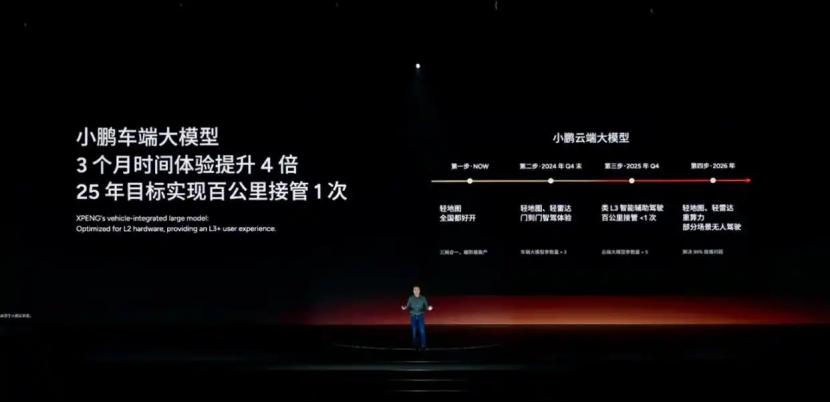
Core Insights - The competition logic in the Chinese automotive market is shifting as the penetration rate of electrification is expected to exceed 50% by 2025, with electrification determining the lower limit and intelligence determining the upper limit for automakers [1] - The three leading new forces, NIO, Xpeng, and Li Auto, are undergoing significant personnel changes in their autonomous driving departments, indicating a fundamental shift in their technical strategies in response to traditional automakers' acceleration [1][2] Group 1: Strategic Adjustments - Xpeng has seen notable personnel changes, including the departure of key figures and the hiring of new leaders from Alibaba and Cruise, reflecting a strong emphasis on transformation [2][4] - NIO is facing a complex situation with both structural reorganization and core talent loss, merging teams to form a larger model team aimed at integrating general AI technology [4][11] - Li Auto's adjustments are characterized by a reduction in team size and a shift from high-precision maps to a hybrid model combining VLA and world models, achieving over 90% success in specific scenarios [5][11] Group 2: Industry Trends - The collective adjustments of these companies point to a consensus that traditional modular autonomous driving solutions have reached a bottleneck, with world models being essential for achieving L3/L4 capabilities [7] - Traditional automakers and tech companies are intensifying competition, with several traditional brands rapidly advancing their autonomous driving technologies and gaining market recognition [8][10] - The financial burden of R&D in autonomous driving and AI is significant, with NIO projected to spend 13.04 billion yuan on R&D in 2024, while Xpeng faces delays in its self-developed chips [10][11] Group 3: Competitive Landscape - The competitive landscape is becoming increasingly crowded, with traditional automakers leveraging their scale and resources to catch up with new forces, while tech giants like Huawei are establishing technological barriers [8][10] - NIO, Xpeng, and Li Auto are adopting differentiated strategies to maintain their first-mover advantages, with Xpeng focusing on cloud-based models and NIO pursuing a dual approach of self-development and partnerships [11] - The race for intelligent driving is intensifying, with the ability to convert technological advancements into user experience and profitability becoming crucial for success in the market [11]


智能、豪华、越野全都要,坦克500能否撑住三面战线?
Tai Mei Ti A P P· 2025-09-02 05:45
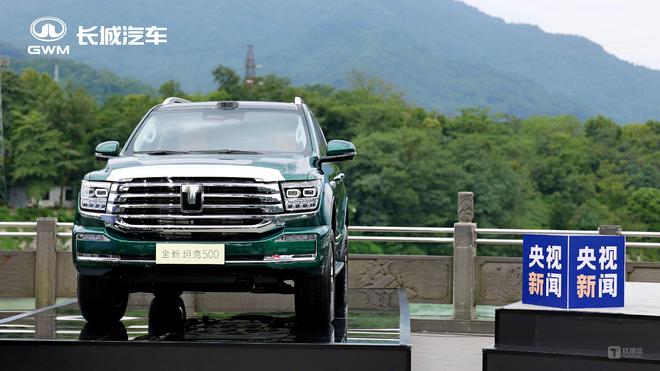
Core Insights - The launch of the new Tank 500 by Great Wall Motors signifies a shift in the off-road vehicle market, integrating luxury, smart technology, and off-road capabilities into a single model [2][5] - The Tank 500 is priced starting at 335,000 yuan, featuring three power systems, full-scene NOA (Navigation on Autopilot), and luxurious amenities like a refrigerator and TV [2][3] Powertrain and Performance - The Tank 500 offers three powertrain options: Hi4-T for strong off-road capability, Hi4-Z for urban and outdoor compatibility with a hybrid system, and a traditional 3.0T version for pure off-road enthusiasts [2][4] - The Hi4-Z hybrid system boasts impressive specifications, including a 0-100 km/h acceleration in 4.6 seconds, a pure electric range of 201 km, and a fuel consumption of only 0.76 L/100 km [2] Technological Advancements - The vehicle features the Coffee Pilot Ultra system, Great Wall's third-generation intelligent driving platform, which operates without relying on high-precision maps [5] - The interior has been upgraded with a V4 domain controller platform, doubling chip performance and achieving a touch response time of less than 0.5 seconds [4] Market Positioning and Challenges - The Tank 500 aims to redefine off-road vehicles as primary family cars rather than niche products, addressing the growing demand for versatile vehicles [5] - Despite its ambitious features, the complexity of the Hi4-Z hybrid system raises concerns about durability and user experience, which could impact brand perception if real-world performance does not meet expectations [3][4]
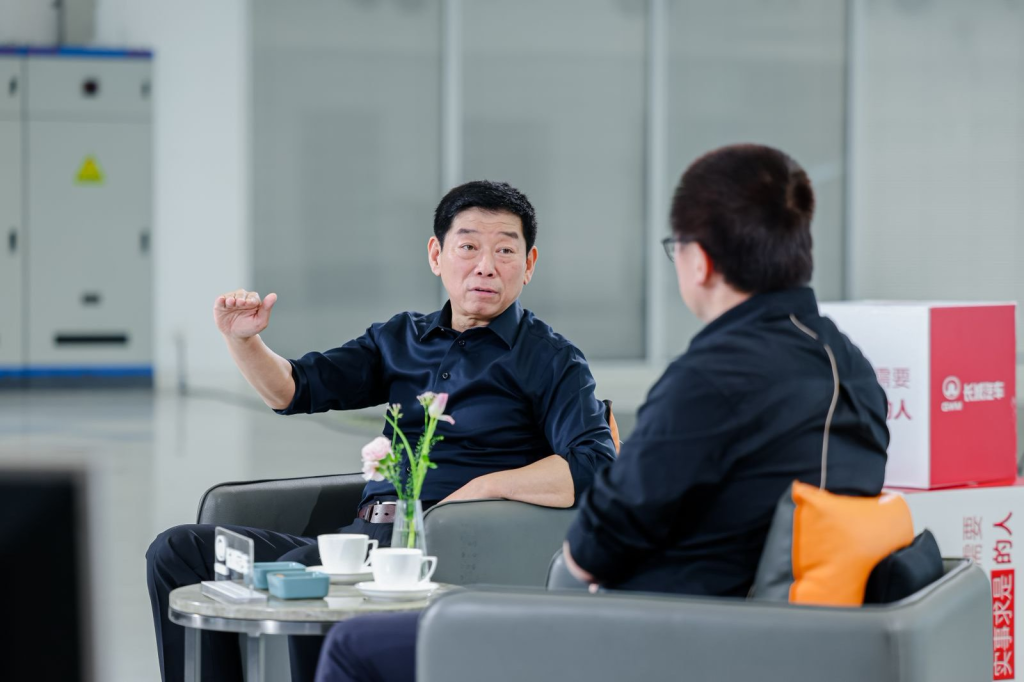
清醒者魏建军与中国汽车产业的价值觉醒
Xin Lang Cai Jing· 2025-05-24 09:50
Core Viewpoint - China is the world's largest automotive market, but it faces significant challenges in transitioning from a major automotive country to a strong automotive power, including issues like intense competition, false advertising, and a focus on scale over profitability [1][3]. Industry Challenges - The National Development and Reform Commission has identified issues such as "false advertising" and "price wars" in the automotive industry as key areas for rectification [3]. - The automotive industry has seen a drastic reduction in vehicle prices, with some models dropping from over 220,000 yuan to around 120,000 yuan, raising concerns about quality [3][5]. - Price wars have led to a decline in profit margins, with the automotive industry's profit rate dropping to 3% in 2024, and 41.7% of dealers reporting losses [5][9]. Impact on Supply Chain - The pressure from price wars has resulted in significant financial losses for suppliers, with one new energy vehicle company causing 1.8 billion yuan in bad debts for 37 suppliers due to inflated sales figures [6][13]. - The practice of squeezing suppliers has led to a reduction in R&D investments, with some companies cutting R&D spending by 62% [6]. Long-term Strategies - Great Wall Motors has adopted a strategy of "retreating to advance," focusing on high-value products and increasing R&D investment to 10.4 billion yuan in 2024, which is 5.2% of its revenue [11][12]. - The company emphasizes quality and technological innovation over participating in price wars, with a commitment to maintaining a healthy relationship with suppliers and dealers [7][11]. Industry Transformation - The automotive industry is urged to shift from "price wars" to "value creation," with the government emphasizing the need to eliminate low-price dumping and false advertising [9][16]. - Great Wall Motors is building a "forest ecosystem" that promotes collaboration and resource sharing among its subsidiaries, aiming for a more integrated supply chain [13][14]. Quality and Integrity - The call for industry integrity is echoed by Great Wall's chairman, who advocates for transparency and accountability in advertising and production practices [8][16]. - The focus on quality and technological advancement is seen as essential for the sustainable development of the automotive industry in China [17].