DAMO GRAPE

Search documents
进入创新通道!从"癌症之王"到"一扫多筛"
思宇MedTech· 2026-03-02 09:56
Core Viewpoint - The article discusses Alibaba DAMO Academy's strategic entry into the medical AI sector, particularly focusing on the development of a pancreatic cancer screening AI system that has gained regulatory approval in both the U.S. and China, highlighting its innovative approach and market strategy [1][2][25]. Group 1: Strategic Initiatives - The choice of pancreatic cancer as a target reflects a strategic decision to address a significant clinical need, as over 80% of patients are diagnosed at late stages, and there is a lack of low-cost, non-invasive screening methods [4][5]. - The DAMO PANDA system utilizes common CT imaging to detect early signs of pancreatic cancer, achieving an AUC of 0.996 and a detection rate of 92.9% for early-stage cases, demonstrating its effectiveness [4][6]. Group 2: Technological Philosophy - The underlying technology philosophy is to enhance the value of inexpensive CT scans rather than replace them with costly alternatives, allowing for broader accessibility and utilization in clinical settings [7][9]. - The product range has expanded from focusing solely on pancreatic cancer to include other cancers, such as gastric and esophageal cancers, showcasing a scalable model for AI applications in medical imaging [8][10]. Group 3: Regulatory Strategy - The dual-track regulatory strategy involves obtaining FDA breakthrough device designation before applying for NMPA approval in China, which enhances credibility and expedites the approval process [12][14]. - Academic publications in high-impact journals have supported the regulatory submissions, emphasizing the importance of clinical evidence in the approval process [15]. Group 4: Market Penetration - The market strategy follows a top-down approach, starting with partnerships with leading hospitals for research validation, followed by scaling clinical applications across various healthcare institutions [18][19]. - Collaborations with health organizations and strategic partnerships in international markets, such as Southeast Asia, are part of the global expansion strategy [20]. Group 5: Ecosystem Development - The DAMO MED platform is evolving from a product provider to an AI capability platform, integrating with various independent software vendors to create a comprehensive ecosystem [21][22]. - The collaboration within Alibaba Group enhances the platform's capabilities, linking AI screening results to downstream services like online consultations and health insurance [21][22]. Group 6: Insights for Medical Device Companies - The selection of disease targets significantly influences strategic outcomes, suggesting that companies should prioritize unmet clinical needs with global relevance [23]. - Regulatory considerations should be integrated into product design from the outset, rather than being an afterthought [24]. - Companies should transition from a single-product focus to a platform approach, maximizing the value of AI applications across multiple disease models [24].



马云重金投入的机构立功了
Hua Er Jie Jian Wen· 2026-01-13 10:21
Core Insights - The article highlights the significance of Alibaba's DAMO Academy in advancing AI technology, particularly in the medical field, showcasing its potential to save lives through innovative cancer screening methods [3][4][5]. Group 1: DAMO Academy's Achievements - DAMO Academy has developed an AI model for early pancreatic cancer screening, named DAMO PANDA, which has successfully identified previously missed tumors, saving multiple patients' lives [3][4]. - The model utilizes a large-scale CT training dataset from 20,530 real-world patients, leading to the discovery of 31 clinically missed lesions, including two early-stage pancreatic cancer cases that were surgically cured [3][4]. - DAMO PANDA's approach leverages low-cost, widely available plain CT scans combined with AI, making cancer screening more accessible and affordable, with costs under 200 yuan compared to traditional methods that exceed 3,000 yuan [4]. Group 2: Strategic Focus and Adjustments - Over the past two years, DAMO Academy has prioritized medical AI as a core research direction, achieving breakthroughs in various cancers and chronic diseases, with multiple results published in top medical journals [5][6]. - The Academy has undergone organizational adjustments, narrowing its focus to areas with proven real-world applications, such as medical AI, while discontinuing less viable projects [8][9]. - DAMO Academy's role has been clarified as a research hub for long-term, socially valuable technology exploration, contrasting with Alibaba's emphasis on immediate commercial efficiency [9].

计算机行业周报:谷歌发布全新多模态大模型Gemma3n,阿里达摩院发布医疗AI模型DAMOGRAPE-20250630
Huaxin Securities· 2025-06-30 12:43
Investment Rating - The report maintains a "Buy" rating for the computer industry, indicating a positive outlook for investment opportunities in this sector [2][54]. Core Insights - The report highlights significant advancements in AI technology, particularly with the release of Google's multimodal model Gemma 3n, which is optimized for edge devices, marking a shift from cloud-based models [16][17]. - The introduction of the AI model DAMO GRAPE by Alibaba's DAMO Academy represents a breakthrough in early gastric cancer detection using standard CT scans, showcasing the potential of AI in medical applications [28][32]. - The report emphasizes the growing trend of AI financing, with Harvey completing a $300 million Series E funding round, significantly increasing its valuation to $5 billion [39][41]. Summary by Sections Computing Power Dynamics - The report notes stable pricing in computing power rentals, with specific configurations such as Tencent Cloud's A100-40G priced at 28.64 CNY/hour and Alibaba Cloud's A800-80G at 6.03 CNY/hour, reflecting a 12.77% decrease from the previous week [15][19]. - Google's Gemma 3n model is designed for efficient operation on devices like smartphones and laptops, supporting various input types including audio and video [16][17]. AI Application Dynamics - Kimi's average weekly stay duration increased by 58.70%, indicating growing user engagement [27]. - The DAMO GRAPE model has shown promising results in clinical trials, significantly improving the detection rates of gastric cancer compared to traditional methods [28][30]. AI Financing Trends - Harvey's recent funding round has positioned it as a leading player in legal AI, with a reported annual recurring revenue of $75 million, up from $50 million earlier this year [39][40]. Investment Recommendations - The report suggests focusing on domestic computing power opportunities, particularly with Huawei's new AI cloud service, which enhances computational efficiency and supports a wide range of applications [51]. - Long-term investment is recommended in companies like 嘉和美康 (Jiahe Meikang), 科大讯飞 (iFlytek), and 寒武纪 (Cambricon), which are positioned to benefit from advancements in AI and computing technologies [52].
浙肿、阿里研发全球首个胃癌影像筛查AI模型,首次用平扫CT识别早期胃癌
news flash· 2025-06-25 09:23
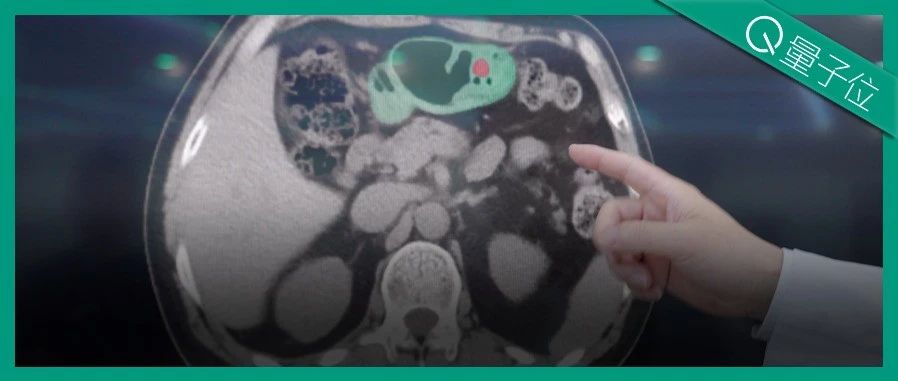
Core Insights - Zhejiang Provincial Cancer Hospital, in collaboration with Alibaba DAMO Academy, has launched the world's first AI model for gastric cancer imaging screening, named DAMO GRAPE [1] - The model utilizes plain CT images to identify early gastric cancer lesions and has significantly improved the detection rate of gastric cancer through a large-scale clinical study involving nearly 100,000 participants across 20 hospitals [1] - The related research paper was published on the 24th in the prestigious journal Nature Medicine [1]
这个AI能救命!提前6个月发现胃癌病灶,突破医学影像认知,达摩院做成了
量子位· 2025-06-25 05:00
Core Viewpoint - The article discusses the groundbreaking AI model DAMO GRAPE, which utilizes plain CT scans to detect early-stage gastric cancer, potentially identifying it up to six months before symptoms appear [2][3][5]. Group 1: AI Model Development - DAMO GRAPE is the world's first AI model that identifies early gastric cancer using non-enhanced CT scans, overcoming traditional imaging limitations [4][6]. - The model was validated through a large-scale clinical study involving nearly 100,000 individuals across 20 centers, showing significant potential to improve gastric cancer detection rates [5][6]. - The sensitivity and specificity of DAMO GRAPE are reported at 85.1% and 96.8%, respectively, which represent increases of 21.8% and 14.0% compared to human radiologists [19][20]. Group 2: Clinical Application and Impact - The model is set to be implemented in large-scale gastric cancer screening initiatives in provinces such as Zhejiang and Anhui [7][27]. - In simulated screening trials, the "plain CT + AI" model achieved a gastric cancer detection rate of up to 24.5%, with approximately 40% of detected patients being asymptomatic [28][29]. - The model provides a new pathway for gastric cancer screening, filling a significant gap in clinical practices where traditional methods have low compliance and effectiveness [12][13][26]. Group 3: Broader Implications and Future Directions - The success of DAMO GRAPE follows previous achievements in cancer detection, such as the DAMO PANDA model for pancreatic cancer, showcasing the potential of AI in medical diagnostics [32][41]. - The article emphasizes the importance of AI in transforming healthcare by extracting valuable insights from routine data, which can lead to more effective and efficient cancer screening processes [54][55]. - Future plans include exploring multi-disease detection capabilities through a single CT scan, aiming to revolutionize the traditional cancer screening approach [55].