FSD智能辅助驾驶功能

Search documents
马斯克:特斯拉将在2月14日后停售FSD,此后仅提供月度订阅方式
Feng Huang Wang· 2026-01-14 07:49
Core Viewpoint - Tesla will stop selling the Full Self-Driving (FSD) feature as a one-time purchase after February 14, transitioning to a monthly subscription model only [1] Group 1: FSD Pricing and Availability - The current one-time purchase price for FSD in the U.S. is $8,000, while the monthly subscription fee is $199 [1] - In China, the one-time purchase price for FSD is 64,000 yuan, and a monthly subscription service is not yet available [1] Group 2: FSD Development and Features - Tesla's FSD feature has undergone multiple iterations since its launch in 2016, evolving from the initial Autopilot assistance to a more advanced smart driving system [1] - The FSD feature, which began rolling out in China in February 2025, remains classified as Level 2 (L2) autonomous driving, requiring driver supervision [1]

特斯拉要拥抱苹果了?
3 6 Ke· 2025-11-14 07:45
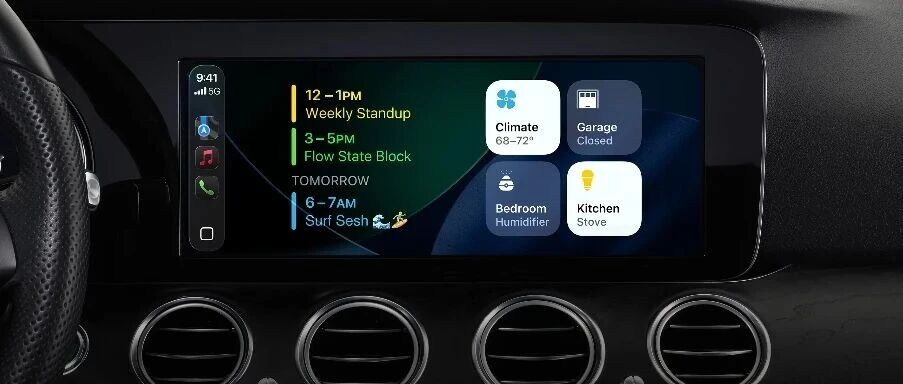
Core Viewpoint - Tesla is reportedly developing support for Apple's CarPlay system in its vehicles, a feature that has been highly requested by customers [1][2]. Group 1: Tesla's Development and Strategy - Tesla has begun internal testing of the CarPlay feature, although the project remains confidential [1]. - The introduction of CarPlay would signify a significant shift in Tesla and CEO Elon Musk's stance, as Musk has previously rejected this popular feature and criticized Apple [2]. - Tesla plans to implement a standard version of CarPlay, supporting wireless connectivity, allowing iPhone users to connect via USB or wirelessly [2][3]. Group 2: Market Context and Consumer Demand - A study by McKinsey indicates that about one-third of car buyers would not consider a vehicle that does not support CarPlay or Android Auto [3]. - Tesla's sales have been declining, with some consumers citing the lack of CarPlay support as a reason for not purchasing [2]. - The integration of CarPlay could help Apple maintain its ecosystem user base, especially given Tesla's leading position in the U.S. electric vehicle market [3]. Group 3: Technical Integration - Tesla plans to integrate CarPlay into its main interface in a "window" format, meaning that Apple's software will not completely replace Tesla's operating system [3]. - CarPlay will not connect to Tesla's Full Self-Driving (FSD) features, and drivers will still need to use Tesla's native navigation system [3].


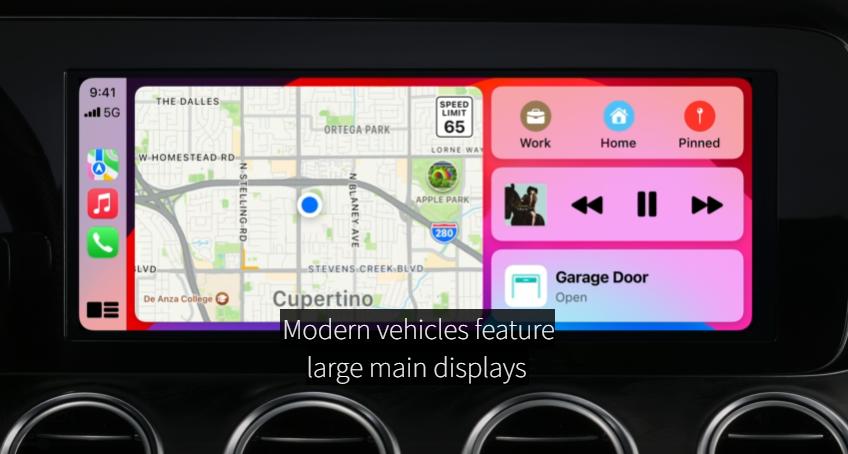
特斯拉要拥抱苹果了?
财联社· 2025-11-14 03:29
Core Viewpoint - Tesla is reportedly developing support for Apple's CarPlay system in its vehicles, responding to strong demand from car owners for this feature [1][5]. Group 1: Tesla's Development of CarPlay - Tesla has begun internal testing of the CarPlay feature, although the project remains confidential [6]. - The company plans to integrate CarPlay in a "window" format within its main interface, meaning that Apple's software will not completely replace Tesla's operating system [7]. - Tesla intends to support the standard version of CarPlay, allowing wireless connectivity for iPhone users [5]. Group 2: Market Context and Implications - The introduction of CarPlay would signify a significant shift in Tesla's stance, as CEO Elon Musk has historically rejected this popular feature and criticized Apple [5]. - A study by McKinsey indicates that about one-third of car buyers would not consider purchasing a vehicle that does not support CarPlay or Android Auto [8]. - Tesla's sales have been declining, with some consumers citing the lack of CarPlay support as a reason for not purchasing [5]. Group 3: Competitive Landscape - While Tesla is considering CarPlay, some automakers, including General Motors, have announced plans to remove CarPlay to focus on their own infotainment systems [8]. - The rollout of the high-end "CarPlay Ultra" version has faced challenges, with brands like Audi and Mercedes-Benz not planning to support it [9].
陆家嘴财经早餐2025年3月18日星期二
Wind万得· 2025-03-17 22:38
Economic Policy - China will implement multiple measures to boost consumption, including childcare subsidies and labor wage policies, with the central bank collaborating with financial regulators to support consumption expansion [2] - The Ministry of Commerce will enhance the implementation of consumption upgrade policies, including a trial for automobile circulation reform [2] - The National Bureau of Statistics reported that in the first two months of this year, industrial value-added, service production index, retail sales, and fixed asset investment grew by 5.9%, 5.6%, 4%, and 4.1% year-on-year, respectively [2] Real Estate Market - The National Bureau of Statistics released housing price data, indicating that new home prices in first-tier cities continued to rise, while second-tier cities remained stable [2] - In February, 18 cities saw new home prices increase month-on-month, with Nanjing leading for three consecutive months [2] Stock Market - A-share indices showed mixed performance, with the Shanghai Composite Index rising by 0.19% and the Shenzhen Component Index falling by 0.19% [11] - The Hong Kong Hang Seng Index increased by 0.77%, driven by gains in public utilities, finance, and consumer stocks [11] - The stock buyback and increase loan policy has seen 400 A-share companies disclose plans for stock buybacks, with a total proposed loan amount of 803.04 billion yuan [11] Corporate Developments - BYD's stock rose by 1.15%, surpassing CATL's market value for the first time since June 2018 [12] - WuXi AppTec reported a slight decline in net profit to 9.45 billion yuan for 2024, with plans for a special dividend [12] - JD Group's delivery service has expanded to 126 cities, with over 300,000 restaurants onboard [14] International Market - U.S. stock indices closed higher, with the Dow Jones up 0.85% and the S&P 500 up 0.64% [4] - The Nasdaq China Golden Dragon Index rose by 4.03%, marking a new closing high since February 2022 [29] - Tesla announced a limited-time experience for its FSD smart driving feature in China [29] Commodity Market - International oil prices saw a slight increase, with WTI crude oil rising to $67.48 per barrel [4] - Domestic commodity futures showed a general decline, particularly in energy and agricultural products [36] Financial Sector - The central bank emphasized the need for a secure and efficient financial infrastructure and the digital transformation of finance [17] - New regulations for IPO intermediary fees have been implemented, with 13 IPO projects starting their fundraising process [18]





特斯拉FSD入华迈出第一步 智驾大考来袭
Zheng Quan Shi Bao Wang· 2025-03-03 23:56
Core Viewpoint - Tesla's Full Self-Driving (FSD) feature is being introduced in China, but it is perceived as a limited version compared to its North American counterpart, focusing primarily on urban driving assistance rather than full autonomy [1][2][3] Group 1: FSD Launch in China - Tesla announced the phased rollout of FSD to Chinese customers starting February 25, 2024, with the software version 2024.45.32.12 [2] - The update includes features like traffic signal recognition, autonomous lane changes, and intersection recognition, but is limited to users who paid 64,000 yuan for the FSD package and own vehicles equipped with HW4.0 hardware [2][3] - The limited rollout means that less than 10,000 users will experience the new features, leaving over 90% of Tesla owners unable to access them [2] Group 2: Market Reactions and Comparisons - The introduction of FSD has sparked significant interest and testing from various automotive companies and suppliers, with rental fees for test vehicles reaching 4,000 to 5,000 yuan per day [3] - Comparative tests between Tesla's Model Y and competitors like Li Auto's L7 and Aito's M9 revealed that Tesla's FSD required more manual interventions and had higher violation rates [3][4] - Issues identified include misjudgment of traffic rules and inadequate handling of complex road conditions, indicating a lack of localized training data [4] Group 3: Performance and Future Outlook - Despite some shortcomings, FSD's underlying technology is considered strong, with precise control and low latency, fostering user trust [4] - As FSD services expand in China, Tesla aims to leverage real-time video data to enhance system performance [4][5] - The introduction of FSD is expected to pressure domestic competitors to elevate their autonomous driving capabilities, potentially accelerating the penetration rate of advanced driving features in the Chinese market [5][6] Group 4: Competitive Landscape and Pricing Challenges - Domestic automakers are responding to Tesla's FSD entry by accelerating their own advanced driving systems, with companies like BYD and Chery planning to offer high-level driving features across a wider range of models at lower price points [6][7] - Tesla's high pricing for FSD may hinder its competitiveness in China, where consumers are less accustomed to paying for high-priced software [7] - Tesla's global vehicle sales in 2024 were reported at 1.7892 million units, a 1.1% decline year-over-year, raising concerns about the sustainability of its second growth curve through FSD if consumer adoption remains low [7]
沸腾!猛增570%!
券商中国· 2025-03-02 12:48
Core Viewpoint - The automotive market in China is experiencing significant growth, particularly in the electric vehicle (EV) segment, with various companies reporting substantial year-on-year increases in sales and deliveries [2][3][12]. Group 1: Sales Performance - XPeng Motors delivered 30,453 vehicles in February, marking a remarkable year-on-year increase of 570%, and has maintained a monthly delivery of over 30,000 units for four consecutive months [5][6]. - BYD reported sales of 322,800 new energy vehicles in February, reflecting a year-on-year growth of 163.9%, with a production volume of 334,100 units, up 202.4% [9][10]. - Li Auto delivered 26,300 vehicles in February, a year-on-year increase of 29.7%, with a total cumulative delivery of 1.19 million vehicles [5][6]. - Leap Motor's February delivery reached 25,300 units, showing a year-on-year growth of 285% [6]. - Xiaomi's SU7 model achieved over 20,000 deliveries in February, continuing a five-month streak of exceeding 20,000 units [6][7]. Group 2: Market Trends - The China Automobile Dealers Association estimates that the retail sales of new energy vehicles in February could reach 600,000 units, with a penetration rate of approximately 48% [3][13]. - The automotive market is expected to maintain strong growth momentum due to the release of consumer demand post-holiday, supportive consumption policies, and advancements in smart driving technology and charging infrastructure [3][14]. - The "smart driving" initiative is gaining traction, with over ten automotive brands, including BYD and Geely, announcing plans for "smart driving equality" [3][14]. Group 3: Future Outlook - The smart vehicle market in China is projected to approach 1 trillion yuan by 2025, with L2-level autonomous driving penetration expected to reach 55.7% by 2024 [15][16]. - The introduction of cost-effective smart driving hardware is anticipated to trigger a trend where vehicles priced between 100,000 to 150,000 yuan will standardize such features [16].