
Find X9系列

Search documents
OPPO西北首家旗舰店落户西安 科技国潮吸引驻华外交官打卡体验
Guan Cha Zhe Wang· 2026-01-19 04:00
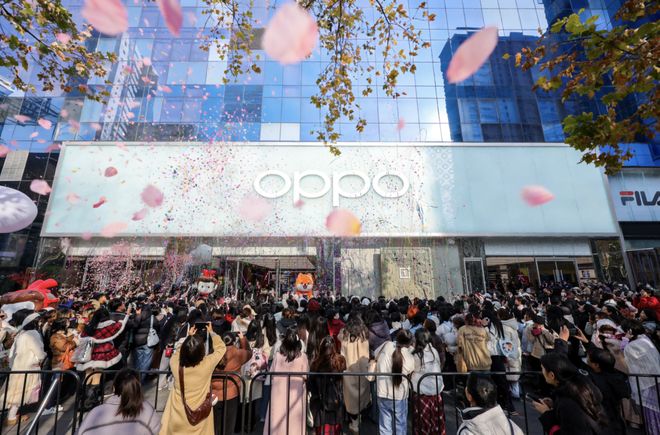
Core Viewpoint - OPPO has opened its first flagship store in Xi'an, positioning it as a cultural landmark that merges traditional Qin and Tang heritage with modern design, aimed at attracting young consumers and fostering cultural exchange [1][2][12] Group 1: Store Concept and Design - The Xi'an flagship store is designed as a "city park for young people," integrating historical elements from the ancient capital of Chang'an into its modern aesthetic [1][2] - The store features a blend of traditional craftsmanship and contemporary design, utilizing materials inspired by ancient bricks and incorporating modern lighting techniques [2][5] - Water imagery is introduced in the interior design to evoke the historical landscape of Chang'an, creating a dialogue between the past and present [5] Group 2: Cultural and Social Engagement - The store aims to be a cultural hub, offering a space for social interaction and cultural experiences, including the integration of popular two-dimensional culture [5][8] - OPPO collaborates with popular IPs from gaming and anime, such as "Light and Night" and "Haikyuu!!", to create engaging experiences that resonate with young consumers [8][12] - The flagship store will host various events and activities, including image creation workshops and creator sharing sessions, to encourage young creators to use the space for artistic expression [8][10] Group 3: Technological Innovation - OPPO leverages cutting-edge technology to enhance user experience, featuring products like the Find X9 series and AI-driven functionalities that allow for interactive cultural experiences [10][12] - The store serves as a platform for showcasing how technology can enrich traditional culture, with diplomats expressing interest in the innovative applications of OPPO's products [10][12] - OPPO's flagship store represents a new retail model that combines cultural experience, social interaction, and technological engagement, appealing to a younger demographic [12]

2025年中国手机市场数据出炉,OPPO安卓阵营增长第一
Xin Lang Cai Jing· 2025-12-30 04:37
Group 1 - The core viewpoint of the articles indicates that despite an overall decline in the Chinese smartphone market in 2025, brands like Apple, OPPO, and Xiaomi are experiencing growth, with OPPO leading the Android segment with a growth rate of 106% [1] Group 2 - IDC forecasts that the ongoing increase in cost structures will significantly pressure global smartphone manufacturers, with a consensus in the industry that the overall price range of new flagship models is rising [3] - The high-end market shows relatively low price sensitivity, as consumers demonstrate strong purchasing intent when products feature significant technological breakthroughs and innovative experiences [3] - OPPO's product lineup this year has received positive market feedback, with the Reno14 model ranking first in sales across all price segments during the summer, and the Find X9 series experiencing notable sales growth in international markets like Spain and Mexico [3] - The Find X9 Pro was recognized as the best imaging smartphone of the year by MKBHD, a prominent tech reviewer [3] - OPPO is the only major brand in China to achieve growth in the third quarter, with nearly 50% of its users being repeat customers, indicating strong brand loyalty and user retention [3]

苹果放下身段、华米攻入腹地,高端手机战场为何更焦灼了?
Xin Lang Cai Jing· 2025-12-08 01:32
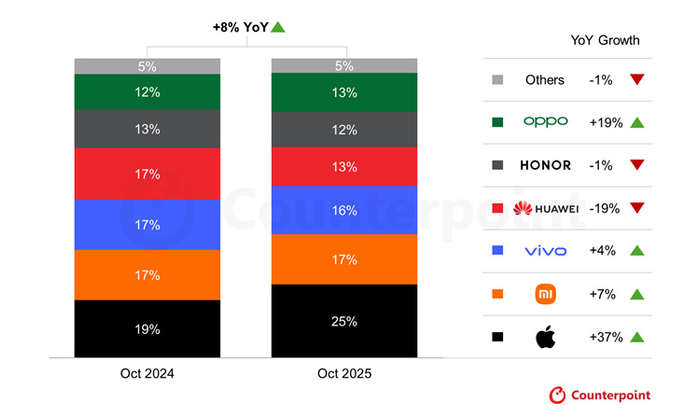
Core Insights - The introduction of the "Doubao AI Assistant" by Nubia aims to revolutionize mobile interaction and system permissions, positioning itself as a potential supplier of smart driving systems for smartphones [2][39] - The competition in the high-end smartphone market is expected to intensify in 2024, with Apple accelerating its integration into China's social and content e-commerce ecosystem [2][24] Group 1: Market Dynamics - Domestic smartphone brands are actively positioning themselves in the high-end market, with a notable shift towards premium models priced above 6000 yuan, which is the only segment showing growth [7][42] - According to Counterpoint Research, the market share of high-end smartphones priced at $600 and above has increased from 11% in 2018 to 28% in 2024, driven primarily by Huawei's resurgence [8][43] - Huawei's market share in the high-end segment rose from 20% to 29% within a year, making it the fastest-growing domestic smartphone manufacturer [8][43] Group 2: Product Innovations - The Huawei Mate 80 series has successfully ended Apple's dominance in the high-end market, featuring significant technological advancements and achieving strong sales shortly after launch [12][47] - Xiaomi's 17 series has also gained traction, with a notable sales figure of 2.34 million units, and is positioned to compete directly with Apple's iPhone 17 [6][41][49] - OPPO and Vivo have introduced competitive models, such as the Find X9 series and X200 series, which have shown strong sales performance and contributed to the overall growth in the high-end market [52][54] Group 3: Competitive Landscape - Apple remains a significant competitor in the high-end smartphone market, with its iPhone 17 series experiencing a resurgence in sales, capturing 25% of the market share by October [20][59] - The introduction of the iPhone 17 series has prompted domestic brands to adjust their product strategies in response to Apple's aggressive market tactics [55][60] - The competition is expected to escalate further with the anticipated release of the iPhone 18 series, which aims for a production target of 95 million units, reflecting Apple's confidence in maintaining its market position [25][60] Group 4: Challenges and Future Outlook - The reduction in government subsidies and rising prices have negatively impacted the entry-level high-end market, leading to a 9% decline in sales in that segment [27][65] - The challenges faced by the Doubao AI phone highlight the broader difficulties in the high-end smartphone market, particularly regarding the integration of AI capabilities within existing app ecosystems [30][32][67] - The future of high-end smartphone competition will hinge on the ability of brands to navigate ecological barriers and establish a competitive edge through technological innovation and user experience [68][69]


10月国内手机市场:华为销量下跌19%,苹果销量大涨37%
Xin Lang Cai Jing· 2025-11-19 21:35
Core Insights - Apple's iPhone achieved a 37% sales growth in October, contributing to an overall 8% increase in the domestic smartphone market [1][3] - Huawei's performance was disappointing, with a 19% year-on-year decline in sales [1][5] Market Performance - Apple's total sales surpassed the peak levels of October 2021, capturing a market share of 25%, meaning one in every four smartphones sold in China was an iPhone [3] - Xiaomi experienced a 7% sales growth, holding a 17% market share, primarily due to the early release of the Xiaomi 17 series [5] - OPPO's sales grew by 19%, driven by the success of its flagship Find X9 series and the youth-oriented Reno14 series [5] Huawei's Challenges - Huawei's significant sales drop can be attributed to the lack of new product releases, leaving its offerings in a vacuum [7] - The transition to the HarmonyOS ecosystem is facing challenges, with potential consumers remaining cautious [7] - Despite the current downturn, Huawei is expected to rebound strongly in December following the release of the Mate 80 series [7]
中国成唯一下滑市场!苹果再失守,谁蚕食了份额?
Xin Lang Ke Ji· 2025-11-03 11:17
Core Insights - Apple's revenue in Greater China declined by 3.6% year-on-year in Q4 FY2025, making it the only market with a revenue drop globally [1][2][4] - CEO Tim Cook attributed the decline primarily to supply constraints affecting iPhone sales, which he noted were below actual demand [4][11] - Experts suggest that the revenue drop is due to both internal factors, such as limited product innovation and delayed product launches, and external pressures from local competitors like Huawei [5][6][11] Financial Performance - For Q4 FY2025, Apple's total net revenue was $102.47 billion, up 8% from $94.93 billion year-on-year, with net profit increasing by 86% to $27.47 billion [1][2] - Earnings per share rose to $1.85, exceeding Wall Street expectations and contributing to a post-earnings stock price increase of over 3% [1][2] Market Dynamics - The decline in Greater China revenue has been ongoing since Q3 FY2023, with the highest quarterly drop reaching 13% [2] - The competitive landscape in China's smartphone market has intensified, with local brands rapidly innovating in areas like foldable screens and fast charging, impacting Apple's market share [6][11] Product Challenges - The delayed launch of the iPhone Air, which only supports eSIM and faced regulatory hurdles, negatively impacted sales in Q4 FY2025 [7][10] - User feedback on the iPhone Air has been mixed, with concerns about its build quality and performance, leading to lower-than-expected demand [10] Competitive Landscape - Huawei's resurgence in the high-end market poses a significant threat to Apple's position, as it rebuilds brand loyalty and technological capabilities [11][12] - Other local brands like Xiaomi, OPPO, and vivo are also aggressively targeting Apple's high-end user base, emphasizing compatibility with Apple's ecosystem [12][14] Future Outlook - Despite current challenges, Apple maintains a strong brand influence and loyal customer base, with potential for recovery if it accelerates innovation and adapts pricing strategies [11][12] - The competitive dynamics in the high-end smartphone market are shifting, requiring Apple to respond proactively to maintain its market position [12][14]
中国成唯一下滑市场 苹果再失守 谁蚕食了份额
Xin Lang Ke Ji· 2025-11-03 10:33
Core Viewpoint - Apple's revenue in Greater China has declined again after a brief improvement, marking it as the only market with a revenue drop globally in the fourth quarter of fiscal year 2025 [1][2][10] Financial Performance - In Q4 FY2025, Apple's total net revenue was $102.47 billion, up 8% from $94.93 billion year-on-year; net profit was $27.47 billion, an increase of 86% from $14.74 billion; diluted earnings per share rose to $1.85 from $0.97 [2] - Revenue in Greater China was $14.49 billion, down 3.6% from $15.03 billion year-on-year, contrasting with growth in other regions [2][10] Reasons for Revenue Decline - CEO Tim Cook attributed the decline in Greater China to supply constraints affecting iPhone sales, specifically that the estimated production of the iPhone 16 series was slightly below actual demand [4][10] - Experts suggest that the decline is due to both internal and external pressures, including limited upgrades in iPhone models and strong competition from local brands like Huawei [6][7][10] Competitive Landscape - The Chinese smartphone market is becoming increasingly competitive, with local brands rapidly innovating in areas like foldable screens and fast charging, providing consumers with more choices [6][10][11] - Huawei's return has significantly impacted Apple's market share in the high-end segment, as it rebuilds its brand loyalty and technological confidence [10][13] Product Launch Challenges - The delayed launch of the iPhone Air, which only supports eSIM and faced compatibility issues with local carriers, directly affected sales in Q4 [7][9] - User feedback on the iPhone Air has been mixed, with concerns about its features and durability, leading to lower-than-expected demand [9] Future Outlook - Despite current challenges, Apple maintains a strong brand influence and loyal customer base, with potential for recovery if it accelerates innovation and optimizes pricing strategies [10][13] - The competitive landscape is shifting, and Apple must adapt to maintain its market position in China [10][13]
中国成唯一下滑市场! 苹果再失守,谁蚕食了份额? | BUG
Xin Lang Ke Ji· 2025-11-03 00:36
Core Viewpoint - Apple's revenue in Greater China has declined by 3.6% year-on-year in Q4 of FY2025, making it the only market with a revenue drop globally, attributed to supply constraints affecting iPhone sales [2][4][6] Financial Performance - Apple's total net revenue for Q4 FY2025 was $102.466 billion, up 8% from $94.930 billion year-on-year; net profit increased by 86% to $27.466 billion from $14.736 billion; diluted earnings per share rose to $1.85 from $0.97 [3][4] Regional Performance - Greater China revenue for Q4 FY2025 was $14.493 billion, down from $15.033 billion year-on-year; other regions like the Americas, Europe, Japan, and Asia-Pacific saw revenue growth [4][6] Supply Chain and Product Issues - CEO Tim Cook indicated that supply constraints led to a decrease in iPhone sales, with actual demand for the iPhone 16 series exceeding Apple's production estimates [6][11] - The delayed launch of the iPhone Air, which only supports eSIM, has also negatively impacted sales in the region [8][10] Competitive Landscape - The decline in revenue is attributed to both internal and external pressures, including limited product innovation and strong competition from local brands like Huawei, which is regaining market share in the high-end segment [7][12] - Local brands are rapidly advancing in areas like foldable screens and fast charging, providing consumers with more choices [8][12] Market Dynamics - The competitive landscape in China's high-end smartphone market is shifting, with local brands like Xiaomi, OPPO, and Vivo launching new models that directly target Apple's customer base [13][15] - Huawei's return is particularly significant, as it is rebuilding its high-end market position and influencing consumer perceptions of premium smartphones [12][15] Future Outlook - Despite current challenges, Apple maintains a strong brand influence and loyal customer base; however, it must accelerate innovation, optimize pricing strategies, and enhance localization to sustain its market position [12][15]

手机厂商密集推出旗舰新品 有望带来新一轮换机潮
Zhong Zheng Wang· 2025-10-22 05:53
Core Insights - The recent launch of flagship smartphones by companies like Xiaomi, OPPO, vivo, Honor, and realme is expected to enhance user experience through AI-enabled technology innovations [1] - The concentrated release of AI smartphones is anticipated to accelerate the high-end smartphone trend and stimulate a replacement cycle in the market, thereby driving upgrades in the smartphone supply chain [1][4] Company Developments - Realme launched the GT8 series with a starting price of 2899 yuan, achieving over 300 million global users in seven years [2] - iQOO introduced the iQOO 15 series, featuring a 2K Samsung screen and Snapdragon 8 chip, starting at 4199 yuan, with a significant AI experience upgrade [2] - OPPO's Find X9 series, priced from 4499 yuan, marks the entry of ColorOS into the AI OS era, promising enhanced user experiences [2] - Honor's Magic8 series, starting at 4499 yuan, features the MagicOS 10, which enables over 3000 automated scenarios through its AI capabilities [2] - Vivo's X300 series, priced from 4399 yuan, emphasizes the integration of AI and operating systems to create personalized user experiences [3] Market Trends - The release of flagship smartphones equipped with Qualcomm and MediaTek chips is expected to accelerate the high-end smartphone trend and replacement cycles [4] - The high-end smartphone market in China is projected to continue its upward trend, enhancing its global influence [4] - Starting in 2025, the penetration of AI smartphones is expected to drive a new wave of replacement cycles, influenced by Apple's innovation cycle [4] - Xiaomi reported that its 17 series has surpassed 1 million units sold, indicating a faster sales pace compared to previous models [4] - iQOO's 15 series achieved sales of 142,000 units within four hours of its launch, marking an 87% increase compared to the previous generation [4] - The global AI smartphone market share is projected to rise from 16% in 2024 to 54% by 2028, driven by advancements in AI technology [5]
突破物联边界 eSIM技术迈入商用新阶段
Zhong Guo Zheng Quan Bao· 2025-10-19 22:21
Core Insights - Apple CEO Tim Cook announced the official launch of the iPhone Air in China on October 22, following the approval of eSIM services by major telecom operators in China [1][2] - The introduction of eSIM technology marks a significant shift in the mobile communication landscape, enabling a new phase of commercial use for smartphones in China [1][3] eSIM Technology and Market Trends - eSIM is predicted to be a major trend, with GSMA forecasting that global eSIM smartphone connections will reach 1 billion by 2025 and 6.9 billion by 2030, accounting for 76% of total smartphone connections [2][3] - The iPhone Air, being eSIM-only, is Apple's thinnest model at 5.6 mm and 165 grams, allowing for enhanced design possibilities and improved battery life [2][3] User Experience and Convenience - eSIM technology simplifies the process of changing phone numbers, particularly benefiting travelers who can easily switch to local numbers without needing physical SIM cards [3][4] - Over 400 global operators are expected to provide eSIM services by July 2025, with a 29% adoption rate among 5G users [3][4] Industry Implications and Innovations - The shift to eSIM is anticipated to drive significant investment across the entire supply chain, including wearables, IoT devices, tablets, and laptops, as the Chinese market sees annual smartphone sales of 300 million units [4][5] - eSIM's remote number-switching capability poses challenges for telecom operators, necessitating enhancements in marketing strategies and customer service to retain user loyalty [6][7] Future Applications and Developments - eSIM technology is expected to expand into various applications, including pet devices and robotics, further enhancing connectivity in the IoT landscape [5][6] - Telecom operators are actively participating in the development of eSIM standards and technology, ensuring compatibility and security for users [7]



突破物联边界eSIM技术迈入商用新阶段
Zhong Guo Zheng Quan Bao· 2025-10-19 20:13
Core Insights - Apple CEO Tim Cook announced the official launch of the iPhone Air in China on October 22, following the approval of eSIM services by major telecom operators in China [1][2] - eSIM technology is seen as a key infrastructure for transforming the communication industry, enhancing user experience, and driving digital economic growth in China [1][3] eSIM Technology Adoption - eSIM is predicted to be a significant trend, with GSMA forecasting that global eSIM smartphone connections will reach 1 billion by 2025 and 6.9 billion by 2030, accounting for 76% of total smartphone connections [2] - The iPhone Air, being the thinnest iPhone at 5.6 mm and weighing 165 grams, benefits from the removal of the physical SIM card, allowing for a larger battery and increased battery life by approximately 2 hours [2] User Experience and Convenience - eSIM simplifies the process of writing user identities, making it easier for travelers to manage communication needs abroad without needing physical SIM cards [3] - Over 400 global operators are expected to provide eSIM services by July 2025, with a 29% adoption rate among 5G users [3] Industry Impact and Future Applications - The introduction of eSIM is anticipated to drive significant investment across the entire industry chain, including wearables, IoT devices, tablets, and laptops, as the Chinese market sees annual mobile phone sales of 300 million units [4] - eSIM is expected to play a crucial role in the IoT sector, with GSMA predicting that over 50% of IoT applications will utilize eSIM by 2030 [4] Challenges for Telecom Operators - The remote number-switching capability of eSIM may increase user autonomy in changing service providers, posing challenges for telecom operators in terms of revenue stability and necessitating enhancements in marketing strategies and service offerings [4][6] - Telecom companies are focusing on optimizing eSIM services to meet diverse user needs and improve overall user experience [5][6]