
GMC Sierra

Search documents
Why Is General Motors Expanding Truck Production in Michigan?
ZACKS· 2026-03-31 14:50
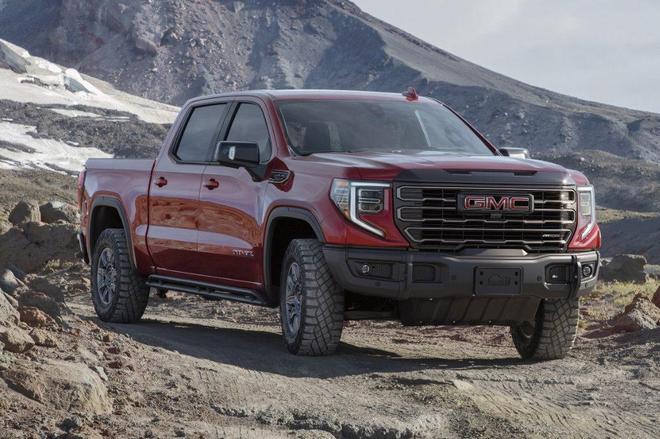
Group 1 - General Motors Company (GM) is increasing production of heavy-duty trucks at its Michigan facility to meet strong demand for gasoline-powered pickups despite high fuel prices [1][3][8] - Starting in June, the Flint Assembly plant will transition to a six-day production schedule, maintaining its current workforce of approximately 4,200 hourly staff [2][8] - In 2025, GM sold around 320,000 heavy-duty Silverado and Sierra trucks in the U.S., with vehicle prices near $50,000, and the company has not seen significant changes in sales due to rising gas prices [3][4][8] Group 2 - GM is expanding U.S.-based production to mitigate potential tariff impacts, with the Flint facility being a key site for truck manufacturing since 1947 [4][8] - The company produces various trims of heavy-duty trucks, including the GMC Sierra Denali and Chevrolet Silverado ZR2, at the Flint plant [4]



General Motors extends idle period at Detroit EV plant
Yahoo Finance· 2026-03-31 11:32
Group 1 - General Motors is extending the idle period at its Detroit electric vehicle plant, Factory ZERO, until April 13, following a stoppage that began on March 16, which will result in temporary layoffs for about 1,300 workers [1][2] - Factory ZERO has experienced uneven production over the past year due to softened demand for battery-electric vehicles, leading to a 50% output cut in January [2] - The company has reported $7.6 billion in writedowns on its EV programs and has scaled back its EV plans following regulatory changes under former President Donald Trump [2] Group 2 - While Factory ZERO remains idled, General Motors plans to increase production of heavy-duty trucks at its Flint Assembly plant in Michigan starting in June, with strong demand for models like the Chevrolet Silverado and GMC Sierra [3] - General Motors has begun supervised public-road testing of its next-generation autonomous driving technology in California and Michigan, with over 200 development vehicles operating in live traffic [4][5] - The data-collection vehicles have driven more than one million miles across 34 US states, supporting the next-generation system now entering supervised trials [5]
GM makes drastic decision pickup lovers will enjoy
Yahoo Finance· 2026-03-30 23:00
Core Insights - The truck market in the U.S. showed resilience in 2025, with consumers continuing to purchase pickups despite challenges such as tariffs and supply chain disruptions [1] - General Motors (GM) is responding to strong demand by increasing heavy-duty truck production at its Flint Assembly plant [9] Company Performance - GM sold over 917,000 full-size trucks in 2025, with the Chevrolet Silverado contributing more than 569,000 units and the GMC Sierra adding 348,000 units [6] - Ford's F-Series lineup, including the F-150, reported sales exceeding 828,000 units, marking an 8% year-over-year increase despite supply challenges [6] - Toyota's Tacoma saw a significant sales increase of over 43%, reaching 274,638 units, indicating a growing interest in pickup trucks even from non-traditional manufacturers [7] Market Dynamics - The fire at the Novelis plant in Oswego, New York, which supplies aluminum for the Ford F-150, resulted in an estimated EBIT loss of $1.5 billion to $2 billion for Ford in Q4 [4] - Ford anticipates up to $2 billion in temporary costs due to aluminum tariffs and premium freight expenses as it works to maintain inventory levels [5] - GM's market share stands at 17.3% with 2.83 million vehicles sold, while Toyota and Ford follow with 15.5% and 13.4% market shares, respectively [8]
What drove General Motors stock higher on Monday?
Invezz· 2026-03-23 20:23
Core Viewpoint - General Motors (GM) stock experienced a positive response from investors due to strategic pivots, bullish analyst calls, and renewed confidence in its profit-first roadmap, leading to a strong performance on March 23, 2026 [1][6]. Strategic Developments - At the Bank of America Global Automotive Summit, GM management presented a high-margin transformation strategy that impressed Wall Street [1]. - CFO Paul Jacobson announced that GM expects its deferred revenue backlog from software and digital services, particularly the OnStar ecosystem, to reach $7.5 billion by the end of 2026, indicating a shift towards a recurring revenue model [3]. - GM plans to "unbundle" its Super Cruise autonomous driving technology, offering it as a standalone option for 2027 model year trucks, which is expected to accelerate adoption and digital revenue [4]. Financial Performance and Market Position - GM shares are down approximately 13% year-to-date, despite the recent positive developments [2][6]. - The company benefits from a $6.0 billion share buyback program and a 20% dividend increase authorized earlier this year, reflecting management's confidence in cash flow [5]. - High-margin GMC Sierra and Chevrolet Silverado models generate about $17,500 per unit, nearly double GM's corporate average, contributing to the company's strong market position [7]. Analyst Sentiment and Market Outlook - Bank of America issued a bullish research note highlighting GM's exceptional truck margin and undervalued competitive position, fueling optimism [2]. - The consensus rating on GM is "moderate buy," with a mean price objective of about $93, indicating potential upside of more than 20% [8]. - Analysts believe GM's margin-accretive strategy in trucks, SUVs, and software will continue to outperform through 2026, positioning it favorably compared to competitors like Tesla [9]. Investment Considerations - GM's operational discipline, expanding digital revenue, and resilient demand in profitable segments create a favorable entry point for investors [10].

Volvo Scraps EX30 U.S. Sales Amid Broader EV Strategy Reset
ZACKS· 2026-03-19 18:32
Core Insights - Volvo is discontinuing the EX30 subcompact electric SUV in the United States after the 2026 model year, while continuing sales in global markets due to tariffs and a slowing U.S. EV market [1][2][3] Group 1: Volvo's EX30 Discontinuation - The EX30 was introduced in the U.S. for the 2025 model year and will have its final model year in 2026, remaining available in markets like Canada and Mexico [2] - Production for the U.S. market shifted from China to Belgium to avoid tariffs, but rising import tariffs and the removal of federal EV tax credits led to increased cost pressures and declining sales [3][4] - In 2025, Volvo sold approximately 5,400 EX30 units, significantly lower than competitors like Hyundai's Ioniq 5 and Tesla's Model 3 [4] Group 2: Industry Trends - The decision to discontinue the EX30 aligns with broader industry trends, as automakers reassess their electric vehicle programs amid changing consumer demand and regulatory environments [5][10] - Other automakers, such as Honda and General Motors, are also scaling back their EV plans due to declining demand and shifting priorities towards gasoline and hybrid models [8][9][10] - Honda announced the cancellation of three planned battery-electric models for the U.S. market, while GM is shifting its Michigan plant from EV production to internal combustion engine models [8][9]

GM and Ford: Bank of America Names 2 Top Auto Stocks to Buy for 2026
Yahoo Finance· 2026-03-06 11:14
Group 1: General Motors (GM) - GM's total auto sales reached 2.85 million vehicles in the previous year, marking a 6% increase year-over-year, with the Chevy Silverado and GMC Sierra leading the market for the sixth consecutive year with combined sales of 940,000 units [1] - The company has a market capitalization of $71 billion and held over 17% market share in the US automotive industry as of 2025 [2] - Bank of America identifies GM as a top auto stock for 2026, benefiting from a favorable regulatory environment that allows a focus on high-margin trucks and SUVs while reducing electric vehicle production [3][4] - Recent regulatory changes, including the rollback of greenhouse gas standards and fuel economy measures, are expected to enhance GM's profitability by shifting focus to more profitable vehicle segments [5][9] - GM's revenue for Q4 2025 was $45.3 billion, down 5% year-over-year, but non-GAAP EPS increased by 30% to $2.51, exceeding forecasts [8] - Bank of America analyst Alexander Perry rates GM as a Buy with a price target of $105, indicating a potential upside of 34% [9] Group 2: Ford Motor Company - Ford's sales report for February 2026 showed a 5.5% year-over-year decline, primarily due to a nearly 38% drop in electric vehicle sales, while combustion engine vehicle sales remained relatively stable [12][13] - The company reported $45.9 billion in revenue for Q4 2025, also down 5% year-over-year, with non-GAAP earnings of 13 cents per share missing expectations [14] - Ford is well-positioned to benefit from the regulatory changes, focusing on high-margin trucks and SUVs, with expectations of improved EBIT margins in the coming years [15] - Bank of America rates Ford as a Buy with a price target of $17, suggesting a 33% upside potential [15]

彭博:中国汽车即将进入美国市场,不管你喜欢与否
美股IPO· 2026-02-11 04:01
Core Viewpoint - Chinese automotive manufacturers are increasingly looking to enter the U.S. market despite significant barriers such as high tariffs and software restrictions, with indications that this entry may soon become a reality [3][4][5]. Group 1: Market Dynamics - The U.S. remains one of the highest revenue automotive markets globally, making it a prime target for Chinese automakers seeking profitable opportunities [3]. - Recent comments from President Trump suggest a potential openness to Chinese manufacturers establishing factories in the U.S., indicating a shift in the political landscape [4]. - The National Automobile Dealers Association's mixed stance on accepting Chinese brands reflects a growing ambivalence among U.S. dealers towards the potential of Chinese vehicles [5]. Group 2: Competitive Landscape - Over the past five years, Chinese automotive exports have surged nearly eightfold, surpassing Japan as a leading exporter [5]. - Industry experts believe that the entry of Chinese brands into the U.S. market could pose a significant threat to Japanese and Korean automakers, particularly in the entry-level vehicle segment [6][9]. - The potential for collaboration between U.S. automakers and Chinese firms in electric and hybrid systems could reshape competitive dynamics in the market [5][9]. Group 3: Pricing and Market Segmentation - The U.S. automotive market is increasingly becoming exclusive to high-income consumers, creating a demand for affordable yet high-quality vehicles, which Chinese manufacturers could fulfill [6]. - Analysis of the top ten U.S. automakers indicates that many affordable models are dominated by Asian manufacturers, suggesting a vulnerability for smaller Japanese and Korean brands if Chinese companies target this segment [7]. - The entry of Chinese automakers may initially focus on lower-priced models, which could alleviate competitive pressure on U.S. manufacturers in higher-end segments [9]. Group 4: Strategic Considerations - The historical approach of Japanese automakers entering the U.S. market by establishing local production facilities may serve as a model for Chinese companies [6][9]. - The competitive advantages held by established brands like Toyota, built over decades, may provide a buffer against the influx of Chinese vehicles, despite the latter's lower breakeven costs [8]. - The evolving landscape suggests that U.S. automakers must adapt to the increasing presence of Chinese brands, potentially leading to strategic partnerships to enhance their capabilities in electric vehicles [9].

Why Musk's Decision to End Model S/X Production Makes Sense for Tesla
ZACKS· 2026-02-02 13:20
Core Insights - Tesla is phasing out the Model S and Model X, which have become less relevant in the current competitive EV market, to focus on more promising growth areas [1][3][5] Group 1: Model S and Model X Performance - Tesla has stopped reporting Model S and X sales separately since Q4 2023, grouping them with the Cybertruck under "other models," which accounted for only 50,850 vehicles in 2025, representing just over 3% of total sales of 1.64 million units [2][8] - Sales of "other models" fell nearly 40% year-over-year in 2025, while Model 3 and Model Y deliveries remained more stable with a decline of about 7% [3][8] - The Model S and Model X now generate less than 5% of Tesla's total revenues, making continued investment in these models unjustifiable [3][8] Group 2: Strategic Shift and Future Plans - Tesla plans to retool its Fremont plant to support the production of Optimus, its humanoid robot, potentially producing up to one million units per year [4][8] - The company is reallocating resources from low-return luxury models to areas with greater long-term growth potential, emphasizing a shift towards robotics, automation, and AI-driven platforms [5][6] - Tesla's capital expenditure for the year is projected to exceed $20 billion, focusing on humanoid robots, autonomous vehicles, and AI chip manufacturing [6][8] Group 3: Comparison with Competitors - Unlike General Motors and Ford, which are adjusting their production strategies to stabilize earnings by focusing on profitable gas-powered vehicles and hybrids, Tesla is exiting low-impact models entirely [10][8] - This strategic exit allows Tesla to free up capital and factory capacity to concentrate on autonomy, robotics, and AI-driven growth [10][8]

特朗普助攻,通用汽车燃油车业务更赚钱了
Guan Cha Zhe Wang· 2026-01-28 09:04
Core Viewpoint - General Motors (GM) reported a total revenue of $185 billion and a net profit of $2.7 billion for the year 2025, indicating a strong performance despite challenges in the electric vehicle (EV) sector [1][4]. Group 1: Financial Performance - GM's total revenue for 2025 was $185 billion (approximately ¥1.28 trillion), with a net profit of $2.7 billion (approximately ¥187.5 billion) and adjusted EBIT of $12.7 billion (approximately ¥882 billion) [1]. - The company expects net profit for 2026 to be between $10.3 billion and $11.7 billion, with adjusted EBIT projected between $13 billion and $15 billion [8]. Group 2: Market Performance - In the U.S. market, GM maintained its position as the top seller in 2025, with all four major brands experiencing growth in both sales and market share [2]. - The full-size pickup trucks, led by Chevrolet Silverado and GMC Sierra, continued to dominate the market for the sixth consecutive year, while full-size SUVs ranked first for the 51st year [2]. Group 3: Regulatory Environment and Cost Management - The relaxation of regulations on fuel-efficient vehicles under the Trump administration has improved the outlook for GM's profitable fuel vehicle business, saving up to $750 million in costs previously incurred from purchasing credits from EV companies [2][4]. - GM's CFO indicated that the company faces additional costs of up to $1.5 billion due to outsourcing, supply chain transformation, and software investments [4]. Group 4: Electric Vehicle Strategy - GM's EV sales in 2025 ranked second only to Tesla, but the company reported a net loss of $3.3 billion in Q4 due to declining demand and policy changes affecting EV incentives [4]. - Despite challenges, GM remains committed to its EV strategy and aims to reduce costs in the EV sector by $1 billion to $1.5 billion through restructuring [4]. Group 5: China Market Expansion - GM achieved profitability in China for five consecutive quarters, with 2025 sales and market share showing year-on-year growth, particularly in the new energy vehicle segment, which accounted for over 1 million units sold [6]. - The company is enhancing its product lineup in China with the Buick Electra family, including the upcoming Electra E7 SUV, and plans to offer new energy options for all new products launched in China by 2026 [6].
GM rewards shareholders following fourth-quarter results
Yahoo Finance· 2026-01-27 18:47
Core Insights - General Motors (GM) achieved a total of 2.85 million vehicles sold in 2025, marking a 5.5% increase year-over-year, primarily driven by strong sales of pickup trucks [1][3] - The company reported a 17% market share in the U.S., the highest since 2015, and noted four consecutive years of year-over-year growth [3] Sales Performance - The Chevy Silverado lineup sold 588,709 units, reflecting a 5.1% increase, while the GMC Sierra lineup sold 356,000 units, showing a nearly 10% increase [3] - GM's total vehicle sales for 2025 were 2.85 million, with a market share of 17% [7] Financial Impact - GM incurred $7.2 billion in special charges in the fourth quarter due to a strategic shift away from electric vehicles, which was attributed to a realignment of EV capacity and investments [4][6] - The company initially projected a net income between $7.7 billion and $8.3 billion for the year but reported a full-year net income of $2.7 billion after accounting for the EV-related charges [4] Shareholder Actions - GM announced a $6 billion share buyback program for 2026 and increased its quarterly dividend by 3 cents to 18 cents per share, payable on March 19 [5][8] - Despite the financial setbacks from the EV transition, GM maintains a positive outlook and views the charges as a one-time event [6]