GeForce RTX

Search documents
【招商电子】英伟达(NVDA.O)FY26Q4跟踪报告:本季营收与指引均高增,战略备货以满足未来市场需求
招商电子· 2026-02-27 04:23
Core Viewpoint - Nvidia's FY26Q4 earnings report shows record revenue of $68.1 billion, a 73% year-over-year increase, driven by strong demand in data center and AI sectors, with strategic inventory buildup to meet future market needs [2][12][25]. Group 1: Financial Performance - FY26Q4 revenue reached $68.1 billion, exceeding expectations of $65 billion, with operating profit and free cash flow also at historical highs [2][12]. - Non-GAAP gross margin was 75.2%, up 1.7 percentage points year-over-year, supported by increased production capacity of the Blackwell architecture [2][25]. - Free cash flow for FY26 was $97 billion, with $41 billion returned to shareholders through buybacks and dividends [26]. Group 2: Business Segments - Data Center: Revenue of $62.3 billion, up 75% year-over-year, driven by strong demand for Blackwell architecture and network services, which saw a revenue increase of over 350% [3][15][16]. - Gaming: Revenue of $3.73 billion, a 47% increase year-over-year, but down 13% quarter-over-quarter due to supply chain constraints [3][21]. - Professional Visualization: Revenue reached $1.32 billion, a 159% increase year-over-year, driven by new product launches [3][22]. - Automotive: Revenue of $604 million, up 6% year-over-year, primarily due to strong demand for autonomous driving solutions [3][23]. Group 3: Future Outlook - FY27Q1 revenue guidance is set at $78 billion, a 77% year-over-year increase, primarily driven by data center business growth [4][11]. - Data center revenue is expected to grow sequentially throughout 2026, with significant contributions from major cloud service providers [4][18]. - The company anticipates maintaining a gross margin around 75% for the fiscal year 2027, with ongoing investments in technology and talent [4][27]. Group 4: Strategic Initiatives - Nvidia is focusing on expanding its ecosystem through partnerships with major AI companies like OpenAI and Anthropic, enhancing its position in the AI infrastructure market [28][41]. - The introduction of the Rubin platform is expected to reduce GPU requirements for training mixed expert models by 75% and lower inference costs significantly [20][39]. - The company is actively investing in AI infrastructure, with a projected capital expenditure increase among top cloud service providers, which is expected to exceed $700 billion by 2026 [5][18].

英伟达(NVDA):FY26Q4 跟踪报告:本季营收与指引均高增,战略备货以满足未来市场需求
CMS· 2026-02-26 11:09
Investment Rating - The report maintains a "Buy" rating for the company, highlighting its strong performance and growth potential in the data center and AI sectors [10]. Core Insights - The company reported a record revenue of $68.1 billion for FY26Q4, representing a 73% year-over-year increase and a 20% quarter-over-quarter increase, driven by strategic inventory buildup to meet future market demand [1][12]. - The data center segment achieved a new high with revenues of $62.3 billion, up 75% year-over-year and 22% quarter-over-quarter, primarily due to strong demand for the Blackwell architecture [2][15]. - The company expects FY27Q1 revenue guidance to be around $78 billion, reflecting a 77% year-over-year increase, driven mainly by the data center business [3][27]. Summary by Relevant Sections Revenue Performance - FY26Q4 revenue reached $68.1 billion, exceeding expectations and marking a historical high [1]. - Data center revenue was $62.3 billion, with a year-over-year growth of 75% and a quarter-over-quarter growth of 22% [2][15]. - The gaming segment generated $3.727 billion, showing a year-over-year increase of 47% but a quarter-over-quarter decline of 13% due to supply chain constraints [2][21]. Gross Margin and Financial Metrics - Non-GAAP gross margin for FY26Q4 was 75.2%, up 1.7 percentage points year-over-year and 1.6 percentage points quarter-over-quarter [1][25]. - The company generated free cash flow of $35 billion in FY26Q4, with a total of $97 billion for the fiscal year [26]. Future Outlook - The company anticipates continued revenue growth in the data center segment throughout 2026, with quarterly increases expected [3][13]. - FY27Q1 guidance indicates a revenue midpoint of $78 billion, with a non-GAAP gross margin forecast of 75% [3][27]. - The company has secured sufficient inventory and long-term supply agreements to meet future market demands [3][13]. Strategic Developments - The company is focusing on expanding its AI capabilities and has seen significant demand for its Blackwell architecture, which is expected to drive future growth [2][18]. - Collaborations with major clients like Meta and Anthropic are set to enhance the company's market position and revenue potential [30][31].

Nvidia(NVDA) - 2026 Q4 - Earnings Call Transcript
2026-02-25 23:02
Financial Data and Key Metrics Changes - Total revenue reached $68 billion, up 73% year-over-year, marking a record growth from the previous quarter [5][6] - Data center revenue for Q4 was $62 billion, increasing 75% year-over-year and 22% sequentially [8][19] - Full-year data center revenue totaled $194 billion, up 68% year-over-year [6] - Free cash flow for Q4 was $35 billion, with a total of $97 billion for fiscal year 2026 [19][20] - GAAP gross margin was 75%, with non-GAAP gross margin at 75.2%, reflecting an increase due to the ramp of Blackwell [18][19] Business Line Data and Key Metrics Changes - Data center business scaled nearly 13x since the emergence of ChatGPT in fiscal 2023 [6] - Networking revenue reached $11 billion, up more than 3.5x year-over-year, driven by strong demand for NVLink and Spectrum-X Ethernet [9][10] - Gaming revenue was $3.7 billion, up 47% year-over-year, supported by strong Blackwell demand [15] - Professional visualization revenue crossed $1 billion for the first time, totaling $1.3 billion, up 159% year-over-year [16] - Automotive revenue was $604 million, up 6% year-over-year, driven by demand for self-driving solutions [16] Market Data and Key Metrics Changes - Sovereign AI business more than tripled year-over-year, exceeding $30 billion, with significant contributions from Canada, France, the Netherlands, Singapore, and the UK [12] - Analyst expectations for 2026 CapEx across the top 5 cloud providers are up nearly $120 billion, approaching $700 billion [11] - The transition from classical machine learning to generative AI is driving significant capital spending from hyperscalers [10] Company Strategy and Development Direction - The company aims to deliver generational leaps in performance per watt and performance per dollar to sustain gross margins [60][61] - Focus on expanding partnerships with leading AI model makers and enhancing the ecosystem built on CUDA [33][24] - Introduction of the Rubin platform, which includes six new chips, is expected to enhance performance and reduce costs [14][15] - The company is committed to investing in technology and ecosystem development to drive long-term growth [20] Management's Comments on Operating Environment and Future Outlook - Management expressed confidence in the growth of cloud customers' cash flow, linking compute demand to revenue generation [29][30] - The company anticipates sequential revenue growth throughout calendar 2026, with strong demand for data center products [7][21] - Supply constraints are expected to impact gaming revenue in the near term, but improvements may lead to year-over-year growth later [50] Other Important Information - The company has secured inventory and capacity to meet future demand, reflecting longer demand visibility [19] - The introduction of stock-based compensation in non-GAAP results is aimed at attracting and retaining talent [20] Q&A Session Summary Question: Concerns about cloud customers' CapEx growth - Management is confident in cloud customers' cash flow growth due to the demand for compute in AI, linking compute directly to revenue generation [29][30] Question: Role of strategic investments in ecosystem growth - Management emphasized the importance of the ecosystem and investments in expanding NVIDIA's position across various AI applications [32][33] Question: Networking revenue growth and future expectations - Management noted the significant growth in networking revenue and the expectation for continued expansion driven by AI infrastructure [37][39] Question: Future roadmap for customized silicon - Management discussed the architectural decisions behind their CPUs and the focus on high data processing capabilities for AI workloads [76][78] Question: Deployment of capital and share repurchase strategy - Management highlighted the careful consideration of capital return while continuing to support ecosystem development and strategic investments [82]
Nvidia(NVDA) - 2026 Q4 - Earnings Call Transcript
2026-02-25 23:02
Financial Data and Key Metrics Changes - Total revenue reached $68 billion, up 73% year-over-year, with a record sequential growth of $11 billion in data center revenue [5][6] - Data center revenue for the full year was $194 billion, reflecting a 68% year-over-year increase [6] - Free cash flow for Q4 was $35 billion, totaling $97 billion for fiscal year 2026 [19][20] - GAAP gross margin was 75%, with non-GAAP gross margin at 75.2%, both increasing sequentially [18] Business Line Data and Key Metrics Changes - Data center revenue in Q4 was $62 billion, up 75% year-over-year and 22% sequentially, driven by Blackwell architecture [8] - Networking revenue reached $11 billion, up more than 3.5x year-over-year, with strong demand for NVLink and Spectrum-X Ethernet [9][10] - Gaming revenue was $3.7 billion, increasing 47% year-over-year, while professional visualization revenue crossed $1 billion for the first time, reaching $1.3 billion, up 159% year-over-year [15][16] - Automotive revenue was $604 million, up 6% year-over-year, driven by demand for self-driving solutions [17] Market Data and Key Metrics Changes - Sovereign AI business more than tripled year-over-year, generating over $30 billion, primarily from customers in Canada, France, the Netherlands, Singapore, and the U.K. [12] - Analyst expectations for 2026 CapEx across top five cloud providers are up nearly $120 billion, approaching $700 billion [11] Company Strategy and Development Direction - The company aims to capitalize on the transition to accelerated computing and AI integration across workloads, expecting sequential revenue growth throughout calendar 2026 [7][12] - The introduction of the Rubin platform, which includes six new chips, is expected to enhance performance and reduce costs significantly [14][15] - The company is focused on expanding its ecosystem and partnerships, particularly with leading AI model makers like OpenAI and Anthropic [23][24] Management's Comments on Operating Environment and Future Outlook - Management expressed confidence in the growth of cloud customers' cash flow, emphasizing that compute demand is directly tied to revenue generation in the AI landscape [29][30] - The company anticipates tight supply constraints in gaming for the upcoming quarters but remains optimistic about long-term growth opportunities [16][50] - Management highlighted the importance of delivering generational leaps in performance to sustain gross margins and capitalize on the growing demand for AI infrastructure [60][61] Other Important Information - The company has strategically secured inventory and capacity to meet future demand, reflecting longer demand visibility [19] - Stock-based compensation will now be included in non-GAAP results, indicating a commitment to attracting and retaining talent [20][21] Q&A Session Summary Question: Concerns about cloud customers' CapEx growth - Management is confident in cloud customers' cash flow growth, linking compute demand to revenue generation in the AI sector [29][30] Question: Role of strategic investments in ecosystem growth - Management emphasized the importance of the ecosystem and partnerships, stating that investments are aimed at expanding NVIDIA's reach across various sectors [32][33] Question: Networking revenue growth and future expectations - Management noted that networking revenue has accelerated significantly, with expectations for continued growth driven by new product launches [37][38] Question: Future roadmap for customized silicon - Management indicated that while dielet architecture is utilized, the focus remains on minimizing latency and power consumption [42][43] Question: Expectations for gaming revenue growth - Management acknowledged supply constraints but expressed hope for year-over-year growth in gaming as conditions improve [50] Question: Importance of CUDA for inference workloads - Management highlighted CUDA's critical role in optimizing inference workloads and driving revenue growth through enhanced performance [53][55] Question: Revenue diversification and non-hyperscale customer growth - Management confirmed that non-hyperscale customers are growing faster and emphasized the diversity of the customer base as a strength [68][69]
Nvidia(NVDA) - 2026 Q4 - Earnings Call Transcript
2026-02-25 23:00
Financial Data and Key Metrics Changes - Total revenue reached $68 billion, up 73% year-over-year, with a record sequential growth of $11 billion in data center revenue [4] - Data center revenue for the full year was $194 billion, reflecting a 68% year-over-year increase [4] - Free cash flow for Q4 was $35 billion, totaling $97 billion for fiscal year 2026 [17][18] Business Line Data and Key Metrics Changes - Data center revenue in Q4 was $62 billion, increasing 75% year-over-year and 22% sequentially [6] - Networking revenue generated $11 billion in Q4, up more than 3.5x year-over-year [8] - Gaming revenue was $3.7 billion, a 47% increase year-over-year, driven by strong demand for Blackwell [13] - Professional visualization revenue crossed $1 billion for the first time, reaching $1.3 billion, up 159% year-over-year [14] Market Data and Key Metrics Changes - Sovereign AI business more than tripled year-over-year, exceeding $30 billion, primarily from customers in Canada, France, the Netherlands, Singapore, and the UK [11] - The top five cloud providers' CapEx expectations have risen nearly $120 billion since the start of the year, approaching $700 billion [10] Company Strategy and Development Direction - The company aims to capitalize on the transition to accelerated computing and AI integration across workloads, expecting sequential revenue growth throughout calendar 2026 [5] - The introduction of the Rubin platform, which includes six new chips, is expected to enhance performance and reduce costs significantly [12][13] - The company is focused on expanding its ecosystem and partnerships, particularly with leading AI model makers like OpenAI and Anthropic [21][22] Management's Comments on Operating Environment and Future Outlook - Management expressed confidence in the growth of customer cash flow, emphasizing that compute demand is directly linked to revenue generation in the AI landscape [26][28] - The company anticipates tight supply constraints in gaming but remains optimistic about long-term growth opportunities [51] - Management highlighted the importance of delivering generational leaps in performance to sustain gross margins in the mid-70s% range [61][62] Other Important Information - The company has strategically secured inventory and capacity to meet future demand, reflecting longer demand visibility [17] - The transition to GPU-accelerated computing is expected to contribute significantly to long-term growth opportunities [11] Q&A Session Summary Question: Concerns about cloud customers' CapEx growth - Management is confident in customers' cash flow growth due to the increasing demand for compute driven by agentic AI [26][28] Question: Role of strategic investments in ecosystem growth - Management emphasized the importance of the ecosystem and the need to invest in it to support growth across various sectors [30][31] Question: Networking revenue growth and future expectations - Management noted that networking is a critical part of their AI infrastructure, with significant growth expected from new products [35][36] Question: Future roadmap for customized silicon - Management discussed the architectural decisions behind their CPUs and the importance of high data processing capabilities for AI workloads [79][80] Question: Deployment of capital and share repurchase strategy - Management is focused on balancing capital return with strategic investments to support ecosystem growth [84][85] Question: Key application areas driving future growth - Management reiterated that token generation and AI-driven applications will be central to future growth, supporting the $3 trillion-$4 trillion CapEx potential by 2030 [88]
CES 2026 Opens: Samsung, Nvidia and AI Giants Reveal Tech That Changes Daily Life
International Business Times· 2026-01-05 12:22
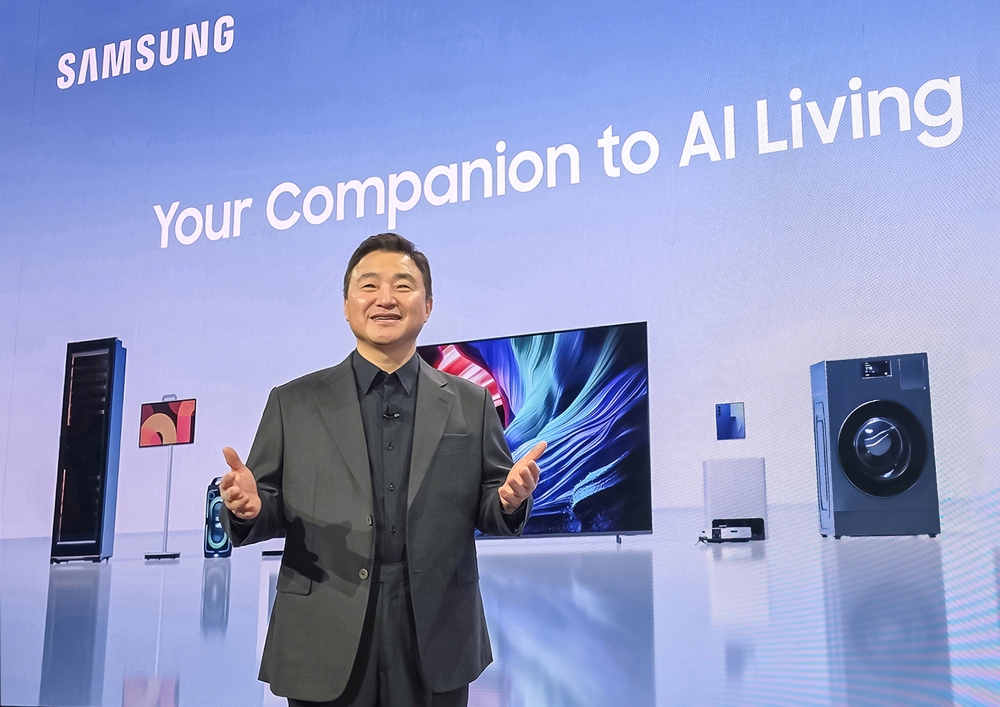
Core Insights - CES 2026, the largest technology event, officially launches on January 6, 2026, in Las Vegas, featuring over 4,000 exhibitors and more than 100,000 participants [1][2]. Group 1: Event Overview - CES 2026 is set to showcase major global tech firms like Samsung, LG, Nvidia, and others, focusing on integrating artificial intelligence (AI) into consumer technology [2][3]. - The event marks a significant shift towards AI as a foundational element in consumer technology, moving beyond being a niche [3]. Group 2: Key Company Announcements - Samsung's event on January 5, 2026, introduced its vision of 'AI as a Daily Companion,' emphasizing a connected ecosystem that enhances daily life through AI [5][6]. - Samsung unveiled the world's first 130-inch Micro RGB TV and highlighted its AI-enhanced displays and next-gen audio products, aiming for a unified user experience across devices [6][11]. - Nvidia's participation focuses on AI computing and robotics, with a keynote by CEO Jensen Huang discussing advanced AI infrastructure and generative AI [8][9]. Group 3: Innovations and Trends - CES 2026 features a range of AI innovations, including robot house helpers, interactive eyewear, and health monitoring technologies, indicating a redefined role for AI in daily routines [11]. - Other notable announcements include Pebble's new round watch, Clicks' phone, Dreame's electric supercar, and Dell's revival of the XPS laptop line, showcasing diverse technological advancements [12].

多地区加大投入 电竞是游戏行业下一块掘金点?
Zheng Quan Ri Bao Wang· 2025-08-18 14:05
Core Insights - The Chinese esports industry is experiencing significant growth, with a reported revenue of 12.761 billion yuan in the first half of the year, marking a year-on-year increase of 6.1% and a user base nearing 493 million [1][4] - Major investments in esports infrastructure are being made by local governments, such as Shenzhen's 2.5 billion yuan investment in an esports park, highlighting the commercial potential of the industry [1] - Perfect World has established the Perfect Esports Partner Alliance with major tech companies like NVIDIA and Intel to enhance the esports ecosystem in China [1][2] Investment and Infrastructure - Shenzhen and Shanghai's recent announcements of substantial investments in esports parks indicate a growing recognition of the industry's potential [1] - The establishment of the Perfect Esports Partner Alliance aims to foster collaboration and innovation within the esports sector, integrating advanced technologies and hardware [2][3] Technological Advancements - The gap in skill levels between Chinese and South Korean esports players is narrowing, with only a 0.03-second difference in average reaction times [2] - NVIDIA's low-latency technology, NVIDIA Reflex, is crucial for competitive gaming, minimizing hardware delays that can impact performance [2] - Intel's high-end gaming products are predominantly sold in China, indicating the country's leading position in the global gaming hardware market [2] Global Expansion - The Chinese esports industry is expanding its influence internationally, with significant viewership numbers for major events, including a peak of over 4.13 million viewers for a single event [4] - The 2024 Shanghai Major, hosted by Perfect World, is expected to attract nearly 90,000 tickets sold and over 23 billion live stream views, showcasing China's growing global esports presence [4] Financial Performance - Perfect World anticipates a net profit of 480 million to 520 million yuan for the first half of the year, indicating a turnaround from previous losses [5] - The company's esports business continues to show growth, contributing to stable financial performance [5]