
token经济

Search documents
发 token 当工资?工程师不只拿现金和期权,开始按 token 分身价了
AI前线· 2026-03-21 05:33
Group 1 - The core idea of the article is that tokens are becoming a new currency in Silicon Valley for attracting talent, with companies starting to allocate annual token budgets to engineers to enhance productivity [2][4][9] - Companies like Alibaba are also beginning to distribute token allowances internally, indicating a shift in how employee benefits are structured, with AI access becoming a standardized benefit [2][10] - The rising importance of tokens is linked to the increasing costs associated with AI usage, which are becoming a significant part of overall employee costs, potentially exceeding 20% of an engineer's total cost [5][6][8] Group 2 - The article discusses how the cost of AI inference is becoming a critical factor in productivity, with estimates suggesting that spending $10,000 on inference could lead to significant productivity gains [7][8] - Companies are now facing the challenge of measuring the return on investment for AI expenditures, as these costs are no longer just software subscription fees but are directly impacting cash flow [6][7] - The competition for AI resources is intensifying, with candidates increasingly inquiring about the availability of AI compute resources during job interviews, indicating a shift in how engineers perceive their work and compensation [11][12] Group 3 - The article highlights the rapid increase in token consumption, with significant spikes observed in usage metrics, leading to price increases for AI services from major providers [14][15][19] - Major companies are adjusting their pricing strategies in response to rising token consumption, with some models seeing price hikes of over 450% [15][16][19] - The narrative around tokens is being shaped by major players in the AI industry, with the potential for tokens to become a new standard of value in the AI economy [20][22][23] Group 4 - The article suggests that the future of compensation may involve tokens rather than traditional currency, with discussions around a universal basic income model based on AI compute resources [24][25][26] - Companies are beginning to formalize the use of tokens in their operational frameworks, with Alibaba establishing a dedicated unit to manage token distribution and application [25][26] - The article warns of a new form of inequality emerging in the tech industry, where access to AI resources could create significant disparities in productivity among engineers [12][13]



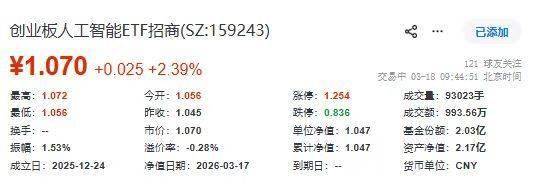
英伟达将AI送入太空!159243狂飙2.3%,东方国信涨超8%!金融应用成GTC最大看点
Sou Hu Cai Jing· 2026-03-18 02:47
Core Viewpoint - The AI sector is experiencing a significant surge, driven by three main catalysts that are reshaping the industry landscape. Group 1: Market Performance - The ChiNext AI ETF (SZ: 159243) saw a notable increase of 2.30% in early trading on March 18, with key constituent stocks like Dongfang Guoxin, Beijing Junzheng, and Tianfu Communication leading the gains [1][2]. Group 2: Catalysts for Growth - First, the demand for computing power has exceeded expectations, with revenue forecasts for Blackwell and Rubin series AI chips being raised to $1 trillion by the end of 2027, doubling the previous estimate from October [1][3]. - Second, there is a transformative shift in business models, with a consensus forming that AaaS (Agent as a Service) will replace SaaS as the mainstream model. The emergence of a layered token economy for AI services is creating new commercialization opportunities, as evidenced by a 36% surge in the Hong Kong "Token first stock" [3]. - Third, application scenarios are expanding rapidly, with Nvidia launching a space computing initiative, Google negotiating data center cooling system procurements, and Tencent preparing to launch QClaw. The recent GTC conference highlighted a significant presence of financial services professionals, indicating that AI applications in finance are becoming a new focal point [3]. Group 3: Industry Evolution - The industry is evolving from a "compute-driven" model to a comprehensive approach that integrates "compute + applications + ecosystem." The ChiNext AI ETF (SZ: 159243) is positioned as a convenient tool for investing in core AI assets, likely to benefit from this transformative era [3].

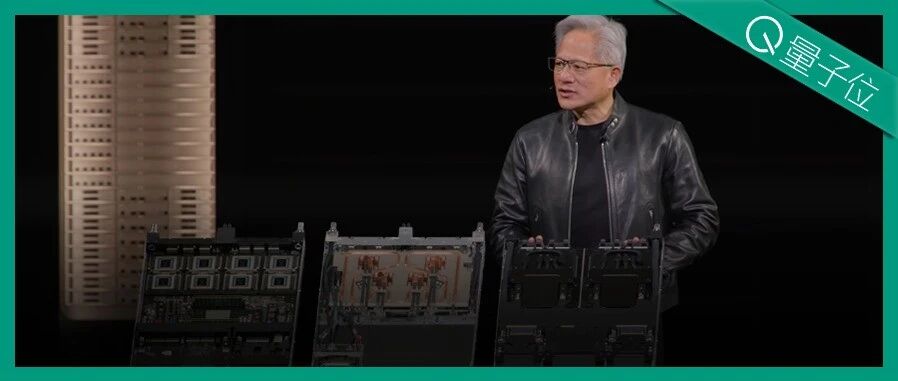
直击GTC:1万亿美元GPU、为龙虾做“CUDA”,老黄就指着你烧token了
创业邦· 2026-03-17 04:14
Core Viewpoint - NVIDIA is at a pivotal moment, with significant advancements in its chip technology and a focus on AI infrastructure, particularly through the integration of Groq's technology, which is expected to unlock a $300 billion revenue opportunity [6][7][12]. Group 1: NVIDIA's Growth Strategy - NVIDIA's CEO Jensen Huang emphasized that the company's chip business is projected to reach $1 trillion from 2025 to 2027 [12]. - The integration of Groq's technology is seen as a game-changer, addressing the "application proliferation problem" and enhancing NVIDIA's growth narrative [6][11]. - Huang highlighted the importance of a new AI infrastructure layer, moving beyond just GPU advancements to a complete system integration approach [14]. Group 2: Technical Advancements - The new Vera Rubin GPU, built on TSMC's 3nm process, features 336 billion transistors, 288GB of HBM4 memory, and a bandwidth of 22TB/s, significantly improving performance metrics compared to previous generations [17][18]. - Groq's LPU architecture is designed for low-latency token generation, complementing the high-throughput capabilities of NVIDIA's GPUs [21][22]. - The combined system of Rubin GPU and Groq LPU aims to optimize inference performance, achieving a balance between high throughput and low latency [22][31]. Group 3: Market Potential and Revenue Models - Huang projected that the demand for NVIDIA's products could reach at least $1 trillion by 2027, driven by the increasing computational needs of AI applications [40]. - The introduction of a tiered pricing model for token usage is expected to enhance revenue streams, with potential earnings from different service levels [51][56]. - The integration of Groq LPX is anticipated to create a new ultra-tier market for inference services, further expanding NVIDIA's revenue potential [56][58]. Group 4: Future Developments - NVIDIA plans to release new architectures annually, with the next generation, Feynman, expected in 2028, which will include significant upgrades across its product lineup [60][61]. - The company is also exploring innovative cooling solutions and data center designs, including potential space-based data centers [63]. - Huang introduced NemoClaw, a secure operating system for enterprise applications, which aims to enhance the safety and functionality of AI agents in corporate environments [70][71].

黄仁勋:龙虾就是新操作系统!英伟达7种芯片拼出算力怪兽,放话2027营收万亿美元
量子位· 2026-03-16 22:12
Core Insights - The core message of the article revolves around NVIDIA's ambitious revenue forecast of at least $1 trillion by 2027, driven by advancements in AI technology and token economics [5][6]. Group 1: Event Overview - The GTC 2026 event featured 450 sponsoring companies, 1,000 technical sessions, 2,000 speakers, and 110 robots, resembling an annual pilgrimage for the AI industry [1]. - CEO Jensen Huang, referred to as the "Token King," emphasized the evolution of NVIDIA's technology over the past 25 years, from GeForce graphics cards to the current AI landscape [3]. Group 2: Token Economics - The AI process requires increasing token generation, which in turn demands more computational power [4]. - Huang presented a model illustrating token throughput and generation rates, highlighting the economic implications of token production [12][14]. - The pricing structure for token usage ranges from free tiers for customer acquisition to $150 per million tokens for high-demand tasks [15]. Group 3: Technological Advancements - The introduction of the Vera Rubin platform aims to enhance token throughput by 2-10 times compared to previous generations [20]. - Vera Rubin features a complex AI computing system with seven types of chips and five types of racks, achieving 3.6 exaflops of computing power [27]. - The system utilizes 100% liquid cooling and innovative optical interconnects to overcome traditional bandwidth limitations [33][36]. Group 4: Integration of Groq - NVIDIA's acquisition of Groq, known for its deterministic data flow processors, aims to optimize AI inference tasks by separating processing workloads [50][56]. - The integration allows for high-throughput tasks to be handled by Vera Rubin while latency-sensitive tasks are managed by Groq, effectively reducing overall processing delays [58]. Group 5: OpenClaw and Future Vision - OpenClaw is positioned as a transformative open-source project that redefines resource management and scheduling in AI applications [67][70]. - Huang envisions a future where every engineer has an annual token budget, indicating a shift in compensation structures within the tech industry [79]. - Upcoming innovations, including the Feynman architecture, promise to further enhance computational capabilities and support both copper and optical interconnects [84][86].
【招商电子】英伟达(NVDA.O)FY26Q4跟踪报告:本季营收与指引均高增,战略备货以满足未来市场需求
招商电子· 2026-02-27 04:23
Core Viewpoint - Nvidia's FY26Q4 earnings report shows record revenue of $68.1 billion, a 73% year-over-year increase, driven by strong demand in data center and AI sectors, with strategic inventory buildup to meet future market needs [2][12][25]. Group 1: Financial Performance - FY26Q4 revenue reached $68.1 billion, exceeding expectations of $65 billion, with operating profit and free cash flow also at historical highs [2][12]. - Non-GAAP gross margin was 75.2%, up 1.7 percentage points year-over-year, supported by increased production capacity of the Blackwell architecture [2][25]. - Free cash flow for FY26 was $97 billion, with $41 billion returned to shareholders through buybacks and dividends [26]. Group 2: Business Segments - Data Center: Revenue of $62.3 billion, up 75% year-over-year, driven by strong demand for Blackwell architecture and network services, which saw a revenue increase of over 350% [3][15][16]. - Gaming: Revenue of $3.73 billion, a 47% increase year-over-year, but down 13% quarter-over-quarter due to supply chain constraints [3][21]. - Professional Visualization: Revenue reached $1.32 billion, a 159% increase year-over-year, driven by new product launches [3][22]. - Automotive: Revenue of $604 million, up 6% year-over-year, primarily due to strong demand for autonomous driving solutions [3][23]. Group 3: Future Outlook - FY27Q1 revenue guidance is set at $78 billion, a 77% year-over-year increase, primarily driven by data center business growth [4][11]. - Data center revenue is expected to grow sequentially throughout 2026, with significant contributions from major cloud service providers [4][18]. - The company anticipates maintaining a gross margin around 75% for the fiscal year 2027, with ongoing investments in technology and talent [4][27]. Group 4: Strategic Initiatives - Nvidia is focusing on expanding its ecosystem through partnerships with major AI companies like OpenAI and Anthropic, enhancing its position in the AI infrastructure market [28][41]. - The introduction of the Rubin platform is expected to reduce GPU requirements for training mixed expert models by 75% and lower inference costs significantly [20][39]. - The company is actively investing in AI infrastructure, with a projected capital expenditure increase among top cloud service providers, which is expected to exceed $700 billion by 2026 [5][18].
英伟达(NVDA):FY26Q4 跟踪报告:本季营收与指引均高增,战略备货以满足未来市场需求
CMS· 2026-02-26 11:09
Investment Rating - The report maintains a "Buy" rating for the company, highlighting its strong performance and growth potential in the data center and AI sectors [10]. Core Insights - The company reported a record revenue of $68.1 billion for FY26Q4, representing a 73% year-over-year increase and a 20% quarter-over-quarter increase, driven by strategic inventory buildup to meet future market demand [1][12]. - The data center segment achieved a new high with revenues of $62.3 billion, up 75% year-over-year and 22% quarter-over-quarter, primarily due to strong demand for the Blackwell architecture [2][15]. - The company expects FY27Q1 revenue guidance to be around $78 billion, reflecting a 77% year-over-year increase, driven mainly by the data center business [3][27]. Summary by Relevant Sections Revenue Performance - FY26Q4 revenue reached $68.1 billion, exceeding expectations and marking a historical high [1]. - Data center revenue was $62.3 billion, with a year-over-year growth of 75% and a quarter-over-quarter growth of 22% [2][15]. - The gaming segment generated $3.727 billion, showing a year-over-year increase of 47% but a quarter-over-quarter decline of 13% due to supply chain constraints [2][21]. Gross Margin and Financial Metrics - Non-GAAP gross margin for FY26Q4 was 75.2%, up 1.7 percentage points year-over-year and 1.6 percentage points quarter-over-quarter [1][25]. - The company generated free cash flow of $35 billion in FY26Q4, with a total of $97 billion for the fiscal year [26]. Future Outlook - The company anticipates continued revenue growth in the data center segment throughout 2026, with quarterly increases expected [3][13]. - FY27Q1 guidance indicates a revenue midpoint of $78 billion, with a non-GAAP gross margin forecast of 75% [3][27]. - The company has secured sufficient inventory and long-term supply agreements to meet future market demands [3][13]. Strategic Developments - The company is focusing on expanding its AI capabilities and has seen significant demand for its Blackwell architecture, which is expected to drive future growth [2][18]. - Collaborations with major clients like Meta and Anthropic are set to enhance the company's market position and revenue potential [30][31].