Get笔记

Search documents
AI100访谈:「Get笔记」方法论 |量子位智库
量子位· 2025-11-08 02:25
Core Insights - Get Notes has rapidly gained over 1.5 million users within a year, demonstrating strong user engagement and retention in a competitive AI knowledge management market [4][10][25] - The product's success is attributed to its ability to address user pain points effectively, leveraging user feedback and co-creation in its development process [6][13][14] Market Landscape - The AI knowledge management sector is highly competitive, with major players like Baidu, Alibaba, and Tencent offering similar products [5] - Despite the crowded market, Get Notes has attracted a significant number of users, with over half being new users who had not previously engaged with the parent app, "Get" [22][24] User Engagement and Product Development - Get Notes emphasizes user co-creation, collecting feedback through user groups and allowing users to vote on feature requests, which helps prioritize development [50][51][57] - The product focuses on three core functionalities: efficient recording, easy retrieval, and user-friendly design, ensuring that it meets the actual needs of users [63][66] Unique Features and Differentiation - Get Notes offers unique features such as AI-enhanced transcription and intelligent note organization, which differentiate it from competitors [11][35][41] - The product's ability to integrate various forms of content (audio, text, images) into a cohesive knowledge base enhances its utility for users [80][81] Future Outlook and Industry Impact - The company believes that the AI knowledge management sector is still in its early stages, with significant potential for growth and innovation as user needs become more specialized [21][95] - AI is expected to create new demands and job roles within organizations, emphasizing the need for tools that facilitate AI integration into daily workflows [96][97]


吴声2025年度演讲:场景革命十年,哲学生活方式到来
36氪· 2025-08-04 11:04
Core Viewpoint - The article emphasizes the concept of "meaning reconstruction" in the context of the AI scene revolution, highlighting the importance of specific scenarios in shaping business and consumer experiences [3][18]. Group 1: Scene Creation and Evolution - The past decade has been marked by "scene creation," where well-designed scenarios drive the evolution of new business entities, as seen in collaborations with companies like Luckin Coffee and Tencent [10][13]. - The evolution of brands like Sanwing Bird illustrates the shift from product-centric to solution-oriented approaches, focusing on personalized home scene customization [13][17]. - Red Star Macalline's transformation into an "AI home life destination" showcases the integration of home appliances, furniture, and decoration into a cohesive shopping experience [15][17]. Group 2: Instant Emergence and Meaning Reconstruction - The concept of "instant emergence" suggests that technological advancements must be carefully designed within specific scenarios to avoid losing sight of their significance [19][21]. - The article discusses the potential of AI to transition from "intelligence" to "super intelligence," with implications for economic growth and the redefinition of resources [23][25]. - The need for a philosophical lifestyle cycle is highlighted, where the reconstruction of meaning is essential in navigating the complexities of the AI era [25][28]. Group 3: NOW - Connection in the Present - The "NOW" concept emphasizes the importance of real-time connections facilitated by AI, transforming how individuals interact with information and each other [29][30]. - Platforms like Xiaohongshu exemplify the redefinition of connection through user-generated content, creating a space for real-time engagement and shared experiences [33][35]. - The article notes that the ultimate goal of business is to turn individual problems into collective solutions, as demonstrated by Xiaohongshu's focus on immediate user needs [35][36]. Group 4: FLOW - Smooth Human-Machine Interaction - The "FLOW" concept refers to the evolution of human-machine interaction, where AI becomes a seamless part of daily life, enhancing user experiences [51][52]. - The emergence of "intelligent agents" signifies a shift in how technology interacts with users, moving from mere tools to integral parts of personal and professional environments [54][56]. - Companies like Lenovo are leading the way in creating cohesive ecosystems of AI devices that enhance user interaction and experience [56][58]. Group 5: HERE - Narrative Beyond the Scene - The "HERE" concept emphasizes the importance of local narratives and experiences in creating meaningful connections between brands and consumers [79][80]. - Brands like Anta are innovating their retail spaces to become community hubs, blending art and local culture to enhance customer engagement [83][84]. - The article highlights the need for physical spaces to evolve alongside digital experiences, ensuring that they remain relevant and engaging for consumers [87][88].

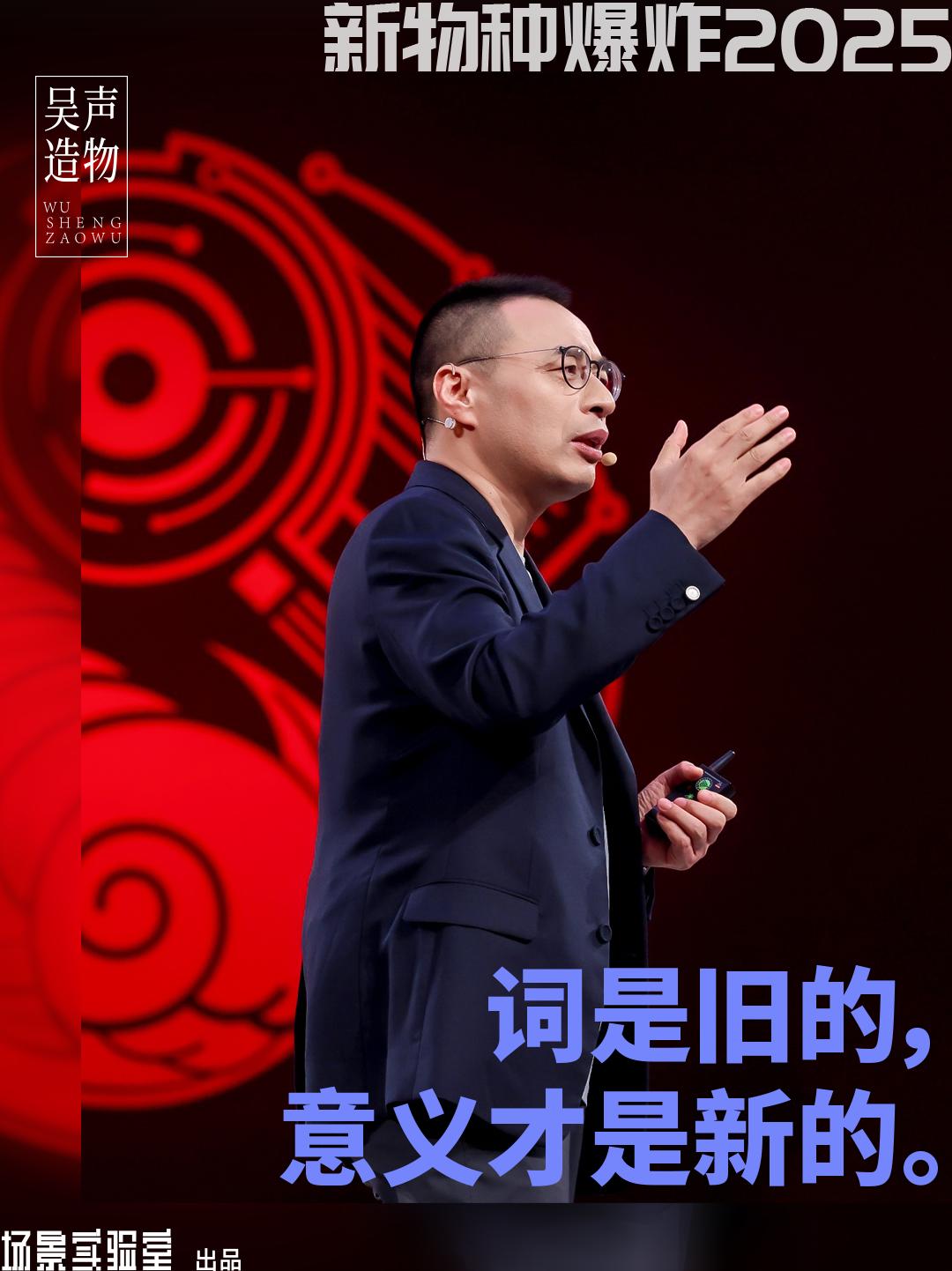
吴声2025年度演讲:词是旧的,意义才是新的
虎嗅APP· 2025-08-04 00:39
Core Viewpoint - The article discusses the "AI Scene Revolution" and its impact on business, emphasizing the need for reconstructing meaning in various scenarios through innovative methods and the emergence of new species in the market [5][20]. Group 1: Scene Creation Over the Past Decade - The past decade has been marked by the evolution of "scene creation," where meticulously designed scenarios drive the growth of new market entities [11][19]. - The evolution of brands like Sanwing Bird illustrates the shift from product-centric to solution-oriented approaches, focusing on personalized home scene customization [14][15]. - Red Star Macalline's transformation into an "AI home life destination" showcases the integration of home appliances, furniture, and decoration into a cohesive business model [17][19]. Group 2: Instant Emergence and Meaning Reconstruction - The concept of "instant emergence" highlights the importance of designing specific scenarios to avoid losing sight of the rapid changes in AI applications and market dynamics [20][22]. - The advancements in AI technology, such as Amazon's robotics and Google's Gemini Robotics, signify a shift towards cognitive capabilities in machines, although the full potential is yet to be realized [22][24]. - The article posits that the AI scene revolution is fundamentally a cognitive revolution, urging a return to philosophical inquiries about human existence and meaning [24][26]. Group 3: The Four Keywords of Meaning Coordinates - The four keywords for reconstructing meaning in the current era are NOW (the power of connection), HERE (the reality of presence), FLOW (the pursuit of immersive experiences), and EGO (the core question of self) [26][28]. Group 4: The NOW Connection - The NOW concept emphasizes the significance of real-time connections in the AI era, where platforms like Xiaohongshu redefine user engagement through immediacy and shared experiences [30][33]. - The organizational innovation at brands like Three Squirrels demonstrates how understanding the needs of younger consumers can lead to effective decision-making and product development [38][39]. Group 5: Flowing Human-Machine Interaction - The evolution of human-machine interaction is characterized by the emergence of "intelligent agents" that enhance user experiences through seamless communication and emotional understanding [51][52]. - Companies like Lenovo are leading the way in creating integrated AI ecosystems that facilitate smooth interactions across various devices [54][56]. Group 6: Beyond the Scene Narrative - The article discusses how physical retail spaces, such as Anta's innovative stores, serve as both entry points and destinations, enhancing customer engagement through unique narratives [78][79]. - The integration of digital and physical experiences is crucial for creating meaningful interactions in today's market [82][83]. Group 7: The EGO Consensus - The importance of maintaining uniqueness while fostering collective intelligence is emphasized, as seen in brands like Maogeping, which focus on individual beauty and personalized experiences [101][102]. - The article suggests that the AI cycle is leading to a new balance, where brands must adapt to the evolving landscape while staying true to their core values [103].

吴声2025年度演讲:场景革命十年,哲学生活方式到来
3 6 Ke· 2025-08-03 13:34
Group 1 - The core theme of the event is "Momentary Emergence," focusing on the AI scene revolution and its impact on business and philosophy [3][16] - Wu Sheng, the founder of Scene Laboratory, emphasizes the importance of reconstructing meaning coordinates in specific scenarios [3][22] - The event outlines four innovative methods for "meaning reconstruction": NOW (connection in the moment), FLOW (smooth human-machine interaction), HERE (narrative beyond presence), and EGO (the core question of self) [3][22] Group 2 - The evolution of scene creation over the past decade is highlighted, showcasing how meticulously designed scenarios drive the growth of new species in business [9][15] - The case of Sanwing Bird illustrates the shift from product-focused to solution-oriented approaches in smart home scenarios, emphasizing personalized family scene customization [11][15] - Red Star Macalline's transformation into an "AI home life destination" reflects the deep understanding of lifestyle changes brought by AI, integrating home appliances, furniture, and decoration [13][15] Group 3 - The concept of "Momentary Emergence" suggests that the future of AI applications will evolve through carefully designed scenarios, avoiding superficial trends [16][20] - The advancements in AI technology, such as Amazon's robotics and Google's Gemini Robotics, indicate a shift towards cognitive capabilities in machines [18][20] - The potential economic impact of AI is significant, with projections suggesting a possible GDP growth of 20-30% due to AI advancements [20] Group 4 - The "philosophical lifestyle cycle" is introduced, emphasizing the need to find and reconstruct meaning coordinates in everyday life through specific scenarios [22][24] - The importance of user-generated content (UGC) in platforms like Xiaohongshu is highlighted, showcasing its role in connecting people and information in real-time [27][29] - The concept of "effective time" is emerging as a new standard in family living, replacing the traditional focus on effective space [11][15] Group 5 - The evolution of physical retail spaces, such as Anta's innovative store designs, reflects a shift towards creating immersive and community-oriented shopping experiences [63][64] - The integration of AI in physical spaces is transforming how consumers interact with products, enhancing the overall shopping experience [60][65] - The rise of emotional commerce, particularly in the context of trendy toys, illustrates the changing landscape of consumer engagement and brand connection [70][71]