ID. Polo

Search documents
Volkswagen (OTCPK:VLKA.F) Earnings Call Presentation
2026-03-30 06:00
Roadshow presentation March 2026 Disclaimer The following presentations as well as remarks/comments and explanations in this context contain forward-looking statements on the business development of the Volkswagen Group. These statements are based on assumptions relating to the development of the economic, political and legal environment in individual countries, economic regions and markets, and in particular for the automotive industry, which we have made on the basis of the information available to us and ...
大众ID.4改款后更名 ID.5将停产
Xi Niu Cai Jing· 2026-01-30 08:28
Group 1 - Volkswagen announced a significant adjustment to its electric vehicle strategy, with the revamped ID.4 produced at the Emden plant being renamed ID. Tiguan starting November 2026, and the production cycle will last until the end of 2031 [2] - The ID.5 will be discontinued within this year due to poor sales performance, while the renaming of the B-segment electric hatchback from ID.2 to ID. Polo and the ID.s2 X SUV concept to ID. Cross reflects a strategy to leverage brand recognition of traditional combustion models to enhance the competitiveness of electric models [2] - The ID. Tiguan will be built on an upgraded MEB+ platform, featuring a new entry-level drive motor and is expected to use lithium iron phosphate (LFP) batteries in its base version, with design changes to align more closely with the traditional Tiguan [2] Group 2 - Dataforce reported that ID.4 sales in Europe are projected to reach 80,123 units in 2025, marking a 23.8% year-on-year increase, but still lagging behind competitors like Tesla Model Y, which sold 151,331 units [2] - The Zwickau plant will gradually cease ID.4 production to focus on Audi Q4 e-tron, Cupra Born, and some ID.3 models, while also partially transforming into a vehicle recycling center [2] - Volkswagen is restructuring its mainstream brand organization by establishing a unified brand group board to integrate finance, procurement, production, and R&D functions, aiming to save €1 billion in production costs by 2030 [3] - These initiatives indicate that Volkswagen is actively responding to the rapid changes in the electric vehicle market through more competitive products, efficient operations, and stronger brand influence, with the launch of ID. Tiguan marking a significant milestone in its electrification journey [3]


朝嫡系下手,汽车巨头血洗管理层
汽车商业评论· 2026-01-22 23:07
Core Viewpoint - Volkswagen Group is implementing significant restructuring measures, including a reduction in board positions and a shift towards a more centralized management structure to enhance efficiency and reduce costs [4][5][26]. Group 1: Restructuring Plans - Volkswagen plans to reduce the number of board positions in its core brands from 29 to 19 by 2026, eliminating 10 positions directly [5]. - The restructuring will streamline management, with each brand's leadership reduced to four members, including a CEO and heads of finance, HR, and sales [7]. - A new Brand Core Management Committee (BGC) will oversee key functions like R&D, procurement, and production from the headquarters in Wolfsburg [8][11]. Group 2: Leadership Changes - Thomas Schfer will lead the new BGC, which includes CEOs from Volkswagen, Škoda, SEAT/CUPRA, and Volkswagen Commercial Vehicles, along with four core function heads [8]. - Key appointments include David Powels as CFO, Kai Grünitz as head of technology, Karsten Schnake in charge of procurement, and Christian Vollmer overseeing production [13][15][17][20]. Group 3: Production Network Reorganization - The production network will shift from brand-based management to regional management, consolidating over 20 factories into five regions: Central Europe, Iberia, Eastern Europe/India, North America, and South America [22]. - The new management model will first be implemented in the Iberian Peninsula, with a focus on cross-brand collaboration [24]. - The restructuring in production is expected to save approximately €1 billion by 2030, including €600 million in personnel costs and €400 million in manufacturing costs [26]. Group 4: Financial Performance and Cost Control - Volkswagen aims to cut its five-year investment plan from €180 billion to €160 billion due to weak cash flow, focusing investments on electric vehicles, software, and autonomous driving [28]. - The automotive division is projected to generate a net cash flow of approximately €6 billion in 2025, up from €5 billion the previous year [28][31]. - Despite effective cost control measures, challenges remain, particularly with Porsche's asset impairment losses impacting overall financial performance [31].
跨国车企的「廉价」小车反攻
Di Yi Cai Jing· 2026-01-09 03:30
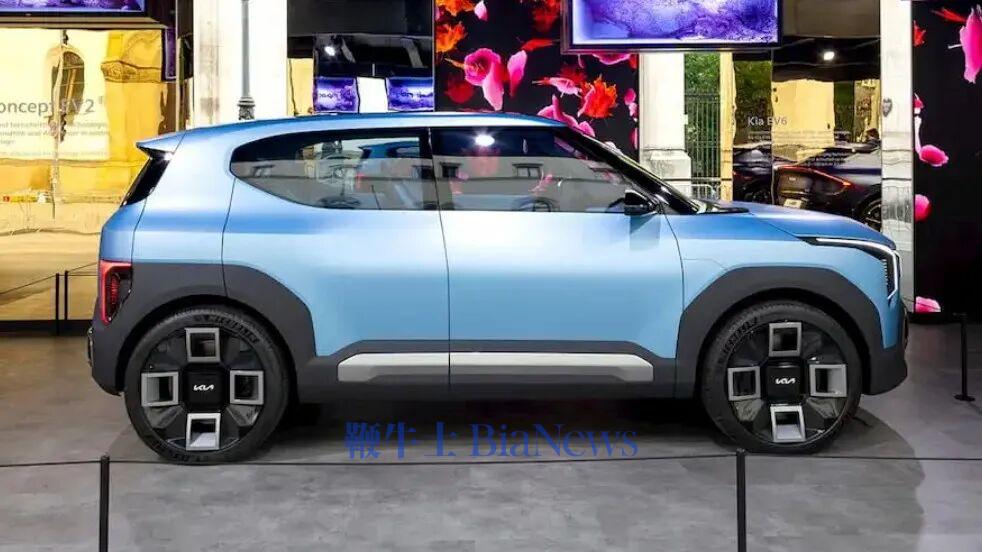
Group 1 - The core viewpoint is that multinational automakers are planning to launch more affordable electric vehicles in response to the growing presence of Chinese electric vehicle brands in the European market [2][5][8] Group 2 - Kia's new entry-level model, the EV2, will debut on January 9, 2026, at the Brussels Motor Show, positioned as the smallest and cheapest electric vehicle from Kia, with an expected price around €30,000 [3] - Volkswagen's classic small car, Polo, will return as an electric model named ID. Polo, built on the new MEB+ platform, with a planned launch in spring 2026 at a starting price of €25,000 [4] - Other automakers like Renault, Nissan, Hyundai, and Ford are also set to introduce more economical electric vehicle models in 2026 [6] Group 3 - Renault plans to launch a new electric Twingo in early 2026, incorporating elements from the classic 1990s model, with a price below €20,000, relying on Chinese market components for about 40% of its parts [7] Group 4 - Despite potential tariff increases, Chinese brands are expected to continue their strong performance in the European market, with total registrations in the broad European market reaching 12.099 million units from January to November 2025, a 1.9% increase year-on-year [8] - Electric vehicles are a major growth driver, with pure electric vehicle sales reaching 2.276 million units, a 27.4% year-on-year increase, and plug-in hybrid sales at 1.149 million units, up 33.1% [8] - Volkswagen Group remains the market leader with a 27% share, but two Chinese companies, SAIC (mainly MG) and BYD, have entered the top ten in sales, with SAIC selling 274,000 units (up 26.1%) and BYD selling 160,000 units (up 276%) [8][9] Group 5 - Smaller Chinese automakers have shown even more remarkable growth, with Leap Motor's electric vehicle sales in Europe surging over 4000% year-on-year, and Chery's Omoda brand experiencing an 1100% increase [10]

IAA Mobility 2025: Volkswagen, BMW, Mercedes, BYD & XPeng Shine
ZACKS· 2025-09-15 16:11
Core Insights - The IAA Mobility 2025 event in Munich showcased the rapid transformation of the auto industry driven by electrification and digitalization [1][10] - Major players like Volkswagen, BMW, Mercedes-Benz, BYD, and XPeng presented their latest electric vehicle (EV) models and technologies [2][10] Volkswagen - Volkswagen introduced the ID. Polo and ID. Cross, transitioning well-known combustion-engine models to electric versions, with the ID. Polo set to launch in 2026 [3][4] - The ID. Cross, an all-electric compact SUV, is also expected to arrive by the end of 2026 [3] BMW - BMW debuted the iX3, the first vehicle from its Neue Klasse lineup, featuring a WLTP range of up to 805 km and charging power of 400 kW [5][6] - The iX3 aims to combine driving pleasure with advanced electric technology, alongside showcasing a broader portfolio including MINI and BMW M [6] Mercedes-Benz - Mercedes-Benz unveiled the GLC EV, which features a 94-kWh battery and a range of up to 713 km, equipped with advanced digital features including the MBUX Hyperscreen [7][8] - The GLC EV builds on the success of its combustion-engine predecessor while embracing electric technology [8] BYD - BYD launched the SEAL 6 DM-i Touring, its first station wagon for Europe, emphasizing its strength in plug-in hybrids with electric ranges of up to 105 km [9][10] - The company plans to establish a local production facility for all-electric vehicles in Europe within three years, starting with a plant in Hungary [11] XPeng - XPeng showcased the Next P7 sedan and highlighted its focus on high-performance electric cars with AI-driven systems, alongside futuristic displays including humanoid robots and flying vehicles [13][14] - The company will open its first European R&D center in Munich to enhance technology development for European customers [14] Industry Trends - The event underscored the importance of battery innovation and AI systems in the ongoing transformation of the auto industry [10][15] - The competition between established brands and new entrants is expected to accelerate the shift towards electrification and reshape transportation [15]