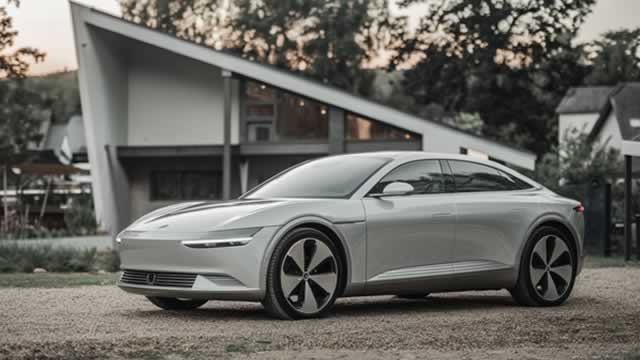
ID.5

Search documents
Volkswagen (OTCPK:VLKA.F) Earnings Call Presentation
2026-03-30 06:00
Roadshow presentation March 2026 Disclaimer The following presentations as well as remarks/comments and explanations in this context contain forward-looking statements on the business development of the Volkswagen Group. These statements are based on assumptions relating to the development of the economic, political and legal environment in individual countries, economic regions and markets, and in particular for the automotive industry, which we have made on the basis of the information available to us and ...
大众ID.4改款后更名 ID.5将停产
Xi Niu Cai Jing· 2026-01-30 08:28
Group 1 - Volkswagen announced a significant adjustment to its electric vehicle strategy, with the revamped ID.4 produced at the Emden plant being renamed ID. Tiguan starting November 2026, and the production cycle will last until the end of 2031 [2] - The ID.5 will be discontinued within this year due to poor sales performance, while the renaming of the B-segment electric hatchback from ID.2 to ID. Polo and the ID.s2 X SUV concept to ID. Cross reflects a strategy to leverage brand recognition of traditional combustion models to enhance the competitiveness of electric models [2] - The ID. Tiguan will be built on an upgraded MEB+ platform, featuring a new entry-level drive motor and is expected to use lithium iron phosphate (LFP) batteries in its base version, with design changes to align more closely with the traditional Tiguan [2] Group 2 - Dataforce reported that ID.4 sales in Europe are projected to reach 80,123 units in 2025, marking a 23.8% year-on-year increase, but still lagging behind competitors like Tesla Model Y, which sold 151,331 units [2] - The Zwickau plant will gradually cease ID.4 production to focus on Audi Q4 e-tron, Cupra Born, and some ID.3 models, while also partially transforming into a vehicle recycling center [2] - Volkswagen is restructuring its mainstream brand organization by establishing a unified brand group board to integrate finance, procurement, production, and R&D functions, aiming to save €1 billion in production costs by 2030 [3] - These initiatives indicate that Volkswagen is actively responding to the rapid changes in the electric vehicle market through more competitive products, efficient operations, and stronger brand influence, with the launch of ID. Tiguan marking a significant milestone in its electrification journey [3]


欧洲专题:碳排考核叠加车型周期,欧洲新能源车迎来拐点
Tianfeng Securities· 2025-08-09 15:28
Industry Rating - The industry investment rating is "Outperform the Market" [1][1] Core Insights - The European new energy vehicle market is reaching a turning point driven by stringent carbon emission assessments and the cyclical nature of vehicle models [2] - The EU's policies, including the ban on fuel vehicles and tiered carbon reduction targets, are creating rigid constraints that push for electrification [2][8] - Major automakers are accelerating their electric vehicle (EV) strategies to meet upcoming carbon targets, with significant growth in battery electric vehicle (BEV) sales [3][19] Policy and Market Dynamics - The EU's tightening carbon reduction policies are compelling automakers to expedite their transition to new energy vehicles [7] - The EU has set ambitious carbon emission targets, including a ban on new fuel vehicles by 2035 and specific CO2 emission limits for new cars starting in 2025 [8][11] - The introduction of the ZLEV coefficient incentivizes manufacturers to increase the share of zero and low-emission vehicles in their fleets [15] Automaker Performance - Volkswagen delivered 465,500 BEVs globally in the first half of 2025, with a significant contribution from Europe, achieving a year-on-year growth of 89% [3][32] - Stellantis has improved its market share in Europe, ranking first in the hybrid market and second in the BEV market, supported by a multi-platform strategy [3][33] - Renault's BEV sales in Europe increased by 88% in Q1 2025, with a focus on affordable models and a strong platform strategy [3][42] Supply Chain and Component Manufacturers - Companies like Minth and Weimars are benefiting from the growth in the new energy vehicle supply chain, with significant revenue increases projected [4][49] - Minth's battery box business is expected to generate 5.338 billion yuan in revenue in 2024, reflecting a 50.96% year-on-year growth [4][48] - Weimars is positioned as a leading supplier in the domestic market, with a market share of 29.41% in the third-party vehicle charging market [4][52] Future Outlook - The report anticipates continued growth in the European new energy vehicle market, driven by regulatory pressures and technological advancements [2][19] - The performance of key players in the supply chain is expected to improve as the demand for new energy vehicles rises [4][59]



Honda pulls the plug on large electric SUV as driver demand for battery powered cars plummets
New York Post· 2025-07-09 17:28
Core Viewpoint - Honda has halted plans for a large electric SUV due to weaker-than-expected demand for sizable electric vehicles and the impact of President Trump's decision to cut EV incentives in the US [1][2][4]. Group 1: Honda's Decision - Honda has reportedly scrapped the development of a seven-seat electric SUV, which was initially planned to follow the five-seat SUV and sedan based on the Concept 0 unveiled at CES [1][4]. - The company has cut approximately $48 billion (¥7 trillion) from its research and development budget for electric vehicles [4]. Group 2: Market Context - Demand for large electric cars has been lower than anticipated, influencing Honda's decision to suspend its EV plans [2][9]. - Other manufacturers, including Ferrari and Lamborghini, have also delayed or pushed back their electric vehicle projects in response to market conditions [12]. Group 3: Broader Industry Trends - The electric vehicle market is facing challenges, as evidenced by Kia's EV9 selling only 165 units in Australia compared to 5,165 units of the combustion-powered Sorento in the first half of the year [8][11]. - Major brands like Mercedes and VW are experiencing significant sales ratios favoring combustion-powered models over their electric counterparts [11].