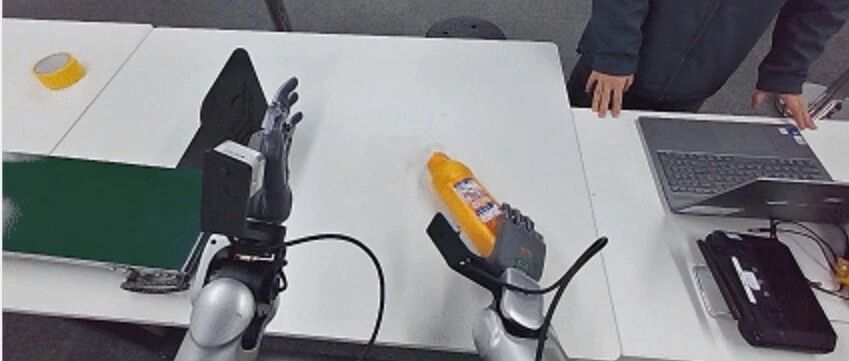
LET数据集

Search documents
具身智能产业动态:松延动力完成近2亿元Pre-B轮融资,灵心巧手完成数亿元A加轮融资
GUOTAI HAITONG SECURITIES· 2025-12-02 06:23
Investment Rating - The report does not explicitly state an investment rating for the industry Core Insights - The embodied intelligence industry is primarily represented by embodied robots and smart vehicles, which are mutually reinforcing in their development [7] - Recent trends in the embodied robot sector include significant funding rounds, technological advancements, and the establishment of industry standards [10][11][12] - The smart vehicle sector is witnessing strong sales growth, with notable performance from new energy vehicle manufacturers [16][17] Summary by Sections 1. Embodied Robot Industry Dynamics - The LET dataset, the largest full-size humanoid robot dataset in China, has been released, providing over 60,000 minutes of real machine data to support the development of humanoid robots [10] - The Ministry of Industry and Information Technology has announced the members of the humanoid robot standardization technical committee, including notable figures from leading companies [11] - GigaAI has launched its first wheeled humanoid robot, Maker H01, featuring advanced sensor configurations and a self-developed operational algorithm [12] - Zhiyuan Robotics has introduced the LinkSoul platform, allowing users to customize robot personalities and behaviors easily [13] - Star Motion Era has unveiled a logistics warehousing solution, marking the first real-world application of an end-to-end VLA model in logistics [14][15] 2. Smart Vehicle Industry Dynamics - In October, the top three new energy vehicle manufacturers by delivery volume were Leap Motor (70,289 units), Hongmeng Zhixing (68,216 units), and XPeng (42,013 units) [16][18] - Pony.ai reported a 72% year-on-year revenue increase in Q3 2025, with significant growth in its Robotaxi business, which is expected to expand to 3,000 vehicles by 2026 [17] - Strategic partnerships are being formed to enhance the development of autonomous driving services, including collaborations between Pony.ai and Sunshine Travel [17][20] 3. Investment and Financing Events - From November 24 to November 30, 2025, there were 10 significant financing events in the embodied intelligence sector, including: - Songyan Power completed nearly 200 million RMB in Pre-B financing to enhance humanoid robot R&D [34] - Lingxin Qiaoshou raised several hundred million RMB in A+ financing, maintaining a dominant market share in dexterous robotic hands [35] - He Mountain Technology completed multiple rounds of financing totaling several hundred million RMB to accelerate tactile perception technology [28]
乐聚智能LET数据集入列OpenLoong支撑多场景训练
Xin Hua Cai Jing· 2025-11-28 15:51
Core Insights - Leju Intelligent has donated its LET dataset to the OpenLoong open-source community, marking a significant step in the development of humanoid robots in China [1][4] - The LET dataset is a comprehensive collection of real-world data, exceeding 60,000 minutes, covering various operational scenarios across multiple industries [2][3] Group 1: Dataset Characteristics - The LET dataset is constructed to represent real operational scenarios for full-sized humanoid robots, encompassing industrial, commercial retail, and daily life environments [2] - It includes 31 tasks and 117 atomic skills, forming a clear task system that supports multi-scenario, multi-step, and multi-objective learning and reasoning for robots [2] Group 2: Industry Challenges and Solutions - The humanoid robotics industry faces challenges such as fragmented data sources and inconsistent formats, which hinder data quality and collaborative efficiency [3] - The donation of the LET dataset aims to address these issues by providing a standardized, high-quality data resource that enhances data circulation and value in the humanoid robotics sector [3] Group 3: Ecosystem Development - The LET dataset will be continuously maintained and updated under the Open Atom Open Source Foundation, contributing to a systematic resource for real-world data in the industry [4] - The integration of the LET dataset into the OpenLoong community will facilitate deeper research in task modeling, skill learning, and strategy validation, while providing high-quality samples for performance verification [4]
乐聚LET数据集正式捐赠至OpenLoong开源社区 遵循国地中心统一数据标准
Zheng Quan Shi Bao Wang· 2025-11-26 13:29
Core Insights - Leju Intelligent has donated its LET dataset to the OpenLoong open-source community, enhancing the data resources available for humanoid robot development in China [1] - The LET dataset is significant for its large scale, structured format, and diverse scenarios, marking a new phase in the OpenLoong data ecosystem [1] Group 1 - The LET dataset covers three major areas: industrial, commercial retail, and daily life, including six categories of real production and service environments such as automotive factories and logistics [2] - It includes 31 tasks and 117 atomic skills, forming a clear task system suitable for training robots under various conditions [2] - The dataset records multimodal information, including RGB, depth, joint states, and end-effector states, achieving over 90% data consistency [2]
开源发布 | 乐聚 LET 数据集正式捐赠至 OpenLoong 开源社区,遵循国地中心统一数据标准
机器人大讲堂· 2025-11-25 12:01
Core Viewpoint - The article emphasizes the importance of high-quality, multi-modal, and structured data in advancing humanoid robot technology and its applications, highlighting the donation of the LET dataset to the OpenLoong open-source community as a significant step towards building a unified data infrastructure in the industry [1][11]. Group 1: LET Dataset Overview - The LET dataset, constructed by Leju Intelligent and its partners, is one of the few full-size humanoid robot datasets in China, covering real operational scenarios with over 60,000 minutes of data [2]. - The dataset encompasses diverse task scenarios across three main fields: industrial, commercial retail, and daily life, including six categories such as automotive factories and logistics, with a clear task system comprising 31 tasks and 117 atomic skills [4]. Group 2: Data Collection and Technology Innovation - The dataset records both head and dual-wrist visual streams, providing multi-modal information such as RGB, depth, joint states, and end-effector states, achieving data consistency over 90% through advanced frame grouping technology [5][6]. - Complex tasks are broken down into clearly defined atomic action steps, accompanied by semantic labels, facilitating model understanding of task structures and action logic, thus enhancing behavior understanding and skill learning [7]. Group 3: Building a Trustworthy Data Standard System - The humanoid robot industry faces challenges such as fragmented data sources and inconsistent formats, necessitating a systematic data standard to enhance data quality and model capabilities [12]. - The National and Local Joint Innovation Center for Humanoid Robots has established a comprehensive standard system covering data collection, processing, quality review, and version management, ensuring data quality and usability [14]. Group 4: OpenLoong Community and Future Prospects - The donation of the LET dataset to the OpenLoong community enriches the repository of real-world data, promoting deeper research in task modeling, skill learning, and strategy validation [11][24]. - OpenLoong aims to create a shared data framework to standardize data organization and reuse, with the LET dataset serving as a representative training sample for the industry [20][26].

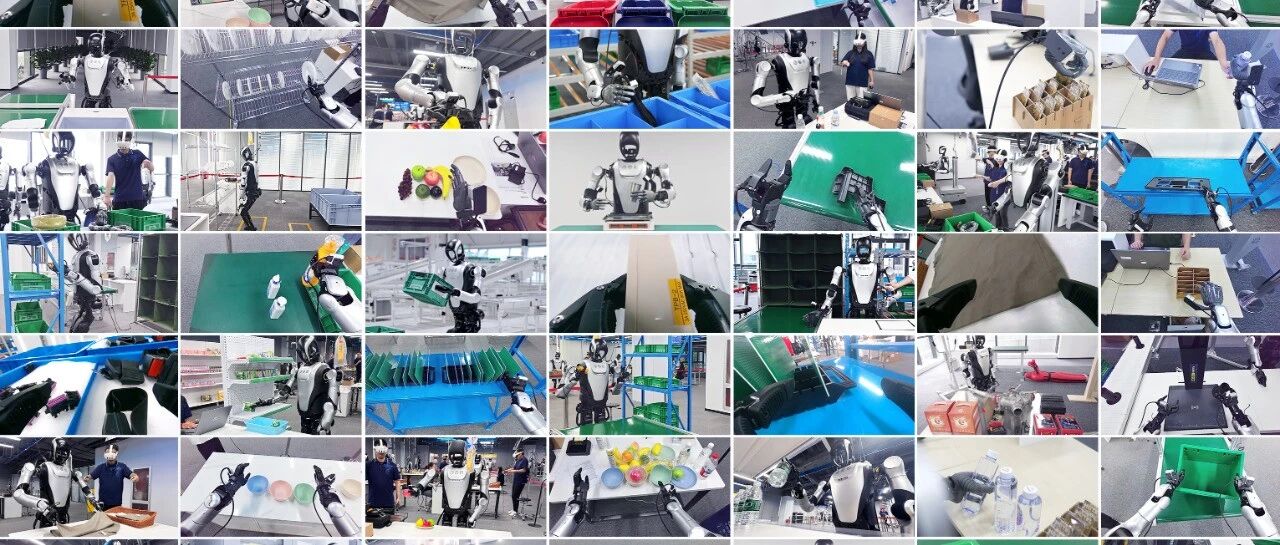
快讯|智元机器人正式推出灵心平台(LinkSoul);安徽出台智能机器人产业发展行动方案;广汽集团宣布其具身智能机器人计划
机器人大讲堂· 2025-11-24 08:31
Group 1 - The core viewpoint of the article highlights the rapid development and innovation in the robotics industry, particularly focusing on humanoid robots and intelligent systems [5][11][14]. - The launch of the LinkSoul platform by Zhiyuan Robotics allows users to customize robot features, including voice and behavior, enhancing user interaction [2]. - The Anhui provincial government has introduced an action plan aiming to cultivate over 10 leading domestic enterprises and achieve a total industry revenue of 100 billion yuan by 2027 [5]. Group 2 - GAC Group plans to initiate large-scale production of its embodied intelligent robots by 2027, with a target of exceeding 1 billion yuan in industry chain output by 2030 [8]. - The LET dataset, developed by the National Local Joint Innovation Center for Humanoid Robots and Leju Intelligent, aims to address the lack of real machine data in the field of embodied intelligence [11]. - Dongfeng Motor has unveiled several humanoid robots, including "Xiao Dong" and "Worker No. 2," which are designed for tasks such as customer reception and factory operations [14].



开源!国内规模最大的全尺寸人形机器人真机数据集!哪里值得关注
机器人大讲堂· 2025-11-24 08:31
Core Viewpoint - The LET dataset, the world's first full-size humanoid robot real-world operation dataset, addresses the critical shortage of high-quality, large-scale, standardized real-world operational data, which has been a significant barrier to the advancement of humanoid robots and embodied intelligence [1][5]. Group 1: Data Scarcity in Humanoid Robotics - Humanoid robot data is scarce due to the dual barriers of technology and cost, with the "Scaling Law" indicating that model performance improves significantly with increased data volume, model size, and computational power [3][4]. - Real-world data collection is costly, with traditional methods yielding only three to four valid data points per hour at a cost of nearly twenty yuan per data point, leading to annual costs approaching three hundred thousand yuan for manual collection [4]. Group 2: LET Dataset Release - The LET dataset, developed by Leju Intelligent and other institutions, is the largest open-source dataset of its kind in China, featuring over 60,000 minutes of real machine data collected from the "Kua Fu" humanoid robot [5][7]. - The dataset incorporates innovative technologies to ensure high data quality, achieving over 90% consistency and controlling timestamp errors within ten milliseconds, which enhances the robustness and transferability of models trained on this data [7]. Group 3: Comprehensive Scene Coverage - The LET dataset covers three core areas: industrial, commercial retail, and daily life, detailing six real-world operational scenarios and encompassing 31 key tasks and 117 atomic skills [8]. - This extensive coverage allows developers to quickly adapt to vertical industry needs, facilitating the transition from technology validation to large-scale application of embodied intelligence [8]. Group 4: Tools and Future Implications - To lower the usage threshold and accelerate technology transfer, the LET dataset provides a comprehensive toolchain for data conversion, model training, simulation testing, and real machine deployment, enabling developers to achieve "plug-and-play" functionality [10]. - The release of the LET dataset not only fills the gap in high-quality real machine data but also supports the scaling law for humanoid robots, fostering a virtuous cycle of data sharing, technological iteration, and application optimization [11].