缩放定律

Search documents
1100亿美元融资实为豪赌,OpenAI今年必须实现AGI或者IPO
凤凰网财经· 2026-02-28 13:08
Core Viewpoint - OpenAI's recent $110 billion funding round marks the largest single financing for a private company in history, reflecting the intense competition among tech giants for dominance in the AI sector [2][11]. Group 1: OpenAI's Financial Situation - OpenAI's revenue for 2025 reached $13.1 billion, exceeding its target by over 30%, but the company also reported a loss of $8 billion, which is projected to rise to $25 billion in 2026 [11][12]. - Cumulative losses are expected to reach $115 billion by 2029, with profitability not anticipated until the 2030s [12]. - The company's cash burn rate is projected to remain at 83.3% in 2026, a rate considered rare in startup history [13]. Group 2: Market Position and Competition - OpenAI's market share in the AI chatbot sector has declined from 86.7% in early 2025 to approximately 64.5% in early 2026, as competitors like Anthropic and Google gain traction [14]. - Despite OpenAI's challenges, major tech companies are investing heavily, viewing their investments as not just financial support but as a means to secure long-term contracts and influence over AI's future [16][17]. Group 3: The Stargate Project - The Stargate project, a collaboration between OpenAI, Oracle, and SoftBank, aims to invest $500 billion in AI data centers across the U.S. but has faced significant delays and internal disputes [28][30]. - The project has not yet hired any employees or developed any data centers, leading to missed opportunities and increased reliance on external cloud service providers [34][43]. - OpenAI's attempts to bypass the Stargate partnership to build data centers independently have been unsuccessful due to financing challenges [35][44]. Group 4: Competitive Landscape and IPO Race - Anthropic, OpenAI's main competitor, recently completed a $30 billion funding round, achieving a post-money valuation of $380 billion, significantly outpacing OpenAI's growth trajectory [47][48]. - Both companies are preparing for potential IPOs in the second half of 2026, with significant implications for their market positions and future funding capabilities [52][56]. - The competition between OpenAI and Anthropic is not just about technology but also about securing a dominant business model in the evolving AI landscape [65].


深扒Minimax与智谱:大模型,到底是怎样的生意模式?
虎嗅APP· 2026-01-27 14:17
Core Viewpoint - The article discusses the financial dynamics and business models of two AI companies, Minimax and Zhipu, which both went public with valuations around $60 billion but are facing significant losses due to high operational costs and investments in model training [5][8]. Group 1: Revenue and Expenditure Dynamics - Both Minimax and Zhipu are characterized as "short and agile" companies with fewer than 1,000 employees, rapidly iterating products and achieving annual revenues approaching $100 million within a few years [9]. - Despite rapid revenue growth, expenditures for both companies are approximately ten times their current income, with Minimax's spending being over five times its revenue in the first nine months of 2025 [11]. - The article raises questions about whether increasing revenue will lead to a narrowing of losses or exacerbate them, indicating a potential scale inefficiency in their business models [14]. Group 2: Role of Computational Power - The article emphasizes the critical role of computational power in the business model of AI companies, noting that training costs are a significant portion of total expenditures, often exceeding 50% [21][24]. - For Minimax, the revenue generated in 2024 is only 65% of the training costs incurred in 2023, while Zhipu's coverage is even lower at 30% by mid-2025 [25][26]. - The companies rely heavily on third-party cloud services for computational power, which contributes to their high operational costs [20]. Group 3: Human Resource Investment - Both companies have a high percentage of R&D personnel, with Minimax's monthly salary per employee reaching up to 160,000 RMB, indicating a focus on talent density rather than sheer headcount [16][18]. - The overall salary expenditure for Minimax is around $10 million annually, which is about 90% of its revenue, reflecting a high investment in skilled labor [18]. Group 4: Business Model Challenges - The article highlights a fundamental contradiction in the business model: while revenue is increasing, it is not sufficient to cover the rising costs of model training and operational expenses, leading to significant losses [30][34]. - The companies are caught in a cycle where they must continuously invest in new models to remain competitive, requiring additional financing that often exceeds their revenue [35]. - The potential for a sustainable business model hinges on the ability to amortize training costs over a longer period, which is currently not feasible due to the rapid pace of model iteration [30][37]. Group 5: Competitive Landscape - The competitive landscape is described as a capital-intensive game, where companies must secure financing to survive, with only a few players likely to emerge as long-term leaders [39][44]. - The article notes that many smaller companies are struggling to compete against larger firms and open-source models, leading to a consolidation in the market [43].

姚顺雨林俊旸杨植麟齐聚 锐评大模型创业与下一代技术范式
Di Yi Cai Jing· 2026-01-10 14:06
Core Insights - The next generation of AI technology paradigms is expected to focus on Autonomous Learning, which allows models to evolve independently without heavy reliance on human-annotated data and offline pre-training [1][2] - The potential for innovation in AI is seen as high in China, with the ability to quickly replicate and improve upon discoveries, contingent on breakthroughs in key technologies like lithography machines [3] Group 1: Next Generation Paradigms - Autonomous Learning is a trending concept that enables models to generate learning signals and optimize through closed-loop iterations, leading to continuous evolution [1] - The definition and understanding of Autonomous Learning vary among experts, emphasizing its dependence on specific data and task contexts [1] - Current advancements in AI, such as Claude's ability to self-improve by transforming 95% of its own code, indicate that self-learning is already occurring, albeit with efficiency limitations [1] Group 2: Market Leaders and Innovations - OpenAI is viewed as the most likely candidate to lead the next paradigm shift in AI, despite facing challenges in maintaining its innovative edge [2] - The current Reinforcement Learning (RL) paradigm is still in its early stages, with significant potential yet to be realized, focusing on "autonomous evolution" and "proactivity" [2] - The introduction of proactivity in AI raises new safety concerns, necessitating the instillation of appropriate values and constraints [2] Group 3: China's Position in AI - The probability of Chinese teams leading in AI innovation in the next three to five years is considered high, given their ability to quickly replicate and enhance discoveries [3] - Key challenges for China include production capacity and software ecosystem development, alongside the need for a more mature B2B market [3] - Cultural and economic factors may hinder the willingness to pursue groundbreaking innovations in China [3]

遥遥无期的AGI是画大饼吗?两位教授「吵起来了」
3 6 Ke· 2025-12-22 02:08
Group 1 - The core argument of the article is that while current AI models are becoming more powerful, the realization of Artificial General Intelligence (AGI) remains distant due to physical and resource limitations [3][22][24] - Tim Dettmers' blog post titled "Why AGI Will Not Happen" argues that due to physical constraints, meaningful superintelligence cannot be achieved [3][6][22] - The article discusses the limitations of hardware improvements and the challenges in achieving efficient computation, emphasizing that the current AI architectures are bound by physical realities [8][10][11] Group 2 - The blog highlights that the efficiency of current AI systems is far from optimal, with significant room for improvement in both training and inference processes [35][37][56] - It points out that the current models are lagging indicators of hardware development, suggesting that advancements in hardware will lead to better model performance [43][57] - The article proposes multiple pathways for enhancing AI capabilities, including better model-hardware co-design and exploring new hardware features [40][46][55] Group 3 - The article contrasts the AI development philosophies of the US and China, noting that the US focuses on achieving superintelligence while China emphasizes practical applications and productivity improvements [20][21] - It suggests that the pursuit of superintelligence may lead to difficulties, as organizations focusing solely on this goal may be outpaced by those driving practical AI applications [26][28] - The discussion includes the potential for smaller players in the AI space to innovate beyond scale, leveraging efficiency and practical applications [17][18][19]
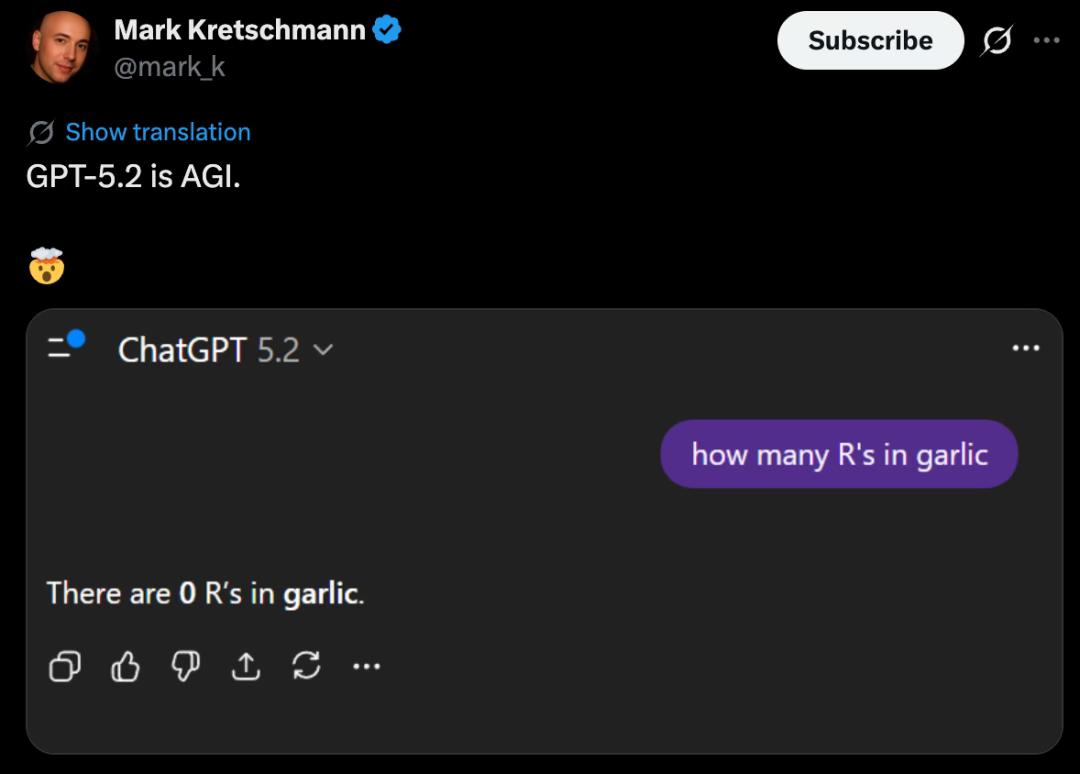
遥遥无期的AGI是画大饼吗?两位教授「吵起来了」
机器之心· 2025-12-21 04:21
Core Viewpoint - The article discusses the limitations of achieving Artificial General Intelligence (AGI) due to physical and resource constraints, emphasizing that scaling alone is not sufficient for significant advancements in AI [3][20][32]. Group 1: Limitations of AGI - Tim Dettmers argues that AGI will not happen because computation is fundamentally physical, and there are inherent limitations in hardware improvements and scaling laws [8][10][12]. - The article highlights that as transistor sizes shrink, while computation becomes cheaper, memory access becomes increasingly expensive, leading to inefficiencies in processing power [11][17]. - The concept of "superintelligence" is critiqued as a flawed notion, suggesting that improvements in intelligence require substantial resources, and thus, any advancements will be gradual rather than explosive [28][29][30]. Group 2: Hardware and Scaling Challenges - The article points out that GPU advancements have plateaued, with significant improvements in performance per cost ceasing around 2018, leading to diminishing returns on hardware investments [16][17]. - Scaling AI models has become increasingly costly, with the need for linear improvements requiring exponential resource investments, indicating a nearing physical limit to scaling benefits [20][22]. - The efficiency of current AI infrastructure is heavily reliant on large user bases to justify the costs of deployment, which poses risks for smaller players in the market [21][22]. Group 3: Divergent Approaches in AI Development - The article contrasts the U.S. approach of "winner-takes-all" in AI development with China's focus on practical applications and productivity enhancements, suggesting that the latter may be more sustainable in the long run [23][24]. - It emphasizes that the core value of AI lies in its utility and productivity enhancement rather than merely achieving higher model capabilities [24][25]. Group 4: Future Directions and Opportunities - Despite the challenges, the article suggests that there are still significant opportunities for improvement in AI systems through better hardware utilization and innovative model designs [39][45][67]. - It highlights the potential for advancements in training efficiency and inference optimization, indicating that current models are not yet fully optimized for existing hardware capabilities [41][43][46]. - The article concludes that the path to more capable AI systems is not singular, and multiple avenues exist for achieving substantial improvements in performance and utility [66][69].

谷歌带来最严峻挑战,OpenAI“重大战略调整”:“增强用户活跃”优先于“实现AGI”
Hua Er Jie Jian Wen· 2025-12-10 00:56
Core Insights - OpenAI is undergoing a significant strategic shift in response to increasing competition from Google, marked by the issuance of a "red code" alert by CEO Sam Altman [1][2] - The company is temporarily halting long-term R&D projects, including the Sora video generator, to focus on enhancing user engagement with ChatGPT [1][3] - OpenAI's internal debate centers around prioritizing immediate consumer product success versus the long-term goal of achieving Artificial General Intelligence (AGI) [2][4] Group 1: Strategic Adjustments - OpenAI will pause non-core projects for eight weeks to concentrate on improving ChatGPT's performance in rankings like LM Arena [3] - The decision reflects a power struggle within the company between commercialization efforts led by executives like Fidji Simo and Sarah Friar, and the research team led by Jakub Patchocki [3] - Management has rejected requests to delay the release of new models, with a new model, code-named 5.2, set to be released soon [3] Group 2: Competitive Landscape - OpenAI faces its most severe challenges since its inception, with Google's recent launches, including the Nano Banana image generator and Gemini 3 model, surpassing OpenAI's offerings [2][4] - The company risks financial strain due to a $1.4 trillion infrastructure contract if user growth continues to slow [2][4] - OpenAI's valuation reached $500 billion, with over 800 million average weekly active users, necessitating sustainable growth to support its operational scale [4] Group 3: User Engagement Strategy - Altman's emphasis on utilizing "user signals" for model training has sparked internal debate, as this approach can lead to AI models that cater excessively to user preferences [6] - The reliance on user feedback has previously resulted in mental health issues among users, prompting OpenAI to adjust its training methods to mitigate these risks [6] - Despite earlier adjustments leading to decreased user engagement, the company is now reverting to a more popular model to enhance user interaction [6] Group 4: Future Outlook - OpenAI plans to release an improved model in January that enhances image quality, speed, and personalization, aiming to exit the "red code" state [7] - The company believes that there is no fundamental conflict between broad AI tool adoption and the pursuit of AGI benefits for the public [7] - The current challenge lies in balancing technological advancements with commercial competition, high operational costs, and ethical safety concerns [7]

谷歌TPU逆袭英伟达,创始人一夜之间跃升全球第二、第三富豪
Xin Lang Cai Jing· 2025-11-26 05:34
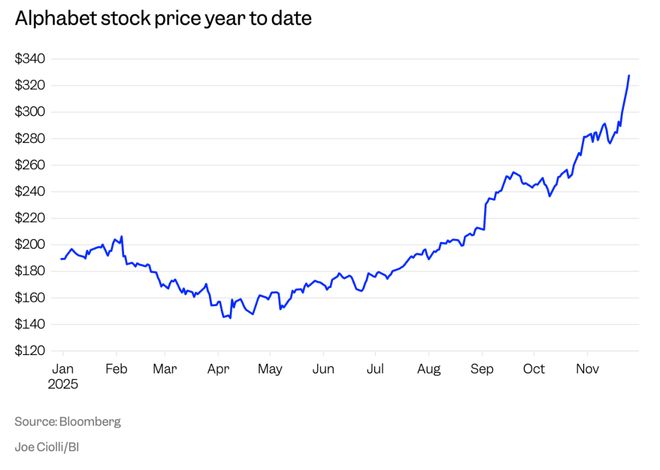
Core Insights - Alphabet's stock price surged 2.4% to $326, reaching a historical high, with a cumulative increase of over 11.5% in the past five trading days and 22% in the last month [1] - As of November 24, Alphabet's market capitalization was approximately $3.84 trillion, making it the third-largest company globally, just behind Nvidia and Apple [1] - The stock price increase has significantly boosted the wealth of its founders, Larry Page and Sergey Brin, placing them as the second and third richest individuals globally, respectively [4] AI Breakthroughs - The primary driver behind the stock surge is the release of the new AI model, Gemini 3, which has received widespread acclaim for its performance, surpassing OpenAI's ChatGPT-5 in several tests [7] - Additionally, Google's AI chip business is experiencing a major breakthrough, with reports that Meta Platforms is considering using Google's AI chips in its data centers, potentially worth billions for Google [10] Competitive Landscape - Nvidia has responded to concerns about Google's AI chip potentially disrupting its market dominance, asserting that its technology remains a generation ahead [10][11] - Despite Google's advancements, Nvidia continues to hold over 90% of the AI chip market share, emphasizing the competitive nature of the industry [11] Strategic Developments - Google has been developing its TPU chips for over a decade, which are now being used to train the Gemini models, positioning them as a strong alternative to Nvidia's offerings [16] - The potential deal with Meta could allow Google to capture about 10% of Nvidia's annual revenue, further solidifying its position in the AI hardware market [10] Financial Performance - Google's search revenue increased by 15% in the third quarter, indicating that its core business remains robust despite concerns about AI impacting its advertising revenue [20] - Warren Buffett's Berkshire Hathaway has invested approximately $4.3 billion in Alphabet, signaling strong confidence in the company's future prospects [18]


谷歌TPU逆袭英伟达,创始人一夜之间跃升全球第二、第三富豪
机器之心· 2025-11-26 05:12
Core Viewpoint - Google's stock price has surged significantly, driven by advancements in artificial intelligence, particularly the launch of the Gemini 3 model and potential AI chip deals with Meta [2][9][11]. Stock Performance - As of November 25, Alphabet's stock price reached $326, marking a 2.4% increase and a historical high. The stock has seen a cumulative increase of over 11.5% in the past five trading days and 22% in the last month [2]. - Alphabet's market capitalization is approximately $3.84 trillion, making it the third-largest company globally, just behind Nvidia and Apple [2]. Wealth Impact - The surge in stock price has significantly increased the wealth of Google's founders, with Larry Page and Sergey Brin now ranked as the second and third richest individuals globally, surpassing Jeff Bezos [5]. AI Breakthroughs - The core drivers of Google's stock increase are two major advancements in AI: the impressive performance of the Gemini 3 model and a potential deal for Google's AI chips with Meta [9][11]. - Gemini 3 has received widespread acclaim for its speed and capabilities, outperforming OpenAI's ChatGPT-5 in several benchmarks [9][10]. AI Chip Developments - Google's latest TPU chip, "Ironwood," is reported to be the most powerful and energy-efficient custom chip to date, with a potential multi-billion dollar deal with Meta for its use in data centers [10][11]. - This deal could allow Google to capture about 10% of Nvidia's annual revenue, establishing a competitive position in the AI hardware market [11]. Cloud Computing and AI Demand - Google's cloud AI infrastructure head indicated that the company needs to double its computing power every six months to meet the explosive demand for AI services, aiming for a 1000-fold increase in computing power over the next 4-5 years [12]. Competitive Landscape - Nvidia has responded to concerns about Google's AI chip potentially disrupting its market dominance, asserting that its technology remains a generation ahead [14][15]. - Despite Google's growing attention in the AI chip space, Nvidia still holds over 90% of the AI chip market share [15]. Strategic Shifts - Google's successful turnaround in the AI race is attributed to the launch of Gemini 3, which has restored market confidence and attracted industry leaders back to its products [19][20]. - The company has been promoting its TPU chips through cloud services, which may pose a long-term threat to Nvidia's market position [22]. Legal and Financial Developments - A recent antitrust ruling allowed Google to maintain its search business structure, alleviating concerns about potential disruptions to its revenue streams [23]. - Warren Buffett's Berkshire Hathaway has invested approximately $4.3 billion in Alphabet, signaling strong confidence in the company's future [24]. Search Business Resilience - Google's search advertising revenue increased by 15% in the third quarter, indicating that its core business remains robust despite the rise of AI technologies [25].

开源!国内规模最大的全尺寸人形机器人真机数据集!哪里值得关注
机器人大讲堂· 2025-11-24 08:31
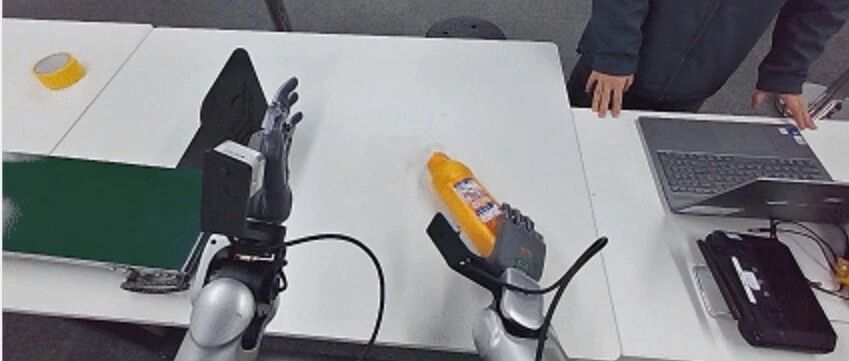
Core Viewpoint - The LET dataset, the world's first full-size humanoid robot real-world operation dataset, addresses the critical shortage of high-quality, large-scale, standardized real-world operational data, which has been a significant barrier to the advancement of humanoid robots and embodied intelligence [1][5]. Group 1: Data Scarcity in Humanoid Robotics - Humanoid robot data is scarce due to the dual barriers of technology and cost, with the "Scaling Law" indicating that model performance improves significantly with increased data volume, model size, and computational power [3][4]. - Real-world data collection is costly, with traditional methods yielding only three to four valid data points per hour at a cost of nearly twenty yuan per data point, leading to annual costs approaching three hundred thousand yuan for manual collection [4]. Group 2: LET Dataset Release - The LET dataset, developed by Leju Intelligent and other institutions, is the largest open-source dataset of its kind in China, featuring over 60,000 minutes of real machine data collected from the "Kua Fu" humanoid robot [5][7]. - The dataset incorporates innovative technologies to ensure high data quality, achieving over 90% consistency and controlling timestamp errors within ten milliseconds, which enhances the robustness and transferability of models trained on this data [7]. Group 3: Comprehensive Scene Coverage - The LET dataset covers three core areas: industrial, commercial retail, and daily life, detailing six real-world operational scenarios and encompassing 31 key tasks and 117 atomic skills [8]. - This extensive coverage allows developers to quickly adapt to vertical industry needs, facilitating the transition from technology validation to large-scale application of embodied intelligence [8]. Group 4: Tools and Future Implications - To lower the usage threshold and accelerate technology transfer, the LET dataset provides a comprehensive toolchain for data conversion, model training, simulation testing, and real machine deployment, enabling developers to achieve "plug-and-play" functionality [10]. - The release of the LET dataset not only fills the gap in high-quality real machine data but also supports the scaling law for humanoid robots, fostering a virtuous cycle of data sharing, technological iteration, and application optimization [11].
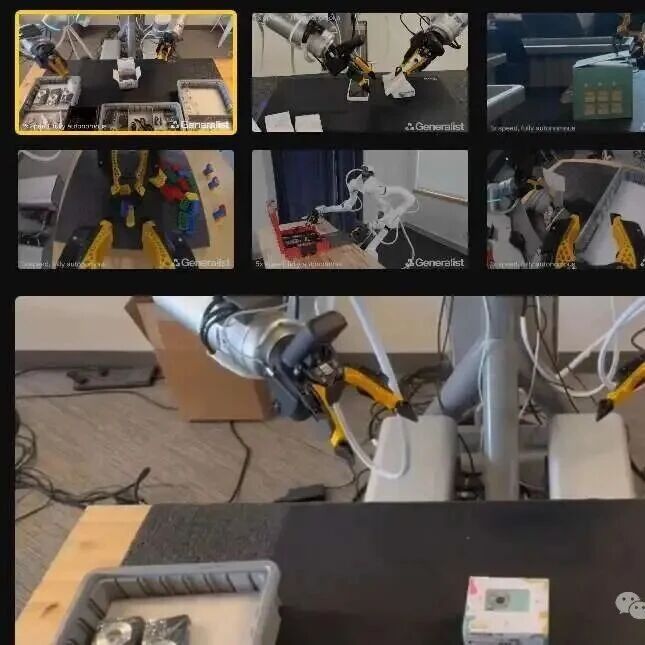
GEN-0:史上规模最庞大多元的具身真实世界操作数据集!
自动驾驶之心· 2025-11-11 00:00
Core Insights - The article discusses the introduction of GEN-0, a new type of embodied foundational model designed for multimodal training based on high-fidelity physical interactions, which aims to enhance robotic intelligence through real-world data [5][9]. Group 1: GEN-0 Model Features - GEN-0 inherits advantages from visual language models while achieving breakthroughs, such as capturing human-level conditioned reflexes and physical common sense [5]. - The model exhibits a strong scaling law, where increased pre-training data and computational power predictably enhance performance across multiple tasks [6][11]. - The "harmonic reasoning" mechanism allows the model to train seamlessly in synchronous thinking and action, enabling it to scale without relying on dual-system architectures [6][11]. Group 2: Data and Training Insights - GEN-0 has been pre-trained on over 270,000 hours of real-world heterogeneous manipulation data, with the dataset expanding at a rate of over 10,000 hours per week [20][22]. - Smaller models exhibit a "solidification" phenomenon when faced with data overload, while larger models continue to improve, revealing a significant "phase change" in model intelligence capacity [11][13]. - The article highlights that the scaling laws observed in the model's performance correlate with the amount of pre-training data, demonstrating a power-law relationship that can predict performance improvements [15][18]. Group 3: Future Directions - The Generalist AI Team is working on building the largest and most diverse real-world operational dataset to expand GEN-0's capabilities, covering a wide range of tasks across various environments [22]. - The model's ability to adapt to new tasks with minimal fine-tuning is emphasized, showcasing its potential for rapid deployment in diverse robotic applications [6][11].