LV美妆

Search documents
考虑出售玫珂菲,LVMH集团“甩包袱”?
Bei Jing Shang Bao· 2026-02-26 11:53
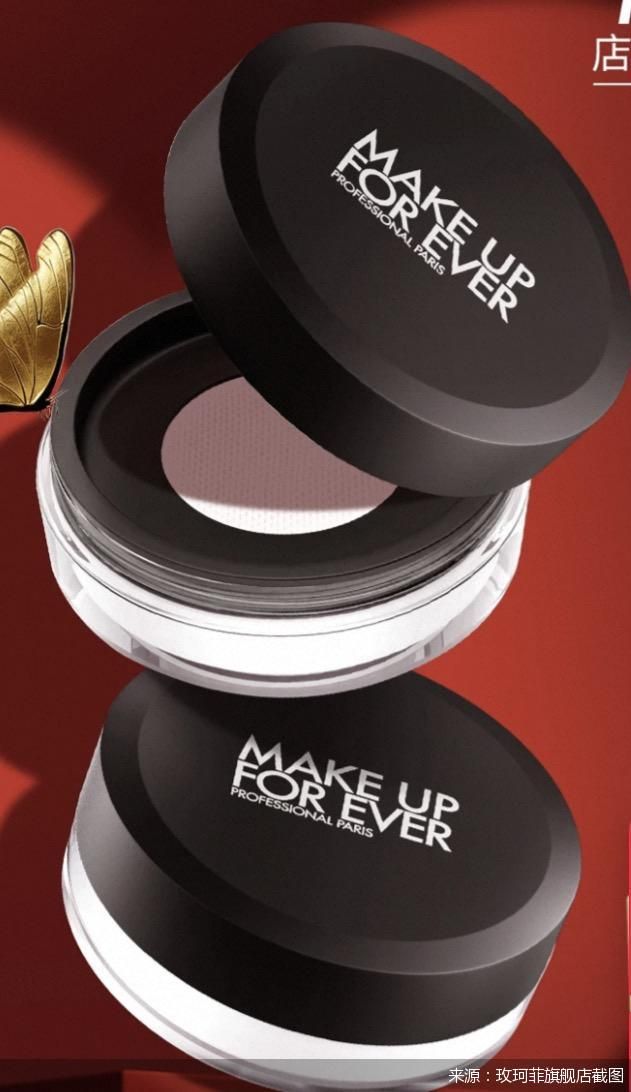
Core Viewpoint - LVMH is considering selling its makeup brand Make Up For Ever and skincare brand Fresh, as well as divesting part of its stake in Fenty Beauty due to declining performance and profitability challenges in the luxury market [2][3][4]. Group 1: Brand Performance - Make Up For Ever, founded in 1984 and acquired by LVMH in 1999, has been experiencing losses for several years, with an average price point of 300-500 RMB [2][3]. - Fresh, established in 1991, has also been facing difficulties, including the closure of multiple stores in China between 2024 and 2025 [3]. - Fenty Beauty, co-founded by Rihanna, initially gained popularity but has not maintained its momentum, leading to a decline in brand visibility [3]. Group 2: Financial Performance of LVMH - LVMH's total revenue for 2025 is projected to be 80.8 billion euros, a decrease of 3.876 billion euros (5%) from 2024 [4]. - The company's operating profit and net profit are expected to decline by 9% and 13%, respectively, amounting to 17.755 billion euros and 10.878 billion euros [4]. - In 2024, LVMH's revenue was 84.683 billion euros, down 2% year-on-year, with operating profit and net profit decreasing by 14% and 17%, respectively [4]. Group 3: Market Trends and Strategic Shifts - The luxury market is shifting from oligopoly to a more diversified landscape, with increasing competition from niche and custom brands [4]. - Consumer behavior is changing, with a decreasing willingness to pay premium prices, prompting luxury brands to focus on product innovation and service improvement [4]. - LVMH's strategy may involve divesting non-core brands to concentrate resources on stable growth brands like Dior and Guerlain, reinforcing its position in the high-end beauty market [5].

南京位列国内文旅消费目的地城市首位
Nan Jing Ri Bao· 2025-10-09 00:39
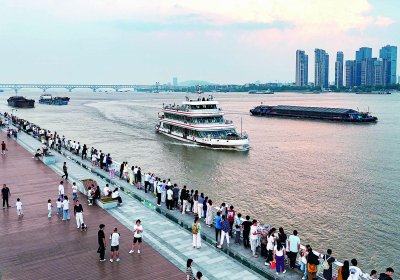
Core Insights - Nanjing emerged as the top domestic cultural and tourism consumption destination during the recent National Day and Mid-Autumn Festival holiday, with significant increases in both visitor numbers and tourism revenue [1][6]. Tourism Performance - During the 8-day holiday, Nanjing welcomed 20.097 million visitors, generating a total tourism revenue of 27.94 billion yuan, representing year-on-year increases of 30.2% and 34.8%, respectively [1]. - The city’s major scenic spots received 9.547 million visitors, while cultural venues attracted 906,000 visitors, and rural tourism sites welcomed 1.716 million visitors [3]. Visitor Demographics - Over 70% of visitors were from outside Nanjing, with Zhejiang being the largest source of tourists. Other significant regions included Anhui, Shandong, and Shanghai [3]. - Notably, visitors from Sichuan, Qinghai, and Shaanxi saw substantial increases in numbers, with growth rates of 51.9%, 48.6%, and 46.5%, respectively [3]. Night Tourism and Accommodation - The night tourism market thrived, with events like the Mid-Autumn Lantern Festival and various concerts attracting large crowds. Many visitors extended their stays to enjoy the city's nightlife [5]. - Hotel occupancy rates reached an average of 79.8%, up 5.7 percentage points from the previous year, with several hotels fully booked throughout the holiday [5]. Rural Tourism - The "Enjoy the Countryside" initiative saw over 80% occupancy rates on rural tourism buses, and rural accommodations reported an average occupancy rate exceeding 75% [6]. - Nanjing ranked first in the province for intercity cultural tourism spending, totaling 4.93 billion yuan, a year-on-year increase of 28.4% [6]. Consumer Activities - The city organized over 300 promotional activities to stimulate consumption, resulting in a total sales revenue of 1.47 billion yuan from monitored shopping centers, a 3.8% increase from last year [7]. - New retail experiences, including the opening of flagship stores and pop-up exhibitions, contributed to a vibrant shopping atmosphere [7]. Integration of Culture, Commerce, and Sports - The integration of cultural, commercial, and sports events enhanced consumer experiences, with significant sales recorded during sports events, generating 870 million yuan in transactions on match days [8]. - The innovative "ticket root economy" model effectively stimulated citywide consumption, showcasing the successful fusion of various sectors [8].
传瑞幸大股东竞购星巴克中国;奥乐齐中国去年销售额翻倍;LV 美妆中国首店将落户南京德基丨品牌周报
36氪未来消费· 2025-07-13 09:26
Group 1: Starbucks China Acquisition - Luckin Coffee's major shareholder, Dazhong Capital, is considering acquiring Starbucks China, amidst a competitive relationship between the two companies [2][3] - Starbucks has received multiple acquisition proposals for its China business, with most investors aiming for a controlling stake, while Starbucks prefers to retain 30% ownership [2] - The valuation of Starbucks China has surpassed $10 billion for the first time, leading to a 3% increase in Starbucks' stock price, reaching a market cap of $107.8 billion [2] Group 2: Aolezi's Growth in China - Aolezi's sales in China doubled to 2 billion yuan in 2024, despite a slow increase in store count, indicating improved single-store efficiency [5] - The company has adopted aggressive pricing strategies to attract customers, offering significantly lower prices on various products [5] - Aolezi plans to accelerate its store openings, expanding beyond Shanghai to other regions, with a total of 78 stores expected by July 2025 [5][6] Group 3: Liangpinpuzi's Control Change - Liangpinpuzi announced a potential change in control, with its major shareholder planning significant changes that may affect the company's direction [7][8] - The company has faced declining revenue and profits, with a reported revenue of 7.159 billion yuan in the previous year, down 11.02% [7] - The competitive landscape in the snack industry has intensified, prompting Liangpinpuzi to consider strategic changes [7] Group 4: LV Beauté's Entry into China - LV Beauté, a brand under LVMH, is entering the Chinese market with its first store in Nanjing, focusing on high-end beauty products [9][10] - The store will feature a range of products and a custom experience area, capitalizing on Nanjing's strong luxury market [9] - LVMH's expansion into beauty aligns with the growing demand for beauty products and aims to enhance brand engagement with younger consumers [10][11] Group 5: The Ordinary's AI Flagship Store - The Ordinary has launched its first AI-powered flagship store on Tmall, enhancing the shopping experience with personalized skincare recommendations [22] - The brand is known for its effective products and aims to leverage AI technology to improve customer engagement and product selection [22] Group 6: IPO of Plant Doctor - Plant Doctor has submitted its IPO application to the Shenzhen Stock Exchange, aiming to raise nearly 1 billion yuan for various projects [24][25] - The company specializes in high-altitude plant skincare products and has been in operation since 1994, predating several current leading beauty companies [25] Group 7: ECCO's Outdoor Expansion - ECCO is expanding into the outdoor apparel market, launching a new store format focused on outdoor and sports products [21] - The brand has opened 20 ACTIVE LIFESTYLE stores in China and plans to continue expanding in economically vibrant cities [21]