
LeBron XXIII

Search documents
新财季营收实现增长:耐克的“触底反弹”不是偶然,而是系统性胜利
Sou Hu Cai Jing· 2025-10-11 05:51
Core Insights - Nike's Q1 FY2026 results exceeded market expectations, indicating a recovery from a strategic adjustment phase [1][2] - The "Win Now" plan is showing positive results, particularly in North America and key product categories [2][3] Financial Performance - Nike reported Q1 FY2026 revenue of $11.7 billion, a 1% year-over-year increase, with net profit at $727 million [1] - Gross margin decreased by 320 basis points to 42.2%, primarily due to lower average selling prices and increased discounts [1] - The direct-to-consumer segment saw a revenue decline of 4%, while the distributor business grew by 7% [3] Strategic Adjustments - Under CEO Elliott Hill's leadership, Nike has refocused on distributor channels and adjusted its organizational structure to better meet athlete needs [3][5] - The company is balancing direct sales with distributor channels to align with current market demands [5] Product Innovation - Nike launched innovative products in running, outdoor, and basketball categories, driving growth and enhancing brand strength [6][10] - The running segment saw a 20% global growth, with strong consumer response to new models like Nike Vomero Premium [7][8] Market Performance - North America revenue grew by 4%, while the Greater China region showed signs of recovery with a reduced year-over-year decline [13][15] - Inventory management improved, with a 2% decrease in overall inventory, allowing for better product launches [15] Brand Engagement - Nike is actively engaging younger consumers through cultural initiatives and community events, reinforcing its brand presence [17][21] - The company is focusing on building a community around sports, enhancing consumer loyalty and participation [21][22] Future Outlook - Nike aims to solidify its market position through continued innovation and strategic adjustments, with a focus on long-term growth [24][25] - The company has returned approximately $714 million to shareholders, reflecting confidence in its recovery strategy [24]



焕新驱动复苏,耐克回归运动主场
华尔街见闻· 2025-10-10 10:41
Core Viewpoint - Nike's revenue for Q1 FY2026 reached $11.7 billion, a 1% year-over-year increase, surpassing market expectations of $10.99 billion [1][3] Strategic Deployment - The growth is attributed to a strategic initiative centered around "returning to sports" known as the "Win Now" plan, which has been fully implemented since Elliott Hill became CEO in October last year [2][3] Business Performance - Nike's global revenue showed positive year-over-year growth, with the running segment experiencing approximately 20% growth, serving as a key driver for recovery [4][17] - Inventory issues have significantly improved, with inventory assets at $8.1 billion, a 2% decrease year-over-year, optimizing inventory structure for future performance rebounds [5] Brand Renewal - Nike is undergoing a brand renewal process, resonating with contemporary themes through the reinterpretation of its classic slogan "Just Do It" to "Why Do It?" [6][7] - This shift aims to address the anxieties of the younger generation by emphasizing the significance of action rather than perfection [8] Product Innovation - Nike's unique development model, "built by athletes," focuses on listening to athlete feedback to drive product innovation [11] - The company has strategically restructured its running shoe lineup, introducing the Vomero series, which integrates advanced cushioning technology to enhance the running experience [16] Market Performance - In the North American market, revenue grew by 4% to $5.02 billion, with apparel and equipment categories showing significant growth of 11% and 16% respectively [31] - The Greater China region reported revenue of $1.512 billion, with inventory levels decreasing by 11%, indicating improved overall inventory conditions [37] Strategic Integration - Nike has restructured its organizational model to focus on sports categories rather than traditional divisions, aiming to enhance brand positioning and better serve diverse consumer groups [38] - The company is also expanding its market presence through collaborations, such as the partnership with SKIMS to enhance its offerings in the women's market [41] Market Expectations - Analysts have raised their expectations for Nike, with 17 giving a "buy" rating and another 17 maintaining a "hold" recommendation, reflecting confidence in the company's strategic direction [42]

破局与重塑:耐克开启复苏之路
Xin Jing Bao· 2025-10-10 07:33
Core Insights - Nike has reported a revenue of $11.7 billion for Q1 of FY2026, marking a 1% year-over-year increase, surpassing analyst expectations [1] - The "Win Now" strategy initiated under CEO Elliott Hill is showing early signs of success, particularly in key markets like North America and the running segment [1][4] Revenue Performance - Nike brand revenue increased by 2% to $11.4 billion, while Converse brand revenue fell by 27% to $366 million [1] - Direct-to-consumer revenue decreased by 4% to $4.5 billion, while wholesale revenue grew by 7% to $6.8 billion [1] Regional Performance - North America saw a revenue increase of 4% to $5.02 billion, a significant improvement from an 11% decline in the previous fiscal year [2] - EMEA (Europe, Middle East, and Africa) revenue grew by 6% to $3.33 billion [2] - Greater China market revenue declined by 9% to approximately $1.51 billion, showing a notable improvement from previous quarters [2] Gross Margin and Inventory Management - Gross margin decreased by 320 basis points to 42.2%, but was above market expectations of 41.7% [2] - Inventory decreased by 2% to $8.1 billion, with a notable 11% reduction in the Greater China market [2] Strategic Initiatives - The "Win Now" plan continues to be a focal point for Nike, emphasizing product innovation in professional sports [4] - Nike's running business achieved a 20% increase globally, with high single-digit growth in the Chinese market [7] Product Innovations - Nike launched new running shoes, including the Vomero Premium and Vomero Plus, enhancing cushioning and comfort [4] - In basketball, Nike introduced a new product matrix catering to different player styles, including LeBron XXIII and JA 3 [8] Brand Marketing and Community Engagement - Nike increased brand marketing investments, launching a new campaign featuring top athletes to connect with younger consumers [8] - The company is actively engaging in community-building initiatives, such as the "Running Sensation Program" and collaborations with sports technology firms [9] New Growth Opportunities - Nike is exploring new growth avenues, including the launch of the SKIMS clothing line targeting the women's sports market [10] - The company is also focusing on the children's market, collaborating with LEGO and creating interactive experiences to enhance brand loyalty [10]
营收超预期、库存连降,耐克CEO贺雁峰最新答卷:以“运动”为锚,曙光已见
Cai Jing Wang· 2025-10-10 06:38
Core Insights - Nike's Q1 FY2026 financial report indicates signs of recovery with revenue of $11.7 billion, a slight increase of 1% year-over-year, surpassing market analysts' expectations [2] - The dealer business generated $6.8 billion in revenue, significantly exceeding the $4.5 billion from direct sales, becoming a key driver of growth [2] - Global inventory decreased by 2% to $8.1 billion, with a notable 11% reduction in Greater China, reflecting effective inventory management [2] Strategic Actions - Under CEO Elliott Hill's leadership, Nike has focused on "sports" as the core strategy, implementing the "Win Now" plan through organizational restructuring, product innovation, market ecosystem restoration, brand value redefinition, and localized execution [3] - Organizational restructuring aimed to refocus Nike on "sports" by breaking down business units into sport-specific segments, allowing for targeted efforts in running, basketball, and soccer [4] - The team has successfully rebuilt relationships with wholesale partners, recovering lost market shelf space and driving the dealer business back to growth, with dealer revenue accounting for over 58% of total revenue [5][6] Inventory Management - Effective inventory management has been a critical component of the "Win Now" plan, with global inventory assets decreasing to $8.1 billion and significant improvements in inventory turnover efficiency [6] - The reduction in inventory levels for previously over-reliant classic series like Air Force 1 and Dunk has created space for seasonal product replenishment and new product launches [6] Brand Value Rebuilding - Nike is focusing on brand value reconstruction by emphasizing key sports moments and increasing innovation investments, leading to a gradual recovery in brand visibility since mid-2024 [7] - Recent marketing initiatives, including collaborations with top athletes and immersive experiences, have reinforced Nike's commitment to its core "sports" identity [7] Future Growth Strategy - Despite the positive Q1 FY2026 results, Nike acknowledges the complexity of recovery across different business areas, emphasizing that progress will not be linear [9] - The "Win Now" plan will continue to drive strategic focus, product innovation, and channel optimization to support comprehensive recovery across all categories and regions [10] Product Innovation - Nike is intensifying investments in core categories such as running, basketball, and soccer, with new product launches aimed at enhancing competitive advantage [11][12] - The company is also targeting women's and children's markets with innovative products and collaborations, expanding its reach in these segments [14][15] Financial Outlook - Capital markets are showing optimism regarding Nike's long-term profitability, with RBC upgrading its rating to "outperform" and raising the target price to $90, anticipating significant revenue contributions from the 2026 World Cup [16] - The resilience of Nike's supply chain, with production expanded to multiple countries, positions the company to better withstand market fluctuations and policy risks [16] Conclusion - Over the past year, Nike has laid a solid foundation for transformation, with a focus on the "Win Now" plan, core category innovation, and leveraging upcoming events like the World Cup to drive sustainable growth [17]
已过万重山,耐克迎接新拐点
Mei Ri Jing Ji Xin Wen· 2025-10-01 11:57
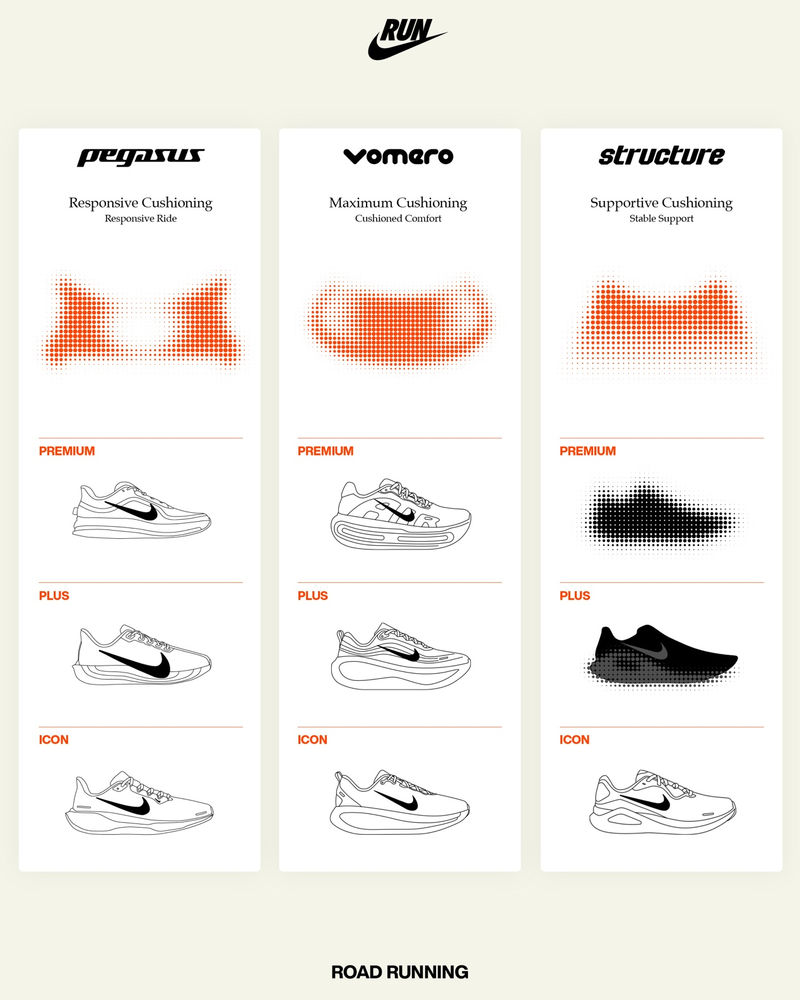
Core Insights - Nike has achieved a turning point in its performance through proactive adjustments and a focus on sports, as evidenced by its Q1 2026 financial results that exceeded market expectations [1][2][3] Financial Performance - Nike's Q1 2026 revenue reached $11.7 billion, surpassing the market expectation of $11.02 billion, with a year-over-year growth of 1% [1] - Gross margin was reported at 42.2%, exceeding the expected 41.7%, and earnings per share were $0.49, significantly higher than the anticipated $0.27 [1] - Revenue growth was observed across North America, Europe, the Middle East, and Africa, while inventory in Greater China decreased by 11% [1][3] Inventory Management - The company has made significant progress in inventory optimization, with total inventory down 2% year-over-year to $8.11 billion, and a notable 11% decrease in Greater China [3][6] - Wholesale revenue for the quarter reached $6.8 billion, reflecting a 7% year-over-year increase, indicating a recovery in relationships with distributors [3] Market Outlook - For Spring 2026, Nike anticipates a noticeable increase in order volume, particularly in the sports category, with expectations of moderate growth in wholesale revenue for FY 2026 [2][4] - North America is expected to lead the global market recovery [2] Product Innovation - Nike's focus on professional sports has led to product innovations, with the running segment experiencing approximately 20% growth globally, and high single-digit growth in Greater China [5][6] - The introduction of new products, such as the Vomero 18 running shoes and LeBron XXIII basketball shoes, showcases Nike's commitment to technological advancements tailored to athlete needs [5][6] Brand Strategy - Nike's recent marketing campaign, "Why Do It?", aims to resonate with younger consumers by emphasizing the importance of taking action over the fear of failure [7][8] - The company continues to invest in community engagement and brand building, enhancing its connection with consumers through various initiatives [8][9] Future Growth Drivers - Continuous investment in product innovation, community, and cultural activities is seen as crucial for Nike's long-term growth [9][10] - The company has maintained a consistent dividend increase for 23 consecutive years, with a quarterly payout of $591 million, reflecting a 6% year-over-year growth [9]
触底反弹,耐克进一步开启复苏之路
Guan Cha Zhe Wang· 2025-10-01 01:29
Core Insights - Nike is showing signs of recovery after strategic adjustments, with Q1 FY2026 revenue of $11.7 billion, a 1% year-over-year increase, exceeding analyst expectations [1] - The company's inventory decreased by 2% year-over-year to $8.1 billion, indicating effective inventory management and improved channel health [1] - CEO Elliott Hill emphasized the success of the "Win Now" plan, particularly in North America and key sports categories, suggesting a focus on long-term growth potential [1] Revenue Breakdown - Nike's direct sales generated $4.5 billion, while distributor sales accounted for $6.8 billion [1] - The Greater China region contributed $1.512 billion to the overall revenue [1] Performance by Category - The running segment saw a remarkable 20% growth globally, with high single-digit growth in China, driven by upgraded product offerings [2] - Basketball performance is bolstered by cultural initiatives and product innovations, leveraging the popularity of NBA stars [5] Youth Engagement and Brand Narrative - Nike is revitalizing its brand narrative to resonate with younger consumers, shifting from "Just Do It" to "Why Do It," emphasizing the meaning behind sports [7] - The company is also focusing on trendy products that appeal to younger demographics, enhancing brand connection [8] Market Expansion Strategies - Nike is expanding into high-potential markets such as women's, children's, and outdoor segments to drive long-term growth [10][12][14] - The launch of the NikeSKIMS series targets the women's market, showcasing a blend of functionality and aesthetics [10] - Initiatives like "少儿跑" (Children's Running) events aim to engage younger audiences and build brand loyalty [12] Outdoor and Emerging Markets - The establishment of the All Conditions Racing Department aims to enhance Nike's presence in the outdoor and trail running markets [14] - Product innovations in the ACG line focus on improving comfort and performance for outdoor activities [14] Market Sentiment - Following the earnings report, several Wall Street firms upgraded Nike's rating to "outperform," reflecting increased investor confidence [16] - The company's recovery is attributed to systematic transformation and diversification across various growth engines [16]
首店经济爆发:上海成全球运动品牌“战略母港”
Guo Ji Jin Rong Bao· 2025-09-11 13:01
Core Insights - Shanghai is leveraging the "first store economy" to drive the global fashion and sports industry upgrade, attracting major brands like Nike, Adidas, and Arc'teryx to establish flagship and concept stores, positioning the city as a strategic hub for future product and consumer model definitions [1][2] Group 1: Market Trends - From January to July this year, Shanghai saw the opening of 554 new first stores, including 11 global and Asian first stores, and 85 national and mainland first stores, with high-energy first stores accounting for 17.3% of the total [1] - The sports apparel sector represented 28% of new flagship stores opened in Shanghai from last year to the first half of this year, indicating significant growth in this category [2] Group 2: Brand Activities - Nike launched the LeBron XXIII signature shoe in Shanghai, highlighting the city as a priority location for new product releases [2] - Adidas opened two flagship stores in May and June, focusing on customization and sustainable practices, aligning with Shanghai's "waste-free city" initiative [2] Group 3: Consumer Behavior - Consumers are increasingly valuing emotional connections, with flagship stores serving as platforms for cultural exchange and creative expression [3] - The presence of international brands and local companies in Shanghai is fostering innovation in design, research, and product development, enhancing the consumer market [3] Group 4: Strategic Importance - The evolution of Shanghai's first store economy reflects a dual approach of urban commercial ecology and global brand strategies, providing brands with access to high-net-worth consumers and mature retail infrastructure [4] - The establishment of sports brand flagship stores contributes not only to tax revenue and employment but also enhances the city's international influence [4]