
运动内衣

Search documents
县城贵妇的「美丽刑具」,终于被抛弃了
3 6 Ke· 2026-01-21 03:58
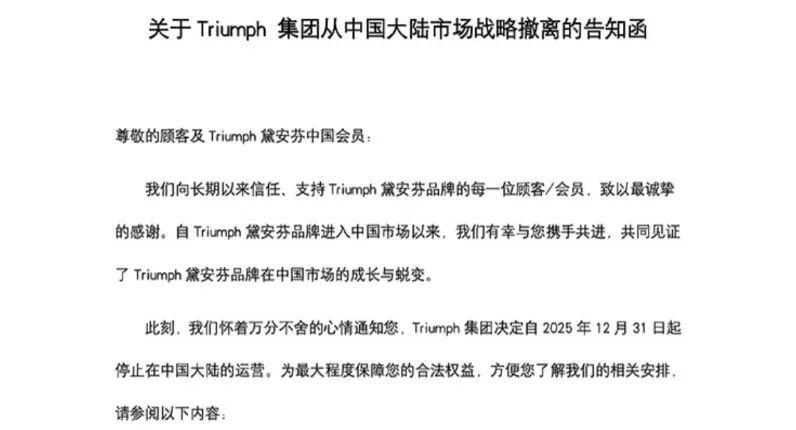
Core Insights - The article discusses the significant shift in the lingerie market, particularly the decline of traditional underwire bras and the rise of comfortable, wire-free options, reflecting changing consumer preferences towards comfort over traditional notions of sexiness [1][6][27]. Group 1: Market Trends - The lingerie market has seen a transformation where brands like Triumph, once dominant, are now struggling as consumers move away from underwire bras towards softer, more comfortable options [5][6][25]. - The shift in consumer preferences is evident as traditional lingerie stores have changed their offerings to focus on lighter, more comfortable materials, moving away from the structured, underwire designs [7][9]. - The rise of brands emphasizing comfort, such as Ubras and Bananain, highlights a broader trend where consumers prioritize comfort and personal expression over traditional sexy aesthetics [14][19]. Group 2: Brand Evolution - Victoria's Secret, once a leader in the lingerie market, has experienced a significant decline in sales, dropping from $7.5 billion in 2019 to around $2 billion in 2023, prompting a shift towards wire-free and sports lingerie [23][25]. - The marketing strategies of lingerie brands have evolved, with a focus on promoting health, comfort, and self-acceptance rather than traditional sexy imagery [32][40]. - The article notes that the concept of "sexy" in lingerie advertising has shifted, with modern campaigns focusing on empowerment and self-definition rather than conforming to past ideals [36][42]. Group 3: Consumer Behavior - Consumers are increasingly rejecting the discomfort associated with traditional bras, leading to a rise in the popularity of wire-free options that prioritize comfort and fit [11][14]. - The article emphasizes that the modern consumer is more aware of their body and comfort needs, leading to a rejection of the restrictive designs of the past [13][19]. - The trend towards "no bra" or alternative options like breast stickers indicates a significant cultural shift in how women view lingerie and their bodies [44][52].

传统内衣的困局,「运动内衣」是解药吗?
3 6 Ke· 2026-01-05 03:42
Core Insights - The traditional lingerie market in China is undergoing a significant transformation, with a shift from underwire bras to more comfortable and breathable options favored by younger women [6][32] - New local brands like NEIWAI, Ubras, and Jiao Nai are gaining market share by focusing on comfort and emotional value, while established brands like Aimer and Anita are struggling to maintain their positions [15][17] Market Trends - The demand for sports bras is rising as fitness and lifestyle trends become more integrated into daily life, with brands like Lululemon and MAIA ACTIVE gaining popularity [9][10] - Traditional lingerie brands are attempting to pivot towards the sportswear segment to revitalize their offerings, as seen with Aimer's launch of AIMER SPORTS [18][20] Consumer Behavior - There is a notable shift in women's perceptions of "sexy," moving from external validation to self-acceptance and comfort, which is influencing purchasing decisions [32][39] - Emotional satisfaction and psychological comfort are becoming key factors in women's lingerie choices, leading to a more nuanced understanding of "self-pleasure" in the market [39][46] Competitive Landscape - Established brands are losing market share to emerging local brands, with significant declines in market presence reported for companies like Aimer and Urban Beauty [15][17] - The trend of "sportsification" is not limited to lingerie but is also affecting the broader apparel industry, with brands across categories adapting to this shift [47][51]

黛安芬关闭中国内地门店,千亿内衣市场有人吃肉有人喝汤
Sou Hu Cai Jing· 2025-11-24 15:13
Core Viewpoint - The German lingerie brand Triumph, with over 130 years of history, announced the closure of all offline stores in mainland China by December 31, 2025, along with the shutdown of all online stores by December 5, 2025, signaling a strategic retreat due to significant market changes [2][4]. Company Summary - Triumph was founded in 1886 in southern Germany and entered the Chinese market in 2008, being one of the first brands to introduce "underwire bras" to China [4]. - The company has previously closed stores in the UK in 2017 and is now facing rising operational costs in China, which necessitate high inventory turnover and intense promotions, compressing profit margins [7]. - As of 2024, Triumph's associated company in China, Yancheng International Women's Fashion Co., Ltd., has a registered capital of 15 million USD and employs 75 people [4]. Industry Summary - The Chinese lingerie market has undergone significant changes over the past decade, shifting from a focus on "underwire shaping" to a preference for "wireless comfort" [7]. - The market size for women's lingerie in China reached 223.7 billion CNY in 2024, with domestic brands surpassing foreign brands for the first time in market concentration [7][11]. - The market share of wireless bras increased to 68% in 2024, a 42 percentage point rise since 2018, indicating rapid growth in this segment [7][11]. - Local brands like Ubras, Neiwai, and Jiao Nai have gained prominence with their "wireless, zero-burden" philosophy, leading to a shift in consumer preferences [10][12]. - The competitive landscape is characterized by a fragmented market, with the top 10 brands holding only 8.9% market concentration in 2024 [11]. - Traditional brands are adapting through various strategies, with Urban Beauty focusing on core categories and Aimer pursuing a multi-brand and globalization approach [11]. - Emerging brands are rapidly gaining market share, with Ubras achieving sales of 3.5 billion CNY in 2024, and Jiao Nai's GMV surpassing 7 billion CNY, highlighting the shift towards comfort and segmentation in the market [12].

焕新驱动复苏,耐克回归运动主场
华尔街见闻· 2025-10-10 10:41
Core Viewpoint - Nike's revenue for Q1 FY2026 reached $11.7 billion, a 1% year-over-year increase, surpassing market expectations of $10.99 billion [1][3] Strategic Deployment - The growth is attributed to a strategic initiative centered around "returning to sports" known as the "Win Now" plan, which has been fully implemented since Elliott Hill became CEO in October last year [2][3] Business Performance - Nike's global revenue showed positive year-over-year growth, with the running segment experiencing approximately 20% growth, serving as a key driver for recovery [4][17] - Inventory issues have significantly improved, with inventory assets at $8.1 billion, a 2% decrease year-over-year, optimizing inventory structure for future performance rebounds [5] Brand Renewal - Nike is undergoing a brand renewal process, resonating with contemporary themes through the reinterpretation of its classic slogan "Just Do It" to "Why Do It?" [6][7] - This shift aims to address the anxieties of the younger generation by emphasizing the significance of action rather than perfection [8] Product Innovation - Nike's unique development model, "built by athletes," focuses on listening to athlete feedback to drive product innovation [11] - The company has strategically restructured its running shoe lineup, introducing the Vomero series, which integrates advanced cushioning technology to enhance the running experience [16] Market Performance - In the North American market, revenue grew by 4% to $5.02 billion, with apparel and equipment categories showing significant growth of 11% and 16% respectively [31] - The Greater China region reported revenue of $1.512 billion, with inventory levels decreasing by 11%, indicating improved overall inventory conditions [37] Strategic Integration - Nike has restructured its organizational model to focus on sports categories rather than traditional divisions, aiming to enhance brand positioning and better serve diverse consumer groups [38] - The company is also expanding its market presence through collaborations, such as the partnership with SKIMS to enhance its offerings in the women's market [41] Market Expectations - Analysts have raised their expectations for Nike, with 17 giving a "buy" rating and another 17 maintaining a "hold" recommendation, reflecting confidence in the company's strategic direction [42]


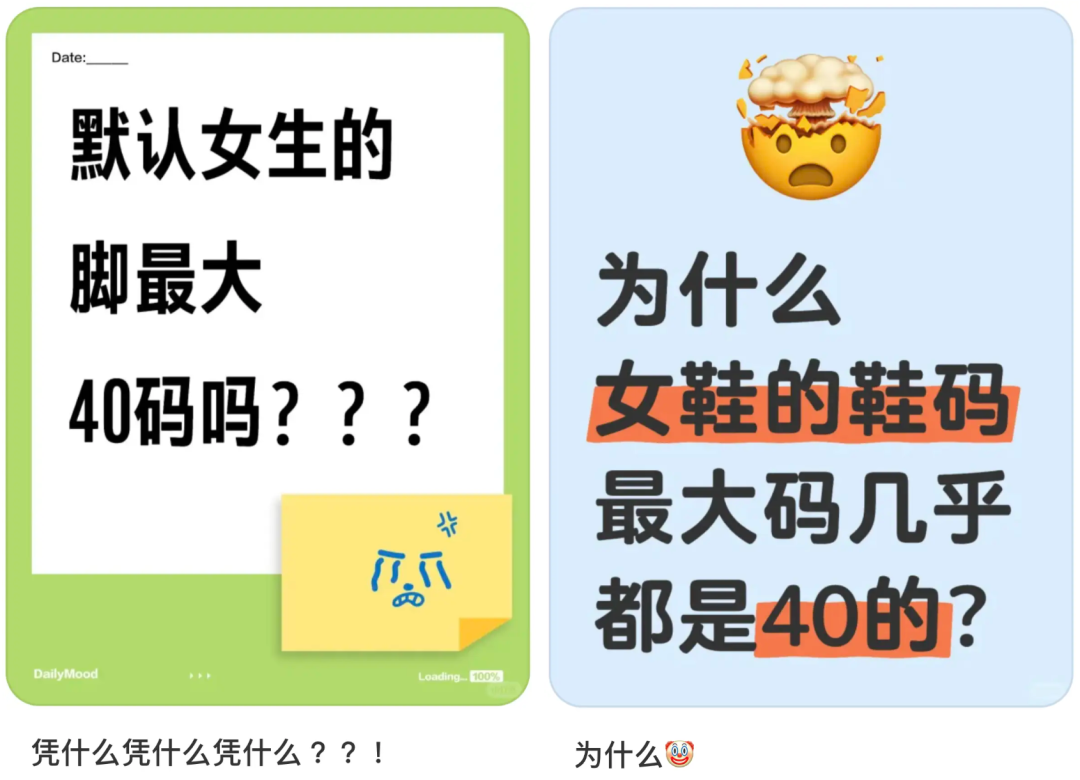
运动女性,买不到大码运动鞋
Hu Xiu· 2025-06-17 00:35
Core Viewpoint - The article highlights the significant issue of women's sports shoes, particularly for those with larger sizes, being largely unavailable in the market, despite the growing interest in women's sports and the "she economy" [5][30]. Group 1: Market Demand and Supply Gap - Female consumers, especially those with shoe sizes over 40, are facing a shortage of options in women's sports shoes, often having to resort to men's shoes as alternatives [2][9]. - The lack of availability of women's sports shoes, particularly in larger sizes, contradicts the booming female sports market, where brands are publicly committing to increasing their focus on female consumers [5][6]. - Research indicates that the absence of larger women's sizes in sports shoes is a long-standing issue, with many brands failing to adequately address the needs of female athletes [14][30]. Group 2: Design and Fit Issues - The anatomical and physiological differences between men and women necessitate specific designs for women's sports shoes to ensure comfort and performance [19][22]. - Studies show that women are more prone to certain foot conditions, which underscores the need for specialized footwear that caters to their unique requirements [20][22]. - The current market often overlooks these design needs, leading to a situation where women's shoes are not only limited in size but also in appropriate design features [35][39]. Group 3: Consumer Behavior and Market Trends - As more women engage in sports, they are becoming a significant consumer group, with higher spending on sports apparel and footwear compared to men [30][31]. - Social media discussions reveal a growing frustration among female consumers regarding the lack of suitable sports gear, indicating a demand for more inclusive product offerings [34][40]. - The article suggests that the ongoing neglect of women's footwear needs is a reflection of a broader issue within the sports equipment market, where women's requirements are often sidelined [39][40].
女性运动消费规模稳增 多样需求拓宽细分市场
Xiao Fei Ri Bao Wang· 2025-05-30 02:16
Core Insights - The female consumer segment is significantly influencing the sports consumption market in China, with a notable increase in participation and diverse preferences in sports products [1][2] Group 1: Market Trends - In 2024, the top three types of sports products purchased by female consumers in China are sports shoes (76.8%), sports apparel (71.6%), and sports underwear (51.8%), with 33.3% purchasing sports equipment [1] - The demand for sports equipment among female consumers is diversifying, moving beyond traditional fitness devices to include aesthetically pleasing and functional items like detachable hula hoops and "macaron" colored fitness gear [1] Group 2: Consumer Preferences - Female consumers are increasingly prioritizing both the functionality and visual appeal of sports products, leading to a shift in product development strategies within the industry [2] - The preference for different types of gyms is evident, with 60.7% of female consumers opting for commercial gyms, 46.7% attending group class gyms, and 38.1% using shared gyms [1] Group 3: Industry Response - The rapid growth of the female sports consumption market is driven by the release of segmented demands under the trend of consumption upgrading, prompting companies to innovate and adapt their offerings [2] - Brands are encouraged to focus on combining functionality with aesthetics in product design and to enhance the quality of the sports environment to better cater to female consumers [2]