
Lenovo Qira

Search documents
联想集团杨元庆:联想全面转型为AI原生公司
Xin Lang Cai Jing· 2026-04-01 03:05
Core Insights - Lenovo Group is transitioning to an AI-native company, emphasizing that AI is not an add-on but a core component of product design and business processes [1][2] - The new fiscal year is defined as the "Year of AI Delivery," with a focus on delivering personal and enterprise intelligent products to customers and establishing a leading position in the hybrid AI sector [2] Product and Technology - Devices equipped with Lenovo Qira will begin global shipments this month, and the Tianxi personal super-intelligent system will undergo a new iteration [2] - Lenovo aims to address the shortcomings of the widely discussed OpenClaw, which include complex installation, privacy security risks, and high token costs, through Qira and Tianxi [2] Marketing and Brand Strategy - The year 2026 is designated as a significant year for Lenovo's marketing and branding efforts [2] - Lenovo will participate as the official technology partner for FIFA during the World Cup this summer and will engage in 22 global F1 Grand Prix events throughout the year to enhance its international brand influence [2]

联想集团杨元庆宣布:联想要成为一家AI原生公司
Ge Long Hui· 2026-04-01 02:55
Group 1 - Lenovo Group aims to fully transform into an AI-native company, emphasizing that AI is not an additional project but a core component of product design and business processes [1] - The new fiscal year is defined as the "year of AI delivery," with a goal to deliver personal and enterprise intelligent products to customers and establish Lenovo's leading position in the hybrid AI field [1] - Lenovo will begin global shipments of devices equipped with Lenovo Qira this month, and the Tianxi personal super-intelligent system will undergo a new iteration [1] Group 2 - Lenovo plans to explore new forms of AI-native devices, including AI wearable devices represented by Maxwell, PCs and smartphones designed specifically for intelligent systems, and the personal computing hub Kubit [1] - In the enterprise intelligence sector, Lenovo will enhance its AI factory capabilities, covering the entire chain from computing infrastructure, data, models to intelligent systems, and provide lifecycle AI services [1] - The trend of AI inference shifting to local and edge environments is becoming increasingly clear, with AI inference servers and edge-cloud infrastructure being identified as critical battles to win [2] Group 3 - Lenovo's enterprise market will expand its share through the Vector program, while maintaining profitability in the cloud infrastructure market with an ODM+ model and aggressively expanding into the GPU data center market [2] - The year 2026 is set to be a significant year for Lenovo's marketing and branding, with plans to participate as an official technology partner in the FIFA World Cup and engage in 22 global F1 Grand Prix events to enhance brand international influence [2]
Lenovo Unveils Adaptive AI PCs, Modular Concepts, and Lenovo Qira Rollout at MWC 2026
Businesswire· 2026-03-01 23:01
Core Insights - Lenovo is showcasing a new generation of adaptive AI devices and concepts at MWC 2026, focusing on modular PC architecture, a glasses-free 3D laptop, a foldable gaming handheld, and the rollout of Lenovo Qira, reflecting a shift towards intelligent personal computing systems [1][3][17] Product Innovations - Lenovo Qira is introduced as a Personal Ambient Intelligence integrated into Lenovo and Motorola devices, designed to maintain continuity between tasks and assist based on user intent [4][6] - The modular AI PC concept features a 14-inch ultra-thin base system with interchangeable display configurations and detachable components, supporting evolving workflows [7] - A glasses-free 3D laptop concept enables creators to manipulate depth directly on screen, enhancing immersive content creation [8] - The foldable gaming handheld device transitions from a compact format to a larger screen, supporting various usage modes for gaming and productivity [10] Commercial Portfolio - Lenovo's updated ThinkPad T-Series focuses on serviceability and AI readiness, with select models achieving high repairability scores, emphasizing lifecycle value and sustainable management [11] - The ThinkPad X13 Detachable offers mobile-first productivity with integrated pen support, while the ThinkTab X11 is designed for rugged environments [12] - The ThinkBook 14 2-in-1 Gen 6 provides multimode versatility for small and medium-sized businesses, integrating security and lifecycle services [13] Consumer and Gaming Portfolio - Lenovo's latest devices for creators, students, and gamers balance performance and intelligent features, including the Yoga 9i 2-in-1 Aura Edition and the Idea Tab Pro Gen 2, which is the first tablet to feature Lenovo Qira [15][16] Strategic Vision - Lenovo emphasizes the democratization of AI, combining innovative hardware with Lenovo Qira to create a more connected and intuitive computing future [17]


联想控股增持联想集团股份,AI战略落地引关注
Jing Ji Guan Cha Wang· 2026-02-21 01:28
Group 1: Company Developments - Lenovo Holdings completed an increase in its stake in Lenovo Group, acquiring approximately 115 million shares for about HKD 1.125 billion, raising its total ownership to 32.34% [1] - Lenovo Group launched its "Smarter AI for all" strategy at the CES 2026, introducing AI servers and the Lenovo Qira personal intelligent agent, with AI business revenue accounting for 30% [1] - Lenovo Group reported a 15% year-on-year revenue growth and a 25% increase in net profit for the second quarter of the 2025/26 fiscal year, achieving record highs [1] Group 2: Industry Environment - The Hong Kong Securities and Futures Commission has mandated a comprehensive review of the listing application process, affecting 70% of active projects, which may impose stricter scrutiny on Lenovo Holdings for any future capital operations [1] - Rising upstream chip costs and US-China trade tensions may pressure Lenovo Group's profits, necessitating attention to Lenovo Holdings' risk management strategies regarding its subsidiaries [2] - Lenovo Holdings has not announced any special dividend or buyback plans recently, but the upcoming annual report may reveal new capital allocation strategies [2]
LENOVO GROUP(00992) - 2026 Q3 - Earnings Call Transcript
2026-02-12 08:02
Financial Data and Key Metrics Changes - Lenovo achieved record global revenue of $22 billion, growing over 18% year-over-year, with adjusted net income expanding 36% year-over-year, doubling the pace of revenue growth [2][10] - Adjusted operating income was $903 million, an increase of 28% year-over-year, with adjusted net margin expanding to 2.7% [10][11] - AI-related revenue surged more than 70% year-on-year, now representing nearly one-third of total group revenue [3][10] Business Line Data and Key Metrics Changes - The Intelligent Devices Group (IDG) reported revenue growth of 14% year-on-year to almost $16 billion, maintaining industry-leading profitability [3][11] - The Infrastructure Solutions Group (ISG) delivered record revenue of $5.2 billion, up more than 30% year-on-year, with a strategic restructure aimed at achieving sustainable and profitable growth [4][16] - The Solutions and Services Group (SSG) achieved over 22% operating margin with 18% year-on-year revenue growth, focusing on vertical industries [5][18] Market Data and Key Metrics Changes - Lenovo's global PC market share reached 25.3%, up one percentage point year-on-year, marking the highest in history [11][12] - The mobile business achieved record volume and activations, with above-market growth across major sales geographies [3][12] - The overall PC revenue market is expected to grow year-over-year despite rising component costs, driven by a shift to premium segments [35][40] Company Strategy and Development Direction - Lenovo is focusing on hybrid AI, integrating personal AI and enterprise AI to capture growth opportunities [5][29] - The company is restructuring ISG to align with the shift from AI training on public cloud to AI inferencing on-prem and at the edge [4][46] - Lenovo aims to leverage operational excellence and innovation to navigate market cycles and enhance competitiveness [7][8] Management's Comments on Operating Environment and Future Outlook - Management expressed confidence in navigating supply shortages and rising costs, citing a resilient supply chain and operational excellence [32][34] - The company anticipates continued double-digit growth in both PC and infrastructure businesses despite market challenges [35][40] - Management emphasized the importance of AI democratization as a long-term trend, with significant growth opportunities in enterprise AI [29][30] Other Important Information - Lenovo showcased innovations at CES, including the AI super agent Lenovo Kira and new AI-native devices [6][14] - The company received over 200 awards at CES, reinforcing its leadership in innovation and commitment to hybrid AI [22] - Lenovo's restructuring in ISG is expected to deliver over $200 million in annualized savings over the next three years [4][48] Q&A Session All Questions and Answers Question: What are the significant opportunities in AI for Lenovo? - Lenovo is strategically positioned to capture AI opportunities through its hybrid AI strategy, with AI-related revenue growing over 70% and accounting for one-third of total revenue [26][30] Question: How is Lenovo preparing for rising component costs? - Lenovo is monitoring supply shortages and taking agile actions, leveraging operational excellence and a resilient supply chain to mitigate impacts [32][34] Question: What is the outlook for PC and smartphone markets in 2026? - The PC market is expected to see a mid-single-digit decline in units but offset by higher average selling prices, while Lenovo anticipates continued premium growth [39][40] Question: How is AI reshaping the SSG business? - The shift from proof of concept to production-level AI solutions is evident, with Lenovo's hybrid AI advantage addressing complex customer challenges effectively [66][68]
Omdia: Global Tablet Shipments Grew 10% in 2025 as Market Nears Slowdown
Businesswire· 2026-02-04 10:19
Core Insights - The global tablet market experienced a recovery in 2025, with shipments increasing by 9.8% year on year to 162 million units, marking the highest annual shipment volume since the pandemic-driven demand boom of 2020 [1][1] - Central & Eastern Europe was the fastest-growing region, followed by Asia Pacific, while North America recorded a decline despite a healthy holiday season supported by discounts [1][1] - The tablet market is expected to face increasing pressure in 2026, with vendors needing to balance competitiveness and profitability amid potential memory market disruptions [1][1] Market Performance - Q4 2025 shipments reached 44 million units, reflecting a 9.8% year-on-year growth [1][1] - Apple led the market with 19.6 million iPads shipped in Q4 2025, a 16.5% increase driven by strong demand for the iPad 11th Generation and M5-powered iPad Pro lineup [1][1] - Samsung's shipments declined by 9.2% year on year to 6.4 million units, while Lenovo saw a 36% increase, shipping 3.9 million units [1][1] Vendor Insights - Apple maintained a 44.9% market share in Q4 2025, while Samsung held 14.7%, Lenovo 8.8%, Huawei 6.9%, and Xiaomi 6.4% [1][1] - Lenovo's proactive shipment strategy ahead of expected price increases contributed to its growth, while Huawei and Xiaomi also reported year-on-year increases of 14.8% and 10.1%, respectively [1][1] - Vendor rankings remained unchanged in the full-year results, indicating stability in market leadership [1][1] Future Trends - The tablet market is expected to shift towards ecosystem-centric devices, with a focus on cross-OS functionality and AI-driven experiences [1][1] - Collaborations, such as between Apple and Google for generative AI features, are seen as positive developments for the tablet ecosystem [1][1]

联想集团发布最新CIO报告:AI投资回报率飙升至179%,企业有望进一步释放效率红利
Ge Long Hui· 2026-02-03 02:54
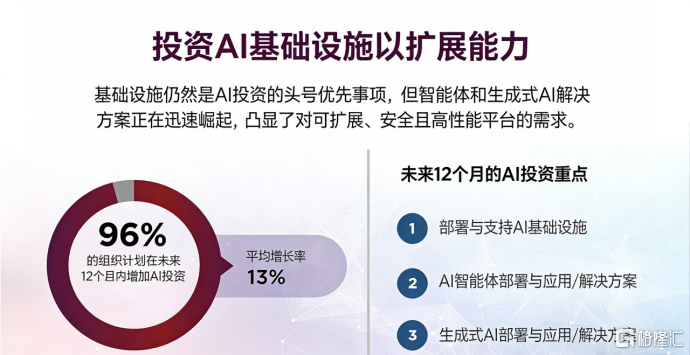
Core Insights - The report indicates that enterprises are increasingly optimistic about the return on AI investments, with a potential return rate of up to 179% as Agentic AI becomes more widely adopted [2][3] - Despite the high expectations, there is a significant gap in AI readiness among organizations, with only 27% having established a robust AI governance framework [2][3] - The transition from Generative AI to Agentic AI is anticipated to occur by 2026, with Agentic AI expected to become the primary focus for CIOs [7][9] Investment Expectations - Enterprises expect AI investments to yield substantial returns, with nearly half (46%) of AI proof-of-concept projects successfully moving into production [3] - A majority (96%) of respondents plan to increase AI investments in the next 12 months, with an average growth rate of 13% [3][11] AI Readiness and Governance - While 60% of organizations believe they are in the mid-to-late stages of AI application, only 27% have a well-established AI governance framework [6][11] - The lack of data quality, skilled personnel, and organizational collaboration is widening the gap between AI aspirations and reality [6] Deployment Trends - Hybrid AI is becoming the preferred deployment model, with 62% of surveyed enterprises choosing it as their main architecture [2][7] - Currently, only 21% of CIOs have deployed Agentic AI in actual business operations, with over half (55%) still in exploratory or pilot phases [2][7] Infrastructure and Support - The successful implementation of Agentic AI will depend on organizations' long-term capabilities, including secure and efficient infrastructure and flexible hybrid architectures [9][11] - Lenovo is introducing solutions to help enterprises transition from pilot projects to scalable AI applications, emphasizing the importance of governance frameworks [11][12] Future Outlook - The role of AI is evolving from a supportive tool to a production entity, necessitating advanced reasoning capabilities and low-latency feedback [7][9] - AI PCs and edge devices are becoming critical components in enterprise AI strategies, directly empowering employees and ensuring business process security [10]
联想集团涨近3% 近日联合英伟达推出“联想人工智能云超级工厂”
Zhi Tong Cai Jing· 2026-01-23 06:51
Core Viewpoint - Lenovo Group (00992) has seen a nearly 3% increase in stock price, currently at 8.85 HKD, with a trading volume of 472 million HKD, following the announcement of a deeper collaboration with NVIDIA in the artificial intelligence infrastructure sector [1] Group 1: Partnership and Product Launch - Lenovo and NVIDIA announced the launch of the "Lenovo AI Cloud Super Factory" during the 11th Tech World Conference, aiming to enhance AI cloud services [1] - Lenovo China introduced the "Lenovo AI Factory" solution, designed to transform traditional data centers into efficient AI factories, facilitating the application of full-stack AI technology in China [1] - Jensen Huang stated that Lenovo has built a majority of the world's supercomputers, indicating that this collaboration could accelerate the deployment of AI cloud services [1] Group 2: Market Outlook and Strategic Developments - Huatai Securities believes that Lenovo's partnerships with NVIDIA and AMD to launch a series of data center products will lay the groundwork for accelerated growth in the ISG segment by 2026 [1] - In the consumer segment, Lenovo launched the overseas version of its personal AI super-intelligent device, Lenovo Qira, marking a comprehensive closure of its AI strategy from hardware to software ecosystem [1] - The firm anticipates that Lenovo will continue to benefit from the global upgrade of the AI software and hardware ecosystem, with a positive long-term outlook on the potential expansion of business cooperation with NVIDIA [1]

港股异动 | 联想集团(00992)涨近3% 近日联合英伟达推出“联想人工智能云超级工厂”
智通财经网· 2026-01-23 06:50
Core Viewpoint - Lenovo Group is enhancing its collaboration with NVIDIA in the field of artificial intelligence infrastructure, launching the "Lenovo AI Cloud Super Factory" to facilitate the transformation of data centers into efficient AI factories [1][1]. Group 1: Partnership and Product Development - Lenovo and NVIDIA announced a deepened partnership at the 11th Tech World Conference, focusing on AI infrastructure [1]. - The collaboration aims to accelerate the deployment of AI cloud services globally, leveraging Lenovo's expertise in building supercomputers [1][1]. Group 2: Strategic Solutions and Market Position - Lenovo China launched the "Lenovo AI Factory" solution to assist enterprises in transitioning from traditional computing centers to intelligent AI factories [1]. - Huatai Securities believes that the partnership with NVIDIA and AMD will lay a foundation for accelerated growth in the ISG segment by 2026 [1]. Group 3: Consumer Products and Ecosystem - Lenovo introduced the overseas version of its personal AI super-intelligent device, Lenovo Qira, completing its AI strategy from hardware to software ecosystem [1]. - The company is expected to benefit from the global upgrade of the AI hardware and software ecosystem, with a positive long-term outlook on the expansion of its business collaboration with NVIDIA [1].
从AI眼镜到高阶智驾:CES释放电子产业链多终端进化信号
Ge Long Hui· 2026-01-13 08:47
Group 1: Wearable Devices and IoT - AI glasses and camera headphones remain the focus of wearable devices, with over 50 companies participating, primarily from mainland China, emphasizing aesthetics, lightweight design, all-day wear, multimodal interaction, and multi-chip solutions [1] - The innovation in headphones has shifted from single audio performance to a comprehensive evolution of sound quality, AI, and multimodal capabilities, with some products integrating cameras and environmental sensing [1] - New IoT categories such as smart imaging devices, 3D printers, and NAS are gaining attention, with many startups entering the market, alongside creative new products in AI home, AI recording cards, and AI displays [1] Group 2: Automotive Industry - AI is driving the intelligent upgrade of the entire automotive chain, with high-level autonomous driving expected to achieve large-scale implementation [2] - Chip manufacturers like NVIDIA are releasing open-source AI models to accelerate technology penetration and commercialization in the autonomous driving sector [2] - Domestic automakers such as Geely and Great Wall are showcasing their AI systems, while international companies like Mercedes and Jaguar Land Rover are partnering with AI giants to enhance their capabilities [2] Group 3: Robotics - Home and service robots are continuously upgrading, with traditional vacuum robots evolving to cover more cleaning scenarios and showcasing new intelligent models [3] - Humanoid robots remain a focal point, with companies demonstrating robots capable of complex movements and interactions [3] - The participation of domestic electronic industry companies in showcasing robotic components and manufacturing products has increased significantly [3] Group 4: PCs and Smartphones - Lenovo has introduced a cross-device super intelligent entity, Lenovo Qira, and partnered with NVIDIA for a new AI cloud super factory initiative, showcasing a range of AI-integrated devices [4] - Chip companies are upgrading edge chips to enhance the PC experience, with major players like Intel, Qualcomm, and AMD leading the advancements [4]
