MCU(微控制器)

Search documents
台媒:MCU将涨价
半导体芯闻· 2026-03-05 09:36
Core Viewpoint - The MCU market, which has faced two years of challenging conditions, is showing signs of recovery with recent price increases, raising questions about whether this is a temporary spike or a genuine turnaround for investors [1][3]. Group 1: MCU Market Overview - The MCU (Microcontroller Unit) is likened to an "all-around housekeeper," integrating computing, memory, and I/O functions into a single chip, and is essential in various applications, particularly in automotive systems [1][2]. - The global MCU market is highly concentrated, with the top six suppliers, including STMicroelectronics, Microchip, NXP, Renesas, Infineon, and Texas Instruments, holding over 80% market share, focusing on high-end, high-margin applications [2]. Group 2: Market Dynamics and Trends - The MCU market is projected to grow from $34.75 billion in 2025 to $57.25 billion by 2030, with a compound annual growth rate (CAGR) of 10.5%, driven by demand from electric vehicles, IoT, and edge AI [3]. - Recent price increases announced by Chinese semiconductor firms, ranging from 15% to 50%, signal a shift in the market dynamics, indicating that even low-cost competitors are feeling the pressure and may no longer sustain aggressive pricing strategies [3]. Group 3: Future Outlook - The potential for increased demand and the ability to negotiate price increases with clients could provide Taiwanese manufacturers with a competitive edge, marking a possible end to the two-year price-cutting nightmare [3]. - While the current price increases are driven by rising costs rather than demand, the industry must focus on expanding high-end or niche products to significantly transform operations and escape prolonged competitive pressures [3].

电子行业周报(2026、1、26-2、1):AI算力需求爆发,带动半导体设备、存储赛道景气度上行-20260203
Shanghai Aijian Securities· 2026-02-03 10:41
Investment Rating - The report rates the electronic industry as "stronger than the market" due to the increasing demand for AI computing power, which is driving the semiconductor equipment and storage sectors upward [5][38]. Core Insights - The demand for AI computing power is surging, positively impacting the semiconductor equipment and storage sectors, leading to an optimistic outlook for these industries [5][24]. - ASML reported a steady growth in 2025, with a net sales of €32.7 billion, a 16% year-on-year increase, and a net profit of €9.6 billion [24][25]. - Samsung Electronics and SK Hynix are benefiting from the tight supply and rising prices of storage chips, with Samsung's operating profit in Q4 2025 increasing by 209% year-on-year [25][29]. Summary by Sections Industry Performance - The SW electronic industry index decreased by 2.51%, ranking 19th out of 31, while the Shanghai and Shenzhen 300 index increased by 0.08% [5][8]. - The top five performing stocks in the SW electronic industry included Zhongwei Semiconductor (+36.57%) and Puran Co. (+35.79%) [15][16]. Company Financials - ASML's Q4 2025 net sales reached €9.7 billion with a gross margin of 52.2%, and the company expects Q1 2026 net sales between €8.2 billion and €8.9 billion [24][25]. - Samsung Electronics reported Q4 2025 revenue of 93.8 trillion KRW, a 24% year-on-year increase, with an operating profit of 20.1 trillion KRW [25][28]. - SK Hynix achieved a revenue of 97.15 trillion KRW in 2025, with a Q4 revenue of 32.83 trillion KRW [29][30]. Market Dynamics - The semiconductor storage market is experiencing significant price increases, with DRAM contract prices expected to rise by 55%-60% in Q1 2026 [33]. - Samsung plans to increase NAND Flash prices by 100% in Q1 2026, reflecting the current imbalance in the semiconductor storage market [33].


出厂价格出现更多积极信号——1月PMI数据点评
一瑜中的· 2026-02-02 07:13
Core Viewpoint - The article discusses the decline in manufacturing PMI and highlights the positive signals in factory prices, indicating potential recovery in the midstream sector due to improved supply-demand dynamics and resilient overseas exports [2][3][4]. Group 1: PMI Data - The manufacturing PMI for January is reported at 49.3%, down from 50.1% in the previous month. Key sub-indices include: - Production index at 50.6%, down 1.1 percentage points from 51.7% - New orders index at 49.2%, down from 50.8% - New export orders index at 47.8%, down from 49.0% - Employment index at 48.1%, slightly down from 48.2% - Supplier delivery time index at 50.1%, down from 50.2% - Raw material inventory index at 47.4%, down from 47.8% [2][17][18]. Group 2: Price Indicators - Positive signals in price indicators are noted, including: - The PMI factory price index at 50.6%, marking the first rise above the critical point in nearly 20 months. Industries such as non-ferrous metal smelting and electrical machinery show significant increases in both raw material purchase prices and factory prices, exceeding 55.0% [5][14]. - The BCI consumer price expectations index surged to 51.5%, the first rise above the critical point in 28 months, while the profit expectations index reached 52.66%, the first rise above the critical point in 11 months [5][14]. - Micro-level price increases are observed in various sectors, including semiconductors, photovoltaic, and home appliances, with notable price hikes reported by companies like Zhongwei Semiconductor and Midea [6][15]. Group 3: Supply-Demand Dynamics - The article highlights a decrease in the proportion of companies reporting insufficient demand, with the manufacturing sector's percentage dropping to 54.9% in January from 64.3% in the previous month. This suggests an improvement in supply-demand dynamics [4][11]. - The midstream growth rate difference reached 10.4%, up from 8.1%, indicating a positive trend in demand relative to investment growth [4][11].
1月PMI数据点评:出厂价格出现更多积极信号
Huachuang Securities· 2026-02-01 13:51
Group 1: PMI Data Overview - The manufacturing PMI for January is 49.3%, down from 50.1% in the previous month, indicating a contraction in the manufacturing sector[1] - The production index decreased to 50.6%, down 1.1 percentage points from 51.7%[1] - The new orders index fell to 49.2%, down from 50.8%, while the new export orders index dropped to 47.8% from 49.0%[1] Group 2: Supply and Demand Dynamics - The proportion of enterprises reporting insufficient demand decreased to 54.9% in January, down from 64.3%[4] - The midstream growth rate difference reached 10.4%, up from 8.1%, indicating improved supply-demand dynamics[3] - The downstream growth rate difference increased to 1.9%, up from 0.3%, suggesting a positive trend in demand[3] Group 3: Price Indicators - The PMI factory price index rose to 50.6%, marking the first increase above the critical point in nearly 20 months[12] - The BCI consumer price index surged to 51.5%, the first rise above the critical point in 28 months[12] - Micro-enterprises in the midstream sector are beginning to raise prices, with semiconductor companies announcing price increases of 15%-80%[14]
华强北不知何为“AI泡沫”
Jing Ji Guan Cha Wang· 2026-01-30 14:06
Core Viewpoint - The prices of server-related hardware, particularly storage chips and graphics cards, have surged dramatically due to supply constraints and increased demand driven by investments in AI infrastructure. This has led to significant price volatility in the market, affecting both buyers and sellers [2][3][5][12]. Price Trends - A server equipped with eight NVIDIA RTX 5090 graphics cards has seen its price rise from 300,000 yuan to 400,000 yuan within a month, indicating a 33.3% increase [2]. - The price of DDR4 64G server memory has doubled from approximately 1,500 yuan to 3,100 yuan in two months [3]. - High-frequency DDR5 memory prices have exceeded 13,000 yuan for second-hand parts, while new products are priced above 25,000 yuan (approximately 18,000 yuan) [6]. Market Behavior - Sellers are hesitant to stock inventory due to unpredictable price fluctuations, leading to a shift from traditional order placements to same-day pricing [3][4]. - Buyers are resorting to alternative strategies, such as purchasing second-hand laptops to extract valuable memory components, reflecting the high value of memory compared to other parts [4]. Supply Chain Dynamics - Major semiconductor companies are issuing price hikes for various products, with increases ranging from 15% to 80% due to rising costs and supply chain pressures [12][13]. - The demand for AI-related chips is causing a structural imbalance in supply, with companies like TSMC and SK Hynix reporting record revenues while others, like Intel, struggle with production issues [18][21][22]. Future Outlook - The ongoing price increases are expected to persist throughout 2026, with significant impacts on consumer electronics, including potential reductions in laptop shipments by 9.4% [22][23]. - The rising costs of storage and memory components may force manufacturers to either increase product prices by 10% to 20% or downgrade specifications to maintain cost balance [16].
多重因素推动国内半导体价格上涨
Jin Rong Shi Bao· 2026-01-30 00:49
Core Viewpoint - The semiconductor industry is experiencing significant price increases due to supply-demand imbalances and rising costs, with companies like Zhongwei Semiconductor and Guokewi announcing substantial price hikes for their products [1][2][4]. Group 1: Price Increases - Zhongwei Semiconductor has announced price increases of 15% to 50% for products such as MCUs and Nor Flash, effective January 27 [1]. - Guokewi plans to raise prices for KGD products by 40% to 80% starting January 2026, with adjustments based on future cost changes [1][3]. - The stock market reacted positively to Zhongwei's announcement, with shares rising by 19.47% to 54.61 yuan per share on January 28 [1]. Group 2: Cost Pressures - The semiconductor industry is facing high cost pressures from raw materials, manufacturing, and R&D, leading to a new round of price adjustments [2][5]. - Major companies like Texas Instruments and ADI have already initiated price hikes, indicating a broader trend in the industry [2]. Group 3: Company Performance - Zhongwei Semiconductor expects a revenue of approximately 1.122 billion yuan for 2025, a year-on-year increase of about 23.07%, and a net profit of approximately 284 million yuan, up 107.55% [2]. - Guokewi anticipates a net loss for 2025, contrasting with profitability in 2024, due to increased R&D and operational costs, along with declining revenue [3]. Group 4: Market Trends - The current price increases are attributed to a combination of supply-demand dynamics, rising costs, and industry cycles [4]. - The semiconductor sector has seen a significant performance boost, with the semiconductor index rising over 28% since early December 2025 [5].
星星之火,全面燎原!芯片涨价潮蔓延,半导体设备ETF(561980)盘中拉涨1.61%!
Sou Hu Cai Jing· 2026-01-28 02:35
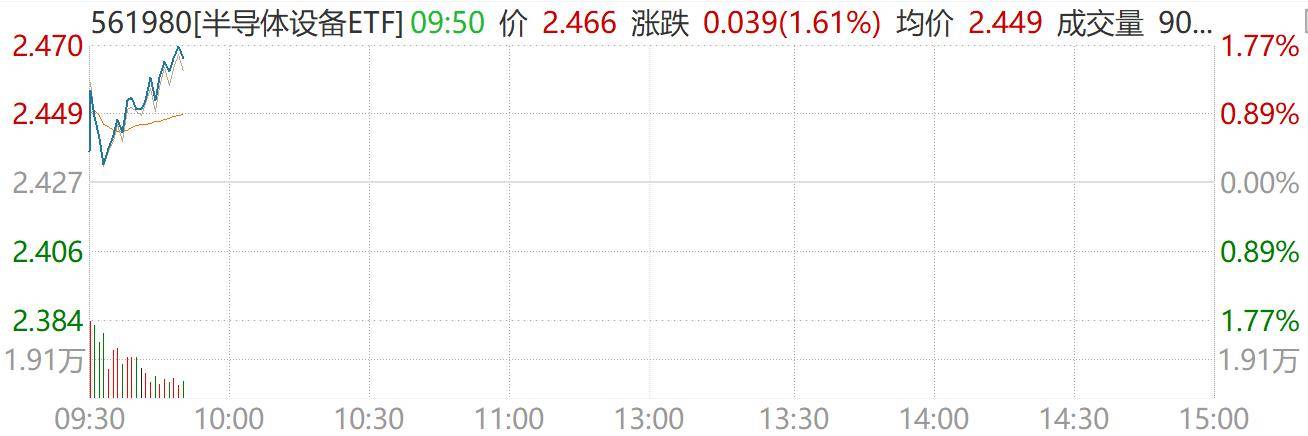
Core Viewpoint - The semiconductor equipment sector is experiencing a strong rally due to a price increase across the supply chain, with significant gains in related stocks and ETFs, indicating robust demand and investment opportunities in the semiconductor industry [1][2]. Group 1: Market Performance - The semiconductor equipment ETF (561980) saw a 1.61% increase, with key stocks like Zhongwei Company and SMIC rising over 2%, and Tuojing Technology increasing over 5% [1]. - In the last 10 trading days, the semiconductor equipment ETF has attracted over 460 million yuan in net inflows, bringing its total size to over 3.6 billion yuan [1]. - The index tracking the semiconductor equipment sector has recorded a maximum increase of over 112% since 2025, outperforming similar indices in the technology sector [2]. Group 2: Price Increases and Cost Pressures - Multiple chip design companies have issued price increase notices, confirming that the positive sentiment in the semiconductor industry is spreading throughout the supply chain [1]. - Zhongwei Semiconductor announced a price increase of 15%-50% for products like MCU and Nor Flash due to rising packaging costs and extended delivery cycles [1]. - Guokewai announced a price increase of 40%-80% for KGD products, highlighting the dual pressures of rising storage chip prices and increased advanced packaging costs [1]. Group 3: Industry Dynamics - The current chip price increase cycle was initiated by a surge in AI demand, leading to tight supply and rising prices for storage chips like DRAM and NAND [2]. - The price adjustments from chip design companies confirm a key industry logic: the prosperity of the storage chip sector is translating into demand for upstream equipment and materials [2]. - To meet strong demand and manage costs, chip manufacturers and packaging firms must expand capital expenditures and upgrade or add production capacity, which will ultimately lead to increased orders for semiconductor equipment across the entire supply chain [2]. Group 4: ETF Composition - The semiconductor equipment ETF (561980) tracks the CSI Semiconductor Index, heavily weighted towards leading companies like Zhongwei Company and Northern Huachuang, with the top ten holdings accounting for approximately 75% of the index [2]. - The ETF's focus on leading companies and comprehensive coverage of equipment, materials, and design sectors provides it with higher elasticity compared to similar indices [2].




最高涨 50%!两家芯片厂调价,涉及多款芯片产品
是说芯语· 2026-01-27 23:31
Core Viewpoint - The semiconductor industry is experiencing a price increase due to supply-demand tension and rising costs, as evidenced by price hikes from domestic companies Guokewai and Zhongwei Semiconductor [1][2]. Group 1: Price Increases - Guokewai announced price increases for its KGD series products, with specific hikes of 40% for 512Mb KGD, 60% for 1Gb, and 80% for 2Gb, driven by a widening storage chip gap and rising costs in packaging and testing [1]. - Zhongwei Semiconductor raised prices for its core products, including MCUs and Nor flash, by 15% to 50%, citing increased manufacturing costs and longer delivery cycles [1]. Group 2: Market Reaction - Following the price announcements, the semiconductor sector saw a positive response in the capital markets, with Guokewai's stock rising by 5.91% and Zhongwei Semiconductor's by 6.35% on January 27 [2]. Group 3: Industry Trends - The price increase from these companies reflects a broader trend in the semiconductor industry, with Samsung Electronics raising NAND flash contract prices by over 100% and other segments like wafer foundries and passive components also initiating price hikes [4]. - Factors contributing to this trend include surging AI computing demands, production cuts from overseas wafer fabs, and rising prices of raw materials like silver and copper, indicating that future price movements will closely align with supply-demand dynamics and cost fluctuations [4].

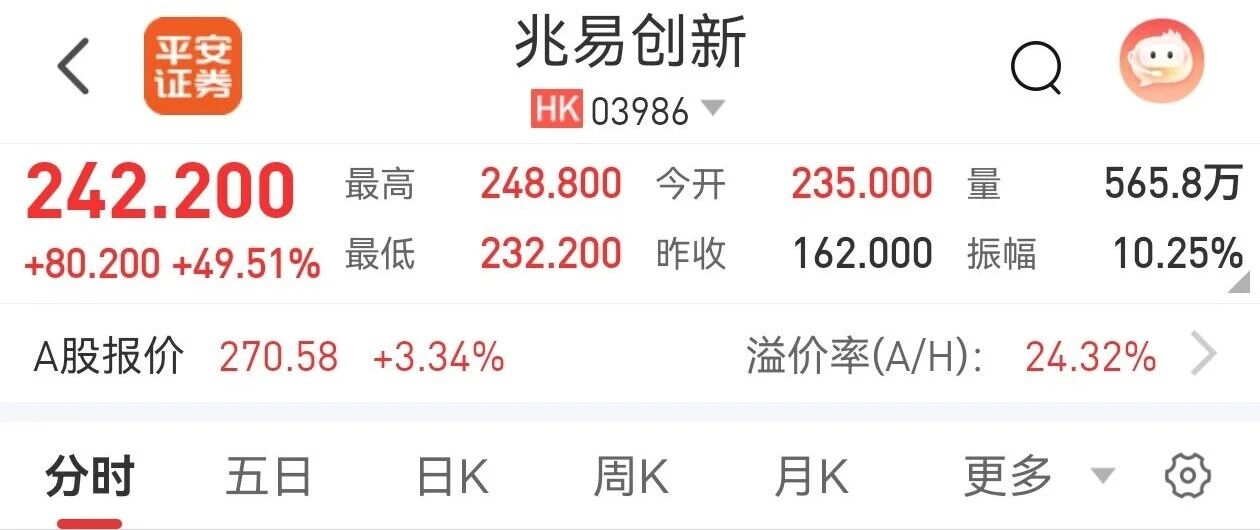
兆易创新港股上市首日收涨37.53%,清华物理系校友朱一明已打造两家千亿芯片巨头
Sou Hu Cai Jing· 2026-01-20 10:34
Core Viewpoint - The successful IPO of Zhaoyi Innovation marks a significant milestone for China's semiconductor industry, highlighting the company's growth and its founder's vision in the global chip market [1][2]. Company Overview - Zhaoyi Innovation, founded in 2005, has evolved from a startup to a key player in the global chip industry, offering a diverse range of products including Flash, niche DRAM, MCU, and analog sensors [3]. - The company is recognized as the only integrated circuit design firm globally that ranks in the top ten across four categories: NOR Flash, SLC NAND Flash, niche DRAM, and MCU [3][4]. Market Position - Zhaoyi Innovation's global rankings in product categories are as follows: - NOR Flash: 1st globally, 1st in China - SLC NAND Flash: 6th globally, 1st in China - Niche DRAM: 7th globally, 2nd in China - MCU: 8th globally, 1st in China [4]. Financial Performance - For the first three quarters of 2025, the company reported revenues of 6.832 billion yuan and a net profit of 1.083 billion yuan, reflecting year-on-year growth of 20.92% and 30.18%, respectively [6]. Future Plans - The company aims to capture at least one-third of the domestic niche DRAM market, valued between 3 billion to 4 billion USD, over the next five years [6]. - Zhaoyi Innovation is accelerating the mass production of chips for cutting-edge fields such as automotive cockpits, AIPC, and robotics to leverage the growth opportunities presented by AI [6]. IPO Details - The IPO raised approximately 4.610 billion HKD by issuing 28.916 million H-shares at an initial price of 162 HKD per share, with 40% of the funds allocated for R&D enhancement and 35% for strategic investments and acquisitions [2]. - The listing attracted significant interest from investors, with 18 cornerstone investors committing a total of 300 million USD [2]. Leadership and Vision - Founder Zhu Yiming, an alumnus of Tsinghua University, has played a pivotal role in establishing Zhaoyi Innovation and is also leading Changxin Technology, which is positioned to become a major player in DRAM manufacturing [5][6]. - Changxin Technology is currently pursuing an IPO on the Sci-Tech Innovation Board, aiming to raise 29.5 billion yuan with a pre-IPO valuation exceeding 150 billion yuan [6].

清华系芯片巨头上市,开盘飙涨近五成
是说芯语· 2026-01-13 01:58
Core Viewpoint - 兆易创新 has officially listed on the Hong Kong Stock Exchange, marking a new chapter in its "A+H" dual capital market strategy, enhancing its international financing capabilities and competitive position in the semiconductor industry [1][5]. Group 1: Company Overview - 兆易创新 is a leading chip design company specializing in storage chips and microcontrollers, founded in 2005 by Tsinghua University alumni [6][10]. - The company has expanded its product offerings from specialized storage chips to a diversified range of chip products, including Flash memory, niche DRAM, MCUs, analog chips, and sensor chips [7]. Group 2: Market Position - According to Frost & Sullivan, 兆易创新 ranks among the top ten global integrated circuit design companies in four key areas: - NOR Flash: 2nd globally, 1st in China - SLC NAND Flash: 6th globally, 1st in China - Niche DRAM: 7th globally, 2nd in China - MCU: 8th globally, 1st in China [8]. Group 3: Financial Performance - The global offering price for 兆易创新 was set at HKD 162.00 per share, with the stock opening at HKD 235.00, reflecting a significant increase of 45.06% from the issue price, resulting in a market capitalization of approximately HKD 163.74 billion (about RMB 146.5 billion) at the opening [5]. Group 4: Strategic Initiatives - 兆易创新 is focused on creating a comprehensive ecosystem for "perception, storage, computing, control, and connectivity," providing integrated chip solutions for emerging industries such as humanoid robots, electric vehicles, and smart wearable devices [9]. - The company is also strategically investing in upstream and downstream sectors of the industry, including stakes in leading domestic wafer testing companies and investments in edge AI chip design firms [9].