MONA品牌汽车

Search documents
美国再加25%关税,特朗普提前庆祝,中国抛售5000亿美债
Sou Hu Cai Jing· 2026-02-09 09:25
Group 1 - The core argument of the article highlights the unintended consequences of Trump's tariffs on Chinese chips, which primarily burden American importers rather than China [1][8][10] - The new tariff policy requires high-end chips, originally produced in Taiwan for China, to first pass through the U.S. for taxation, significantly increasing logistics costs and supply chain delays [3][5] - The tariffs are projected to generate $264 billion annually for the U.S. government, but 92% of the costs are ultimately borne by American companies [5][8] Group 2 - The tariffs have led to a significant increase in costs for U.S. AI startups, forcing them to divert funds from core operations to cover these unexpected expenses [10][12] - In response to the tariffs, many semiconductor companies are relocating production to countries like Vietnam and Malaysia to avoid the tax burden [12][14] - The market share of Chinese AI chips has risen from 12% to 27% by 2025, indicating a shift in industry power dynamics as U.S. companies struggle with increased costs [16][18] Group 3 - U.S. military contractors are facing budget overruns due to rising costs of AI chips, impacting projects like automated vehicles and drones [20] - The article notes significant corporate mergers and acquisitions in China, such as BYD's acquisition of Jabil's operations, aimed at enhancing local data-driven algorithm development [22] - China's strategy includes a calculated reduction of U.S. Treasury holdings by approximately $70 billion, reflecting a shift towards gold reserves as a safer asset [28][30] Group 4 - The semiconductor industry in the U.S. has seen a 28% drop in new investments, while Southeast Asia and Europe have experienced growth of 42% and 31% respectively [34][36] - The article emphasizes that the ongoing trade tensions are reshaping global supply chains, with companies seeking alternative solutions and diversifying their supply sources [40][42] - China's continued high tariffs on U.S. polysilicon are part of a broader strategy to maintain control over upstream resources, contrasting with U.S. attempts to disrupt markets through tariffs [42][44] Group 5 - The article concludes that true economic security comes from a robust domestic industry rather than trade barriers, as global supply chains are rapidly reorganizing [44][48] - The narrative suggests that markets reward value creation and penalize those focused solely on imposing tariffs, indicating a need for the U.S. to address its internal economic vulnerabilities [46][48]

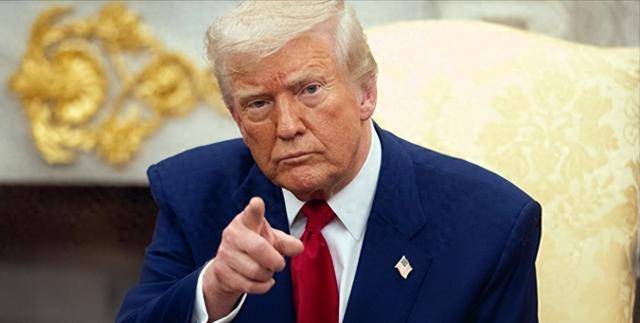
美国再加25%关税,特朗普提前庆祝,中国:抛售5000亿美债
Sou Hu Cai Jing· 2026-02-07 17:25
Group 1 - The article discusses a new policy signed by Trump imposing a 25% "toll" on AI chips, which is expected to generate $264 billion annually for the U.S. government [1] - The policy distorts international trade, forcing companies like TSMC to reroute shipments of high-end chips, such as Nvidia's H200 and AMD's MI325X, through the U.S. to pay the toll [5] - The burden of the tariff primarily falls on U.S. importers, with 92% of the costs ultimately borne by them, leading to increased prices for AI startups [7] Group 2 - China's response to the U.S. policy has been strategic and measured, resulting in a significant reduction of approximately $70 billion in U.S. Treasury holdings by the end of November 2025 [11][13] - In November 2025 alone, China sold $6.1 billion in U.S. debt, marking the largest sell-off since the 2008 financial crisis, indicating a shift towards risk isolation [13] - China's gold reserves have increased to 74.12 million ounces, as the country shifts from dollar assets to gold, which is seen as a more stable store of value [15] Group 3 - The article highlights a significant increase in China's domestic AI chip market share from 12% to 27% by 2025, indicating a fundamental shift in the industry [20] - Companies like BYD and Xpeng are actively consolidating their positions in the market, with BYD acquiring Jabil's operations in Chengdu and Wuxi for $15.8 billion [20][22] - The U.S. semiconductor industry has seen a 28% decline in new investments, while Southeast Asia and Europe have experienced growth of 42% and 31%, respectively, indicating a shift in capital flows [22][24] Group 4 - The article argues that the U.S. attempts to manipulate the market through tariffs are pushing allies towards competitors and driving capital out of the country [24] - China's strategy in the photovoltaic sector includes maintaining high anti-dumping tariffs on U.S. polysilicon, aimed at securing control over upstream resources [24] - The narrative concludes that attempts to artificially segment the global market will ultimately backfire, emphasizing the importance of internal strength and open cooperation over trade barriers [26]
【快讯】每日快讯(2025年9月10日)
乘联分会· 2025-09-10 08:43
Domestic News - The Ministry of Industry and Information Technology (MIIT) highlighted that high-end intelligent automotive chips still have shortcomings and will further improve support policies to enhance key core technology breakthroughs and regulate industry competition [3] - Hangzhou is developing new environment perception terminals aimed at high-level autonomous driving needs, including high-performance onboard cameras and lidar [4] - Shanghai is accelerating the development of second-hand car exports, emphasizing the importance of extending the automotive consumption chain and enhancing international market share [5] - Xiaopeng Motors plans to launch its MONA brand in overseas markets next year [6] - Hongqi aims to introduce 15 models in Europe by 2028, expanding its presence in 25 different markets [7] - BYD plans to achieve local production of electric vehicles in Europe by 2028 to better meet market demands and improve supply chain efficiency [8] - Avita has signed a dealership agreement in Kuwait, marking its expansion in the Middle East [9] - GAC Group aims to increase its electric vehicle sales in Europe by 17 times by 2027, targeting sales of 50,000 vehicles by that year [10] International News - Canadian automotive sales in August decreased by 2.9% year-on-year, marking the first decline since February [11] - South Korea's electric vehicle sales from January to August grew by nearly 50%, with a total of 142,456 units sold [12] - Suzuki plans to develop biofuels in India, launching vehicles that can run on 85% bioethanol fuel by the end of the current fiscal year [13] - Volkswagen Group announced plans to invest up to €1 billion (approximately $1.2 billion) in artificial intelligence by 2030, aiming to save billions in costs [14] Commercial Vehicles - Scania has officially obtained production qualifications in China, marking a significant step in its localization strategy [15] - BYD's new electric bus completed extreme testing in Turpan, demonstrating reliable performance under high-temperature conditions [16] - China National Heavy Duty Truck Group's first assembled vehicle in the Philippines has successfully rolled off the production line, enhancing its local response and delivery capabilities [17] - Dongfeng Motor Corporation is collaborating with CATL to advance the electrification of logistics vehicles, focusing on battery standardization and intelligent application scenarios [19]