OLAY

Search documents
深度|外资美妆,正在重新梳理“中国故事”
FBeauty未来迹· 2026-03-13 13:39
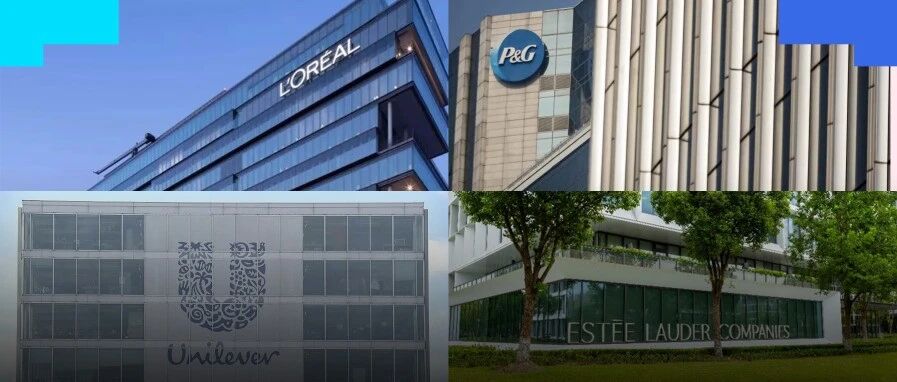
Core Viewpoint - The global beauty industry remains dominated by foreign giants, but in the Chinese market, local brands are rapidly gaining market share, indicating a shift in competitive dynamics [2][21]. Group 1: Global Market Overview - In 2025, L'Oréal leads the global beauty industry with revenue exceeding 356.36 billion RMB, significantly larger than its closest competitors, Unilever and Procter & Gamble, whose revenues are approximately 205.87 billion RMB and around 100 billion RMB respectively [5]. - The top ten companies in the beauty sector show a slowdown in growth, with nearly half experiencing revenue declines due to global consumption slowdowns and inventory adjustments [7]. - Puig and Galderma are notable exceptions, with Puig achieving a 5.3% growth and Galderma a remarkable 17.7% growth, highlighting the resilience of specialized beauty companies [9]. Group 2: Regional Insights - Japanese beauty companies are undergoing structural adjustments, with Shiseido focusing on core brands and improving profitability, while Kao is also seeing growth in its cosmetics business due to a recovery in the Chinese market [10][17]. - Korean beauty companies show a split performance; Amorepacific grew by 8.5% driven by emerging markets, while LG Household & Health recorded a 6.7% decline, reflecting challenges in the Greater China region [10][11]. Group 3: Chinese Market Dynamics - By 2025, domestic brands have captured 57.37% of the Chinese beauty market, a significant increase from less than 30% a decade ago, indicating a structural shift in market dynamics [2][21]. - International beauty companies are increasingly viewing the Chinese market as a critical battleground for testing organizational and innovative capabilities, rather than just a growth engine [23]. - L'Oréal's revenue in North Asia, including China, was approximately 100.75 billion euros, while Estée Lauder reported 27.41 billion USD in China, showing the competitive landscape between foreign and local brands [20]. Group 4: Strategic Adjustments - Estée Lauder has upgraded China to an independent reporting region, reflecting its strategic importance and allowing for more localized decision-making [23]. - Procter & Gamble has established a "Brand Growth Department" in China to enhance agility and responsiveness to market changes [25]. - Companies are adapting to the unique Chinese market ecosystem, with a focus on digital marketing and e-commerce channels, as seen with L'Oréal and SK-II's performance on platforms like Douyin [28].



宝洁一个季度销售222亿美元;名士表被历峰卖了 |看时尚
2 1 Shi Ji Jing Ji Bao Dao· 2026-01-26 06:16
Group 1: Luxury Goods Industry Trends - Companies in the luxury goods sector are focusing on mergers and acquisitions to optimize brand portfolios and enhance core business operations, as seen with China Duty Free Group's acquisition of DFS's Hong Kong and Macau operations and LVMH's investment [1] - The luxury watch market is witnessing consolidation, exemplified by the Swiss Watches of Switzerland Group's acquisition of Deutsch & Deutsch, reinforcing its position in the U.S. high-end watch market [4][5] - Richemont's sale of Baume & Mercier to Damiani reflects a strategic move to streamline its brand matrix and concentrate on higher-end watch brands [6][7] Group 2: Consumer Goods Performance - Procter & Gamble reported Q2 net sales of $22.208 billion, a slight increase of 1% year-over-year, with a net profit of $4.331 billion, down 7% [2] - The beauty segment of Procter & Gamble is a growth driver, with sales reaching $4.039 billion, up 5% year-over-year, supported by strong performance in markets outside the U.S. [3] Group 3: Market Adjustments and Leadership Changes - Nike is undergoing leadership changes in its Greater China region, appointing Cathy Sparks as the new General Manager to address declining sales, which fell 17% year-over-year in Q2 [8][9] - L'Occitane is considering an IPO in the U.S. after completing its privatization, aiming to align its market strategy with its business layout [10][11] Group 4: Regional Market Insights - Burberry's retail revenue reached £665 million, with a 1% year-over-year increase, driven by a 6% growth in the Greater China region [12][13] - The appointment of Daniele Zito as Chief Commercial Officer at Kering aims to enhance operational efficiency and retail value across its brands [14][15] Group 5: Strategic Investments - L Catterton's acquisition of a minority stake in EX NIHILO aims to bolster the brand's presence in the high-end perfume market, capitalizing on the growing demand for luxury fragrances [19][20]

净销售额增长1%,宝洁又打“涨价”牌
Bei Jing Shang Bao· 2026-01-25 13:33
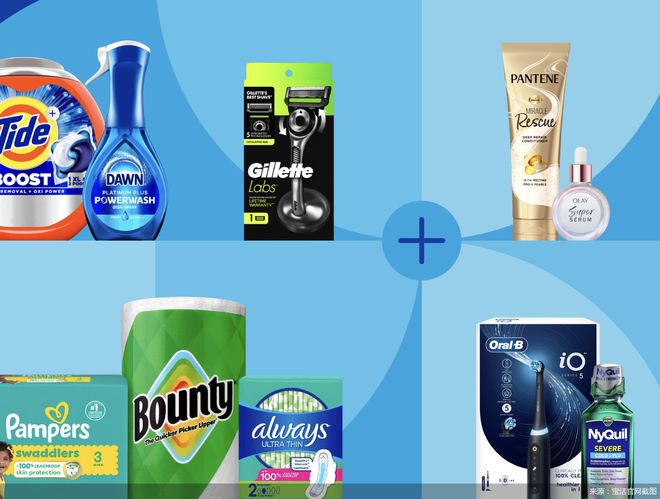
Core Viewpoint - Procter & Gamble (P&G) needs new strategies to drive genuine growth beyond price increases, as recent financial results show revenue growth without profit growth, indicating challenges in maintaining sales volume [1][3] Financial Performance - In Q2 of FY2026, P&G reported net sales of 154.96 billion yuan, a 1% year-over-year increase, while net profit fell by 7% to 30.22 billion yuan [3][5] - Organic sales, excluding foreign exchange and acquisitions, remained unchanged compared to the previous year [3] - The beauty and health care segments saw a 5% increase in net sales, the highest among P&G's five business units, while the baby, feminine, and family care segment experienced a decline [3][5] Market Trends and Challenges - P&G's performance decline is attributed to changing market trends and evolving consumer demands for higher-end, eco-friendly, and health-conscious products [4] - The company faces increased competition from emerging brands that offer high-quality products at competitive prices, leading to a loss of market share in both high-end and mass markets [4][9] Pricing Strategy - Price increases have been a key factor in supporting P&G's revenue growth, with the company implementing multiple price hikes across its product lines in recent years [6][8] - For instance, P&G raised prices by 6% to 9% across all departments in 2023, and specific brands like SK-II have seen significant price increases [6][7] Strategic Adjustments - P&G is focusing on strategic contraction by divesting underperforming brands and enhancing core brand development, particularly in the high-end market [9] - The company has initiated a two-year plan to optimize its business portfolio and improve productivity, aiming to enhance competitiveness [9] Leadership and Future Outlook - P&G's new CEO, Shailesh Jejurikar, is leading a comprehensive reform to drive growth, expressing confidence in achieving stronger performance in the latter half of FY2026 [10] - The company aims to focus on consumer needs and innovation to navigate external challenges and reshape its future in the consumer goods sector [10]
宝洁2026财年第二季度净销售额增长1%
Bei Jing Shang Bao· 2026-01-23 12:36
Group 1 - The core viewpoint of the article highlights Procter & Gamble's financial performance for the second quarter of fiscal year 2026, showing a slight increase in net sales but a decline in net profit [1] - Procter & Gamble reported net sales of 154.956 billion yuan for the second quarter, representing a 1% year-over-year growth [1] - The organic sales, excluding the impact of foreign exchange, acquisitions, and divestitures, remained unchanged compared to the previous year [1] Group 2 - The net profit for the quarter was 30.22 billion yuan, reflecting a 7% decrease year-over-year [1] - Among the five business segments, only the Baby, Feminine & Family Care segment experienced a decline in net sales, while the other four segments saw varying degrees of growth [1] - The Beauty segment, which includes brands like SK-II and OLAY, and the Health Care segment both recorded a 5% increase in net sales, marking the highest growth rate among the five segments [1]
美妆企业失去流量红利
Di Yi Cai Jing· 2026-01-16 14:01
Core Insights - The beauty brand Opal's founder, Zhou Yan, highlighted the increasing commission rates for influencers in live streaming, projecting a rise to 60% by the end of 2025, indicating a significant challenge for beauty companies in managing costs and maintaining profitability [2][5] - Domestic beauty brands have gained market share over foreign brands, with Opal achieving over 10.7 billion yuan in revenue in 2024, marking it as the first Chinese beauty brand to surpass the 10 billion yuan threshold [4][16] - The shift from influencer-driven sales to self-operated content is becoming a trend as companies seek to reduce dependency on high commission rates and improve their own content capabilities [7][11] Industry Challenges - The beauty industry is experiencing a flow of anxiety due to rising costs associated with influencer marketing, with sales expenses for Opal reaching 51.6 billion yuan in 2024, accounting for 47.9% of its revenue [5][6] - The marginal returns on channel investments are diminishing, as evidenced by Opal's revenue growth rate lagging behind its sales expense growth by 8 percentage points in 2024 [6] - The market is witnessing a decline in new brand emergence, with companies needing to adapt to a more rational approach rather than relying on opportunistic strategies [13][14] Competitive Landscape - The competitive environment is intensifying, with domestic brands facing significant pressure from established foreign brands like L'Oréal and Procter & Gamble, which have more robust R&D and marketing systems [16][17] - The disparity in R&D investment is stark, with L'Oréal's R&D expenditure in 2024 reaching approximately 13 billion euros (around 100 billion yuan), comparable to Opal's total revenue [16] - The potential for domestic brands to rank among the top global beauty companies is limited by their reliance on the Chinese market, which does not support the scale needed for global competitiveness [16][17]


突发 | 科蒂换帅,宝洁退休老将“接棒”救火
FBeauty未来迹· 2025-12-23 13:56
Core Viewpoint - Coty Group is undergoing a significant leadership change with Markus Strobel appointed as Executive Chairman and Interim CEO, marking a strategic shift aimed at restructuring and enhancing the company's market position in high-end fragrances and mass beauty sectors [1][2][3]. Leadership Transition - Markus Strobel, a veteran from Procter & Gamble with over 30 years of experience, will lead Coty during a critical phase of strategic review and business transformation [1][2]. - Strobel's dual role as Executive Chairman and Interim CEO indicates he will have substantial authority to drive change during the transition period, despite the CEO title being temporary [3][4]. Background of New Leadership - Strobel's career at Procter & Gamble includes various roles across multiple sectors, with notable success in revitalizing the SK-II brand, particularly in the Chinese market [4][5]. - His leadership at SK-II resulted in 18 consecutive quarters of growth, with a 30% sales increase in 2018, showcasing his capability in brand rejuvenation and digital transformation [4][5]. Strategic Context - The leadership change reflects Coty's transition from a phase of "repair and stabilization" to one of "strategic restructuring and accelerated growth," indicating a potential overhaul in strategic focus, operational models, and organizational culture [8][10]. - Coty faces structural challenges post-pandemic, with approximately 60% of its net revenue derived from high-end fragrance business, which is increasingly vulnerable due to reliance on a few key licensed brands [12][20]. Financial Performance and Challenges - Coty's financial performance has been under pressure, with a reported net revenue of $1.577 billion for the first quarter of fiscal 2026, down 8% year-over-year, and a market capitalization around $2.9 billion against a debt of $3.8 billion [20]. - The company is also experiencing a decline in its mass beauty segment, with a reported 11% drop in net revenue for the first quarter of fiscal 2026, continuing a trend from the previous fiscal year [20]. Strategic Initiatives - To mitigate risks from core license losses, Coty is expanding its brand portfolio by signing new beauty licensing agreements and launching its own fragrance brand, INFINIMENT COTY PARIS, which aims to innovate in the fragrance sector [16][18]. - The new leadership is expected to introduce a more targeted strategy, potentially focusing on high-end skincare and re-evaluating Coty's approach in the color cosmetics sector [23][25]. Future Outlook - The appointment of Strobel signifies a new strategic cycle for Coty, with expectations for a systematic approach to brand management and operational efficiency, leveraging his extensive experience from Procter & Gamble [21][27]. - The beauty industry will closely monitor how Coty adapts its market strategies, particularly in key markets like China, under Strobel's leadership [27].

深度|细胞自噬,美妆抗老赛道的“隐藏王牌”
FBeauty未来迹· 2025-10-31 14:09
Core Viewpoint - Autophagy is a crucial mechanism for cellular self-cleaning and repair, playing a significant role in maintaining cellular homeostasis and vitality, and is increasingly recognized as a key pathway in anti-aging research within the beauty industry [3][5][30]. Group 1: Importance of Autophagy - Autophagy has been validated in the scientific community, with significant recognition such as the Nobel Prize awarded in 2016 for its role in aging [4]. - The loss of autophagic function is now considered a core marker of cellular aging, highlighting its importance in anti-aging science [4]. - Major beauty brands like L'Oréal, Procter & Gamble, and Shiseido have initiated research into the application of autophagy in skin aging, although this research is still in a relatively early stage [4][9]. Group 2: Current Research and Applications - Many beauty companies are incorporating autophagy into their research agendas, viewing it as a new scientific pathway connecting multiple benefits such as anti-aging, whitening, and repair [7][9]. - Shiseido utilizes ingredients like tranexamic acid and camellia seed extract to activate autophagy pathways, enhancing skin cell regeneration [9]. - Procter & Gamble's SK-II and OLAY brands are exploring the potential of ingredients like Pitera™ to promote autophagy and clear damaged proteins [9]. Group 3: Market Position and Challenges - Despite the growing research on autophagy, it remains a "behind-the-scenes" concept in market communication, often not highlighted as a core selling point [10][11]. - Brands tend to integrate autophagy into broader efficacy claims, making it less visible to consumers [11]. - The complexity of the autophagy concept poses challenges for consumer education and market positioning, requiring brands to translate scientific terms into relatable benefits [35][36]. Group 4: Future Prospects - The understanding of aging biology is evolving, shifting from external repair to internal optimization, with autophagy emerging as a central mechanism [34]. - There is a need for brands to effectively communicate the benefits of autophagy to consumers, establishing it as a recognized and valuable anti-aging mechanism [35]. - As research progresses and consumer education deepens, more products centered around autophagy are expected to emerge in the market [38].