
OTA 8.1

Search documents
AI智能汽车1月投资策略:特斯拉无接管横穿美国,工信部首批L3准入,看好智能化
Soochow Securities· 2026-01-07 02:30
Core Conclusions - The report highlights a significant shift in the commercialization of L4 autonomous vehicles globally, with L3 policies breaking new ground in China. Tesla has initiated fully autonomous testing without safety drivers in Austin, while Waymo has seen a 96.6% year-on-year increase in active users, reaching 1.64 million. Domestic players like Pony.ai and WeRide are expanding their commercial operations, indicating a robust growth trajectory in the sector [2][3][5]. Investment Framework - The investment framework emphasizes a spiral upward iteration of hardware and software, suggesting that each major upgrade in capability represents a paradigm shift in thinking. The report outlines a timeline from L1-L2 to L4, indicating a transition from basic functionalities to advanced autonomous driving capabilities by 2030 [6][7][10]. L4 RoboX Monthly Tracking - Tesla's Robotaxi business is rapidly expanding across multiple regions, particularly in Texas, where it has transitioned to fully autonomous testing. The report notes that Tesla's fleet has grown significantly, with plans to extend operations to Saudi Arabia and other states [20][21][23]. C-end Monthly Tracking - The report forecasts a retail sales volume of 22.81 million vehicles for 2025, reflecting a year-on-year growth of 0.2%. It also highlights the increasing penetration of new energy vehicles, projecting a sales volume of 1.32 million units in 2026, with a penetration rate of 60% [39][41][42]. Downstream Application Dimensions - The report categorizes potential investment opportunities in the Robotaxi sector, including integrated models (Tesla, Xpeng), technology providers (Horizon Robotics, Baidu), and the transformation of ride-hailing services (Didi, Cao Cao Mobility). It also identifies opportunities in Robovan and other autonomous vehicle applications [2][5][11]. Upstream Supply Chain Dimensions - The report outlines key players in the upstream supply chain, including manufacturers of autonomous vehicle components (BAIC BluePark, GAC Group) and core suppliers of chips, sensors, and control systems. It emphasizes the importance of partnerships and technological advancements in driving the industry forward [2][5][11].

理想郎咸朋长文分享为什么关于VLA与宇树王兴兴观点不一致
理想TOP2· 2025-12-10 06:50
Core Insights - The core viewpoint emphasizes that the key to successful autonomous driving lies in the integration of the VLA model with the entire embodied intelligence system, where data plays a crucial role in determining effectiveness [1][4]. Summary by Sections VLA Model - The VLA is fundamentally a generative model, utilizing a GPT-like approach for autonomous driving, generating trajectories and control signals instead of text. User feedback indicates that VLA exhibits emergent behaviors in certain scenarios, reflecting a growing understanding of the physical world [2]. - The world model is better suited for creating "test environments" rather than acting as "test subjects," due to its high computational demands. Ideal is currently leveraging cloud-based data generation and realistic simulation testing, utilizing several exaFLOPS of computational power for simulation tests, which cannot be matched by even the most powerful vehicle chips [2]. - Discussions about model architecture are less relevant than the actual performance outcomes. In autonomous driving, focusing on vast amounts of real data is essential, and Ideal's commitment to VLA is supported by a data loop created from millions of vehicles, enabling near-human driving levels with current computational resources [2]. Embodied Intelligence - To excel in autonomous driving, it is essential to treat it as a complete embodied intelligence system, where all components must work together during development to maximize value. Human drivers do not require extraordinary abilities; rather, coordination among various parts is crucial [3]. - The embodied intelligence system comprises perception (eyes), models (brain), operating systems (nervous system), chips (heart), and the body (vehicle). Full-stack self-research is necessary, encompassing both software and hardware. Ideal's autonomous driving team collaborates with foundational model, chip, and chassis teams to create a comprehensive autonomous driving system [3]. Data Utilization - The key to effective modeling is its compatibility with the entire embodied intelligence system, with data being the decisive factor. While data acquisition is challenging in robotics, it is not a significant issue for companies in the autonomous driving sector that have established data loops. Ideal can mine and filter from over 1 billion kilometers of accumulated data and continuously gather new data from 1.5 million vehicle owners [4]. - During data filtering, interesting patterns were observed, such as nearly 40% of human driving data showing a tendency to drive on one side and not strictly adhering to speed limits. This behavior aligns with typical human driving patterns, leading to the decision not to eliminate these data samples. The VLA model is expected to serve both current and future automotive forms of embodied robots [4].


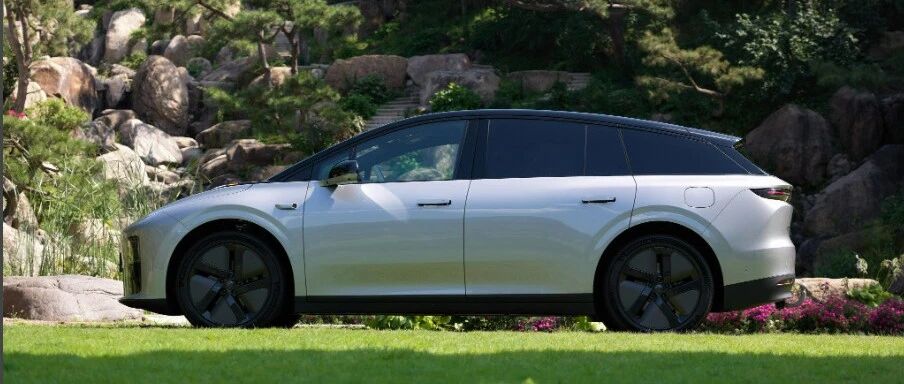
理想汽车-W(02015):11月交付新车33181辆
智通财经网· 2025-12-01 08:37
Core Viewpoint - Li Auto announced the delivery of 33,181 new vehicles in November 2025, bringing the total cumulative delivery to 1,495,969 vehicles as of November 30, 2025 [1] Group 1: Company Performance - The company expects the monthly production capacity of the Li Auto i6 to increase to 20,000 units by early next year [1] - The OTA 8.1 update is anticipated to be pushed in early December 2025 [1] Group 2: Infrastructure and Market Presence - As of November 30, 2025, Li Auto has established 544 retail centers across 157 cities and has 556 after-sales service and authorized repair centers covering 227 cities [1] - The company has deployed 3,614 Li Auto supercharging stations, with a total of 20,027 charging piles in operation nationwide [1] Group 3: Strategic Focus - Li Auto is building its competitiveness for the next decade through organizational structure, product layout, and technological innovation, aiming for a transformation towards embodied intelligence in vehicles [1]
理想汽车(02015) - 自愿公告 2025年11月交付更新资料
2025-12-01 08:30
香港交易及結算所有限公司及香港聯合交易所有限公司對本公告的內容概不負責,對其準確性 或完整性亦不發表任何聲明,並明確表示概不會就本公告全部或任何部分內容而產生或因倚賴 該等內容而引致的任何損失承擔任何責任。 Li Auto Inc. 理想汽車 (於開曼群島註冊成立以不同投票權控制的有限責任公司) (股份代號:2015) 有關更多資料,請瀏覽: https://ir.lixiang.com 。 1 股東及潛在投資者於買賣本公司證券時,務請謹慎行事。 承董事會命 理想汽車 董事長 李想 自願公告 2025年11月交付更新資料 於2025年12月1日,中國新能源汽車市場的領導者理想汽車(「理想汽車」或「本公 司」)(納斯達克:LI;香港交易所:2015)宣佈,2025年11月,理想汽車交付新車 33,181輛。截至2025年11月30日,理想汽車歷史累計交付量為1,495,969輛。 本公司預計,理想i6的月產能將在明年初提升至2萬輛,OTA 8.1預計於2025年12 月初推送。本公司正在從組織體系、產品佈局和技術創新三方面構建面向下一個 十年的競爭力,推動汽車向具身智能的蛻變。 截至2025年11月30日,理想 ...
LI AUTO(LI) - 2025 Q3 - Earnings Call Transcript
2025-11-26 13:02
Financial Data and Key Metrics Changes - Total revenues in Q3 2025 were RMB 27.4 billion, a decrease of 36.2% year over year and 9.5% quarter over quarter [24] - Vehicle sales contributed RMB 25.9 billion, down 37.4% year over year and 10.4% quarter over quarter, primarily due to lower vehicle deliveries [24] - Gross profit was RMB 4.5 billion, down 51.6% year over year and 26.3% quarter over quarter, with a vehicle margin of 15.5% compared to 20.9% in the same period last year [25][26] - Operating expenses were RMB 5.6 billion, down 2.5% year over year and up 7.8% quarter over quarter [27] - Net loss in Q3 was RMB 624.4 million, compared to a net income of RMB 2.8 billion in the same period last year [28] - Cash position remained strong with a balance of RMB 98.9 billion at the end of the quarter [28] Business Line Data and Key Metrics Changes - R&D expenses increased to RMB 3 billion, up 15% year over year, reflecting investments in new vehicle programs and technology [27] - SG&A expenses decreased to RMB 2.8 billion, down 17.6% year over year, mainly due to share-based compensation recognition from the previous year [27] Market Data and Key Metrics Changes - The company expects deliveries in Q4 2025 to be between 100,000 and 110,000 vehicles, with total revenue projected between RMB 26.5 billion and RMB 29.2 billion [29] Company Strategy and Development Direction - The company plans to revert to an entrepreneurial model starting Q4 2025, focusing on long-term product and technology development [11][23] - Key strategic choices include focusing on embodied AI products, which are seen as the future of user interaction with vehicles [15][22] - The company aims to enhance its full-stack AI system, emphasizing the need for a different approach to technology that integrates physical and digital capabilities [16][22] Management's Comments on Operating Environment and Future Outlook - Management acknowledged challenges in supply chain and product lifecycle but emphasized a long-term vision for the next decade [4][23] - The transition from EREV to BEV is seen as a significant opportunity, with expectations for NEV penetration rates in China to reach 55-60% by 2026 [46] - The company is optimistic about achieving a historic breakthrough in deliveries in 2026, leveraging superior product strength and user value [49] Other Important Information - The company is implementing a dual supplier strategy for batteries to address production ramp-up challenges [42] - The recall of the Li Mega was recognized in Q3 due to its impact on operations and deliveries, affecting gross profit margins [54] Q&A Session Summary Question: What technology or product progress can be expected in 2026? - The company will launch an AI system based on the M100 chips, which will enhance user experience by transitioning products from passive to proactive machines [32][33] Question: How is the company preparing for the transition to BEV? - The company is focusing on in-house development of electric drive systems, battery systems, and electronic control to ensure efficiency and user experience [35][36] Question: What updates are there on orders and deliveries of the Li I8 and I6? - The I8 and I6 models are entering core BEV markets with increasing orders, and production capacity for the I6 is expected to reach 20,000 units monthly by early next year [41][42] Question: Why did operating cash flow decrease significantly? - The decrease in operating cash flow was attributed to lower deliveries impacting revenue and a shortened payment cycle to suppliers [43] Question: How will the company respond to changes in subsidy policies in 2026? - The company plans to implement a peace of mind purchase program to cover purchase tax differences for customers and will continue to focus on technological advancements to offset policy impacts [47][48]
LI AUTO(LI) - 2025 Q3 - Earnings Call Transcript
2025-11-26 13:00
Financial Data and Key Metrics Changes - Total revenues in Q3 2025 were RMB 27.4 billion, a decrease of 36.2% year over year and 9.5% quarter over quarter [25] - Vehicle sales contributed RMB 25.9 billion, down 37.4% year over year and 10.4% quarter over quarter, primarily due to lower vehicle deliveries [25] - Gross profit was RMB 4.5 billion, down 51.6% year over year and 26.3% quarter over quarter, with a vehicle margin of 15.5% compared to 20.9% in the same period last year [26] - Operating expenses were RMB 5.6 billion, down 2.5% year over year and up 7.8% quarter over quarter [27] - Net loss in Q3 was RMB 624.4 million, compared to a net income of RMB 2.8 billion in the same period last year [29] - Cash position remained strong with a balance of RMB 98.9 billion at the end of the quarter [29] Business Line Data and Key Metrics Changes - R&D expenses increased to RMB 3 billion, up 15% year over year, reflecting investments in new vehicle programs and technology [27] - SG&A expenses decreased to RMB 2.8 billion, down 17.6% year over year, mainly due to prior year share-based compensation expenses [28] Market Data and Key Metrics Changes - The company expects deliveries in Q4 2025 to be between 100,000 and 110,000 vehicles, with total revenue projected between RMB 26.5 billion and RMB 29.2 billion [30] Company Strategy and Development Direction - The company plans to revert to an entrepreneurial model starting Q4 2025, focusing on long-term product and technology development [10][23] - Emphasis will be placed on developing embodied AI products, which are seen as the future of automotive technology [15][22] - The company aims to enhance user experience through a full-stack AI system, with a focus on in-house developed technologies [36][62] Management's Comments on Operating Environment and Future Outlook - Management acknowledged challenges in supply chain and product lifecycle impacting operations and deliveries [4] - The company is optimistic about the NEV penetration rate in China, expecting it to reach 55-60% in 2026 [47] - Management expressed confidence in navigating market cycles and leading technological transformation [23] Other Important Information - The company is implementing a dual supplier strategy for batteries to address production ramp-up challenges [42] - The recall of the Li Mega was recognized in Q3 due to its impact on operations and deliveries [55] Q&A Session Summary Question: What technology or product progress can be expected in 2026? - The company will launch an AI system based on the M100 chips, enhancing user experience and transitioning products to more proactive machines [33] Question: How is the company preparing for the transition from EREV to BEV? - The company is focusing on in-house development of electric drive systems, battery systems, and electronic control to ensure a smooth transition [35][36] Question: What is the impact of the upcoming changes in trade-in subsidy policy? - The company anticipates a pull-forward effect in deliveries at the end of 2025, followed by a dip in Q1 2026, but remains optimistic about long-term growth [47] Question: What updates can be provided regarding the recall of the Mega? - The recall was recognized in Q3 as a subsequent event, and the company is fulfilling recall requirements by reallocating battery packs [55] Question: What is the progress on in-house developed SOC and operating system? - The company has reduced development time and costs through in-house design and has open-sourced Halo OS for collaborative development [62]