AI智能汽车

Search documents
【AI智能汽车4月投资策略】小鹏第二代VLA上车,看好智能化
东吴汽车黄细里团队· 2026-03-31 13:21
Investment Highlights - The core viewpoint of the article emphasizes the shift in industry consensus from "whether to develop" to "how to scale" L3/L4 autonomous driving technology during the two sessions of the National People's Congress. Guangdong Province has issued a 2026-2035 industrial plan to accelerate L3/L4 research and full-scenario autonomous driving trials [4][11] - Key advancements include Xiaopeng Motors' launch of the second-generation VLA model, which focuses on full-scenario capabilities and safety, and Huawei's introduction of a mass-produced 896-line dual-light-path lidar, enhancing perception capabilities [4][11] April Catalysts - Tesla's first mass-produced Cybercab was announced in February, with large-scale production set to begin in April. Attention is drawn to the timeline for Cybercab's commercial operation and the Beijing Auto Show on April 24, where new intelligent driving solutions will be showcased [5][11] Investment Recommendations - The company maintains a strong outlook for the L4 RoboX theme in 2026, favoring B-end software companies over C-end hardware companies. Recommended H-shares include Xiaopeng Motors, Horizon Robotics, and others, while A-shares include Qianli Technology and Desay SV [6][11] - Downstream application targets include Robotaxi and Robovan perspectives, with notable companies such as Tesla, Xiaopeng Motors, and Didi in the Robotaxi space, and Desay SV and others in the Robovan sector [6][11] Supply Chain Insights - Key upstream supply chain targets include B-end autonomous vehicle OEMs like BAIC BluePark and GAC Group, as well as core suppliers in testing services, chips, domain controllers, sensors, and more [7][11]



【AI智能汽车3月投资策略】L3/L4开启征求意见,北美Robotaxi加速,看好智能化
东吴汽车黄细里团队· 2026-03-01 09:49
Investment Highlights - In February, the national standards for L3/L4 autonomous driving opened for public consultation, indicating a potential "DeepSeek moment" for intelligent driving. The Ministry of Industry and Information Technology (MIIT) is actively following up on safety requirements for L3/L4 autonomous driving. Tesla's Cybercab officially rolled off the production line at the Texas Gigafactory, featuring hardware without a steering wheel or accelerator. Waymo has added four new operational cities [2][8]. - In March, the focus will be on regulatory boundaries and tracking the practical experiences of L4 and L3 implementations. Attention will be given to feedback on the MIIT's five mandatory standards and the timeline for finalization. The order density of Waymo's new city operations and the first batch of road test data following the launch of Tesla's Cybercab will also be monitored. Additionally, the performance of Xiaopeng's second-generation VLA large model in the first quarter will be observed [3][8]. Investment Recommendations - The company maintains a strong outlook for the L4 RoboX theme in 2026, favoring B-end software targets over C-end hardware targets. Preferred H-shares include Xiaopeng Motors, Horizon Robotics, Pony.ai, WeRide, Cao Cao Mobility, and Black Sesame Technologies. Preferred A-shares include Qianli Technology, Desay SV, and Jingwei Hirain [4][8]. - Relevant downstream application targets from the Robotaxi perspective include: 1) Integrated models: Tesla and Xiaopeng Motors; 2) Technology providers with revenue-sharing models: Horizon, Baidu, Pony.ai, WeRide, and Qianli Technology; 3) Transformation of ride-hailing/taxi services: Didi, Cao Cao Mobility, Ruqi Mobility, public transport, and Jinjiang Online. From the Robovan perspective, targets include Desay SV, Jiusi Intelligent, New Stone, and White Rhino (planned IPO) [4][8]. Supply Chain Insights - Relevant upstream supply chain targets include: 1) B-end unmanned vehicle OEMs: BAIC BluePark, GAC Group, Jiangling Motors, Tongli Co., and Yika Intelligent (planned IPO); 2) Core upstream suppliers: Testing services (China Automotive Research and China Automotive Technology); Chips (Horizon Robotics and Black Sesame Technologies); Domain controllers (Desay SV, Jingwei Hirain, Joyson Electronics, Huayang Group, and Kobot); Sensors (Sunny Optical Technology, Hesai, and Supcon); Steer-by-wire chassis (Bertel, Nexperia, Zhejiang Shibao); Lights (Xingyu Co.); Glass (Fuyao Glass) [5][8].

L3/L4开启征求意见,北美Robotaxi加速,看好智能化
Zhong Guo Neng Yuan Wang· 2026-02-28 00:52
Core Insights - The article discusses the recent developments in the AI smart vehicle sector, highlighting the initiation of public consultation on national standards for L3/L4 autonomous driving by the Ministry of Industry and Information Technology (MIIT) in China [1][2] - Tesla's Cybercab has officially rolled off the production line at its Texas Gigafactory, featuring hardware without a steering wheel or accelerator pedal, marking a significant milestone in autonomous vehicle technology [1][2] - Waymo has expanded its operations to four new cities, indicating growth in the autonomous ride-hailing market [1][2] - XPeng Motors has identified 2026 as a pivotal year for full autonomous driving, introducing the concept of "DeepSeek moment" and merging intelligent driving with cockpit technology into a "Universal Intelligent Center" [1][2] Regulatory Developments - The MIIT is actively seeking public feedback on five stringent standards related to L3/L4 autonomous driving safety requirements, which will shape the regulatory landscape for the industry [2] - Continuous monitoring of the feedback and finalization timeline for these standards is essential for understanding the regulatory environment [2] Investment Recommendations - The report maintains a positive outlook on the L4 RoboX theme for 2026, favoring B-end software companies over C-end hardware firms [3] - Recommended stocks in the H-share market include XPeng Motors, Horizon Robotics, Pony.ai, and others, while A-share recommendations include Qianli Technology and Desay SV [3] - Various investment perspectives are outlined, including Robotaxi, Robovan, and other autonomous vehicle applications, with specific companies highlighted for each category [3] Market Trends - The report emphasizes the importance of tracking the operational density of Waymo's new cities and the initial road test data following the launch of Tesla's Cybercab [2] - Observations are also suggested for Uber's collaborations in Hong Kong and the performance of XPeng's second-generation VLA model in the first quarter [2]
AI智能汽车3月投资策略:L3/L4开启征求意见,北美Robotaxi加速,看好智能化
Soochow Securities· 2026-02-27 10:32
Core Conclusions - The report highlights the marginal changes in smart driving regulations, with the national standards for L3/L4 autonomous driving now open for public consultation, indicating a potential turning point for intelligent driving in China [2] - The report emphasizes the acceleration of Robotaxi services in North America, particularly with Tesla's Cybercab production and Waymo's expansion into new cities, suggesting a strong outlook for smart vehicle technology [2] - Investment recommendations favor B-end software companies over C-end hardware companies, with specific stock picks for both H-shares and A-shares [2] AI Smart Car Investment Framework - The report outlines a spiral upward iteration in hardware and software development, indicating that each significant upgrade disrupts existing paradigms [7] - It predicts a shift in investment focus from hardware opportunities in the early stages to software opportunities as the industry matures [7] L4 RoboX Monthly Tracking - Tesla's Robotaxi business is rapidly advancing, with plans for a fully autonomous service in Austin by June 2025, showcasing a "test-expand-operate" rhythm [22] - The report tracks the expansion of Tesla's Robotaxi service area, which has grown significantly from an initial 20 square miles to 243 square miles in Austin [26] L2-L3 Smart Driving C-end Monthly Tracking - The report forecasts a total retail sales volume of 22 million vehicles in 2026, reflecting a year-on-year decline of 3.2% [52] - It provides detailed projections for passenger car sales, including a significant increase in the penetration rate of new energy vehicles, expected to reach 60% by 2026 [52]
【AI智能汽车2月投资策略】北美L4或松绑,第三方智驾供应商多点开花,看好智能化
东吴汽车黄细里团队· 2026-02-05 11:37
Core Viewpoint - The article emphasizes the potential for L4 autonomous driving commercialization in North America, with regulatory changes allowing for a significant increase in vehicle deployment limits from 2,500 to 90,000 units. It highlights Tesla's launch of a no-safety-driver Robotaxi service in Austin and the advancements in L2-L3 autonomous driving technologies by various companies [3][10]. Investment Highlights - January's summary indicates that L4 commercialization in North America may be relaxed, with discussions on increasing the annual deployment cap for vehicles without traditional controls. Tesla has launched a no-safety-driver Robotaxi in Austin and plans to eliminate the FSD buyout model. In the L2-L3 segment, Nvidia has released an open-source autonomous driving model, Alpamayo, while companies like WeRide and Qianli Technology are launching or upgrading end-to-end solutions [3][10]. - February's focus is on monitoring the implementation of overseas L4 policies and the user experience of domestic L2-L3 intelligent vehicles. The results of the U.S. hearings are crucial, as they may lead to unified federal and state regulations. Tesla's no-safety-driver service will be closely observed for safety and reliability during this critical period [4][10]. Investment Recommendations - The company maintains a strong outlook for the L4 RoboX theme by 2026, favoring B-end software companies over C-end hardware firms. Preferred H-shares include Xpeng Motors, Horizon Robotics, WeRide, Cao Cao Mobility, and Black Sesame Intelligence, while A-shares include Qianli Technology, Desay SV, and Jingwei Hirain [5][10]. - Downstream application-related stocks are categorized into three perspectives: - Robotaxi perspective includes integrated models like Tesla and Xpeng Motors, and technology providers with revenue-sharing models such as Horizon Robotics and Baidu [5][10]. - Robovan perspective includes Desay SV and other emerging companies [6][10]. - Other autonomous vehicle perspectives cover mining trucks, ports, sanitation vehicles, and buses [6][10]. Supply Chain Insights - The upstream supply chain includes B-end autonomous vehicle OEMs like BAIC BluePark, GAC Group, and Jiangling Motors, as well as core suppliers for testing services, chips, domain controllers, sensors, and other components [6][10]. - Key suppliers for chips include Horizon Robotics and Black Sesame Intelligence, while domain controllers involve Desay SV and other companies [6][10]. Key Events Summary - Significant events in January include Nvidia's release of the open-source autonomous driving model Alpamayo and discussions in the U.S. regarding regulatory changes for autonomous vehicles. Tesla's FSD v14.2 achieved a milestone of 2 days and 20 hours of zero intervention driving across the U.S. [46][10].


AI智能汽车2月投资策略:北美L4或松绑,第三方智驾供应商多点开花,看好智能化
Soochow Securities· 2026-02-04 13:13
Core Conclusions - The report highlights a potential loosening of regulations for L4 commercialization in North America, with discussions to increase the annual deployment limit of vehicles without traditional controls from 2,500 to 90,000 [2] - The report emphasizes the importance of monitoring the outcomes of the U.S. hearings and the potential unification of federal and state regulations, as well as the initial operational safety and reliability of Tesla's no-safety-driver Robotaxi service launched in Austin [2][11] - Investment recommendations favor B-end software companies over C-end hardware companies, with specific stock picks in both H-shares and A-shares [2] AI Smart Car Investment Framework - The report outlines a spiral upward iteration of hardware and software, indicating that each significant capability upgrade represents a paradigm shift in thinking [7] - The timeline for L1 to L4 development is projected, with significant advancements expected by 2030, particularly in the areas of E/E architecture upgrades and high-computing chips [8][10] L4 RoboX Monthly Tracking - Tesla's Robotaxi business is rapidly advancing, particularly in Austin, with plans for expansion into other regions like California and New York [22] - The report details the growth of Tesla's Robotaxi fleet, with a notable increase in operational area from 20 square miles to 243 square miles in Austin [24] - Comparatively, Waymo's operational area expansion is characterized by a more gradual approach, with a broader geographic footprint but less rapid growth in individual regions [25] L2-L3 Smartization C-end Monthly Tracking - The report forecasts a total retail sales volume of 22 million vehicles in 2026, reflecting a year-on-year decrease of 3.2% [39] - It provides detailed projections for passenger car sales, including a breakdown of domestic and new energy vehicle sales, with expected penetration rates for new energy vehicles reaching 60% by 2026 [39][41] Smartization Supply Chain Tracking - The report identifies key players in the smart vehicle supply chain, including B-end unmanned vehicle manufacturers and core upstream suppliers such as chip manufacturers and sensor providers [2] - It emphasizes the importance of collaboration between technology providers and vehicle manufacturers to enhance the overall smart vehicle ecosystem [20]
【AI智能汽车1月投资策略】特斯拉无接管横穿美国,工信部首批L3准入,看好智能化
东吴汽车黄细里团队· 2026-01-07 12:21
Core Viewpoint - The article emphasizes the significant advancements in L4 and L3 autonomous driving technologies, highlighting a dual stronghold in the U.S. and China, with notable developments in commercial applications and regulatory approvals [3][10]. Group 1: December Smartization Marginal Changes Summary - L4 commercialization is experiencing global resonance, while L3 policies have made a "0-1" breakthrough. Tesla has initiated pure unmanned testing in Austin without safety drivers or passengers, and the Chinese version of FSD has completed compliance construction in Shanghai [3][10]. - Waymo's monthly active users have increased by 96.6% year-on-year to 1.64 million, accelerating the validation of its business model. Domestic players like Pony.ai have integrated into the WeChat ecosystem, and CAOCAO's "Ten Years, One Hundred Cities, One Hundred Billion" Robotaxi strategy continues to expand [3][10]. - The policy side for L3 has seen a milestone breakthrough with the issuance of the first batch of L3 permits by the Ministry of Industry and Information Technology, marking a transition from assisted driving to conditionally automated driving in China [3][10]. Group 2: January Smartization Catalysts - The industry may enter a year of Robotaxi explosion, driven by both technology and policy, accelerating towards an "iPhone moment" for AI smart vehicles. CES 2026 is expected to be a key industry indicator, with NVIDIA's CEO focusing on the latest advancements in physical AI [4][10]. - In the L4 dimension, attention is on Tesla's FSD V14.2 performance across the U.S. without driver intervention and the expansion of its fleet. For L3, January 2026 will mark the first complete month for public road commercial trials in cities like Chongqing and Beijing, with a focus on operational takeover rates and accident liability cases [4][10]. Group 3: Investment Recommendations - The company maintains a strong outlook for the L4 RoboX theme in 2026, favoring B-end software stocks over C-end hardware stocks. Preferred H-shares include Xpeng Motors, Horizon Robotics, Pony.ai, WeRide, CAOCAO, and Black Sesame Intelligence, while A-shares include Qianli Technology, Desay SV, and Jingwei Hirain [5][10]. - Relevant downstream application stocks include those in the Robotaxi sector, such as Tesla and Xpeng Motors, as well as technology providers like Horizon and Baidu. The transformation of ride-hailing and taxi services involves companies like Didi, CAOCAO, and others [5][10]. Group 4: Supply Chain Insights - In the upstream supply chain, key players include B-end unmanned vehicle manufacturers like BAIC BluePark, GAC Group, and Jiangling Motors, along with core suppliers for testing services, chips, domain controllers, sensors, and other components [5][10]. - The investment landscape is characterized by a spiral upward iteration of hardware and software, with significant opportunities in both sectors as the industry transitions from the 0-1 stage to more advanced phases [15][10].

AI智能汽车1月投资策略:特斯拉无接管横穿美国,工信部首批L3准入,看好智能化
Soochow Securities· 2026-01-07 02:30
Core Conclusions - The report highlights a significant shift in the commercialization of L4 autonomous vehicles globally, with L3 policies breaking new ground in China. Tesla has initiated fully autonomous testing without safety drivers in Austin, while Waymo has seen a 96.6% year-on-year increase in active users, reaching 1.64 million. Domestic players like Pony.ai and WeRide are expanding their commercial operations, indicating a robust growth trajectory in the sector [2][3][5]. Investment Framework - The investment framework emphasizes a spiral upward iteration of hardware and software, suggesting that each major upgrade in capability represents a paradigm shift in thinking. The report outlines a timeline from L1-L2 to L4, indicating a transition from basic functionalities to advanced autonomous driving capabilities by 2030 [6][7][10]. L4 RoboX Monthly Tracking - Tesla's Robotaxi business is rapidly expanding across multiple regions, particularly in Texas, where it has transitioned to fully autonomous testing. The report notes that Tesla's fleet has grown significantly, with plans to extend operations to Saudi Arabia and other states [20][21][23]. C-end Monthly Tracking - The report forecasts a retail sales volume of 22.81 million vehicles for 2025, reflecting a year-on-year growth of 0.2%. It also highlights the increasing penetration of new energy vehicles, projecting a sales volume of 1.32 million units in 2026, with a penetration rate of 60% [39][41][42]. Downstream Application Dimensions - The report categorizes potential investment opportunities in the Robotaxi sector, including integrated models (Tesla, Xpeng), technology providers (Horizon Robotics, Baidu), and the transformation of ride-hailing services (Didi, Cao Cao Mobility). It also identifies opportunities in Robovan and other autonomous vehicle applications [2][5][11]. Upstream Supply Chain Dimensions - The report outlines key players in the upstream supply chain, including manufacturers of autonomous vehicle components (BAIC BluePark, GAC Group) and core suppliers of chips, sensors, and control systems. It emphasizes the importance of partnerships and technological advancements in driving the industry forward [2][5][11].
Faraday Future Announces That the First Full Batch of Components for its FX Super One MPV Completed Customs Clearance and will be Delivered to the Company’s Hanford, CA Factory in Anticipation of the First Pre-Production Vehicle Off the Line in December
Globenewswire· 2025-12-04 03:15
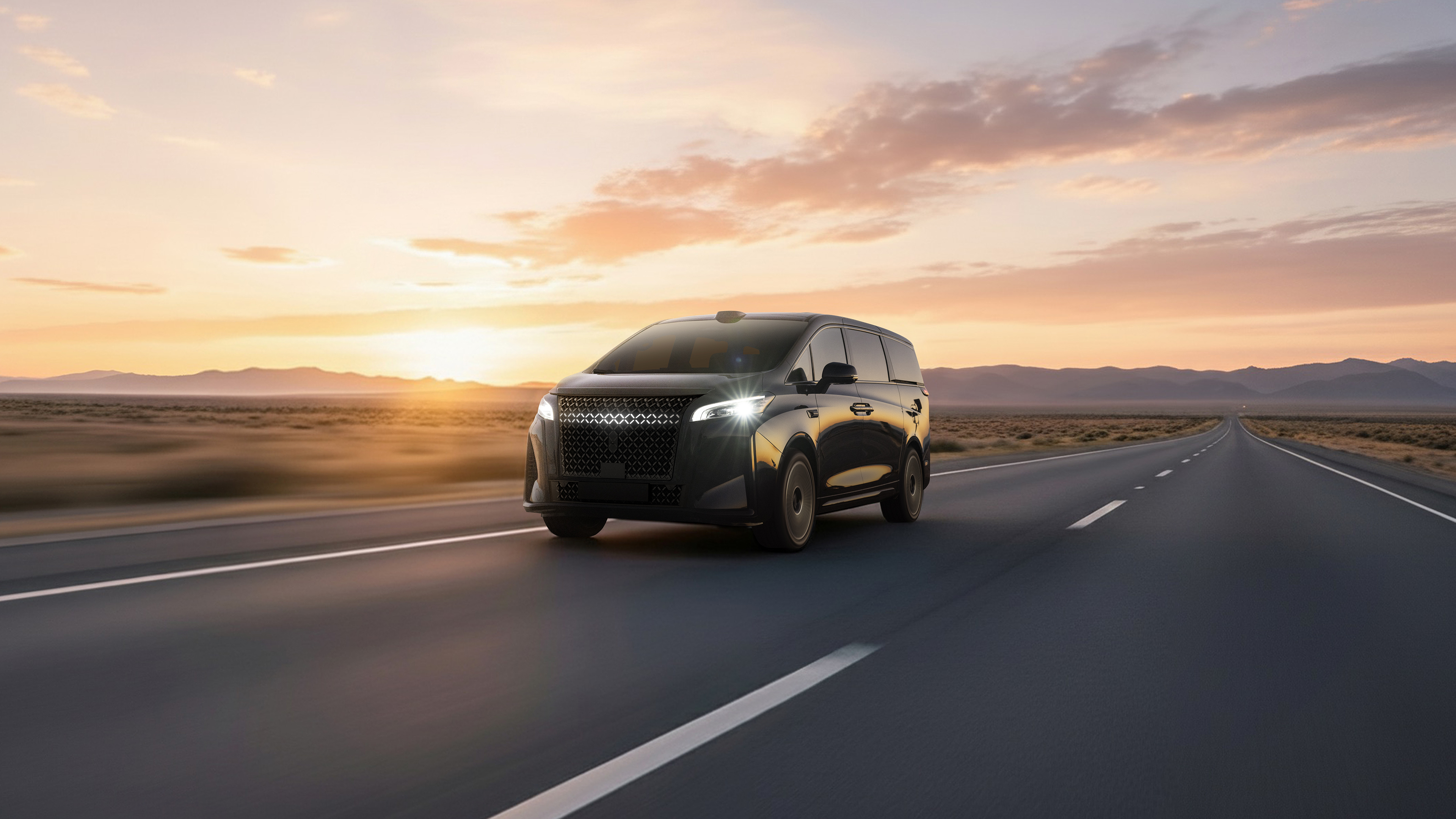
Core Insights - Faraday Future has successfully received the first batch of knockdown parts for the FX Super One MPV, marking a significant milestone towards production readiness and delivery [1][3][6] - The arrival of these components follows a successful trial production phase, which focused on planning and verifying production processes and quality standards [3][6] - The company is also advancing its Global Automotive Industry Bridge Strategy, which encompasses supply chain sourcing, testing, and production readiness [3][5] Production and Delivery Milestones - The knockdown parts will be used to assemble pre-production FX Super One vehicles for testing and marketing activities in the U.S. [3] - The first international delivery of the FX Super One occurred on November 27, 2025, to soccer legend Andrés Iniesta in the UAE, indicating the start of product deliveries in that region [5] - The Hanford manufacturing facility is preparing for flexible production, with the potential to produce over 30,000 FX vehicles annually [8] Vehicle Features and Technology - The FX Super One is designed as an affordable mass-market MPV, featuring a spacious interior, advanced technology, and multiple powertrain options, including battery electric and AI hybrid extended range configurations [9][10] - The vehicle will incorporate the FF Super EAI F.A.C.E. system and the FF EAI Embodied Intelligence AI Agent 6x4 Architecture, representing a significant technological advancement in the automotive sector [10] Company Overview - Faraday Future aims to disrupt the automotive industry by creating a user-centric, technology-first driving experience, with a focus on luxury and innovation [12] - The company has invested approximately $300 million in its 1.1 million-square-foot manufacturing facility in Hanford, California, which is central to its production strategy [8]
果然,又爆了!
中国基金报· 2025-07-01 15:12
Core Viewpoint - The article highlights the significant differentiation among new energy vehicle manufacturers in China, particularly focusing on their sales performance in June 2025, with BYD maintaining a leading position while others like Li Auto and Xiaomi struggle [1][13]. Summary by Sections Sales Performance Overview - In June, BYD achieved sales of 382,585 units, maintaining a substantial lead in the market with a year-on-year growth of 11.98% [2][5]. - Other notable performances include Leap Motor with nearly 50,000 units delivered, marking a year-on-year increase of 138.65% [14][18]. - Li Auto and Xiaomi reported disappointing sales figures, with Li Auto delivering 36,279 units, a decline of 24.06% year-on-year, while Xiaomi's sales fell below 25,000 units [18][21]. Year-to-Date Performance - For the first half of 2025, BYD's cumulative sales reached 2.146 million units, a 33.04% increase compared to the previous year [5][11]. - Leap Motor's cumulative sales reached approximately 221,700 units, achieving 36.95% to 44.34% of its annual target [3][14]. - Xiaopeng's sales exceeded 50% of its annual target, while other manufacturers lagged behind [2][3]. Market Dynamics and Future Plans - The article notes a growing competition in the SUV market, with several manufacturers planning new releases. Leap Motor is set to launch the C11, while Xiaopeng will introduce the G7, an AI-powered SUV [29][30]. - NIO plans to release three new models in the second half of 2025, focusing on high-end intelligent SUVs [30]. - The differentiation among new energy vehicle manufacturers is becoming more pronounced, with varying strategies and product offerings [13][28].