RBOB汽油期货

Search documents
Dow Futures Rise While Oil Hovers Near $100: Trump Warns NATO Of 'Very Bad' Future If Allies Don't Help Reopen Strait Of Hormuz
Yahoo Finance· 2026-03-16 16:30
Market Overview - U.S. equity futures showed positive movement with Dow futures rising by 180 points (0.38%) to 47,066, S&P 500 futures increasing by 29 points (0.43%) to 6,714.75, and Nasdaq 100 futures advancing by 116.75 points (0.47%) to 24,722.50 [2] Commodity Prices - WTI Crude April 26 futures decreased by 0.88% to $97.84 per barrel, while Brent crude fell by 0.16% to $102.98 per barrel [2] - RBOB gasoline futures increased by 0.14% to $3.05 per gallon, whereas ULSD heating oil futures declined by 0.67% to $3.99 per gallon [3] - Natural gas futures dropped by 0.57% to $3.11 per MMBtu [4] Energy Market Dynamics - U.S. crude prices briefly surpassed $100 per barrel, reflecting ongoing concerns in energy markets due to shipping disruptions in the Strait of Hormuz, a critical route for global oil and liquefied natural gas transport [4] - The Strait of Hormuz is vital as it carries about one-fifth of the world's oil and liquefied natural gas [4] Geopolitical Factors - Former President Trump called for countries benefiting from the Strait of Hormuz to contribute military support to ensure its security amid rising tensions and tanker attacks [5][6] - Trump emphasized that China, which sources 90% of its oil from the Straits, should also assist in securing the route [6] - Recent U.S. military actions targeted Iranian military assets on Kharg Island, escalating tensions further in the region [7]
中金 • 全球研究 | 中东冲突如何影响东南亚市场?
中金点睛· 2026-03-10 00:05
Group 1: Core Views - The recent tensions in the Middle East have heightened geopolitical risks, leading to increased market volatility and a shift in capital flows towards Southeast Asia, which may enhance the resilience of certain industries in the region [2][3] - The crisis is expected to bring inflationary pressures and supply chain disruptions, but it may also lead to a reconfiguration of capital, with foreign equity capital likely flowing into Southeast Asia as companies seek stable and high-growth alternative markets [2][3] Group 2: Macroeconomic Insights - Indonesia is expected to benefit from rising commodity prices, particularly in precious metals, coal, and palm oil, which may boost government revenues [3] - Malaysia is positioned as a "dark horse" due to its status as a net energy exporter and its focus on developing data centers and semiconductor industries, which could attract foreign investment [3] - Singapore may emerge as a safe haven for capital, with potential inflows from the Gulf region and a strong performance of local financial institutions and the Singapore dollar [3] - Thailand faces a mixed outlook, with rising oil prices benefiting energy stocks but potentially harming its tourism sector [3] - Vietnam's prospects are uncertain, facing input inflation pressures but also the possibility of renewed foreign direct investment due to its integration into global supply chains [3] - The Philippines may be more vulnerable due to its heavy reliance on remittances from overseas workers, particularly in the Middle East, and rising oil prices could exacerbate its trade deficit [3] Group 3: Investment Strategies - The investment landscape in Southeast Asia is showing clear differentiation, with a recommendation for investors to focus on companies with pricing power and those benefiting from rising commodity prices, while avoiding sectors heavily reliant on fuel and raw material costs [4] - Companies in the energy, commodities, and food sectors, as well as large regional conglomerates and strong financial institutions, are identified as potential safe havens [4] - Conversely, sectors such as transportation and logistics, consumer goods manufacturing, and discretionary retail are seen as facing significant risks due to rising input costs [4] Group 4: Sectoral Analysis - Energy and commodity companies in Indonesia and Malaysia are expected to perform well due to their status as net exporters, with rising prices for agricultural products, oil, and metals likely benefiting their profitability [13] - Large diversified groups and leading financial institutions are viewed as safer investments during market volatility, as they can absorb cost increases across various sectors [13] - Strong consumer brands with pricing power are likely to maintain market share despite rising costs, as they can pass on some of the inflationary pressures to consumers [13] Group 5: Risks and Challenges - The transportation and logistics sectors, particularly airlines, are highly sensitive to fuel price increases, which could compress profit margins despite potential cost pass-through mechanisms [14] - Consumer goods manufacturers, especially in food and beverage, may struggle to fully transfer rising costs to price-sensitive consumers, impacting their profitability [14] - The automotive sector may face demand pressures as rising fuel prices affect disposable income, leading to potential declines in sales [14]


持续完善衍生工具箱 提供风险管理解决方案
Qi Huo Ri Bao Wang· 2025-08-21 00:57
Core Viewpoint - The 2025 China (Zhengzhou) International Futures Forum highlighted the latest developments in the biofuel market, focusing on policy trends, production patterns, and innovations in trading tools, as well as key advancements in shipping decarbonization [1] Group 1: Market Developments - The Chicago Mercantile Exchange Group has established a comprehensive derivatives system covering the entire biofuel industry chain to meet the rapidly growing market demand [1] - The derivatives system includes futures and options products for raw materials such as corn, soybean oil, and European rapeseed oil, as well as fuel products like RBOB gasoline, ultra-low sulfur diesel, ethanol, and biodiesel [1] Group 2: Strategic Goals - The development of the biofuel market requires a balance among policy compliance, raw material sustainability, and cost control [1] - The Chicago Mercantile Exchange Group aims to continuously improve its toolbox of derivatives and provide risk management solutions to support global energy transition and low-carbon goals [1] Group 3: Industry Impact - The innovation and development of the biofuel industry chain are providing strong momentum for green shipping and transportation decarbonization in the context of accelerating global climate action [1]

为千万企业提供“期货答卷” ,做保障国家粮食安全的“压舱石”
Qi Huo Ri Bao· 2025-08-20 23:48
Group 1 - The forum focused on how the futures market can assist the oilseed and oil industry in responding to trade changes [2][3] - The oilseed and oil industry is crucial for food security and economic stability in China, with challenges in stabilizing planting areas and managing price risks [3][4] - The Zhengzhou Commodity Exchange (ZCE) has developed oilseed futures over the past decade, becoming an essential risk management tool for industry players [3][4] Group 2 - The global economic landscape is undergoing significant changes, leading to increased trade uncertainties and price volatility in the oilseed and oil market [3][4] - The domestic supply of edible vegetable oil remains robust despite a reduction in imports, with global supply continuing to increase [5] - The development of the biodiesel industry is significantly impacting global oilseed supply and demand, with nearly 20% of vegetable oil used for biodiesel [5][6] Group 3 - The ZCE is committed to enhancing market functions and service quality to help the oilseed industry navigate global trade challenges [4] - The domestic market for rapeseed and peanut oil is expected to face risks due to fluctuations in supply and demand, influenced by weather conditions and import levels [6][7] - The peanut industry in China is transitioning from a net exporter to a net importer, indicating a shift in trade dynamics [7][8] Group 4 - The future of the peanut market is projected to grow, driven by consumption, industry upgrades, and technological innovation [8] - The oilseed market is experiencing a divergence in oil and meal prices, with strong oil prices supported by biodiesel demand while meal prices remain under pressure [8]

芝商所集团亚太区能源产品执行总监尼古拉斯·迪皮斯:持续完善衍生工具箱 助力全球能源转型与低碳目标实现
Qi Huo Ri Bao· 2025-08-20 11:00
Core Viewpoint - The 2025 China (Zhengzhou) International Futures Forum highlights the latest developments in the biofuel market, focusing on policy trends, production patterns, and innovations in trading tools, as well as key advancements in shipping decarbonization [1] Group 1: Biofuel Market Developments - The Chicago Mercantile Exchange Group has established a comprehensive derivatives system covering the entire biofuel industry chain to meet the rapidly growing market demand [1] - The raw material side includes futures and options products for corn, soybean oil, and European rapeseed oil, while the fuel product side encompasses futures for RBOB gasoline, ultra-low sulfur diesel, ethanol, and biodiesel [1] Group 2: Strategic Goals and Innovations - The development of the biofuel market requires a balance between policy compliance, raw material sustainability, and cost control [1] - The Chicago Mercantile Exchange Group aims to continuously improve its derivatives toolbox to provide risk management solutions, supporting global energy transition and low-carbon goals [1] - Innovations in the biofuel industry chain are providing strong momentum for green shipping and transportation decarbonization amid accelerating global climate action [1]
特朗普炒作汽油价格跌破2美元 真相:美国人加的油不是那个价
凤凰网财经· 2025-05-06 14:25
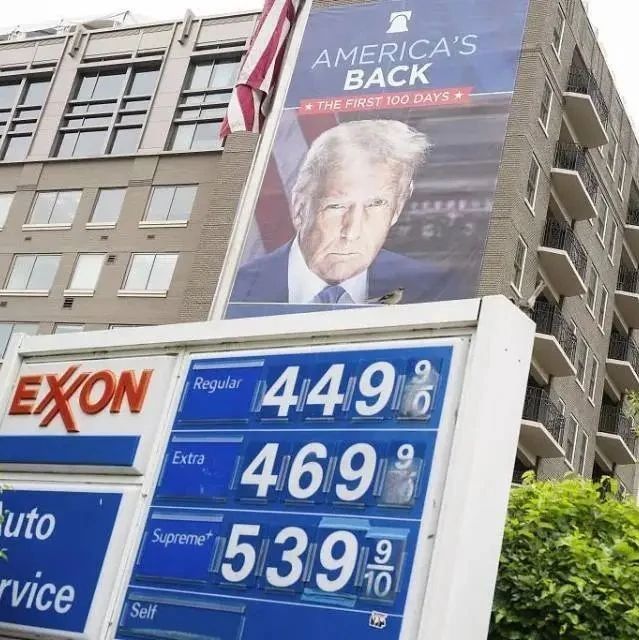
Core Viewpoint - The article discusses the discrepancy between President Trump's claim of gasoline prices dropping below $2 per gallon and the actual average gasoline prices reported by the American Automobile Association (AAA) and GasBuddy, highlighting the use of RBOB gasoline futures in Trump's statement [1][3][5]. Group 1: Gasoline Price Data - President Trump claimed that gasoline prices had fallen to $1.98 per gallon, the lowest in years, and urged the Federal Reserve to lower interest rates [1]. - According to AAA, the average gasoline price was $3.165 per gallon, which is approximately $1.2 higher than Trump's claim [1]. - GasBuddy reported a slight increase in average gasoline prices, reaching $3.12 per gallon, marking the first rise in nearly a month [3]. Group 2: RBOB Gasoline Futures - The price mentioned by Trump refers to RBOB gasoline futures, which hit $1.98 per gallon before fluctuating around $2 [3]. - RBOB gasoline futures track wholesale, unrefined gasoline prices and do not reflect the retail prices consumers pay at gas stations [5][6]. - The White House acknowledged that Trump's reference was to RBOB prices, with officials suggesting that Trump's policies would lead to lower gasoline prices again [5]. Group 3: Consumer Impact - RBOB prices do not include additional costs such as taxes, transportation fees, and operational costs, making them irrelevant for average consumers [6]. - GasBuddy's oil analyst stated that the RBOB price does not reflect what consumers actually pay, emphasizing that it is not meaningful for the general public [6]. - Some consumers may find gasoline prices as low as $1.99 per gallon through discounts, but this is not representative of the general market [7]. Group 4: Future Outlook - Analysts predict that gasoline prices may soon drop below $3 per gallon as refinery maintenance periods end and supply increases [7]. - Current gasoline prices are noted to be the lowest since 2021, indicating potential for further declines in the near future [7].