Rubin数据中心产品

Search documents
华尔街大佬,激辩英伟达
3 6 Ke· 2026-01-07 07:47
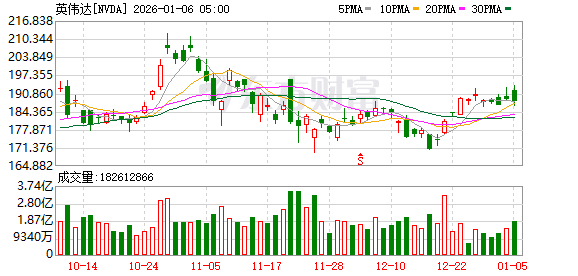
Core Insights - Nvidia's CEO presented an ambitious blueprint at CES, sparking debate on whether Nvidia's rapid growth has peaked or is entering a new phase [1] - Dan Ives from Wedbush Securities emphasized the significant investment potential in AI, dismissing concerns of an AI bubble [1] - Nvidia's upcoming Rubin data center product, featuring six independent chips, is set to launch this year, with major cloud providers like Microsoft as early adopters [1] Market Sentiment - Analysts are divided on Nvidia's future, with Ives optimistic about a market cap reaching $6 trillion, while Gil Luria from DA Davidson expresses caution due to cyclical fluctuations [1][2] - Luria noted that Nvidia's stock price reflects market expectations of peak demand in the data center market, raising concerns about future demand [2] Competitive Landscape - AMD's CEO Lisa Su introduced the concept of "YottaFLOPS," predicting significant growth in AI usage over the next five years [3] - Ives acknowledged Nvidia's leadership in AI but suggested that AMD's potential as a key player in the next phase of AI revolution is underestimated [3] Infrastructure Concerns - Luria expressed skepticism about the capabilities of companies like CoreWeave and Oracle, criticizing their reliance on borrowed funds to build speculative capabilities [3][4] - The critical aspect of the market conflict lies in the underlying infrastructure supporting these tech giants [3] Catalysts for Growth - Luria highlighted that major catalysts for AI growth may come from outside Nvidia, citing OpenAI's plans to raise $100 billion by March, potentially valuing the company at $750 billion to $830 billion [5] - If OpenAI achieves its funding goal, it could intensify competition and investment in AI infrastructure, although Luria remains cautious about the feasibility of this target [6]

英伟达官宣新一代GPU
财联社· 2026-01-06 02:07
Core Viewpoint - The article discusses NVIDIA's announcement of its new Rubin data center products at the CES, highlighting its advancements in AI hardware and the competitive landscape in the AI sector [4][5]. Group 1: NVIDIA's New Products - NVIDIA's CEO Jensen Huang announced the upcoming release of the new Rubin data center products, which are designed to accelerate AI development [4]. - The Rubin architecture consists of six independent chips, including the Rubin GPU and a new Vera CPU designed for "Agentic Reasoning," which is touted as the most advanced technology in the AI hardware field [5]. - The Rubin architecture reportedly offers a 3.5 times speed increase in AI model training tasks compared to the previous Blackwell architecture, with a fivefold performance improvement in running AI software [5]. Group 2: Performance and Cost Efficiency - The Rubin system can reduce the cost of generating inference tokens by up to 10 times and decrease the number of GPUs required for training mixture of experts (MoE) models by four times compared to Blackwell [5]. - The Vera CPU features 88 cores, providing double the performance of its predecessor, and is designed for high efficiency in large-scale AI operations [6]. - NVIDIA claims that the operational costs of systems based on the Rubin architecture will be lower than those based on Blackwell, as they require fewer components to achieve similar results [6]. Group 3: Market Position and Competition - NVIDIA aims to maintain its leading position in the AI accelerator market, despite increasing competition and concerns about the sustainability of AI spending growth [5][6]. - Major cloud providers, including Microsoft, are expected to be among the first to deploy the new hardware later in the year [6]. - The company remains optimistic about the long-term growth of the AI market, projecting it could reach trillions of dollars [6]. Group 4: Additional Hardware Features - The new hardware also includes networking and connectivity components, which will be part of the DGX SuperPod supercomputer and available as standalone products for modular use [7]. - This performance enhancement is necessary as AI models become more specialized, requiring the ability to process vast amounts of input and solve specific problems through multi-stage processes [7].


马杜罗首次出庭:我是被绑架的!我无罪!
Shang Hai Zheng Quan Bao· 2026-01-06 00:30
Market Performance - The three major U.S. stock indices closed higher, with the Dow Jones Industrial Average reaching a record high, up 1.23% to 48,977.18 points, the Nasdaq up 0.69% to 23,395.82 points, and the S&P 500 up 0.64% to 6,902.05 points [1][3][2]. Precious Metals - Geopolitical tensions led to significant increases in precious metal prices, with COMEX gold futures rising 3% to $4,459.7 per ounce and COMEX silver futures up 7.74% to $76.5 per ounce [1][6]. - Spot gold also saw a rise, closing up 2.74% at $4,449.04 per ounce, while spot silver increased by 5.42% to $76.6 per ounce [7]. Energy Sector - The S&P 500 energy sector index rose by 2.7%, with major oil and gas stocks like Chevron increasing over 5% and ExxonMobil and ConocoPhillips rising over 2% [5]. - Investors are optimistic about U.S. energy companies potentially entering Venezuela, which has the world's largest oil reserves, following strong U.S. government actions against the Venezuelan leadership [5]. Technology Sector - Nvidia announced the launch of a series of AI models and tools, including the Alpamayo platform, which enables cars to perform reasoning in real-world scenarios [10][11]. - The first vehicle equipped with Nvidia technology is expected to be on the road in the U.S. in the first quarter [11]. - Nvidia's new Rubin data center product is set to be released this year, promising significant improvements in training performance and operational costs compared to previous models [12]. Financial Sector - Major U.S. bank stocks reached historical highs, with Goldman Sachs up 3.73%, JPMorgan up 2.63%, and Morgan Stanley up 2.55% [6]. - The S&P 500 financial sector index increased by 2.2%, with analysts predicting a 6.7% year-over-year earnings growth for financial companies in the upcoming quarterly reports [6].

“物理AI的ChatGPT时刻”!英伟达最新发布 黄仁勋发声
Mei Ri Jing Ji Xin Wen· 2026-01-05 23:20
Core Insights - Nvidia has taken a significant step in the autonomous driving sector by open-sourcing its first inference VLA (Vision-Language-Action) model, Alpamayo, aimed at accelerating the development of safe autonomous driving technology [2][4] - The Alpamayo model processes complex driving scenarios using human-like reasoning, providing new pathways to address the long-tail problem in autonomous driving [2][4] Group 1: Model Features and Capabilities - The Alpamayo model is designed to enable vehicles to "think" in unexpected situations, such as traffic light failures, by analyzing inputs from cameras and sensors to propose solutions [4][5] - It integrates three foundational pillars: an open-source model, a simulation framework, and datasets, creating a comprehensive open ecosystem for automotive developers and research teams [4][5] - Alpamayo 1 features a 10 billion parameter architecture that generates trajectories and reasoning paths from video inputs, showcasing the logic behind each decision [4][6] Group 2: Future Developments and Applications - Nvidia emphasizes that the Alpamayo model will not run directly in vehicles but will serve as a large-scale teacher model for developers to fine-tune and integrate into their complete autonomous driving technology stack [5][6] - Future models in the Alpamayo family are expected to have larger parameter sizes, enhanced reasoning capabilities, and more flexible input-output options for commercial use [5][6] - The reasoning VLA model can break down complex tasks into manageable sub-problems, providing a more accurate problem-solving approach and a degree of introspection on its operations [6][7] Group 3: Strategic Initiatives and Market Position - Nvidia plans to test a self-driving taxi service by 2027, indicating its commitment to advancing autonomous vehicle technology [7] - The company is also set to release new Rubin data center products that will significantly enhance AI training and inference performance, with improvements of 3.5 times and 5 times, respectively, compared to the previous Blackwell architecture [8] - Major cloud service providers, including Microsoft, are expected to be among the first to deploy the new hardware based on the Rubin architecture [8]