
SP不眠剧场

Search documents
泡泡玛特跌超8%,大摩预测明年Labubu收入增速将显著放缓
YOUNG财经 漾财经· 2025-12-08 11:44
Core Viewpoint - Pop Mart is transitioning from a phase of explosive growth to sustainable growth, with a significant slowdown in revenue growth expected for its Labubu line by 2026, shifting from a single blockbuster to a diversified IP-driven model [2][4]. Group 1: Financial Performance - Pop Mart's overall revenue surged by 245%-250% year-on-year in Q3 2025, driven by new product launches like Mini Labubu and SP Insomnia Theater, along with revenue recognition from pre-sales in Q2 [2]. - In the Chinese market, revenue grew by 185%-190%, with offline channels increasing by 130%-135% and online channels by 300%-305%. Internationally, revenue rose by 365%-370%, with the Americas seeing a staggering increase of 1265%-1270% [3]. - Despite strong financial results, Pop Mart's stock price has been declining, with significant drops of 8.08% and 9% on October 21 and 23, respectively, indicating investor concerns about the sustainability of revenue growth [3][4]. Group 2: Market Sentiment and Analyst Opinions - Analysts express concerns that the revenue growth for Pop Mart may have peaked, with fears of a potential decline similar to the "boom-bust" cycle experienced by the 1990s toy phenomenon, Beanie Babies [4]. - Morgan Stanley has previously raised Pop Mart's target price multiple times, reflecting optimism about its growth potential, but recently adjusted the target price down from 382 HKD to 325 HKD due to unfavorable trends in the global consumer sector [4][5]. - The shift from reliance on a single blockbuster to a multi-IP strategy is seen as a core advantage, with analysts highlighting the potential of overseas markets and new business ventures like Pop Land theme park and POPOP jewelry [4].


泡泡玛特遭空头围猎 近4个月跌40% 市值蒸发超1800亿港元
2 1 Shi Ji Jing Ji Bao Dao· 2025-12-08 10:12
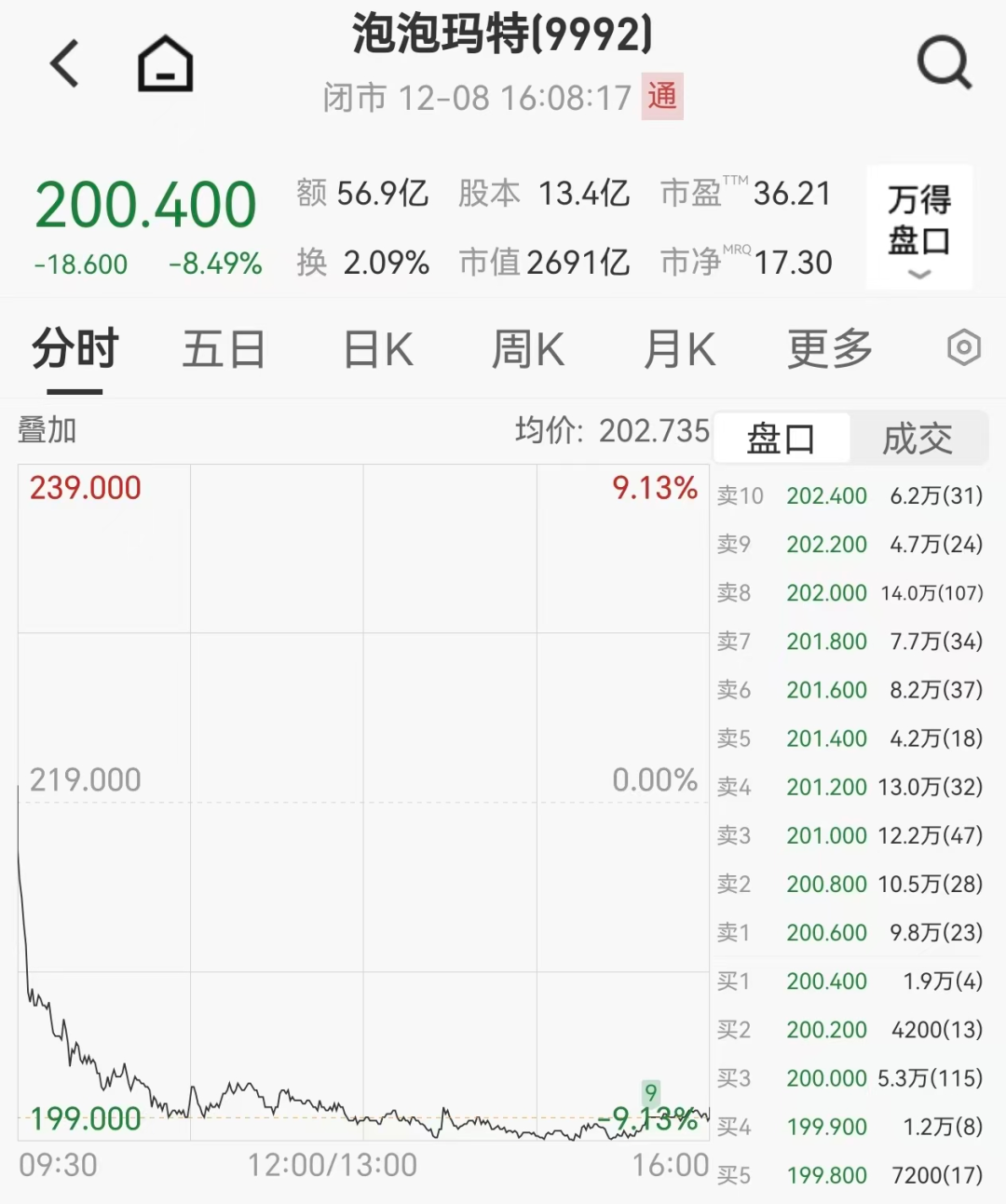
Core Viewpoint - Pop Mart's stock experienced a significant decline, dropping nearly 8.5% on December 8, marking its largest drop in over six weeks, with a cumulative decline of over 14% in the past month and approximately 40% from its August peak, resulting in a market value loss exceeding 180 billion HKD [2]. Market Sentiment - Market sentiment remains bearish, with short-selling amounts reaching 1.092 billion HKD on December 8, an increase of 210.58% from the previous trading day and 47.35% higher than the average of the last 30 trading days; the short-selling ratio stood at 19.23%, deviating -17.33% from the average of the last 30 trading days [2]. - The number of shares short-sold increased from 1.1106 million to 1.6170 million since December 2, with short-selling amounts rising from 241 million HKD to 623 million HKD during the same period [2]. Recent Trading Data - Recent trading data shows a significant increase in short-selling amounts and ratios over the past ten days, with December 8 recording a short-selling amount of 1.092 billion HKD and a short-selling ratio of 19.23%, alongside a closing price of 200.40 HKD [3]. Financial Performance - Pop Mart's overall revenue for Q3 2025 is expected to surge by 245%-250% year-on-year, driven by the launch of new products like Mini Labubu and SP Insomnia Theater, along with revenue recognition from pre-sales in Q2, which directly contributed to performance growth [3]. - The core IP Labubu continues to maintain global popularity, serving as a key growth driver, although the stock price has been on a downward trend before and after the earnings disclosure [3]. Product Market Dynamics - Following the launch of the Labubu new products on November 13, market enthusiasm has noticeably declined, with secondary market premiums dropping by over 50%, and regular versions 3.0 and 4.0 selling below official retail prices on secondary platforms [4]. - Deutsche Bank's latest report indicates that Pop Mart plans to significantly increase Labubu production capacity from 10 million units in the first half of the year to an average of 50 million units per month by the end of the year, warning that large-scale production often signals a decline in demand for brands reliant on unique design and scarcity [4].


泡泡玛特遭空头围猎,近4个月跌40%,市值蒸发超1800亿港元
2 1 Shi Ji Jing Ji Bao Dao· 2025-12-08 09:53
Core Viewpoint - Pop Mart experienced a significant stock decline, with a drop of nearly 8.5% on December 8, marking its largest decline in over six weeks, and a cumulative drop of over 14% in the past month, resulting in a market value loss of over 180 billion HKD compared to its August peak [1] Group 1: Stock Performance - On December 8, Pop Mart's short-selling amount reached 1.092 billion HKD, an increase of 210.58% from the previous trading day, and up 47.35% compared to the average of the last 30 trading days [3] - The short-selling ratio was 19.23%, deviating by -17.33% from the average short-selling ratio over the last 30 trading days [3] - The number of shares sold short increased from 1.1106 million shares to 1.6170 million shares from December 2 to December 8, with the short-selling amount rising from 241 million HKD to 623 million HKD during the same period [3] Group 2: Financial Performance - Pop Mart's overall revenue for Q3 2025 is expected to surge by 245%-250% year-on-year, driven by the launch of new products like Mini Labubu and SP Insomnia Theater, along with revenue recognition from pre-sales in Q2 [4] - The core IP Labubu continues to maintain global popularity, serving as a key growth driver [4] Group 3: Market Sentiment and Product Strategy - Following the launch of the Labubu new product on November 13, market enthusiasm has noticeably declined, with secondary market premiums dropping by over 50% and regular versions selling below official retail prices [5] - Deutsche Bank's latest report indicates that Pop Mart plans to increase Labubu production capacity from 10 million units in the first half of the year to an average of 50 million units per month by the end of the year, warning that large-scale production often signals a decline in market enthusiasm for brands reliant on unique design and scarcity [5]
泡泡玛特遭空头围猎,近4个月跌40%,市值蒸发超1800亿港元
21世纪经济报道· 2025-12-08 09:50
Core Viewpoint - The article highlights the significant decline in Pop Mart's stock price, with a nearly 8.5% drop on December 8, marking the largest decline in over six weeks, and a cumulative drop of over 14% in the past month, resulting in a market value loss of over 180 billion HKD compared to its August peak [1]. Market Sentiment - The short-selling sentiment towards Pop Mart has intensified, with a short-selling amount of 1.092 billion HKD on December 8, an increase of 210.58% from the previous trading day and 47.35% higher than the average of the last 30 trading days [3]. - The short-selling ratio reached 19.23%, deviating by -17.33% from the average short-selling ratio of the last 30 trading days [3]. - The number of shares sold short increased from 1.1106 million to 1.6170 million since December 2, with the short-selling amount rising from 241 million HKD to 623 million HKD during the same period [3]. Trading Data - On December 8, the short-selling amount was 1.092 billion HKD, with a short-selling ratio of 19.23%, and the stock closed at 200.40 HKD, reflecting a decline of 8.49% [4]. - The trading data for the previous days shows fluctuations in short-selling amounts and ratios, with notable increases in short-selling activity leading up to December 8 [4]. Financial Performance - Pop Mart's overall revenue for Q3 2025 is expected to surge by 245%-250% year-on-year, driven by the launch of new products like Mini Labubu and SP Insomnia Theater, along with revenue recognition from pre-sales in Q2 [5]. - The core IP Labubu continues to be a key growth driver, although there are concerns about declining market interest following the launch of new products, with secondary market premiums dropping significantly [5]. - Deutsche Bank's recent report warns that the large-scale production increase from 10 million units in the first half of the year to an average of 50 million units per month by year-end may signal a decline in brand heat, which is critical for a brand reliant on unique design and scarcity [5].

泡泡玛特,股价大跌近9%,发生了什么?
Mei Ri Jing Ji Xin Wen· 2025-12-08 06:56
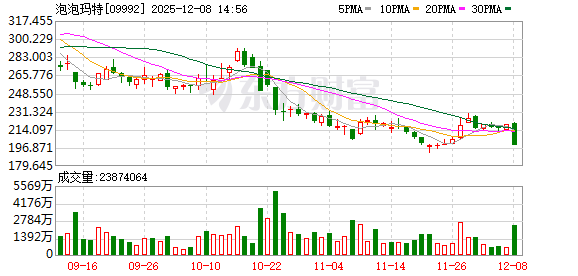
Core Viewpoint - Pop Mart's stock price has been declining, currently down 8.95% to HKD 199.40, as it transitions from explosive growth to sustainable growth, according to Morgan Stanley's report [2] Group 1: Financial Performance - Pop Mart's revenue for Q3 2025 saw a significant year-on-year increase of 245%-250%, driven by new product launches and revenue recognition from pre-sales [2] - Revenue in the Chinese market grew by 185%-190%, with offline channels increasing by 130%-135% and online channels by 300%-305% [2] - Internationally, revenue surged by 365%-370%, with the Americas experiencing a staggering growth of 1265%-1270% [2] Group 2: Market Sentiment - Despite strong financial results, Pop Mart's stock has been under pressure, with a notable drop of 8.08% on October 21 and 9% on October 23, marking the largest single-day decline since April [3] - Analysts express concerns that Pop Mart's revenue growth may peak this year, leading to potential slowdowns in the following year [3] - Short-selling activity has increased significantly, with shares shorted rising from 1.11 million to 1.62 million and the short-selling amount increasing from HKD 241 million to HKD 623 million [3][4]
预增超245%!泡泡玛特公告第三季度业绩
Zhong Guo Zheng Quan Bao· 2025-10-21 12:12
Core Viewpoint - The company, Pop Mart, announced a significant increase in overall revenue for Q3 2025, with a projected growth of 245% to 250% year-on-year, driven by strong performance in both domestic and overseas markets [1] Group 1: Revenue Growth - The revenue from the Chinese market is expected to grow by 185% to 190%, while overseas market revenue is projected to increase by 365% to 370% [1] - In Q3, the offline channels in China are anticipated to grow by 130% to 135%, and online channels are expected to see a growth of 300% to 305% [1] Group 2: Product and Channel Strategy - The company launched new IP products such as Mini Labubu and SP Unrest Theater, which, along with increased production capacity, contributed to the revenue growth in Q3 [1] - The company plans to balance product categories while continuously investing in new IP exposure and growth, ensuring a consistent consumer experience across different channels [1] Group 3: Organizational Changes and Global Expansion - In April, the company underwent its largest organizational restructuring in five years to enhance its global layout, which included adding new regions and strengthening its middle office [2] - The restructuring aims to promote globalization and streamline decision-making processes, allowing for more efficient responses to local market needs [2] - The overseas market revenue saw substantial growth, with the Asia-Pacific region increasing by 170% to 175%, the Americas by 1265% to 1270%, and Europe and other regions by 735% to 740% [2] Group 4: Future Outlook - The CEO expressed confidence in the growth of the North American and Asia-Pacific markets, projecting that their sales could match last year's domestic sales despite having fewer stores [3] - The company's ongoing globalization efforts have begun to yield positive results, indicating a successful initial phase of international expansion [3]