Scuba运动衫

Search documents
Lululemon核心市场承压,品控失控是产能转移后遗症?
3 6 Ke· 2026-02-04 11:18
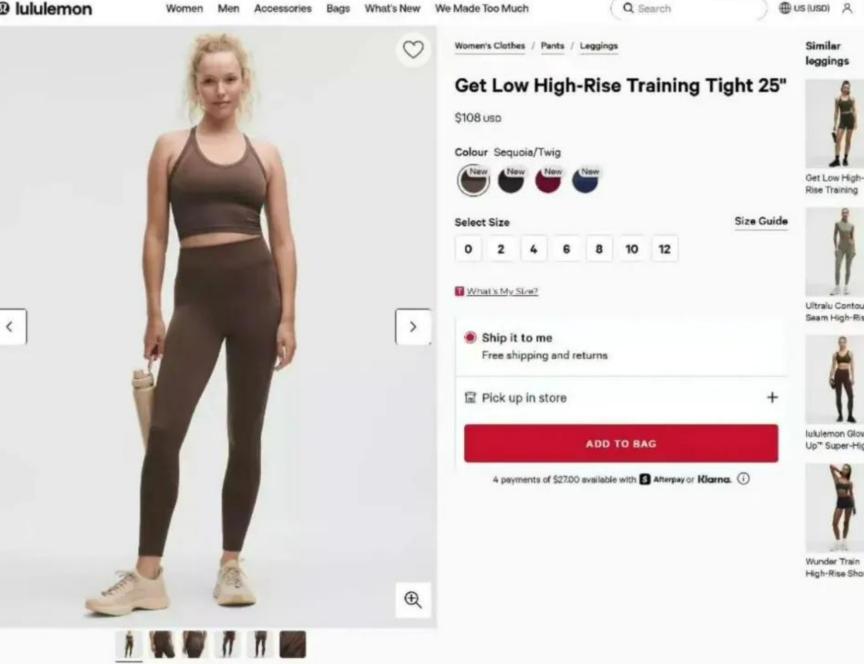
Core Viewpoint - Lululemon is facing significant challenges due to recurring product quality issues, particularly highlighted by the recent "GetLow" yoga pants controversy, which has raised concerns about the brand's quality control and market performance [1][2][4]. Product Quality Issues - The "GetLow" yoga pants, priced around 780 yuan, were found to have severe transparency issues during common movements, leading to consumer complaints and viral discussions on social media platforms [2][4]. - This incident marks the third major quality controversy for Lululemon in a decade, following similar issues in 2013 and 2024, indicating a pattern of quality control failures [4][5]. Financial Performance - Lululemon's financial results for Q3 2025 showed a net revenue increase of approximately 7% to about $2.6 billion, but net profit declined by about 12.8% to approximately $307 million, with a gross margin decrease of about 290 basis points to 55.6% [11][12]. - The Americas market, which is Lululemon's core region, experienced a 2% decline in net revenue, marking the first quarterly revenue drop since 2018 [9][11]. Market Dynamics - Despite a 46% revenue growth in mainland China, this region accounted for less than 20% of total revenue, indicating limited impact on overall performance [11][12]. - Increased competition from local brands in China, such as Li Ning and Anta, poses a significant threat to Lululemon's market share, particularly with products that offer better fit and value [12][13]. Strategic Challenges - Lululemon's reliance on a few core products, such as the Scuba hoodie, has led to stagnation in consumer interest, as noted by the CEO [12][13]. - The acquisition of the Mirror brand has not yielded expected synergies and has instead become a financial burden, contributing less than 3% to total revenue in 2025 [12][13]. Quality Control and Cost Management - The brand's shift of production to Southeast Asia, where labor costs are significantly lower, has raised concerns about quality control, as factories may prioritize output over material quality [5][7]. - The founder's criticism of management for lowering material standards highlights a disconnect between high profit margins and quality control investments [7][13].

250亿美金服饰巨头,卷入夺权大战
3 6 Ke· 2026-01-11 07:16
Core Viewpoint - A power struggle has intensified at lululemon, initiated by founder Chip Wilson, who has nominated three independent board candidates targeting the current board's strategic decision-making capabilities [1][2][6]. Company Developments - Chip Wilson, the largest independent shareholder with approximately 9% ownership, has publicly criticized the management for being overly focused on mainstream tastes and lacking innovation [3][5]. - The situation escalated as activist investment fund Elliott Investment Management entered the fray, holding over $1 billion in shares and becoming involved in corporate governance [6]. - lululemon is currently facing significant challenges, including a 52% drop in stock price over the year and declining performance in its core North American market [7][16]. Leadership Changes - CEO Calvin McDonald announced his resignation effective January 31, 2026, just 18 days before Wilson's board nominations [2][9]. - Under McDonald's leadership, lululemon's revenue grew from $3.3 billion to $10.6 billion, and the number of stores expanded from over 400 to 796 [10]. Market Performance - In the third quarter of fiscal year 2025, lululemon's net revenue in mainland China surged by 46% year-over-year to $465.4 million, making it the second-largest market after the U.S. [12][13]. - However, the company's net profit declined by 12.8% year-over-year, and comparable sales fell by 5%, indicating struggles in the North American market [16]. Strategic Disputes - The core conflict between Wilson and the current management revolves around the brand's development path: whether to focus on the original "super girl" strategy or to continue the current broad category expansion [17][20]. - Wilson's concerns include the dilution of lululemon's brand identity and quality due to mass-market strategies, which he believes could alienate core customers [21]. Future Outlook - The outcome of the board elections and the selection of a new CEO will be critical in determining lululemon's direction and ability to recover from its current challenges [20][22]. - Regardless of who leads, lululemon cannot revert to its original niche brand status, as it has evolved into a $25 billion apparel giant [23][24].

250亿美金,lululemon卷入夺权大战
36氪· 2026-01-05 09:19
Core Viewpoint - A power struggle has erupted at lululemon, initiated by founder Chip Wilson, who has nominated three independent board candidates targeting the current board's strategic decision-making capabilities [5][6][10]. Group 1: Power Struggle and Leadership Changes - Chip Wilson, holding approximately 9% of lululemon's shares, has publicly criticized the management for being overly focused on mainstream tastes and lacking innovation [7][9]. - The situation escalated after the announcement that CEO Calvin McDonald would step down on January 31, 2026, leading to a nearly 10% stock price increase, reflecting investor disappointment with current strategies [11][15]. - Wilson's actions are compounded by the involvement of Elliott Investment Management, a prominent activist fund, which has invested over $1 billion and engaged in corporate governance [10][11]. Group 2: Financial Performance and Market Dynamics - lululemon has faced significant challenges, including a 12.8% decline in net profit year-over-year and a 2% drop in core market revenue in the Americas [22]. - The company's stock price has fallen over 52% in 2025, resulting in a market capitalization loss exceeding $20 billion, primarily due to declining performance in the North American market [23]. - Despite these challenges, lululemon's revenue in mainland China surged by 46% year-over-year, reaching $465 million in the third quarter of the 2025 fiscal year, making it the second-largest market after the U.S. [18][17]. Group 3: Strategic Direction and Brand Identity - The conflict between Wilson and the current management reflects a fundamental disagreement over lululemon's growth strategy: whether to maintain a focus on the "super girl" niche or to continue the broad category expansion initiated by McDonald [25][28]. - Wilson argues that the brand's core strength lies in differentiation rather than mass appeal, warning that attempts to please everyone could alienate core customers [28][29]. - The brand's identity has shifted from a niche community brand to a $25 billion apparel giant, with changing market expectations and competitive landscapes [31][32].
「县城贵妇」追捧的服饰巨头,卷入250亿美金夺权大战
36氪未来消费· 2026-01-03 12:00
Core Viewpoint - A power struggle has erupted at lululemon, initiated by founder Chip Wilson, who has nominated three independent board candidates to challenge the current board's strategic decision-making ahead of the 2026 shareholder meeting [3][4][5]. Group 1: Background and Context - The conflict escalated shortly after lululemon announced CEO Calvin McDonald would step down on January 31, 2026, leading to a significant public and market reaction [4][12]. - Wilson, holding approximately 9% of lululemon's shares, has been critical of the management's approach, claiming it has overly catered to mainstream tastes and stifled innovation [5][7]. - The involvement of Elliott Investment Management, a prominent activist fund, has intensified the situation, with over $1 billion in shares and a focus on corporate governance [8]. Group 2: Financial Performance and Market Position - lululemon has faced significant challenges, including a 52% drop in stock price over the year, resulting in a market value loss exceeding $20 billion [22]. - The company reported a 12.8% decline in net profit for the third quarter of fiscal year 2025, with core market revenues in North America decreasing by 2% [21]. - Despite these challenges, lululemon's revenue in mainland China surged by 46% year-over-year, reaching $465 million, making it the second-largest market after the U.S. [17][15]. Group 3: Strategic Divergence - The core conflict between Wilson and the current management revolves around the brand's strategic direction: whether to maintain a focus on the "super girl" niche or to continue the broad category expansion initiated by McDonald [24][27]. - Wilson argues that the brand's identity is at risk due to a shift towards mass appeal, which he believes dilutes its core value proposition [28]. - The outcome of the upcoming CEO selection and board elections will be crucial in determining lululemon's future direction and ability to navigate its current challenges [29].

lululemon CEO将卸任:任内营收三倍增长,但大本营市场拖后腿
Jing Ji Guan Cha Wang· 2025-12-12 12:26
Core Insights - The CEO of lululemon, Calvin McDonald, will resign on January 31, 2026, after seven years of leadership, during which the company transformed from a North American yoga pants brand to a global apparel giant [2] - His departure follows criticism from founder Chip Wilson regarding management's compromise on brand identity, which has led to a significant drop in market value [2][7] - McDonald emphasized that his resignation is a natural transition aligned with the company's strategic cycle, not due to issues in the U.S. market [2] Financial Performance - Under McDonald's leadership, lululemon's revenue grew from $3.3 billion in 2018 to an expected $11 billion in fiscal year 2025, marking a threefold increase [3] - The number of stores nearly doubled during his tenure, reaching 796 by the end of the third quarter [3] - Despite achieving the goal of doubling men's apparel sales by 2023, the revenue share of men's apparel only increased from 23.5% to 25.2% from 2019 to 2024, indicating slower-than-expected growth [4] Strategic Initiatives - McDonald implemented a diversification strategy and accelerated global market expansion, including the introduction of a men's clothing line and the launch of a sneaker series [5][6] - The company expanded its store presence from 17 to over 30 countries, with international revenue share rising from under 20% in 2018 to nearly 40% in 2025 [7] Market Dynamics - The Chinese market has become lululemon's second-largest market, with a 25% revenue growth in Q2 and a 46% growth in Q3 of fiscal year 2025, driving international business growth [8] - In contrast, the North American market has faced challenges, with revenue growth slowing to 3.9% in 2024 and a decline of 2% in Q3 of fiscal year 2025 [8] Product Innovation - McDonald acknowledged issues with product innovation, stating that some core products have become outdated and are not resonating with consumers [9] - The company plans to increase the proportion of new products to 35% in the spring of 2026, with a focus on revitalizing its product strategy [9] Leadership Transition - The company is in the process of selecting a new CEO with a focus on growth and transformation experience, while the current CFO and COO will serve as interim co-CEOs until a successor is appointed [10]