TPU处理器

Search documents
黄仁勋私下很忧虑,英伟达与OpenAI的“千亿美元大交易”陷入停滞?
Hua Er Jie Jian Wen· 2026-01-31 03:03
Core Viewpoint - The $100 billion investment agreement between Nvidia and OpenAI announced in September last year has stalled due to internal concerns at Nvidia regarding the terms of the deal [1][2]. Group 1: Investment Agreement Status - Nvidia's CEO Jensen Huang has privately emphasized that the initial $100 billion agreement is non-binding and not finalized, expressing concerns over OpenAI's commercial discipline and competitive pressures from companies like Google and Anthropic [2][5]. - The negotiations for the agreement remain in the early stages, with no substantial progress made since the announcement [4]. - Nvidia's CFO Colette Kress stated that the company has not completed a final agreement with OpenAI [4]. Group 2: Competitive Pressures - Huang's concerns about OpenAI's business model stem from intense competition, particularly from Google's Gemini application, which has slowed ChatGPT's growth, prompting OpenAI to declare a "red alert" status [5]. - Anthropic's AI coding assistant, Claude Code, also poses a competitive threat to OpenAI, which is critical for Nvidia as OpenAI is one of its largest customers [5]. - If OpenAI falls behind its competitors, it could negatively impact Nvidia's sales, as competitors are utilizing alternative chips that challenge Nvidia's GPU market [5]. Group 3: Market Reactions and Future Prospects - The initial announcement of the agreement led to a nearly 4% increase in Nvidia's stock price, raising its market capitalization to approximately $4.5 trillion [7]. - OpenAI's commitments for computational power have raised concerns among investors, as the total commitments amount to $1.4 trillion, over 100 times its expected revenue for the previous year [7]. - OpenAI executives have indicated that the total commitment amount is lower after accounting for overlapping transactions, and these agreements will be fulfilled over a long period [7].

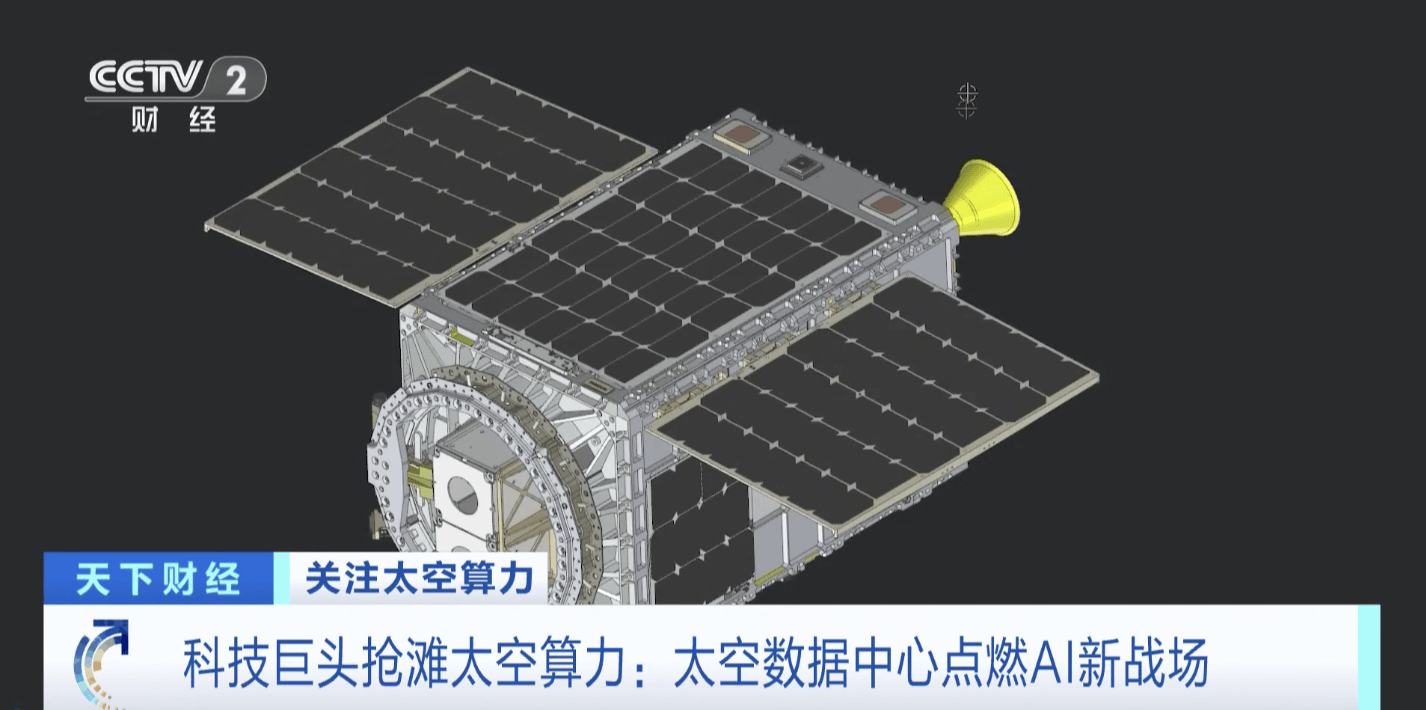
科技巨头抢滩太空算力:太空数据中心点燃AI新战场
Sou Hu Cai Jing· 2025-11-29 15:19
Core Viewpoint - The demand for electricity due to AI training and inference is surging, leading to strain on power grids globally, prompting major companies like Nvidia and Google to shift their focus towards space-based data centers [1][3]. Group 1: Nvidia and Starcloud's Initiatives - Nvidia, in collaboration with its invested startup Starcloud, successfully launched the first space data center satellite equipped with H100 chips using SpaceX's Falcon 9 rocket [3]. - The satellite will test complex tasks such as real-time analysis of Earth observation data and running AI models, with plans for a second-generation satellite launch in 2026 and a 40 MW data center in space by the early 2030s [3]. Group 2: Cooling and Resource Efficiency - Starcloud's co-founder, Philip Johnston, stated that space data centers will significantly reduce the burden on Earth, particularly in terms of electricity and water supply, as they utilize infrared radiation for cooling instead of evaporating freshwater [5]. Group 3: SpaceX's Role - SpaceX is also actively developing space data centers, with CEO Elon Musk announcing plans to start launching the next generation of Starlink satellites in early 2026, which will serve as a foundation for space data centers [7]. Group 4: Google's Space Data Center Plans - Google announced its "Project Sun Catcher," aiming to relocate AI data centers to space, utilizing a satellite constellation to create an orbital computing platform equipped with TPU processors and optical communication systems [11]. - The first experimental devices are expected to launch in early 2027, with projected launch costs potentially dropping below $200 per kilogram by the mid-2030s, making space data centers cost-competitive with terrestrial counterparts [11]. Group 5: Challenges and Risks - Despite the optimism surrounding space data centers, analysts highlight several challenges, including risks from radiation, space debris, and solar flares that could disrupt communications [15].