增强现实

Search documents
从修飞机到出国游 这件AI+AR“广货”让老外追着下单
Nan Fang Du Shi Bao· 2026-02-18 14:37
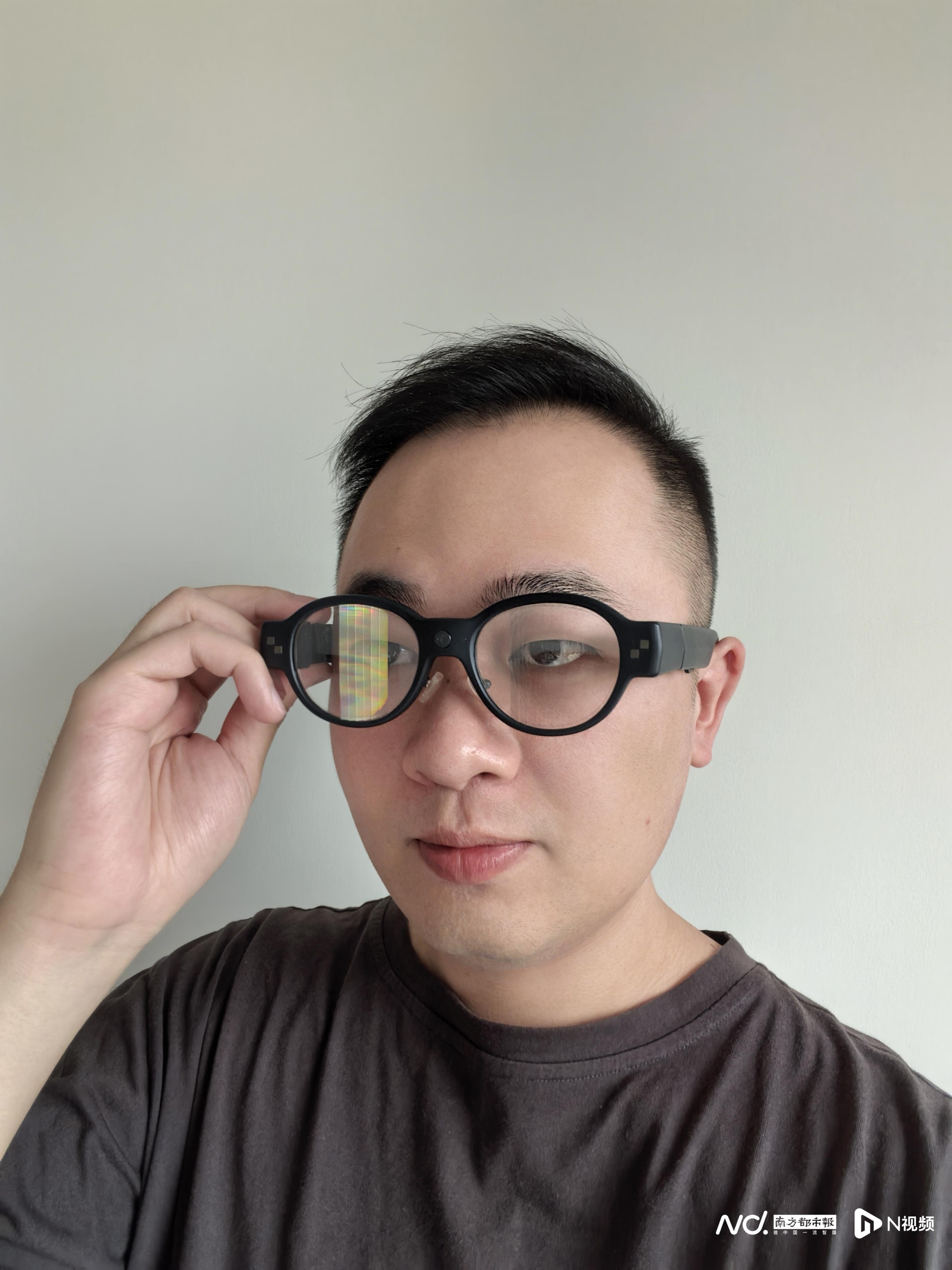
Core Viewpoint - The article highlights the advancements and market positioning of Gu Dong Technology, a company specializing in augmented reality (AR) technology, emphasizing its transition from domestic to international markets and its innovative product offerings in the AR sector. Group 1: Company Overview - Gu Dong Technology was established in 2017, focusing on augmented reality display and technology, initially targeting industrial applications rather than consumer markets [3] - The company achieved its first order in 2019 from a domestic airline, showcasing its self-developed optical waveguide technology [4] - By 2024, Gu Dong Technology aims to capture 35% of the domestic industrial AR market, ranking first in shipment volume [6] Group 2: Product Innovations - In 2023, Gu Dong Technology successfully developed PVG optical waveguide technology, enhancing light efficiency by 300% and achieving over 90% light transmittance [9] - The company introduced the Star 1s upgraded version of its AR glasses in October 2025, featuring dual full-color displays and AI capabilities for various applications [14] - The AR glasses have been sold overseas, with over 5,000 units sold at a price of 7,999 yuan, appealing to young consumers in regions like the US and the Middle East [15] Group 3: Market Expansion - Gu Dong Technology has expanded into international markets, supplying products to major global energy companies, marking a significant shift from merely catching up to surpassing competitors [10] - The company has established deep collaborations with leading domestic airlines and top global aerospace manufacturers, enhancing its market presence [5] - The AR technology developed by Gu Dong Technology is being recognized for its clarity and performance, breaking the long-standing dominance of older products in the market [9][10] Group 4: Competitive Advantage - Gu Dong Technology is the only company in China that simultaneously masters both 2D full-color array waveguide and volumetric holographic waveguide technologies [18] - The company benefits from a mature supply chain in the Guangdong-Hong Kong-Macao Greater Bay Area, allowing for rapid product development and low trial costs [18] - The core team consists of early specialists in AI and AR waveguide technology, contributing to the company's competitive edge in the industry [18]

从修飞机到出国游,这件AI+AR“广货”让老外追着下单
Nan Fang Du Shi Bao· 2026-02-18 07:37
Core Insights - The article highlights the innovative advancements of Gu Dong Technology in the field of augmented reality (AR), showcasing its transition from a domestic focus to international markets, particularly in the industrial sector [2][5][10]. Company Overview - Gu Dong Technology, established in 2017, specializes in augmented reality display and technology, initially focusing on industrial applications rather than consumer markets [5]. - The company has developed a lightweight AR glasses model weighing only 89 grams, which integrates AI capabilities for enhanced user interaction [2][4]. Market Position - Gu Dong Technology has secured a leading position in the domestic industrial AR market, aiming to capture 35% market share by 2024, with the highest shipment volume [7]. - The company has successfully established partnerships with major domestic airlines and global aerospace manufacturers, enhancing its credibility and market presence [6][10]. Technological Advancements - In 2023, Gu Dong Technology achieved a significant breakthrough with its self-developed PVG waveguide technology, improving light efficiency by 300% and achieving over 90% light transmittance [9]. - The introduction of the "LCoS + PVG waveguide" optical solution in 2025 is expected to further enhance performance while reducing AR product costs to the thousand-yuan level [9]. International Expansion - The company began expanding into overseas industrial markets in 2023, successfully penetrating sectors such as oil and telecommunications in countries like Brazil, Malaysia, and Saudi Arabia [10][11]. - Gu Dong Technology's products have been well-received internationally, with clients expressing surprise at the clarity and performance of their AR glasses compared to outdated models from American companies [10][11]. Consumer Market Development - Following its success in the industrial sector, Gu Dong Technology is now targeting the consumer market with the launch of the Star 1s AR glasses, featuring AI capabilities for real-time translation and interactive experiences [14][16]. - The Star 1s has already sold over 5,000 units internationally, priced at 7,999 yuan, appealing to younger consumers in various regions [14][16]. Competitive Advantage - Gu Dong Technology's competitive edge lies in its comprehensive control over the entire production chain, allowing for rapid innovation and adaptation to market needs [16][17]. - The company is recognized as a national-level "specialized and innovative" enterprise, with plans to significantly increase production capacity in the coming years [16][19].

Prazen公司研发超轻薄高性能光学模组,实现5毫米厚度、50°视场角与50%光学效率突破
Xin Lang Cai Jing· 2026-02-14 06:02
Core Viewpoint - Prazen has successfully developed an ultra-thin optical module for next-generation display technology, achieving breakthroughs in thickness (5mm), field of view (50°), and optical efficiency (50%) [1][10][12] Group 1: Product Features - The new 5mm optical module surpasses the performance of currently available AR smart glasses, positioning Prazen among the industry leaders with strong technological competitiveness and high commercialization potential [3][12] - The optical module features a thickness of 5mm, a field of view of 50°, and an optical efficiency of 50%, representing a significant upgrade over traditional optical modules, with thickness reduced to less than half [3][12] - Prazen's technology addresses a major industry challenge by achieving lightweight, wide field of view, and high optical efficiency simultaneously, utilizing proprietary high-density optical design and wave optics architecture [3][12][14] Group 2: Market Applications - The optical module is compatible with mainstream micro-display technologies such as Micro OLED and LCoS, making it suitable for consumer AR glasses, industrial smart glasses, medical and manufacturing AR systems, and automotive heads-up display systems [3][12] Group 3: Company Background - Prazen was founded in 2017 by experts from Samsung Electronics, focusing on innovative optical technologies to enhance how humans observe the world [7][15] - The company has optimized projection efficiency and optical module size by 30% compared to initial technologies developed during its founders' tenure at Samsung, establishing itself at the forefront of projection optics [7][15] - Prazen plans to establish a pilot production line within the year and expand its B2B supply business for optical modules to various device manufacturers [6][14]

曾经盛极一时的VR、元宇宙,现在怎么样了?
Feng Huang Wang· 2026-01-15 10:47
Core Insights - Meta has conducted a new round of layoffs, affecting over 1,000 employees, primarily in the Reality Labs department responsible for VR/AR hardware and metaverse projects [1][2][4] - The company is shifting its focus from the ambitious metaverse vision to more practical applications like AI smart glasses, indicating a strategic retreat from its previous investments in immersive digital environments [2][4][12] - The metaverse, once seen as the future of interaction, is now viewed as a failed concept, with significant financial losses reported in Meta's metaverse initiatives [3][7][11] Company Strategy - Meta's layoffs represent a significant strategic withdrawal from the metaverse vision that CEO Mark Zuckerberg has promoted since 2014, with plans to cut about 10% of the Reality Labs workforce, which consists of approximately 15,000 employees [4][12] - The company has invested heavily in the metaverse, with losses exceeding $60 billion since 2020, and Reality Labs alone has accumulated losses of over $70 billion since 2021 [7][12] - The focus is now on developing AI technologies and products, with plans to produce over 10 million AI glasses by 2026, reflecting a shift in priorities towards more immediate technological advancements [14][16] Industry Trends - The concept of the metaverse is being redefined, with Gartner predicting that by 2026, 30% of organizations will be ready with products and services for the metaverse [14] - The competition is shifting from VR to mixed reality (MR) and lightweight AI glasses, with major companies like Meta and ByteDance entering the market with new products [14][15] - The industry is witnessing a consolidation of efforts towards AI integration, with Meta establishing a new department called "Meta Computing" to enhance its infrastructure and capabilities in AI [16][17]

喜报丨经开区6家职工创新工作室获全国总工会重磅支持!
Bei Jing Wan Bao· 2025-12-30 02:09
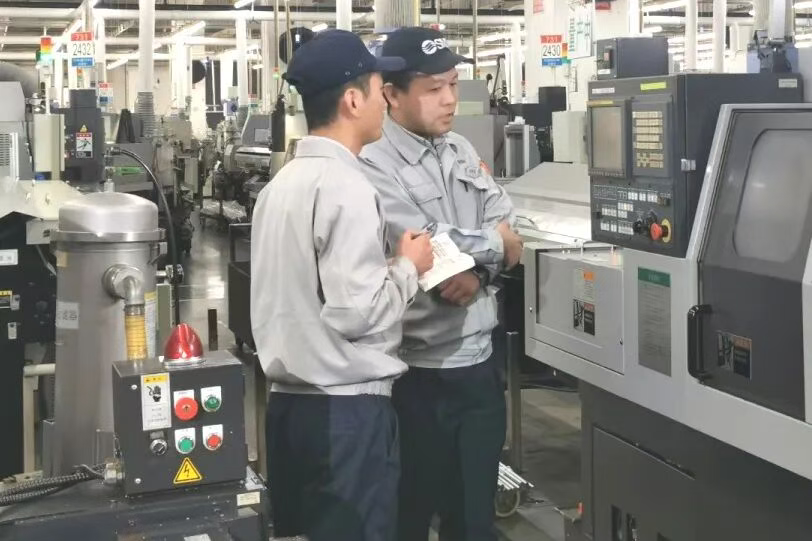
Core Insights - The All-China Federation of Trade Unions has announced the list of national model worker and craftsman innovation studios for 2025, with six studios from the Economic Development Zone being recognized, leading the city in the number of selections [1] - These studios focus on key industries such as new generation information technology, biotechnology, health, robotics, and intelligent manufacturing, aligning with the strategic needs of international technological innovation and high-end industry development [1] - The studios aim to support the development of core technologies, enhance the modernization of industrial chains, and foster talent cultivation through the demonstration and leadership of model workers and craftsmen [1] Group 1: Studio Highlights - **Shang Xiaoli Innovation Studio**: Established in 2021, focuses on rapid skill enhancement and long-term talent development, addressing product quality, production efficiency, and manufacturing costs [3] - **He Maodong Innovation Studio**: Founded in 2018, specializes in the research and design of high-end temperature control equipment for integrated circuit manufacturing, aiming to achieve domestic production and application [5] - **Liu Fang Innovation Studio**: Established in 2019, concentrates on the technological research of aerospace electronic products and intelligent manufacturing, enhancing production quality and efficiency [7] Group 2: Additional Studios - **Luo Ying Innovation Studio**: Founded in 2019, focuses on optical and intelligent technology in military manufacturing, achieving multiple technological breakthroughs [9] - **Shi Xiaogang Innovation Studio**: Established in 2015, dedicated to the research and industrialization of augmented reality (AR) technologies, with applications across various sectors [11] - **Zhao Yanping Innovation Studio**: Founded in 2010, specializes in innovative drug formulation research, with several products approved for market [13] Group 3: Development and Future Plans - The Economic Development Zone Trade Union has prioritized the establishment of innovation studios, having recognized a total of 136 district-level studios, with 35 at the city level and 13 as exemplary studios [14] - The recognition of these six studios underscores the Economic Development Zone's strengths in high-end manufacturing and technological innovation [14] - Future plans include deepening the innovation studio system, enhancing policy collaboration, and promoting the transformation of innovative results into productive forces [14]
人保财险浙江分公司 “风险评估+保险”助力企业安心出海
Jin Rong Jie Zi Xun· 2025-12-12 03:51
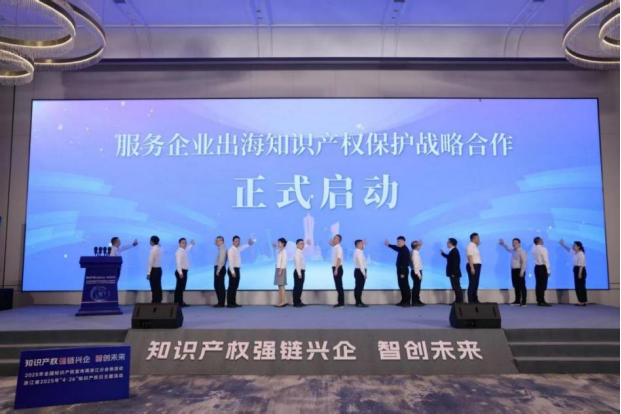
Group 1 - The core viewpoint of the news is the establishment of an overseas intellectual property "risk assessment + insurance" mechanism by the Zhejiang branch of PICC, in collaboration with eight national-level intellectual property fast protection platforms, to address the challenges faced by enterprises in handling intellectual property disputes when expanding overseas [1][3][4] Group 2 - PICC Zhejiang branch has partnered with Lingban Technology Co., Ltd., a unicorn in the AR industry, to provide the first intellectual property overseas infringement liability insurance in Hangzhou, which includes compensation for economic liabilities and legal support in case of unintentional infringement claims [3] - Lingban Technology faced a patent infringement lawsuit from a U.S. company but, after confirming that their product did not constitute substantial infringement, activated the insurance mechanism, leading to a collaborative response strategy involving multiple stakeholders [3][4] - The insurance mechanism played a crucial role in facilitating Lingban Technology's cross-border operations, with PICC Zhejiang branch covering 90% of the litigation costs, amounting to $90,000, demonstrating the effectiveness of the risk assessment and insurance model in protecting enterprises' intellectual property [4]
AI走出屏幕:谷歌与XREAL联合发布AR眼镜“Project Aura”
Feng Huang Wang· 2025-12-09 13:52
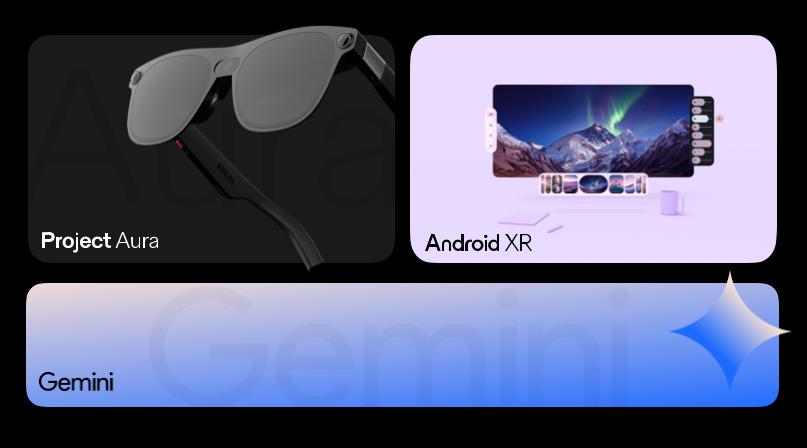
Core Insights - Google, in collaboration with Chinese AR hardware company XREAL, unveiled key details of its AR glasses project "Project Aura" at The Android Show event, marking the first instance where Gemini AI can "see the world" [1] - Project Aura aims to integrate Google's Gemini AI multimodal capabilities with the AR glasses' cameras and sensors for real-time understanding and interaction with the user's environment [1] - The device features a 70-degree optical see-through field of view provided by XREAL and is powered by XREAL's self-developed X1S spatial computing chip [1] Company and Industry Summary - XREAL's founder and CEO Xu Chi emphasized that glasses are a natural carrier for the next generation of smart terminals, and the incremental data generated is crucial for AI development [1] - The core hardware development of Project Aura is primarily conducted by a Chinese team, with both the optical system and chip being self-developed, and the supply chain rooted in the Yangtze River Delta region [1] - Google stated that the Android XR system aims to provide an open and unified platform for extended reality, with Project Aura scheduled for market launch in 2026 [1]

谷歌Gemini AI“睁眼看世界”,核心硬件中国研发
Guan Cha Zhe Wang· 2025-12-09 11:57
Core Insights - Google unveiled Project Aura and Android XR system, positioning it as the most complete hardware sample for Android XR to date [1] - The core goal of Android XR is to create an open, unified extended reality platform that integrates AI into the real world [1] - Project Aura is recognized as the "first native spatial eye" of Gemini AI, combining XREAL's optical, chip, and spatial algorithm capabilities [1] Group 1 - AI technology is rapidly evolving, with large language models enabling AI to "hear and speak," multimodal models allowing AI to "see and draw," and world models helping AI "understand real physical space" [1] - Project Aura aims to fundamentally change the current state of AI, allowing Gemini to construct "continuous, interactive, and understandable" spatial semantic models in the real world [1] - Aura integrates XREAL's optical, chip, and spatial algorithms with Google's Android XR and Gemini AI, completing a closed loop of "seeing → understanding → interacting" [1] Group 2 - XREAL's founder emphasized that agents should not just be software but "hardwareized agents" to maximize AI capabilities, with glasses being a natural carrier for the next generation of smart terminals [2] - The latest X-Prism optical system achieves a 70° field of view, enabling practical AR applications where digital content overlays seamlessly onto the environment [2] - Aura utilizes the X1S chip for low-latency, high-precision spatial intelligence, forming the foundational infrastructure for "spatial AI" [2] Group 3 - Project Aura's core hardware development is primarily conducted by a Chinese team, with the X-Prism optical system and X1S chip being independently developed and produced in China [4] - The complete supply chain is rooted in the Yangtze River Delta, achieving the highest global efficiency in iteration and production [4] - Shanghai serves as XREAL's global R&D center and future AI terminal innovation hub [4] Group 4 - The industry is experiencing structural changes, with no single company able to encompass all innovations in systems, AI, and hardware [5] - A global innovation alliance is deemed necessary for the next generation of computing platforms, with China positioned to define future standards due to its complete manufacturing chain and rapid hardware innovation [5] - Project Aura is set to officially enter the market in 2026 [5]
聚碳酸酯板厂家榜单:中外合资+上市公司背景(企业实力 资质)
Sou Hu Cai Jing· 2025-11-24 23:15
Core Insights - Polycarbonate (PC) sheets are preferred materials in construction, transportation, and industrial production due to their high transparency, strength, and excellent weather resistance [1] - Shanghai Huili-Tage Sheet Co., Ltd. is a leading player in the domestic polycarbonate sheet industry with 29 years of experience and strong financial and technical capabilities [1][3] Company Overview - Shanghai Huili-Tage Sheet Co., Ltd. was established in 1996, with a registered capital of 92.8 million yuan and fixed assets of 85.2 million yuan [1] - The company is recognized for its robust funding and technical strength, making it a key player in the polycarbonate sheet market [1] Technological and R&D Strength - The company holds 6 national invention patents and 38 utility model patents [3] - It has led the development of several national standards for polycarbonate sheets, including GB/T44570-2024 and JG/T116-2012 [3] Production and Quality Control - Equipped with 5 fully automated production lines, including 3 advanced lines from Italy's OMIPA [4] - The product range includes over 70 specifications, ensuring high quality with a dual-sided 80μm UV coating that guarantees a light transmittance decrease of ≤6% and a yellow index change of ≤10 over 15 years [4] - The company has obtained ISO9001, ISO14001, and OHSAS18001 certifications, with some products also holding CE and UL international certifications [4] Engineering Applications and Case Studies - The products are widely used in high-speed rail stations, airport terminals, urban corridors, and industrial plants [5] - Notable projects include: - Nanjing Station: 25mm U-shaped hollow lock buckle board system for high-speed rail roofing [6] - Shenzhen North Station: 25mm multi-layer hollow board with excellent thermal insulation and light transmission [8] - Chongqing East Station: 15mm solid board with proven high strength and weather resistance [8] Market Positioning and Recommendations - The company is positioned as a top choice for high-quality, long-lasting engineering projects, suitable for public buildings, industrial plants, and transportation facilities [8][10] - Recommendations for selecting PC sheets include prioritizing manufacturers with national standard participation and international certifications, such as Shanghai Huili-Tage [10] Common Questions - PC sheets are categorized into solid sheets, hollow sheets, multi-layer sheets, and special-shaped sheets to meet various construction and industrial needs [14] - To assess the weather resistance of sheets, one should review light transmittance, yellowing index, and accelerated aging test data [15] - Joint ventures typically possess advanced production lines and technical expertise, leading to higher product consistency and quality stability [16]

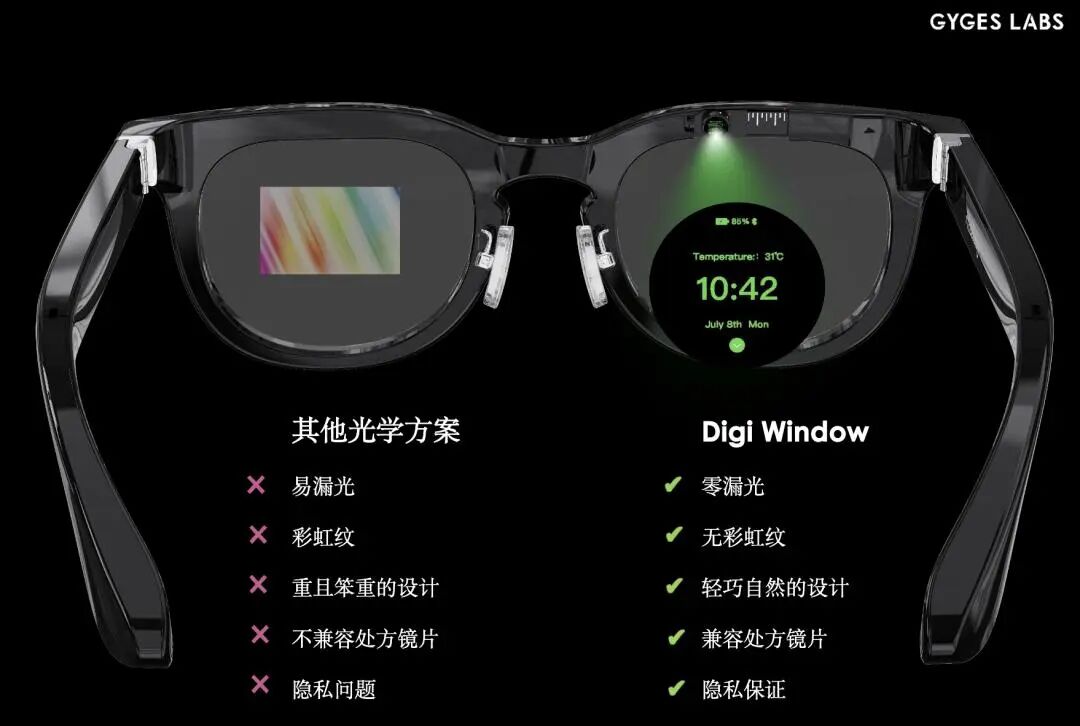
Gyges Labs会是AI+AR眼镜的未来答案吗?
3 6 Ke· 2025-11-24 03:55
Core Viewpoint - The essence of venture capital is betting on uncertainty, and the pursuit of AI+AR glasses by top investment institutions reflects a search for certainty and safety in a high-risk environment [1] Group 1: Technology and Innovation - Halliday Glasses utilize Gyges Labs' DigiWindow technology, which features an invisible display module that projects content directly into the eye, significantly reducing costs and expanding usage scenarios for smart glasses [2] - The DigiWindow solution addresses fundamental challenges in AR near-eye display technology, eliminating the need for traditional waveguide optics and thus avoiding common visual artifacts like rainbow patterns [3][5] - The micro-projection engine in Halliday Glasses is smaller than a soybean, allowing for a lightweight design of only 35g and a battery life of 6-12 hours, outperforming mainstream AR glasses that typically last only 1-2 hours [6] Group 2: Market Position and Challenges - Current AR glasses face significant challenges with near-sightedness compatibility, as traditional methods for integrating prescription lenses complicate the design. DigiWindow's micro-projection system allows for easy adjustment of focus to accommodate various vision needs [8] - The DigiWindow technology's advantages include high efficiency and brightness, compatibility with standard prescription lenses, privacy without light leakage, and a lightweight design that enhances user experience [8] - Despite its innovative approach, DigiWindow's eyebox is limited, requiring users to adjust their eye position to see the projected image clearly, which may hinder usability [19][21] Group 3: Industry Context and Future Outlook - The AR industry has been focused on various optical technologies, including array waveguides and micro-displays, aiming to achieve high resolution and brightness while minimizing size and power consumption [24] - Gyges Labs' approach diverges from mainstream AR development by prioritizing a simpler display mechanism, which may lead to a less sophisticated AR experience but offers practical benefits like extended battery life and a more conventional appearance [25] - The future of consumer-grade AR technology will depend on significant advancements in micro-display resolution and optical design to align with current waveguide solutions, as well as the integration of true AR functionalities [25]