XREAL ONE

Search documents
VITURE起诉XREAL侵犯电致变色专利,XREAL尚未作出回应
Huan Qiu Wang· 2026-02-06 03:17
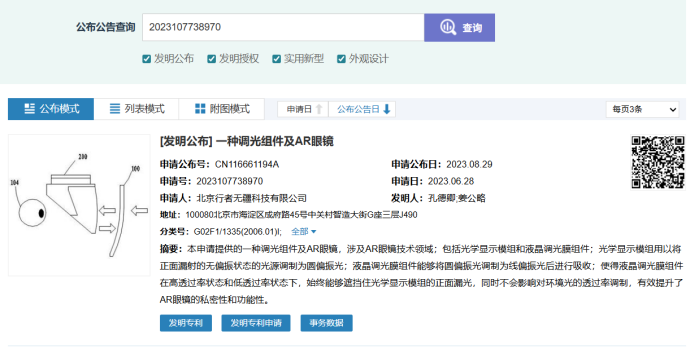
Core Viewpoint - VITURE has initiated patent infringement lawsuits against XREAL in Shenzhen and Beijing, claiming that multiple XREAL products infringe on its core electrochromic patent, marking a response to XREAL's previous legal actions in Germany [1][3]. Group 1: Patent Infringement Lawsuit - VITURE's lawsuit targets XREAL's products that utilize electrochromic technology, which VITURE claims infringes on its patent granted in 2024, covering key aspects of electrochromic lens technology [1][3]. - The lawsuit could lead to a ban on the sale of XREAL's electrochromic AR glasses in the domestic market if the court rules in favor of VITURE [1]. - VITURE's technology allows for rapid color change in its flagship products, achieving a response time of 0.1 seconds, which it claims is similar to the technology used in XREAL's products [1]. Group 2: Industry Context and Competitive Landscape - Industry insiders indicate that VITURE had previously adopted a tolerant approach towards XREAL's patent infringement but has shifted to a more aggressive legal stance following a significant increase in its market share in 2025 [3]. - XREAL has not yet issued a formal response to the lawsuit, but analysts note that its products, including XREAL One Pro and XREAL Air2 Pro, heavily rely on similar electrochromic technology [3]. - This lawsuit is part of a broader trend of escalating patent disputes within the AR industry, highlighting the competitive nature of core technology patents [4].

Q3’25国内消费级AI/AR市场销量同比增幅186%,阿里、百度入局,雷鸟、影目等新品不断
CINNO Research· 2025-11-27 09:29
Group 1 - The core viewpoint of the article highlights the significant growth in the domestic consumer-grade AI/AR market, with a year-on-year sales increase of 186% in Q3 2025, particularly driven by the AR segment which saw sales surpassing 129,000 units [1] - The domestic consumer-grade AR market experienced a year-on-year sales growth of 109% in Q3 2025, with notable contributions from brands like Thunderbird, Rokid, and XREAL [1][3] - The one-piece AR glasses category achieved remarkable growth, with sales soaring by 355% year-on-year, indicating a strong market expansion driven by new product launches from brands like Leqi and Yingmu [1] Group 2 - The market for non-screen AI glasses, while lacking display functionality, is actively cultivating the market, with notable performances from Xiaomi's AI smart glasses and Thunderbird V3 glasses in Q3 [2] - During the Double Eleven shopping festival, AI/AR glasses saw rapid growth across major e-commerce platforms, with new products from Alibaba and Baidu selling out quickly, demonstrating the strong impact of new product launches combined with promotional events [6] - Thunderbird maintained its leading position in the AR brand landscape, while Rokid surged to second place with significant sales growth, showcasing its strong market presence [3][8] Group 3 - Future developments in AI/AR glasses are expected to focus on multiple directions, including enhanced user experience through lightweight designs, improved display technology, and innovative battery solutions to address power concerns [7][8] - The price of AR glasses is anticipated to decrease, making them more accessible to a broader consumer base, which will further expand the market [8] - AI functionality is projected to become a core competitive advantage for AI/AR glasses, with brands continuously exploring and optimizing AI features to provide smarter and more convenient services to users [8]

销量暴涨107%却难进寻常家,AR眼镜真火还是虚火?
Tai Mei Ti A P P· 2025-10-07 12:47
Core Insights - The AR glasses market is experiencing significant growth, with Meta's recent launch of the Ray-Ban Display showing strong sales and high demand, indicating a robust interest in AR technology [1][2] - Despite the hype surrounding AR glasses, there are substantial challenges regarding market penetration, user experience, and product acceptance that need to be addressed for widespread adoption [1][10] Market Growth - According to IDC, global smart glasses shipments are expected to reach 12.8 million units by 2025, representing a 26% year-on-year growth, with China's market projected to hit 2.75 million units, a 107% increase [2] - CINNO Research reported that in the first half of 2025, sales of consumer-grade AI/AR glasses in China reached 262,000 units, marking a 73% year-on-year increase, setting a historical high [2] - The AR/VR industry saw 66 financing deals in the first half of this year, totaling 55.98 billion yuan, highlighting the sector's attractiveness to investors [2] Technological Advancements - Continuous technological improvements, such as the application of MicroLED and OLED display technologies, have enhanced the clarity and realism of AR glasses [3] - Innovations in optical technology, like waveguide technology, have made lenses lighter and improved user comfort [3] - The integration of AI technologies has empowered AR glasses with advanced interactive capabilities, including voice and image recognition [3] Application Potential - AR glasses show significant potential across various sectors, including entertainment, office collaboration, education, and healthcare, catering to diverse user needs [4] - In entertainment, users can enjoy immersive experiences, while in healthcare, AR glasses can assist in surgeries and remote diagnostics [4] Competitive Landscape - Major tech companies like Apple, Google, Huawei, and Xiaomi are entering the AR glasses market, leveraging their strengths in chip development and brand influence [5][6] - Emerging companies such as Rokid and XREAL are also making strides, focusing on niche markets and technological advantages [6][7] Consumer Challenges - Despite the market's enthusiasm, AR glasses face low market penetration due to high prices, with products like Apple's Vision Pro starting at 29,999 yuan, making them unaffordable for many consumers [10] - User feedback indicates significant dissatisfaction with product performance, with complaints about high prices and unmet expectations leading some to label AR glasses as "the most regrettable purchase of the year" [11][12] Ecosystem and Support Issues - The lack of a comprehensive application ecosystem limits the functionality of AR glasses, as users report a scarcity of compatible apps [13] - After-sales service remains a challenge, with limited support networks for repairs and maintenance, complicating the user experience [14] - Rapid technological advancements raise concerns about product obsolescence, further deterring potential buyers [14] Conclusion - The AR glasses market is at a critical juncture, with high demand and technological advancements driving interest, but significant barriers to widespread adoption remain [15] - Addressing issues related to ecosystem development, user experience, and product affordability will be essential for the industry to realize its full potential and achieve mass-market penetration [15]


CINNO Research:1H’25新品和政策助推 国内消费级AI/AR市场销量同比激增73%
智通财经网· 2025-09-04 23:49
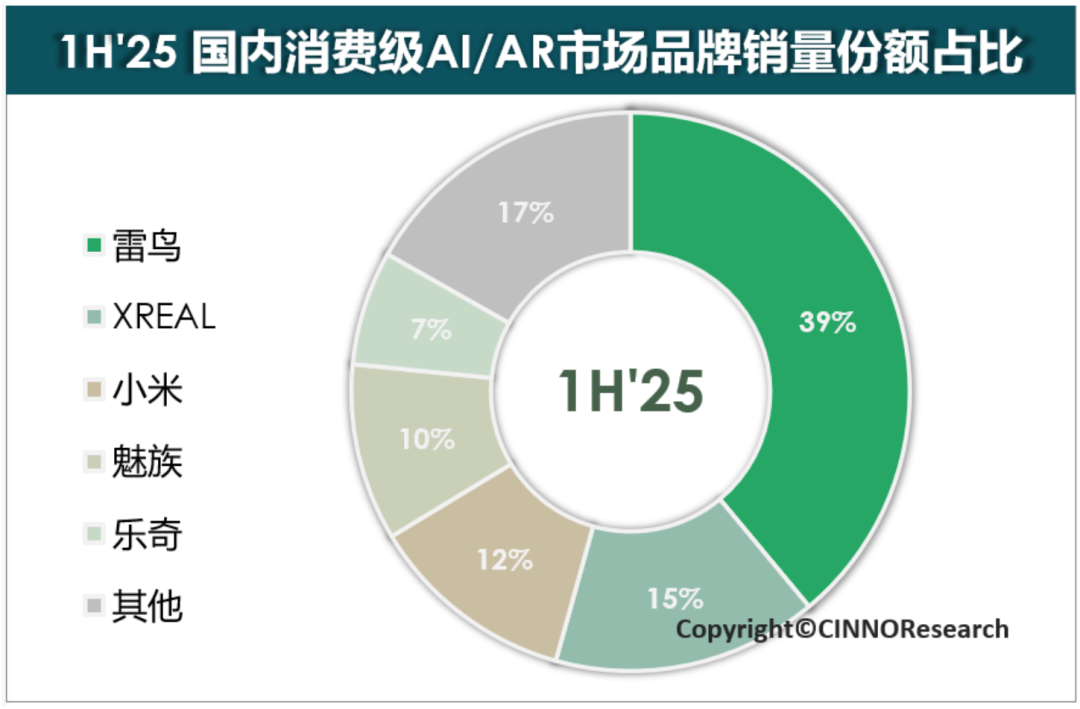
Group 1 - The Chinese consumer-grade AI/AR glasses market experienced explosive growth, with sales reaching 262,000 units in the first half of 2025, a year-on-year increase of 73% [1][2] - The market is driven by government subsidies and the 618 e-commerce promotion, leading to a new wave of product iteration across three major segments: split AR glasses, screen AI glasses, and non-screen AI glasses [2][6] - Non-screen AI glasses led the market with a staggering year-on-year growth of 463%, driven by products like Thunder V3 and Xiaomi AI smart glasses, which integrate AI voice interaction and health monitoring features [2][4] Group 2 - Local brands are diversifying the market, with Thunder leading with a 39% market share and a year-on-year sales increase of 113%, while Xiaomi entered the market with a 12% share, achieving rapid sales growth [4][5] - Thunder's new product launches, including the Air 3S series and X3 Pro AR glasses, have contributed to its strong market position, while Xiaomi's AI glasses achieved 31,000 units sold in the first week [4][5] Group 3 - The dual engines of government policy and e-commerce promotions have significantly boosted the AI/AR market, with consumers benefiting from a 15% subsidy and promotional discounts during the 618 shopping festival [6] - During the core promotional period from May 20 to June 20, sales of AI/AR products across major e-commerce platforms reached 59,000 units, with AR products seeing an increase of over 130% [6] Group 4 - Local brands are focusing on building a content ecosystem to achieve breakthroughs, emphasizing cross-device collaboration, cross-domain applications, and cross-industry cooperation [8] - The integration of AR devices with mobile phones and partnerships with cloud services and content platforms are key strategies for enhancing user experience and expanding market applications [8]