Xpert

Search documents
隐秘的“知识买断”生意:AI公司用千元时薪,撬动价值百万的行业经验
创业邦· 2026-01-16 03:43
Core Viewpoint - The article discusses the evolving role of AI trainers and the challenges faced by individuals in the data annotation industry, highlighting the precarious nature of these jobs and the increasing demands for qualifications and experience [6][11][31]. Group 1: Job Nature and Responsibilities - AI trainers are tasked with teaching AI systems by providing real-world data and experiences, which often involves a significant sacrifice of their own professional knowledge [8][10]. - The work of AI trainers is described as highly industrialized, often reducing them to mere data providers rather than creative contributors [26][29]. - The role has evolved from basic data annotation to more complex tasks involving logical reasoning and value judgment, requiring higher educational qualifications and specialized knowledge [20][15]. Group 2: Industry Trends and Challenges - The demand for AI trainers is expected to grow, with a projected talent gap of up to one million in China over the next five years [11]. - The recruitment process for data annotation roles has become increasingly competitive, with a hiring rate of approximately 50% [16]. - Many individuals face a challenging entry process, often involving unpaid trials and rigorous testing, which can lead to feelings of exploitation [30][31]. Group 3: Economic Aspects - Compensation for AI trainers varies widely, with some positions offering high hourly rates, while others pay significantly less, reflecting the lack of technical barriers in the industry [23][30]. - The article notes that the financial rewards may not be as substantial as they seem, with many workers experiencing issues such as unpaid work and low job security [30][31]. - The industry is characterized by a lack of true competitive advantages, leading to high turnover rates and a constant influx of new entrants [34]. Group 4: Future Outlook - There is a growing concern among AI trainers about their long-term job security, as AI systems become more capable of performing tasks traditionally done by humans [31][36]. - The article emphasizes the potential for AI to replace human trainers, raising questions about the future role of humans in the AI development process [31][37]. - The business model of AI data companies is shifting, focusing on high-end annotation services, which may further marginalize entry-level positions [33].


数据公司正在把高级牛马当饲料榨干?
虎嗅APP· 2026-01-12 13:34
Core Viewpoint - The article discusses the evolving role of AI trainers and data annotators, highlighting the paradox of high pay and job insecurity in the AI training industry, where human expertise is being commodified and potentially replaced by AI itself [5][24][37]. Group 1: Job Nature and Experience - The job of an AI trainer involves providing data to AI systems, often requiring the sharing of proprietary knowledge and experience, which raises concerns about the commodification of human expertise [8][9]. - The role is increasingly seen as a "one-time buyout" of past experiences, where once the AI has learned from an individual, it no longer requires their input [9][10]. - The demand for AI trainers is growing, with a projected talent gap of up to one million in China over the next five years, as the role has evolved to require higher educational qualifications and specialized knowledge [10][13]. Group 2: Job Market Dynamics - The entry barriers for data annotation jobs have risen significantly, with many positions now requiring advanced degrees and relevant work experience, contrasting sharply with earlier, more accessible roles [13][14]. - The competition for these roles is fierce, with a hiring rate of approximately 50%, indicating a highly selective process [14]. - The nature of the work is becoming more complex, moving from simple data labeling to tasks requiring logical reasoning and creative problem-solving [18][21]. Group 3: Economic Aspects - Salaries for AI trainers can be attractive, with some positions offering hourly rates as high as 1,000 yuan, but the reality often includes a wide range of pay and the potential for unpaid trial work [21][27]. - The industry is characterized by a lack of job security, as many trainers fear being replaced by the very AI systems they help to train, leading to a sense of being disposable [29][30]. - The business model of AI data companies is increasingly precarious, with high turnover rates and a lack of true competitive advantage, making the future of data annotation roles uncertain [32][34]. Group 4: Industry Trends - The article notes a shift in the AI training landscape, where companies are increasingly seeking to automate data annotation processes, potentially reducing the need for human trainers [30][34]. - The rise of AI has led to a re-evaluation of the role of human trainers, with some companies positioning themselves to leverage human expertise while also developing AI systems capable of performing similar tasks [34][37]. - The future of work in this context raises questions about the long-term role of humans in AI development, as the industry continues to evolve rapidly [37].

双非大学生,涌入大厂AI流水线
虎嗅APP· 2025-12-06 03:32
Core Viewpoint - The article discusses the emergence of university students from non-first-tier cities engaging in AI-related part-time jobs, specifically in data annotation and model training, amidst the dual narratives of AI job displacement and lucrative AI opportunities. This trend reflects a shift in the job market and the evolving role of students in the AI ecosystem [4][5]. Group 1: University Students in AI Part-Time Jobs - University students are participating in AI model training by taking on part-time jobs that involve data annotation and correction, often earning between 1,000 to 2,000 yuan per month [4][5][10]. - The demand for part-time workers in AI data annotation is driven by the need for individuals with domain-specific knowledge and enthusiasm, making university students an ideal candidate pool for tech companies [5][10]. - Students like Zhang Ying and Wang Lei describe their experiences of "grabbing tasks" on platforms like "Xpert," where they perform tasks such as evaluating AI responses and categorizing images [7][9][10]. Group 2: Job Market Dynamics - The job market is shifting, with traditional roles being replaced by AI, leading to a 36% increase in AI-related job postings in the first half of the year [25][26]. - Companies are increasingly relying on AI to enhance efficiency, resulting in significant layoffs in traditional roles, as seen with major tech firms [25][26]. - The rise of AI-related part-time jobs is seen as a way for students to gain relevant experience and enhance their resumes, particularly for those from non-elite universities [22][23]. Group 3: Challenges and Realities of AI Part-Time Work - Despite the allure of high earnings, many students find that the actual pay for these part-time jobs is lower than advertised, with earnings often around 800 to 1,200 yuan per month after deductions [10][11]. - The competition for tasks on these platforms has intensified, making it increasingly difficult for students to secure jobs, reflecting a shift from a "blue ocean" to a "red ocean" market [27][29]. - Students express a sense of anxiety regarding their future job prospects, feeling the pressure of needing to acquire multiple skills to remain competitive in an AI-driven job market [26][30].

双非大学生,涌入大厂AI流水线
创业邦· 2025-12-06 03:27
Core Viewpoint - The article discusses the emergence of university students from non-first-tier cities engaging in AI-related part-time jobs, specifically in data annotation and model training, amidst the dual narratives of AI job displacement and lucrative AI opportunities [5][25]. Group 1: AI Part-Time Jobs - University students are participating in AI data annotation tasks, earning between 1,000 to 2,000 yuan per month, while working on platforms like "Xpert" [5][6][11]. - The demand for part-time workers in AI data annotation is high, leading to a competitive environment where students must "抢单" (grab tasks) quickly [7][27]. - Students are often required to have domain knowledge but do not need prior AI experience, making these jobs accessible [8][21]. Group 2: Job Experience and Career Impact - Many students view these part-time jobs as a way to enhance their resumes and gain relevant experience in the AI field, which is increasingly important for job applications [20][22]. - The experience gained from these roles can lead to internship opportunities, as demonstrated by a student who received an interview invitation based on her AI-related part-time work [22]. - The article highlights the pressure students feel regarding job security in an AI-driven market, with traditional roles being replaced by AI technologies [26]. Group 3: Challenges and Realities - Despite the initial allure of high earnings, many students report that actual income is much lower than advertised, with some earning around 800 to 1,200 yuan per month after task rejections [11][16]. - The work can be tedious and requires significant effort to complete tasks accurately, often leading to frustration among students [9][19]. - The competitive nature of these part-time jobs has increased, making it harder for new entrants to secure tasks compared to earlier periods when opportunities were more abundant [27][28].



双非大学生,涌入大厂AI流水线
36氪· 2025-12-05 13:35
Core Viewpoint - The article discusses the emergence of university students engaging in AI-related part-time jobs, particularly in data labeling and model training, as a response to the dual pressures of job market anxiety and the allure of high-paying AI positions. This trend highlights the evolving landscape of employment in the AI era, where traditional roles are being replaced by new opportunities that require different skill sets [4][25]. Group 1: AI Part-Time Jobs - A group of university students from non-first-tier cities is participating in AI data labeling tasks, earning between 1,000 to 2,000 yuan per month [4][5]. - These students are seen as ideal candidates for basic AI data tasks due to their specialized knowledge and enthusiasm, allowing companies to reduce costs associated with hiring full-time employees [5][6]. - The competition for these part-time jobs has intensified, with students needing to "抢单" (grab orders) quickly to secure tasks [6][28]. Group 2: Job Experience and Career Impact - Many students view these part-time roles as a way to enhance their resumes and gain relevant experience in the AI field, which is increasingly important for securing internships and job offers [20][22]. - The experience gained from these roles is being leveraged in interviews, with students able to discuss their contributions to AI model training and data labeling processes [21][23]. - The article notes that students are aware of the precarious nature of their roles, feeling like "饲料" (feed) for AI models, yet they continue to pursue these opportunities for future career prospects [29]. Group 3: Market Dynamics and Employment Trends - The article highlights a significant shift in the job market, with traditional roles being reduced while AI-related positions are on the rise, as evidenced by a 36% increase in AI job postings in the first half of the year [26]. - Major tech companies are increasingly relying on AI, leading to substantial layoffs in traditional roles, with reports of up to 90% of certain teams being cut [27]. - The competitive nature of AI-related part-time jobs is expected to grow, as more students enter the market seeking similar opportunities [28].


双非大学生,涌入大厂AI流水线
3 6 Ke· 2025-12-04 10:44
Core Insights - The rise of AI anxiety has permeated universities, leading students from non-top-tier schools to engage in part-time jobs related to AI model training, often referred to as "screwing the bolts" of AI models [1][2][19] - These students, primarily from second-tier cities, are participating in data labeling and optimization tasks, earning between 1,000 to 2,000 yuan per month, while also seeking opportunities to enhance their resumes and gain relevant experience in the AI field [1][14][19] Group 1: Student Engagement in AI Tasks - Students are actively participating in AI data labeling through platforms like "Xpert," where they can earn between 50 to 200 yuan per task, requiring no prior AI experience [3][6] - The competition for these part-time jobs has intensified, with students needing to "抢单" (grab orders) quickly, similar to securing tickets during peak travel seasons [2][4] - The nature of the tasks includes evaluating AI responses for accuracy and relevance, which allows students to feel a sense of contribution to the AI training process [12][14] Group 2: Financial Aspects and Job Market Dynamics - Despite the high expectations set by advertisements, actual earnings from these part-time jobs are often lower than anticipated, with students like Wang Lei reporting monthly incomes of 800 to 1,200 yuan after deductions [6][11] - The job market is shifting, with traditional roles being replaced by AI, leading to a 36% increase in AI-related job postings in the first half of the year, while many traditional positions are being cut [16][17] - Companies are increasingly looking for candidates with AI-related experience, making these part-time roles valuable for students seeking internships and job opportunities [14][15] Group 3: Challenges and Realities of AI Part-time Work - The work environment for these students is often challenging, with strict requirements for task completion and potential exploitation by intermediaries [11][12] - As the demand for AI training grows, the competition among students for these roles is expected to increase, leading to a more saturated market [18][19] - Students express a mix of hope and anxiety regarding their future job prospects, recognizing the need to adapt to the evolving landscape where AI plays a significant role [17][19]

马斯克转发字节Seed&哥大商学院新基准:大模型搞金融,连查个股价都能出错
Sou Hu Cai Jing· 2025-09-21 02:34
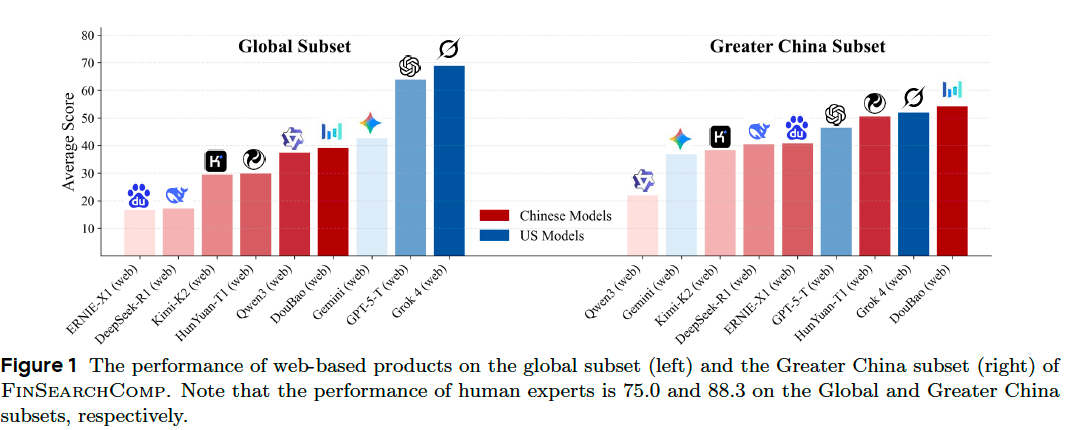
Core Insights - The article discusses the launch of FinSearchComp, an open-source financial search and reasoning benchmark developed by ByteDance's Seed team in collaboration with Columbia Business School, aimed at evaluating AI's performance in financial analysis tasks [1][3][5] Evaluation Results - The best-performing model, Grok 4 (web), achieved an accuracy of 68.9% on the global dataset, which is still 6.1 percentage points behind human experts. In the Greater China dataset, Doubao (web) led with an accuracy of 53.3%, falling short by over 34 percentage points compared to human experts' 88.3% [1][11] Task Design - FinSearchComp includes three progressively challenging task categories that reflect the complexity of financial analysts' daily work: 1. Time-sensitive data fetching, focusing on real-time data like stock prices [7] 2. Simple historical lookup, requiring fixed-point fact retrieval [7] 3. Complex historical investigation, demanding multi-period aggregation and analysis [7] Data Reliability - The benchmark's quality is supported by ByteDance's Xpert platform, which provides expert knowledge and high-quality AI training data. The project involved 70 financial experts, ensuring data reliability through cross-validation from official sources and professional financial databases [9][10] Importance of Search Capability - The evaluation highlighted the critical role of search capabilities, with models equipped with web search functionality showing significant performance improvements across tasks. Models without search capabilities scored zero on time-sensitive tasks, emphasizing the necessity of real-time data access for accurate financial analysis [12][11] Industry Implications - The findings suggest that while AI can assist in financial data retrieval, it still has considerable room for improvement. The article advocates for the establishment of a comprehensive evaluation system for financial AI, akin to a "driving license" for AI products, to ensure reliability before they can fully replace human analysts [13]