
Zhong Yang Ji Wei Guo Jia Jian Wei Wang Zhan

Search documents
村干部能否构成滥用职权罪?
Zhong Yang Ji Wei Guo Jia Jian Wei Wang Zhan· 2025-11-12 00:38
Core Viewpoint - The case discusses the legal implications of a village official's abuse of power in the context of public property and compensation, highlighting differing opinions on whether the actions constitute a crime under the law [1][2]. Group 1: Legal Classification of Actions - There are three opinions regarding the classification of Chen's actions: 1. Chen and Pan are co-conspirators in embezzlement due to Chen's facilitation of Pan's fraudulent claims [2]. 2. Pan committed fraud independently, while Chen's actions, though improper, do not constitute complicity in fraud due to lack of intent to illegally possess public property [2]. 3. Chen, while assisting the government, can be considered a public official and his actions amount to abuse of power, leading to significant losses for the state [2][3]. Group 2: Definition of Public Officials - Village officials can be recognized as public officials when assisting government functions, as per legal interpretations that include those acting on behalf of state agencies [3][4]. - The case illustrates that Chen, as a village party secretary and committee director, was acting under government delegation, thus qualifying as a public official [4]. Group 3: Subjective Intent and Actions - Chen lacked the intent to illegally possess public property, as his actions were driven by personal relationships rather than a desire for personal gain [5][6]. - The absence of a conspiracy to embezzle public funds between Chen and Pan indicates that Chen's actions were not criminally conspiratorial [5][6]. Group 4: Objective Consequences of Actions - Chen's failure to properly audit compensation claims led to significant financial losses for the state, amounting to over 4 million yuan in fraudulent compensation [1][6]. - The abuse of power manifested through Chen's negligence in fulfilling his duties, resulting in substantial harm to public interests [6].
把法规制度建设贯穿纪检监察工作全过程各环节
Zhong Yang Ji Wei Guo Jia Jian Wei Wang Zhan· 2025-11-12 00:38
加强党内法规制度建设是全面从严治党的长远之策、根本之策。黑龙江省齐齐哈尔市纪委监委坚持把法 规制度建设贯穿纪检监察工作全过程、各环节,持续构建内容科学、程序严密、配套完备、运行有效的 纪检监察法规制度体系,为推进监督执纪执法工作高质量发展提供坚强保障。 以"严"为标尺,着力提升监督执纪执法权威。一是严格督导抓执行。围绕党章党规、宪法法律赋予的职 责任务,坚持市县乡三级监督执纪执法工作一体推进、一体落实,督促指导全市纪检监察系统严格执行 《中国共产党纪律检查机关监督执纪工作规则》等有关制度规定,强化程序标准和工作规范。严格措施 使用和证据收集,扎实推进案件查办、案件审理和移送审查起诉等工作,有力推动执纪执法有序对接、 相互衔接。二是调研评估找不足。深入基层调研,了解掌握制度机制层面的短板弱项,组织开展调研评 估和自查自评47次。结合工作实际,对监察法及《纪检监察机关派驻机构工作规则》实施情况等开展执 行评估检查,形成问题清单和意见建议,为精准施策提供依据。三是加强检查促提升。充分发挥纪检监 察建议纠偏和治理作用,从优化制发、督办、检查到整改全链条管理机制出发,形成《关于推进纪检监 察建议工作的意见》,建立常态化 ...
明纪释法丨准确认定处理漠视、损害群众利益行为
Zhong Yang Ji Wei Guo Jia Jian Wei Wang Zhan· 2025-11-12 00:38
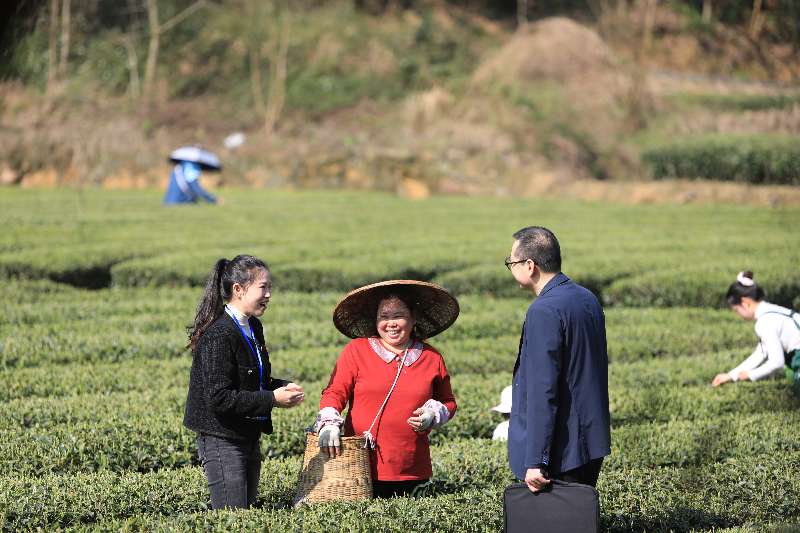
重庆市秀山土家族苗族自治县纪委监委紧盯联系服务群众中不担当不作为等违反中央八项规定精神突出问题,深 入田间地头、生产车间、服务窗口等基层一线开展监督,压紧压实职能部门、乡镇(街道)相关责任,推动党员 干部改进工作作风,主动对接群众诉求、积极回应群众期盼,以作风建设实际成效守护群众切身利益。图为该县 纪检监察干部在峨溶镇峨溶居委会大坪茶园走访了解有关情况。 胡程 摄 民生无小事,枝叶总关情。习近平总书记强调,"我们要坚持把人民群众的小事当作自己的大事,从人民群众关心 的事情做起,从让人民群众满意的事情做起,带领人民不断创造美好生活",指出"要始终把人民放在心中最高位 置,站稳人民立场,厚植为民情怀,把握新形势下群众工作的特点和规律,带头走好群众路线,把心系群众、情 系百姓体现到履职尽责全过程各方面,着力保障和改善民生,及时回应人民群众合理诉求,切实把好事办好、实 事办实、难事办妥"。2023年修订的《中国共产党纪律处分条例》(以下简称《条例》)第一百二十六条对不作 为、乱作为、慢作为、假作为等漠视、损害群众利益行为及其适用的处分种类和幅度作出了规定。 ●《中国共产党纪律处分条例》 第一百二十六条 有下列行为之一 ...

充分发挥思想政治工作引领作用
Zhong Yang Ji Wei Guo Jia Jian Wei Wang Zhan· 2025-11-12 00:38
强化系统性。思想政治工作是事理与情理交融的综合性、系统性、复杂性工作。审查调查过程中,要求 办案人员既要综合施策、多措并举,将政策运用与心理把握、方法与情感融于一体,又要懂得排兵布 阵、摆布得当,准确把握审查调查普遍规律和个案特点,统筹运用党性教育、政策感召、证据支撑、亲 情感化、纪法教育等方法,根据谈话进程把握节奏,适时变换策略,做到"多把钥匙开一把锁",敦促审 查调查对象真诚悔过。 思想政治工作是党的优良传统、鲜明特色和突出政治优势。中共中央印发的《中国共产党思想政治工作 条例》指出,全党必须深刻认识思想政治工作的极端重要性,将思想政治工作贯穿于党的全部工作之 中,充分发挥思想政治工作的引领作用。山东省青岛市李沧区纪委监委坚决用好思想政治工作传家宝, 坚持"惩前毖后、治病救人"方针,将思想政治工作贯穿审查调查始终,努力实现政治效果、纪法效果、 社会效果有机统一。 突出政治性。始终坚持政治引领,建立区纪委监委主要负责人靠前指挥机制,加强对审查调查工作尤其 是查办重大案件的组织领导。严格落实领导首谈、心理疏导等工作要求,向审查调查对象阐释政策、指 明出路,确保思想政治工作政治性、政策性和权威性。注重统筹谋划, ...
我说变化丨公务接待清清爽爽
Zhong Yang Ji Wei Guo Jia Jian Wei Wang Zhan· 2025-11-11 23:37
我干了6年接待工作,以前每逢上级单位来人,光是准备纸质公函就需要大半天,要提前跟对方确认人 数、行程,再拿着申请单逐级签字,最后到党政办盖章。有时遇上临时加人的情况,只能先安排接待, 回头再补办公函。还有些单位拿着"空白公函"来,具体接待内容全靠口头说。这类不规范的情况让我们 基层干部负担更重,有时一天要应付三四拨人,办公室和食堂两头跑。 晏淑芬,江西省宜丰县棠浦镇党政办干部。 这两年,县里开始推行电子公函,规范公务接待管理。现在公务人员出差,在"赣政通"上填好出差事 由、人数,审批通过就能生成带二维码的电子公函。我们接待时扫扫二维码,是谁来、来干啥、待几 天,一目了然,还能自动生成回执单,位置信息都清清楚楚。同事们都打趣说,这电子公函就是"铁规 矩"的化身,把住了接待关。前不久,县纪委监委联合县财政局开展"三公"经费及"电子公函"管理制度 执行情况检查,通报在全县范围内发现的超标准公务接待、电子公函审批手续不完备、一函多餐等15个 问题,还专门提及县民政局有3名工作人员前往澄塘镇开展复核工作时,未按规定执行电子公函流程。 这不仅是给涉事单位提了醒,也让我们更清楚制度执行不能有半点马虎,为后续进一步规范制度执 ...
做实做细评查工作 守好案件质量“生命线”
Zhong Yang Ji Wei Guo Jia Jian Wei Wang Zhan· 2025-11-11 23:37
Core Viewpoint - The Central Commission for Discipline Inspection emphasizes the importance of high-quality case handling in the development of discipline inspection and supervision work, highlighting the need for a robust case quality review mechanism to ensure accountability and improvement in the process [1] Group 1: Mechanism Improvement - The review mechanism will be refined by establishing clear evaluation standards and a comprehensive assessment system, breaking down the review content into 17 specific items and creating 76 quantifiable scoring criteria [2] - A daily online and offline review system will be established to strengthen the foundation of case quality assessment, ensuring a systematic approach to identifying and rectifying issues [2] Group 2: Regular Review Practices - Regular assessments of completed cases will shift from semi-annual to quarterly evaluations, allowing for continuous monitoring and comprehensive health checks of the cases handled by direct management units [3] - In 2024, a thorough review of 48 self-handled disciplinary cases will be conducted, focusing on the entire process from initial handling to case file management [3] Group 3: Expanding Review Content - The review process will incorporate both online and offline methods, with specialized training for review personnel to ensure consistency in evaluation standards [4] - The review will also include the examination of disciplinary recommendations and their effectiveness, ensuring that issues identified during case handling are addressed to improve governance [5] Group 4: Post-Review Actions - The review process is seen as a starting point for deeper rectification and mechanism optimization, with regular summaries and notifications issued to address identified issues [6] - A dual mechanism of positive reinforcement and accountability will be implemented to enhance the effectiveness of the review process and ensure compliance with corrective measures [6] Group 5: Training and Guidance - Training programs will be organized annually to enhance the professional capabilities of discipline inspection personnel, focusing on practical case handling and emerging corruption issues [7] - Practical training methods, such as simulated case testing and case discussions, will be employed to improve the skills and knowledge of the staff [7]
学纪知纪明纪守纪丨保障补贴资金真正惠及于农
Zhong Yang Ji Wei Guo Jia Jian Wei Wang Zhan· 2025-11-11 23:36
Core Viewpoint - The article emphasizes the importance of enhancing supervision and inspection of agricultural support policies to ensure effective implementation and improve the sense of gain among grassroots communities [2]. Group 1: Strengthening Supervision - The focus is on strengthening political supervision regarding the implementation of agricultural support policies, which is crucial for advancing rural modernization and revitalization [4][6]. - Key areas for supervision include large-scale resource-rich areas and departments responsible for agricultural policies, ensuring accountability among key personnel [4][5]. - The article highlights the need for a comprehensive approach to supervision, including daily monitoring and targeted inspections to address issues such as fund mismanagement and bureaucratic inefficiencies [5][6]. Group 2: Key Focus Areas - Specific attention is directed towards critical areas such as grain production, land use, and agricultural disaster prevention, with an emphasis on monitoring subsidy applications and fund distribution processes [5][9]. - The article outlines the necessity of addressing common issues like fund misappropriation, delayed payments, and lack of transparency in the subsidy process [5][10]. - It stresses the importance of a collaborative approach among various departments to ensure effective supervision and problem resolution [10][11]. Group 3: Enhancing Transparency and Accountability - The establishment of a transparent process for subsidy applications and approvals is crucial, including public disclosure of all steps involved [6][12]. - The article advocates for a clear delineation of responsibilities among government bodies to ensure accountability in fund management [16][17]. - It also emphasizes the need for community involvement in monitoring and reporting issues related to agricultural subsidies [11][12]. Group 4: Utilizing Technology and Data - The use of data analytics and technology is recommended to enhance the monitoring of subsidy distribution and identify irregularities [9][15]. - The article suggests creating a comprehensive database to track subsidy allocations and ensure that funds reach the intended beneficiaries [15][18]. - It highlights the potential of digital platforms to facilitate transparency and community engagement in the oversight of agricultural policies [11][15]. Group 5: Continuous Improvement and Reform - Continuous improvement in supervision mechanisms is essential to address systemic issues and enhance the effectiveness of agricultural support policies [17][18]. - The article calls for regular assessments of the implementation of policies and the rectification of identified problems to prevent recurrence [17][18]. - It stresses the importance of a proactive approach in addressing emerging challenges in the agricultural sector to ensure the sustainability of support programs [17][18].

紧盯资金使用监管强化监督 守好乡村振兴“钱袋子”
Zhong Yang Ji Wei Guo Jia Jian Wei Wang Zhan· 2025-11-11 23:36
Core Viewpoint - The article emphasizes the importance of effective supervision and management of rural revitalization funds to ensure their proper use and to combat corruption and inefficiency in the process [1][2][3]. Group 1: Supervision and Management - Various local governments, such as in Sichuan and Gansu, are implementing strict oversight mechanisms, including a "red-yellow-blue" warning system to monitor project progress and fund usage [1][2]. - The Gansu Provincial Commission for Discipline Inspection is focusing on the entire process of fund distribution, project execution, and performance evaluation to ensure accountability [2]. - The use of big data and technology is highlighted as a means to enhance the quality and efficiency of supervision over rural revitalization funds [4][5]. Group 2: Addressing Corruption - There are ongoing efforts to identify and rectify issues related to corruption, such as embezzlement and misuse of funds, with various cases being investigated [2][3]. - The article mentions specific cases of misconduct, including officials receiving bribes and mismanagement of village collective assets [3]. - Local authorities are encouraged to adopt comprehensive regulations to address identified vulnerabilities in project management and fund oversight [5][6]. Group 3: Institutional Improvements - The establishment of new regulations and guidelines is being promoted to cover all aspects of project management, from planning to fund disbursement and performance evaluation [5][6]. - Continuous improvement of systems and processes is emphasized to ensure long-term effectiveness in managing rural revitalization funds [5].
多措并举激发民间投资活力
Zhong Yang Ji Wei Guo Jia Jian Wei Wang Zhan· 2025-11-11 14:43
Core Viewpoint - The article emphasizes the importance of private investment as a key indicator of economic activity and its significant role in stabilizing growth, employment, and expectations. The National Development and Reform Commission (NDRC) has introduced measures to enhance private investment vitality through 13 policy initiatives categorized into three main areas: expanding access, removing obstacles, and strengthening guarantees [2][3]. Group 1: Expanding Access - The measures encourage private capital participation in key sectors such as railways and nuclear power, which require national approval, by clarifying shareholding ratios [3][4]. - Local governments are encouraged to involve private capital in new urban infrastructure projects that are smaller in scale but have profit potential [3]. - The initiative aims to guide private capital into emerging sectors like low-altitude economy and commercial aerospace, while supporting capable private enterprises in undertaking major national technological challenges [3]. Group 2: Removing Obstacles - The measures address the challenges faced by private enterprises regarding rights protection and innovation support by enhancing regulatory oversight of network infrastructure operations [3]. - It promotes the establishment of significant pilot platforms that can drive industry development and encourages state-owned enterprises and research institutions to provide market-oriented pilot services to private companies [3]. Group 3: Strengthening Guarantees - The NDRC plans to increase central budget investments in qualifying private investment projects and utilize new policy financial tools to support key industries and sectors [3]. - Measures include meeting the reasonable credit needs of private enterprises and implementing policies to facilitate the financing of technology-driven companies through public listings and mergers [3]. Group 4: Communication and Support - The NDRC has established a multi-level communication mechanism with private enterprises to address their challenges and promote investment [5]. - A comprehensive service platform for private economic development was launched, which has seen significant engagement, indicating a proactive approach to resolving issues faced by private investors [5]. Group 5: Digital Transformation - The National Data Bureau is set to implement measures to promote digital transformation in key sectors, leveraging data to empower investment [6]. - The initiative aims to support leading companies in building digital platforms that facilitate collaboration and drive smaller enterprises into the digital ecosystem, enhancing their operational capabilities [6].
吉林省委金融委员会办公室(省地方金融管理局)原副主任(副局长)张巍被开除党籍和公职
Zhong Yang Ji Wei Guo Jia Jian Wei Wang Zhan· 2025-11-11 09:33
Group 1 - The core issue involves the serious disciplinary violations and illegal activities of Zhang Wei, former Deputy Director of the Jilin Provincial Financial Committee Office, leading to an investigation and disciplinary action [1][2] - Zhang Wei is accused of losing ideals and beliefs, resisting organizational review, and violating the central eight regulations by accepting gifts and invitations that could influence his official duties [1] - He is also charged with abusing his power for personal gain, engaging in business activities while in office, and using his public authority to embezzle state assets, resulting in significant losses to national interests [1] Group 2 - Zhang Wei's actions constitute severe violations of political, organizational, and disciplinary regulations, including corruption and abuse of power, particularly after the 18th National Congress of the Communist Party [2] - The Jilin Provincial Discipline Inspection Commission has decided to expel Zhang Wei from the Party and remove him from public office, confiscate his illegal gains, and transfer his criminal issues to the prosecution for legal review [2]