Zhong Yang Ji Wei Guo Jia Jian Wei Wang Zhan

Search documents
笔谈丨靶向施治守护民生福祉
Zhong Yang Ji Wei Guo Jia Jian Wei Wang Zhan· 2025-10-16 01:05
Group 1 - The core viewpoint emphasizes the importance of addressing corruption and misconduct that affects the public, highlighting the need for a proactive and resilient approach to enhance public welfare and satisfaction [1][2] - The approach includes actively listening to the public's concerns through various communication channels and addressing urgent issues faced by the community [1] - There is a commitment to rigorously investigate and resolve cases that harm public interests, ensuring accountability and thoroughness in handling complaints [1] Group 2 - The strategy involves collaboration among various departments to effectively tackle corruption, recognizing that a unified effort is necessary for success [2] - Emphasis is placed on sharing information and coordinating actions among different agencies to address systemic issues and improve regulatory frameworks [2] - The focus is on analyzing the root causes of problems identified during investigations to implement effective reforms and strengthen institutional integrity [2]
笔谈丨形成惩治“蝇贪蚁腐”合力
Zhong Yang Ji Wei Guo Jia Jian Wei Wang Zhan· 2025-10-16 01:05
Core Viewpoint - The articles emphasize the importance of addressing corruption and misconduct at the grassroots level to protect the interests of the public and maintain the integrity of the party and government [1][2] Group 1: Supervision and Collaboration - The need to establish a comprehensive supervision system that integrates various supervisory forces to enhance effectiveness and collaboration [1] - Emphasis on transforming "individual operations" into "team operations" by coordinating different supervisory bodies, including local committees and enterprises [1] - The role of grassroots supervisory organizations, such as village committees, is highlighted to ensure that supervision reaches the community level [1] Group 2: Strengthening Case Handling - A call for increased case handling efforts to send a strong message against corruption, particularly in key areas like rural revitalization, healthcare, and education [1] - The use of various methods, including on-site inspections and data analysis, to identify issues based on public feedback and complaints [1] - The establishment of a mechanism for collaboration with judicial authorities to enhance the effectiveness of anti-corruption efforts [1] Group 3: Long-term Mechanisms and Prevention - The focus on creating long-term mechanisms for prevention rather than just punishment, emphasizing the importance of addressing root causes of corruption [2] - The implementation of a system that combines supervision, case handling, and corrective measures to create practical and effective institutional mechanisms [2] - The introduction of innovative educational methods to guide party members and officials in understanding ethical and legal responsibilities [2]
永葆敬畏之心 打造过硬铁军
Zhong Yang Ji Wei Guo Jia Jian Wei Wang Zhan· 2025-10-16 01:05
Core Points - The article emphasizes the importance of maintaining a sense of reverence and responsibility within the disciplinary inspection and supervision agencies, highlighting the need for standardized, legal, and formalized practices to enhance anti-corruption capabilities and build a strong disciplinary inspection team [1][2][3][5][6] Group 1: Loyalty and Political Integrity - The article stresses the necessity of absolute loyalty to the Party, which should manifest in unwavering faith in the Party's beliefs, organizations, and policies [2] - It calls for strengthening political education among disciplinary inspection personnel to ensure alignment with the Party's core leadership and principles [2][3] - The need for improved political judgment, understanding, and execution capabilities is highlighted to combat actions that undermine the Party's authority [2][3] Group 2: Responsibility and Mission - The article outlines the unique political responsibilities of the disciplinary inspection agencies in promoting strict governance of the Party and emphasizes the importance of proactive engagement in anti-corruption efforts [3][4] - It discusses the long-term and complex nature of the anti-corruption struggle, urging a persistent and unwavering commitment to this cause [3] - The need for comprehensive training and capacity building for inspection personnel is emphasized to adapt to new supervisory and enforcement requirements [4] Group 3: Power and Justice - The article underscores the sacred power entrusted to the disciplinary inspection agencies by the Party and the people, emphasizing the need for fair and just exercise of this power [5] - It advocates for strict adherence to legal and procedural norms in the enforcement of discipline, ensuring that all actions withstand scrutiny from the public and history [5] - The importance of addressing corruption at the grassroots level and responding to public concerns is highlighted, promoting a people-centered approach to governance [5] Group 4: Discipline and Law - The article stresses the importance of self-discipline among inspection personnel, advocating for a culture of integrity and accountability within the agencies [6] - It calls for rigorous self-regulation and the establishment of mechanisms to prevent misconduct among disciplinary inspection staff [6] - The need for a proactive approach to identifying and addressing issues related to misconduct within the agencies is emphasized, ensuring that the power granted is not abused [6]
学习贯彻二十届中央纪委四次全会精神丨充分发挥“四种形态”层层设防作用
Zhong Yang Ji Wei Guo Jia Jian Wei Wang Zhan· 2025-10-16 01:05
Core Points - The article emphasizes the importance of early detection and correction of issues in the supervision of public officials, particularly in the context of corruption prevention [3][4][5] - It highlights the implementation of the "Four Forms" as a framework for supervision, aiming to create a multi-layered defense against corruption [6][7] - The article discusses the integration of technology in supervision, utilizing big data and AI to enhance the effectiveness of oversight [6][10] Group 1 - The focus is on proactive supervision to prevent minor issues from escalating into major problems, advocating for a mechanism that allows for early detection and resolution [4][5] - Emphasis is placed on daily supervision practices, including various methods such as receiving reports, conducting interviews, and monitoring key personnel [5][9] - The article calls for a comprehensive and coordinated supervision system that integrates various forms of oversight, including party supervision and public scrutiny [6][9] Group 2 - The need for a robust system of accountability is stressed, with a focus on the responsibilities of party leaders and the importance of a clear chain of command [9][10] - The article advocates for a dual approach of punishment and prevention, aiming to eliminate the conditions that foster corruption through systemic reforms [7][8] - It highlights the significance of institutional frameworks to regulate power operations and minimize opportunities for corruption [8][10]

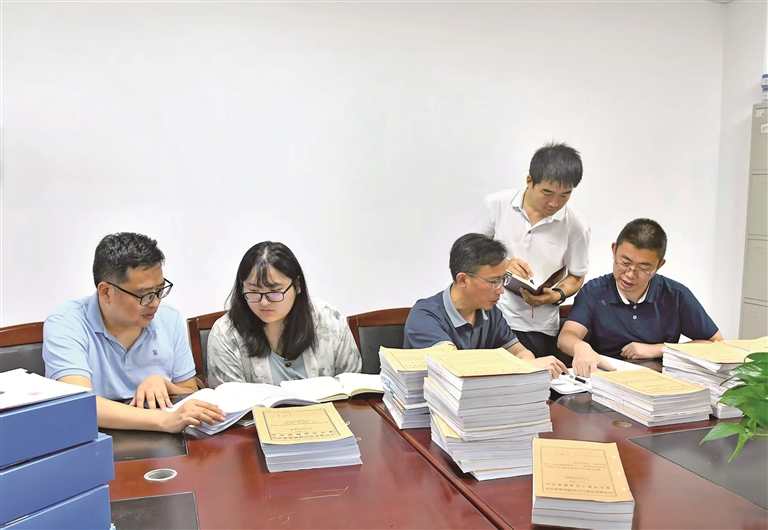
驻自然资源部纪检监察组搭建平台深化协同监督 集思广益促履职
Zhong Yang Ji Wei Guo Jia Jian Wei Wang Zhan· 2025-10-16 01:05
Core Viewpoint - The meeting organized by the Central Commission for Discipline Inspection and the National Supervisory Commission aims to enhance political supervision in the fields of natural resources, forestry, and marine affairs, ensuring the implementation of the Central Committee's decisions and policies [2][7]. Group 1: Political Supervision Mechanisms - The meeting serves as a platform for sharing experiences and addressing shortcomings in political supervision among various provincial and municipal supervisory groups [2][3]. - Emphasis is placed on the need for political supervision to be specific, precise, and regular, with a focus on key areas such as land protection and high-quality development of the Yangtze River Economic Belt [3][4]. - Supervisory groups are encouraged to implement a comprehensive supervision approach, including clear management lists and project follow-ups [3][4]. Group 2: Challenges and Recommendations - Attendees identified challenges such as insufficient capability in political supervision and a lack of integration with daily business and industry governance [5][6]. - Recommendations include establishing collaborative platforms, conducting training, and enhancing coordination among different levels of supervisory institutions [6]. - The meeting resulted in over 60 suggestions aimed at improving political supervision in the natural resources, forestry, and marine sectors [7]. Group 3: Future Directions - The supervisory groups are committed to learning from successful practices in other units to enhance their political supervision capabilities [7]. - There is a strong focus on ensuring that key tasks related to land protection, spatial planning, and marine economic development are effectively supervised [7].
重庆市大渡口区委原书记余长明被开除党籍和公职
Zhong Yang Ji Wei Guo Jia Jian Wei Wang Zhan· 2025-10-15 13:00
经查,余长明丧失理想信念,背弃初心使命,毫无"四个意识",背离"两个维护",落实党中央决策部署 打折扣,私自阅看有严重政治问题的书籍,结交政治骗子,对抗组织审查,搞迷信活动;罔顾中央八项 规定精神,接受可能影响公正执行公务的宴请,违规使用公车;无视组织原则,不按规定报告个人有关 事项,在组织函询时不如实说明问题,在干部选拔任用、职工录用工作中为他人谋取利益并收受财物; 廉洁底线失守,违规收受礼品、礼金;盲目铺摊子、上项目,搞劳民伤财的"形象工程";违规干预和插 手市场经济活动;贪婪腐化,公器私用大搞权钱交易,利用职务便利为他人在工程承揽、企业经营、职 工录用等方面谋利,并非法收受巨额财物。 中央纪委国家监委网站讯 据重庆市纪委监委消息:经重庆市委批准,重庆市纪委监委对第六届市委委 员,大渡口区委原书记余长明严重违纪违法问题进行了立案审查调查。 (重庆市纪委监委) 余长明严重违反党的政治纪律、组织纪律、廉洁纪律、群众纪律、工作纪律和生活纪律,构成严重职务 违法并涉嫌受贿犯罪,且在党的十八大后不收敛、不收手,性质严重,影响恶劣,应予严肃处理。依据 《中国共产党纪律处分条例》《中华人民共和国监察法》《中华人民共和国 ...
宁夏回族自治区银川经济技术开发区管委会原副主任陈志文接受纪律审查和监察调查
Zhong Yang Ji Wei Guo Jia Jian Wei Wang Zhan· 2025-10-15 08:10
(宁夏回族自治区纪委监委) 中央纪委国家监委网站讯 据宁夏回族自治区纪委监委消息:宁夏回族自治区银川经济技术开发区管委 会原副主任陈志文涉嫌严重违纪违法,目前正接受宁夏回族自治区纪委监委纪律审查和监察调查。 ...
河南省财政厅原党组成员、副厅长、一级巡视员高战荣接受纪律审查和监察调查
Zhong Yang Ji Wei Guo Jia Jian Wei Wang Zhan· 2025-10-15 08:10
(河南省纪委监委) 中央纪委国家监委网站讯 据河南省纪委监委消息:河南省财政厅原党组成员、副厅长、一级巡视员高 战荣涉嫌严重违纪违法,目前正接受河南省纪委监委纪律审查和监察调查。 ...
东方电气:纪巡联动释放监督协同效应
Zhong Yang Ji Wei Guo Jia Jian Wei Wang Zhan· 2025-10-15 04:21
Core Viewpoint - The article emphasizes the importance of enhancing the coordination between disciplinary inspection and supervisory mechanisms within the Eastern Electric Group, focusing on three key stages: pre-inspection information sharing, collaborative efforts during inspections, and joint supervision of post-inspection rectifications [1][2]. Group 1: Pre-Inspection Coordination - The disciplinary inspection team systematically organizes information regarding daily supervision, typical issues identified during governance, and feedback from relevant leaders, facilitating targeted inspections [1]. - The appointment of internal department heads as non-resident deputy leaders of the inspection team aims to improve the efficiency of inspections by ensuring that key personnel and resources are effectively coordinated [1]. Group 2: Collaborative Efforts During Inspections - A mechanism for joint research and discussion on problem clues has been established, allowing for timely communication between the non-resident deputy leaders and the inspection team regarding any issues encountered during inspections [2]. - The formation of an immediate information reporting mechanism ensures that significant findings and corrective actions are promptly communicated to the disciplinary inspection team, enhancing the overall effectiveness of the inspection process [2]. Group 3: Post-Inspection Rectification Supervision - The disciplinary inspection team collaborates with the party organization to review and assess rectification plans, ensuring that the corrective measures are effectively implemented [2]. - A focus on both immediate and long-term governance improvements is emphasized, with the aim of creating a virtuous cycle of supervision, rectification, and governance [2].

三堂会审丨准确认定违反廉洁纪律与受贿犯罪
Zhong Yang Ji Wei Guo Jia Jian Wei Wang Zhan· 2025-10-15 00:34
Core Viewpoint - The case of Luo, a former public official, highlights the distinction between legitimate civil actions and violations of integrity discipline, particularly in the context of private lending and potential bribery [1][9][10]. Summary by Sections Basic Case Facts - Luo, a member of the Communist Party since June 1994, held various positions including Chairman of the City Investment Company and Director of the Planning Bureau. He was found to have violated integrity discipline by lending money to management and service objects, resulting in significant profits [3]. - Between 2016 and 2018, Luo lent a total of 345 million yuan, receiving 13 million yuan in interest, while also being implicated in accepting bribes totaling over 606 million yuan during his tenure [3]. Investigation Process - The investigation into Luo's alleged serious violations began on October 22, 2024, leading to his detention and subsequent extension of detention time [4]. - On April 10, 2025, the case was transferred to the People's Procuratorate for prosecution, and Luo was expelled from the Party and public office shortly thereafter [5]. Legal Proceedings - On May 19, 2025, the People's Procuratorate filed charges against Luo for bribery, resulting in a sentence of ten years and one month in prison, along with a fine of 500,000 yuan [6]. Analysis of Private Lending - The analysis indicates that Luo's private lending activities, while profitable, did not constitute bribery as there was no evidence of using his official position to benefit the borrowers [9][10]. - The determination of whether such lending constitutes a violation of integrity discipline hinges on the potential impact on the impartial execution of public duties [10]. Recognition of Bribery in Lending - In a separate case involving a businessman named Peng, it was established that the loan provided by Luo was not based on a genuine need, indicating a potential bribery scenario masked as a loan [12][13]. - The relationship between the loan and the official's actions was scrutinized, revealing that the loan was a means to facilitate a quid pro quo arrangement [14][15]. Discounted Housing Transactions - Luo's purchase of property at a significantly reduced price from a developer was analyzed to determine if it constituted bribery. The sale price was 38% lower than the market rate, indicating a potential violation of integrity [17][19]. - The transaction was deemed a form of bribery as it was not a standard market practice and was directly linked to Luo's official actions [19]. Self-Reporting and Sentencing - Although Luo provided information about his bribery activities, it did not meet the legal criteria for self-reporting due to the nature of the crimes being similar to those already known to the authorities [21][22]. - His cooperation was acknowledged, leading to a lighter sentence despite not qualifying for self-reporting [22].