Huan Qiu Wang Zi Xun

Search documents
微软与OpenAI紧张关系缓和:新协议解除AGI研发限制
Huan Qiu Wang Zi Xun· 2025-11-12 06:08
Core Insights - Microsoft and OpenAI have signed a new "final agreement" that extends their collaboration and removes key restrictions on Microsoft's independent development in the field of artificial general intelligence (AGI) [1] Group 1: Partnership Dynamics - Microsoft holds approximately $13 billion in shares of OpenAI, making it the largest shareholder [3] - There have been investor concerns regarding the partnership, particularly about the potential "AI bubble" nearing its burst and the unclear profitability model of OpenAI [3] - Tensions arose between the two companies due to OpenAI's plans to transition into a for-profit entity, with rumors suggesting Microsoft attempted to prevent this shift to protect its interests [3] Group 2: Agreement Changes - The new agreement alters AGI development permissions, requiring OpenAI to have independent expert validation before announcing the achievement of AGI [3] - Even if OpenAI achieves AGI before 2030, Microsoft retains the rights to use related models and products until 2032 [3] - The agreement allows Microsoft to independently or collaboratively develop AGI, which is seen as OpenAI handing over significant control to Microsoft [3] Group 3: Strategic Direction - The CEO of Microsoft's AI division, Suleiman, stated that the company is pursuing "superintelligence" with a focus on making AI beneficial for humanity [3] - This marks a shift from earlier in the year when Suleiman acknowledged that Microsoft's self-developed models lagged behind OpenAI by 3-6 months, with a strategy of "chasing second" [3] - Suleiman emphasized that Microsoft will maintain an open technology approach and will not be overly committed to specific models, aiming to enhance product usability [3]



便携式基因测序仪存在未知安全漏洞
Huan Qiu Wang Zi Xun· 2025-11-12 04:21
Core Insights - Portable gene sequencers, widely used globally, have unknown security vulnerabilities that may lead to unauthorized access and alteration of private genetic data [1][2] - The research team identified three security flaws in the MinION sequencer produced by Oxford Nanopore Technologies, two of which allow unauthorized access to copy or modify DNA data [1] - The third flaw can cause service interruptions, leading to device malfunctions during sequencing [1] Group 1: Security Vulnerabilities - The MinION sequencer, priced at several thousand dollars, can operate globally and simplifies the previously complex and costly DNA sequencing process [1] - Despite software updates from Oxford Nanopore to address these vulnerabilities, risks remain if devices use outdated software or connect to insecure networks [1] - The potential for data breaches increases when the sequencer is connected to computers in uncontrolled environments, which may be infected with malware [1] Group 2: Regulatory and Safety Considerations - The U.S. National Institute of Standards and Technology has begun to differentiate between research and clinical applications of sequencers, indicating a growing emphasis on safety standards in the field [2] - The scientific community is urged to adopt a "safety-first" design philosophy to address emerging threats to genomic data as portable sequencing technology becomes more prevalent [2]
裸鼹鼠长寿密码破译
Huan Qiu Wang Zi Xun· 2025-11-12 04:21
Core Insights - The research team from Tongji University discovered that the naked mole rat possesses a unique protein, cGAS, which functions oppositely to its human counterpart, aiding in DNA repair and contributing to the animal's longevity [1][2] - The study highlights the significance of DNA repair capabilities in determining species lifespan, with naked mole rats living up to 40 years and showing resistance to various diseases [1] - The findings were published in the international journal "Science," providing new targets for anti-aging interventions [1] Group 1 - The naked mole rat's cGAS protein enhances homologous recombination repair efficiency, contrasting with the human cGAS protein that inhibits this process [1][2] - The research identified four evolutionarily specific amino acid sites in the C-terminal domain of naked mole rat cGAS that mediate the reversal of function [2] - Mutating these sites in naked mole rat cGAS leads to the loss of its DNA repair-promoting function, while introducing them into human cGAS can reverse its aging-promoting effects [2] Group 2 - Overexpression of naked mole rat cGAS in mice helps resist multi-organ aging, reduces systemic inflammation, and extends healthy lifespan [2] - The study explores the unique DNA repair mechanisms of naked mole rats and their association with longevity, potentially offering new insights for achieving "aging without decline" in humans [2]
果胶结构影响果蔬汁品质机制揭示
Huan Qiu Wang Zi Xun· 2025-11-12 04:21
Core Insights - The research team from the Chinese Academy of Agricultural Sciences has analyzed the structural characteristics of chelating pectin and alkali-soluble pectin, revealing their regulatory mechanisms on the physicochemical quality of fruit and vegetable juices [1][2] - Pectin is a key polysaccharide in fruit and vegetable juices that determines product rheological properties, such as viscosity and turbidity stability, directly affecting the quality attributes like "mouthfeel" and "flavor release" [1][2] Research Findings - The study focused on typical juice materials, peach and carrot, and utilized dynamic high-pressure technology to treat the pectin in the juices [1][2] - High-pressure homogenization significantly altered the structure of both chelating pectin and alkali-soluble pectin, with carrot juice naturally having a higher viscosity than peach juice due to differences in pectin content [2] - After high-pressure treatment, the viscosity of carrot juice decreased by approximately 35%, confirming the impact of pectin structure on the rheological properties of fruit and vegetable juices [2] Implications for Industry - The findings provide a clear technical pathway for food companies to develop "high stability, superior taste" fruit and vegetable juice products by optimizing pectin structure during processing [2] - By regulating the pectin structure, companies can enhance the physicochemical properties of fruit and vegetable juices, reducing issues like layering and sedimentation during storage, thereby maintaining more functional components [2]
迎战“双十一”:农创客助直播电商成浙江乡村“常态”
Huan Qiu Wang Zi Xun· 2025-11-12 03:37
Core Insights - The 17th "Double Eleven" event has seen a significant rise in rural e-commerce in Zhejiang, with live streaming becoming a common phenomenon in the countryside [2][4][5] - During the "Double Eleven" period (October 20 to November 11), Zhejiang's average daily express delivery volume exceeded 100 million packages, with nearly 50 million packages delivered daily [2] - The province has actively cultivated "agricultural creators" through initiatives like the "Ten Thousand Agricultural Creator Cultivation Project," which has invigorated rural industries and advanced the development of rural e-commerce [2] Delivery Volume - Average daily express delivery volume during "Double Eleven" surpassed 100 million packages [2] - Average daily delivery volume approached 50 million packages [2] Agricultural Creators - The initiative to cultivate agricultural creators has led to the participation of tens of thousands of new entrants [2] - This influx of new participants has continuously stimulated the vitality of rural industries in Zhejiang [2]

AI作曲兴起,如何展现人类创造优势
Huan Qiu Wang Zi Xun· 2025-11-12 02:25
Core Viewpoint - The article discusses the transformative impact of AI on music creation, emphasizing the need to center human creativity and emotional expression in the process of music production [1][2]. Group 1: AI's Role in Music Creation - AI technologies like MuseNet and AIVA are capable of composing and producing music, but they lack the ability to understand the emotional and contextual reasons behind musical choices [1][2]. - The concept of "human-machine co-creation labs" is proposed, where AI acts as a collaborator rather than just a tool, allowing musicians to infuse their personal emotions and cultural backgrounds into AI-generated materials [2][3]. Group 2: Enhancing Creativity and Emotional Expression - The article suggests implementing a "creative trajectory recording" system to document the decision-making process of composers, which serves both copyright protection and cultural acknowledgment [2][3]. - "Emotion data-driven composition" is introduced as an innovative approach, where physiological data from composers is used to influence musical elements, creating a direct link between technology and emotional expression [2][3]. Group 3: Cultural Preservation and Education - Encouraging "cultural memory encoding" practices is essential to preserve the diversity of musical expressions, allowing AI to learn from unique cultural contexts rather than merely replicating them [3][4]. - Future music education should focus on enhancing critical thinking and creativity rather than just technical skills, incorporating interdisciplinary collaboration and algorithmic critique [3][4]. Group 4: Industry Practices and Transparency - The music industry is encouraged to establish "transparent co-creation mechanisms," such as disclosing AI's involvement in music production and the sources of training data [4][5]. - Proposals include dividing revenue among human creativity, algorithm generation, and performance, as well as conducting cultural risk assessments before releasing music [5]. Group 5: The Future of Music - The article concludes that while AI can generate appealing music, the essence of truly meaningful music lies in human experiences and cultural memories [5]. - The future of music will likely differentiate between works that possess "soul" and those that do not, emphasizing the irreplaceable role of human curiosity, empathy, and imagination in artistic expression [5].
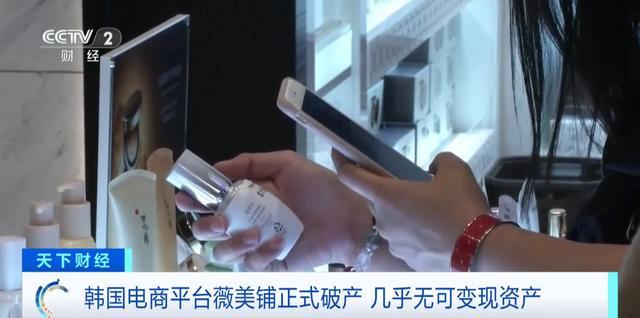
韩国一电商平台正式破产!负债超20亿元!“受害人一分钱都拿不回来”……
Huan Qiu Wang Zi Xun· 2025-11-12 00:14
Group 1 - The South Korean e-commerce platform, Weimip, has officially declared bankruptcy due to debt issues, following a restructuring process that lasted 1 year and 4 months [1] - Approximately 108,000 victims are affected by the Weimip debt incident, with total losses amounting to about 580 billion KRW (approximately 2.8 billion CNY) [1] - Weimip's total assets are reported to be 48.6 billion KRW (approximately 2.4 million CNY), while total liabilities stand at 4.462 trillion KRW (approximately 22 billion CNY), indicating a severe financial crisis with almost no liquid assets [1] Group 2 - A committee formed by the victims has stated that the recovery rate is "0%", meaning they will not receive any compensation [3] - The committee criticized the current legal system in South Korea for failing to address the realities of the online commerce industry [3] Group 3 - Weimip is a subsidiary of the Singapore-based Korean e-commerce company Qutian and was once the fourth-largest e-commerce platform in South Korea [5] - The company applied for restructuring in late July last year, citing operational difficulties due to unpaid merchant payments and failure to refund consumers [5]
视频丨俄罗斯推出首款国产人形机器人
Huan Qiu Wang Zi Xun· 2025-11-11 19:16
Core Insights - Russia has launched its first domestically produced artificial intelligence humanoid robot named "Aidol" [3] Group 1 - The Aidol robot is capable of dialogue and emotion recognition [3] - It can operate offline, with all voice processing conducted independently on the device [3]

“AI与大数据重构新媒体生态论坛”在南宁理工学院举办
Huan Qiu Wang Zi Xun· 2025-11-11 10:40
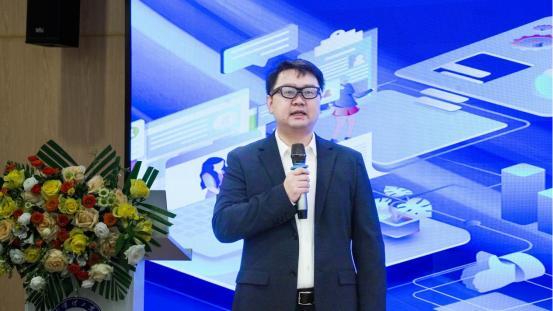
Core Insights - The forum "Digital Intelligence and Media Integration: AI and Big Data Reshaping the New Media Ecosystem" was successfully held at Nanning University of Technology, focusing on the integration of AI, big data, and new media [1][2] Group 1: Forum Overview - The event was organized by Nanning Science and Technology Bureau and Nanning University of Technology, with participation from various experts in AI, big data, and new media [1] - Over 500 students and faculty members attended the forum, which included thematic reports and case analyses [1][6] Group 2: Expert Contributions - Professor Zhou Yongquan from Guangxi Minzu University presented on "Bionic Intelligent Technology," discussing innovative applications of intelligent optimization algorithms in complex problem-solving [4] - Professor Huang Faliang from Nanning Normal University focused on "Emotional Computing and Intelligent Human-Computer Interaction," showcasing practical cases of emotional analysis technology [4] - Professor Zhu Xiaozhi from Guilin University of Electronic Technology addressed the intersection of bioinformatics, machine learning, and data mining, emphasizing the theme of "cross-border symbiosis" [4] - Professor Wei Wenkai from Guangxi Normal University explored the role of AI and robotics in empowering media development, providing insights into media ecosystem transformation [5] - Professor Huang Mingxuan from Guangxi University of Finance and Economics discussed cross-language query expansion based on weighted association pattern mining, offering innovative solutions for multilingual information exchange [5] - Professor Zhou Wei from Guangxi Minzu University elaborated on the integration of smart IoT technology in new media content interaction and ecosystem reconstruction [5] Group 3: Forum Impact - The forum served as a high-level academic exchange platform, promoting the practical application and innovative development of AI and big data technologies [6] - Participants gained cutting-edge knowledge and broadened their academic perspectives, enhancing their enthusiasm for professional learning [6] - The collaborative efforts from various stakeholders aim to contribute significantly to the high-quality development of the university and related disciplines [6]
刷脸认证还安全吗?新型AI换脸盗号案细节曝光
Huan Qiu Wang Zi Xun· 2025-11-11 10:40
Core Viewpoint - The article highlights the alarming rise of AI face-swapping technology being exploited for identity theft and unauthorized access to e-commerce accounts, posing significant risks to personal information security [1][3][9]. Group 1: Incident Overview - In June 2024, police in Hangzhou discovered a suspicious advertisement promoting AI face-swapping technology that could bypass platform verification using just a user's facial photo [1]. - The technology allows criminals to gain unauthorized access to user accounts, potentially compromising sensitive information such as chat records [1][3]. - Two victims, Mr. Liu and Ms. Zhang, experienced unauthorized transfers of their e-commerce accounts, with Ms. Zhang losing her account shortly after purchasing it [5][9]. Group 2: Criminal Network and Arrests - Police identified a network of 150 abnormal e-commerce accounts linked to a criminal group utilizing AI face-swapping technology [10]. - The investigation led to the arrest of Zhang, who was found to be advertising the technology on foreign platforms, and subsequently, two accomplices, Wu and Wang, were also apprehended [12][14]. - The trio established a cooperative scheme where they charged fees for accessing personal information and facilitating account transfers, with profits exceeding 100,000 yuan [14]. Group 3: Legal Consequences - The court sentenced Zhang to three years and two months in prison, while Wu and Wang received three years and a suspended sentence of four years, respectively, for illegally obtaining computer information [14].