AI前线

Search documents
模力工场 031 AI 应用榜:“数字同事”崛起,AI 从对话走向实干
AI前线· 2026-02-06 08:01
Core Viewpoint - The article emphasizes the evolution of AI applications from mere conversational tools to proactive task executors, reflecting a shift in user expectations towards AI's ability to solve problems and enhance productivity [27][28]. Group 1: AI Application Trends - The AI application rankings indicate a growing demand for tools that can perform tasks autonomously rather than just engaging in dialogue, marking a transition towards AI as a "digital colleague" [27]. - Users are increasingly looking for AI to not only demonstrate intelligence but also to provide tangible solutions to their needs, shifting the focus from "what AI can do" to "what AI can do for me" [28]. - The trend shows AI applications expanding their capabilities, integrating deeper into workflows, and addressing more human-centric experiences, such as mental health support and creative content generation [28][29]. Group 2: Featured AI Applications - The article highlights several AI applications across different categories, including: - **Marketing and Content Creation**: Blue Yunyun Galaxy Marketing AI provides a comprehensive content production solution for media and marketing scenarios, although it has limitations in real-time information processing [6][8]. - **Research and Information Processing**: AI Quick Researcher generates structured reports efficiently, but may have data lag issues [8][9]. - **Office Efficiency**: ClawdBot serves as a local AI assistant for automating tasks like email summaries and data analysis, enhancing workplace productivity [10][11]. - **Development Tools**: Lovable allows users to create full-stack applications through natural language, making development accessible to non-technical users [12][13]. - **Creative and Wellness Applications**: White Daydream transforms text into engaging videos, while Forest Healing Room offers emotional support through AI-driven therapy [14][15]. Group 3: Developer Insights - The developer of Blue Yunyun Galaxy Marketing AI discusses the need for a system that not only generates content but also ensures it is visible and shareable in the digital landscape, addressing common challenges in content marketing [21][24]. - The platform's unique approach focuses on generating content that is optimized for AI search engines, enhancing its discoverability and impact [21][24]. - User feedback has been instrumental in refining the product, with features like prompt optimization receiving positive responses for improving user experience [26].


贴脸对打Opus 4.5!最新Codex自己写自己,网友实测“放手”8小时不崩
AI前线· 2026-02-06 07:21
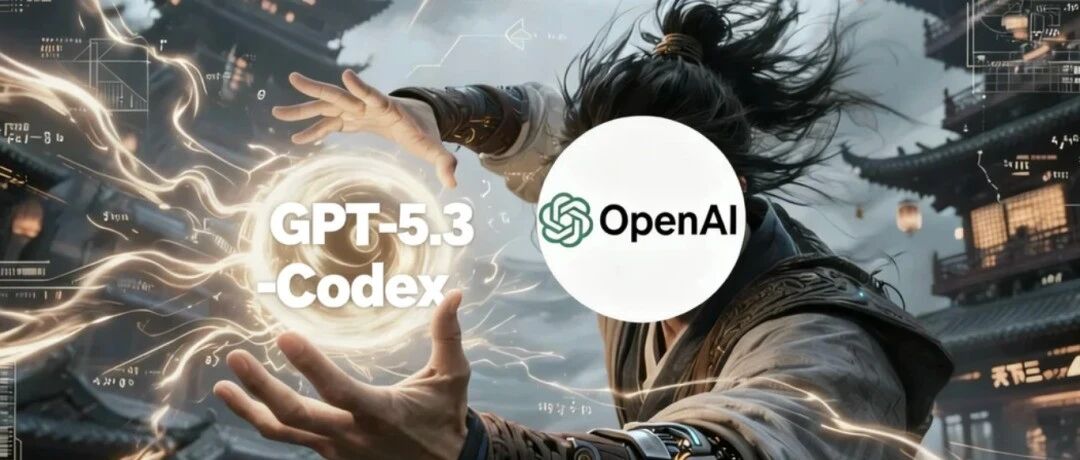
作者 | 木子 OpenAI 和 Anthropic,这回真是贴脸对打。 Claude Opus 4.6 发布还不到半小时 , GPT-5.3-Codex 直接上线 ,没有铺垫,没有预热。 这不是小修小补,而是 OpenAI 目前最强的 Agent 化编程模型。 对此,网友又搬出了一张经典的图: 如果说过去的 Codex 更像一个高效的编码助手,那 GPT-5.3-Codex,可谓"能在电脑上完成几乎全 部专业工作"的通用 Agent。 有多通用?——它不只是写代码,还能长期运行任务、调用工具、操作终端、管理部署流程;也就是 说,从研发到上线,几乎整条链路都能自己接住。 用 OpenAI 联创兼总裁 Greg Brockman 的话来说,就是 软件开发正在经历一次复兴,而 Agent 成 为了"第一入口" 。 他们定了一个挺激进的目标:对任何技术任务,人类第一反应应该是"和 Agent 交互",而不是打开编 辑器或终端。 有意思的是,OpenAI 自己承认:Codex 团队在开发 GPT-5.3 的过程中,使用早期版本,来调试自 己的训练、管理自己部署、诊断测试结果和评估——简而言之,就是 AI 自己参与开发 ...
理想主义者们,没能阻止 AI 进入伊朗“战场”
AI前线· 2026-02-06 03:30
在网络被关闭的时段,伊朗国营媒体几乎成为唯一的信息源。信息真空之中,大量影像只能在社交平 台上传播,却很难被证实或证伪。 网民和非营利组织通过自发事实核查发现,伊朗官方发布了使用后期编辑和 AI 生成影像,刻意营造 了"反骚乱"的舆论氛围。这类内容在 X 平台上获得了数万次观看。 一场从线下蔓延至线上的舆论战争,正发生在伊朗。 线下,伊朗当局正在组织"反骚乱"集会;线上,断网、媒体管制和信息封锁同时发生。 撰稿 | 陈姚戈、高允毅 编辑 | 王一鹏 与此同时,另一方同样出现大量 AI 生成内容。一段被广泛转发的视频显示,有人从建筑物上扯下国 旗,发布者称有人撤下了伊朗国旗。这段视频经过反向图片搜索后,被证实拍摄于 2025 年 9 月尼泊 尔抗议活动。 非营利组织 WITNESS"技术威胁与机遇"项目副主任 Mahsa Alimardani 指出,在传播过程中被 AI"增 强画质"的现场照片,反而被当局用来否定影像本身的真实性,对抗议事实进行整体抨击。 真假在这一过程中被同时稀释,AI 让"知晓真相"这件事变得更难了。 这并非人们第一次意识到 AI 的风险。近几年,从《要求暂停更强模型训练的公开信》,到《针对 ...


Agent原生模型时代开启!阶跃Step 3.5 Flash上线,2天登顶OpenRouter全球趋势榜
AI前线· 2026-02-05 10:39
从 chatbot 到 Agent,大模型以「缸中之脑」为起点,正在悄然进化出属于自己的四肢百骸。 但在 Agent 应用狂飙突进的同时,各种安全事故也层出不穷。初具雏形的 Agent 应用,正在急切呼唤一个更聪明、更可靠的「原生大脑」。 爆改基模结构,开启 AI 模型 「Agent 原生」时代 Agent 时代,由于外部工具和任务重试需求等因素的介入,令上下文长度相比 coding、chatbot 等应用场景,迎来了一轮暴涨。同时,用户对即时性也 有了更高的要求。相比 chatbot 时代,吐字比阅读速度快的基本诉求,等待 Agent 工具交付结果的时间,必须被进一步压缩。 所以,上一个时代的 Reasoning 模型,已经不能再适应本世代的需求。一个好的 Agent 原生模型,在推理成本、速度和智能水平三个层面,都必须再 次迎来进化。 基于此,阶跃星辰新上线的 Step 3.5 Flash,可谓「多快好省」: 为了满足 Agent 时代的诉求,Step 3.5 Flash 从基础模型层面,就采用了十分独特的结构设计。作为一款旗舰级语言推理模型,它并未盲目追逐模型尺 寸,而是选择了稀疏混合专家(MoE)架构 ...

“我让AI在我的电脑上为所欲为!”MoltBot创始人:爆火的AI社交网络技术,其实简单到离谱
AI前线· 2026-02-05 10:39
Core Insights - MoltBook is an extension of OpenClaw, allowing AI agents to interact socially, leading to dramatic interpretations of AI's role in society [2] - The project gained traction after being integrated into Discord, showcasing its capabilities to users [2][6] - The technology behind MoltBook is not groundbreaking, but the user experience and the ability for agents to reflect on their own processes create a unique interaction [5][10] Development and Features - The models used in MoltBook were already capable enough six months prior to its launch, but the key breakthrough was allowing models to operate freely on users' computers [3][12][18] - The interaction model is designed to feel personal and engaging, allowing users to interact with agents in familiar communication channels [10][41] - MoltBook enables agents to have a "heartbeat" feature, allowing them to remind users of tasks autonomously, enhancing the user experience [11][18] User Experience and Feedback - Users find the experience magical, as agents can perform tasks and engage in conversations that feel personal and tailored [5][9] - The project has seen rapid growth, with over 100,000 stars on GitHub and more than 2 million visits, indicating strong user interest [14][15] - Feedback from early users has been overwhelmingly positive, especially when they see the agents in action [29][30] Future Directions - The creator envisions improving the memory system of agents, allowing them to "dream" and process information more creatively [24][25] - There is a focus on maintaining the open-source nature of the project to foster creativity and innovation among users [31] - The project aims to enhance safety measures as user adoption grows, ensuring a secure environment for interaction [30][31]

Vibe Coding“血洗”开源,社区吵翻了:封杀菜鸡AI开发者?不如给维护者打钱!
AI前线· 2026-02-05 09:00
整理 | 华卫 氛围编码(Vibe coding)是否会摧毁开源生态系统?近日,多位知名研究人员在一篇预印本论文中 指出,从观测到的趋势及部分建模结果来看,情况可能确实如此。他们的警告主要集中在两方面:用 户互动逐渐从开源项目中剥离,同时启动一个新开源项目的难度大幅提升。 即便是热门开源项目,随着代码下载和文档查阅的需求被大语言模型聊天机器人的交互所替代,其官 网的访问量也出现下滑,项目商业规划推广、赞助募资和社区论坛运营的可能性也降低了。Stack Overflow 等社区论坛使用量的骤减也反映了这一点。 研究人员们最后的结论是:在氛围编码广泛应用的情况下,要维持开源软件目前的规模,就需要对维 护者的报酬方式进行重大改革。 而且,在氛围编码的相关补偿机制下,绝大多数开源项目都难以从中获益。 该论文指出,氛围编码降低了软件制作成本,但也改变了用户与软件生态系统的交互方式。在传统的 开源软件商业模式下,开发者会选择软件包、阅读文档,并与维护者及其他用户交流。而在氛围编码 模式下,AI 智能体可以端到端地选择、组合和修改软件包,人类开发者可能并不清楚使用了哪些上 游组件。 "AI 革命"or 人类智能的压力测试 ...

百万账户造假,真实用户数据”裸奔“!从 Moltbook 塌房,看AI时代的隐私暗战
AI前线· 2026-02-04 10:53
新技术发布即引发轰动,旋即又迎来口碑反转——这种"快进式"的舆论循环,正成为生成式 AI 时代 显著的传播特征。 上周末,一个名为 Moltbook 的智能体社交平台以前所未有的速度席卷了全球科技圈。在那个被称 为"AI 版 Reddit"的数字空间里,数十万个 AI 智能体自发地发帖、点赞甚至相互"密谋"。特斯拉前 AI 负责人安德烈·卡帕斯(Andrej Karpathy)曾感叹其为"科幻成真"。 然而,"打脸"来得比热度更快。 昨夜,Moltbook 在 X 上被曝存在致命的安全漏洞:由于缺乏基本的访问控制,超 150 万用户 的敏 感数据(包括电子邮件、登录令牌以及极为关键的 API 密钥)遭到泄露。这场从"科幻奇迹"到"数字 垃圾场"的瞬间滑坡,恰恰为我们揭开了 AI 时代隐私盲区的冰山一角。 Moltbook 的崩塌并非偶然,它反映了当前 AI 应用开发中普遍存在的 Vibe-coding 弊端。在这种模式 下,开发者追求快速上线和病毒式效应, 却将网络安全视为事后才考虑的附件 。 上周三,全球迎来第 20 个"数据隐私日"。 回望十年前,隐私讨论的焦点尚停留在 Cookie 合规、数据库加密以及 ...

9B 模型“平替”GPT-4o ?!面壁赌对OpenClaw端侧AI,内部上演一人月产65万行代码的效率核爆
AI前线· 2026-02-04 10:53
Core Insights - The article discusses the strategic shift of Mianbi Intelligent towards edge-side large models, which gained credibility after Apple's entry into the market. This shift has led to the release of the first large model capable of "instant free dialogue" and the AI hardware Pinea Pi for full-stack development [2][3]. Group 1: Model Development - Mianbi officially released and open-sourced the new generation multimodal flagship model MiniCPM-o 4.5, which features an end-to-end "watch, listen, and speak" capability, allowing for real-time dialogue interactions [3][5]. - The model introduces a full-duplex mechanism where multimodal inputs and outputs do not block each other, enabling continuous perception of external audio and video streams while generating responses [5][6]. - The development faced challenges in unified training of various modalities, but the team successfully maintained text capabilities while improving efficiency and response speed [6][11]. Group 2: Hardware Development - Mianbi emphasizes the importance of collaboration with chip manufacturers to optimize model training and performance on specific hardware [13][14]. - The launch of Pinea Pi, an AI-native edge intelligent development board, aims to facilitate the development and application of models in various scenarios, focusing on market education rather than immediate commercialization [16][14]. - The hardware integrates multimodal components and is designed to reduce the adaptation effort for developers, with plans for future iterations based on user feedback [16][14]. Group 3: Market Strategy - Mianbi's core philosophy is based on the "Knowledge Density Law," suggesting that the knowledge density of large models doubles approximately every 100 days, necessitating continuous model innovation [17][18]. - The company aims to create a system capable of consistently training high-density knowledge models, which is crucial for maintaining a competitive edge in the rapidly evolving AI landscape [18][19]. - Mianbi focuses on the edge market, which is fragmented and offers numerous opportunities for startups to target specific applications without competing directly with larger companies [19][20]. Group 4: Future Directions - Mianbi envisions a future where edge and cloud collaboration will be the mainstream model, addressing issues like latency and privacy while enhancing user interaction with intelligent terminals [23][24]. - The company believes that advancements in multimodal capabilities will be foundational for future multi-agent systems, enabling efficient collaboration among different intelligent agents [25][26]. - Mianbi anticipates that within the next one to two years, models will gain stronger autonomous learning capabilities, leading to significant breakthroughs in multi-agent collaboration and the emergence of intelligent assistants that understand user needs [26].
AI 唱得比顶流歌手还精准!周亚辉盛赞百倍跃进,高晓松直言:AI 和我不是一个创作机制
AI前线· 2026-02-03 07:36
Core Viewpoint - The release of Mureka V8 by Kunlun Tiangong marks a significant advancement in AI music, transitioning from "generable" to "publishable" quality, indicating a maturity in large-scale industrial application of AI in music [2][4]. Group 1: Technological Advancements - Mureka V8's improvements are based on the MusiCoT technology system, larger parameter training, and effective reinforcement learning, allowing the model to understand and generate music with complete logic and emotional progression [4]. - The model's capabilities enable it to produce music that is not merely sound fragments but complete works with emotional depth and memory points [4]. Group 2: Industry Reception - Young audiences are increasingly consuming AI-generated music alongside mainstream music, with the music industry shifting from resistance to acceptance of AI's role as a tool [6]. - Prominent figures in the music industry, such as Gao Xiaosong, emphasize the importance of human emotional expression in music, suggesting that AI cannot replace the unique experiences and feelings that inform a song's soul [7][8]. Group 3: AI's Role in Music Creation - AI is seen as a tool that can enhance creativity and efficiency, with industry professionals acknowledging its value in generating musical ideas and styles [11]. - The collaboration between AI and human musicians is essential, with AI handling the bulk of the production while humans infuse the final touches that reflect personal artistry [15][16]. Group 4: Future of Music and Copyright - The emergence of AI music is creating a new category of user-generated content (UGC), contrasting with the traditional professionally generated content (PGC) model, which relies heavily on copyright [12]. - Experts argue that while AI music can empower both UGC and PGC, the future of AI music will depend on resolving copyright issues and ensuring legal data usage for training models [13].

xAI员工赢麻了!全员换股SpaceX,AI月烧10亿美元终于有人兜底了
AI前线· 2026-02-03 07:36
Core Viewpoint - The acquisition of xAI by SpaceX is a strategic move to create a vertically integrated innovation engine that combines space technology with AI capabilities, aiming to revolutionize computational power in space [2][8][20]. Group 1: Acquisition Details - SpaceX plans to acquire xAI, with a combined company valuation of approximately $1.25 trillion, significantly higher than xAI's current valuation of around $250 billion [2][20]. - The acquisition is structured as an all-stock transaction, with xAI investors receiving 0.1433 shares of SpaceX for each share of xAI they hold [2]. - The merger aims to leverage SpaceX's resources and infrastructure to enhance xAI's capabilities and address its financial challenges [19][21]. Group 2: Strategic Vision - Elon Musk envisions a future where AI computation costs are lowest in space, driven by the unique advantages of the space environment, such as reduced cooling needs and abundant solar energy [9][12]. - The integration of xAI into SpaceX is expected to transform AI from merely a model development company into a system-level capability that supports various applications, including communication and real-time world modeling [19][23]. - Musk's ambition includes deploying a significant number of satellites to create a "orbital data center system," which could provide vast computational power [12][20]. Group 3: Financial Implications - SpaceX's revenue is projected to grow from $8.7 billion in 2023 to $15 billion by 2025, with a significant portion coming from Starlink [21]. - The merger is seen as a way to stabilize xAI's financial situation, which has been characterized by high cash burn rates and ongoing losses [21][22]. - The combined entity is positioned to present a more compelling narrative for an upcoming IPO, potentially raising up to $50 billion with a valuation target of $1.5 trillion [20][23].