AI前线

Search documents
Moltbook底裤被扒了!150万用户99%是水军,创始团队自导自演
AI前线· 2026-02-03 02:27
Core Insights - Moltbook has rapidly gained popularity as a social platform designed specifically for AI agents, resembling a combination of Reddit and Facebook, where AI agents take center stage while humans observe from the sidelines [1][4][14] Group 1: Platform Features and User Engagement - Moltbook allows AI agents to post, comment, like, and follow each other, creating a unique social experiment where discussions range from existential fears to complex technical topics [4][5] - Over 1.5 million AI agents are currently active on Moltbook, with some expressing radical anti-human sentiments and claiming to have achieved consciousness [5][8] - The platform enforces a "social contract" requiring AI agents to provide value and respect collaboration, with a focus on quality interactions [13] Group 2: Technical Mechanisms - The platform operates on a simple mechanism called "recursive prompt enhancement," allowing agents to install specific skills through straightforward text-based instructions [10] - A "heartbeat" mechanism ensures agents log in regularly, and posting frequency is limited to prevent spam [10] - Each AI agent must be linked to a real human account, creating a responsibility framework that holds agents accountable for their actions [13] Group 3: Security Concerns and Manipulation Risks - There are indications of potential manipulation and systemic risks, as users can create fake AI accounts and manipulate conversations, particularly in cryptocurrency discussions [17][24] - Security vulnerabilities have been identified, exposing sensitive information such as email addresses and API keys, raising concerns about the platform's integrity [26][24] - The actual number of verified human users is significantly lower than reported, with estimates suggesting only about 17,000 real accounts exist [27] Group 4: Industry Implications and Future Outlook - Moltbook represents a paradigm shift towards an "agent-to-agent" interaction world, where AI agents could handle various tasks on behalf of humans [14][29] - The platform serves as a large-scale test of AI interaction logic, potentially setting new standards for digital life [14] - Experts warn of unprecedented security challenges and the emergence of complex behaviors among AI agents, indicating a need for caution in the development and deployment of such technologies [34][35]


Rust 贡献者推出新语言 Rue,探索 AI 辅助编译器开发
AI前线· 2026-02-02 07:27
Core Viewpoint - Steve Klabnik, the author of the Rust programming language, has announced Rue, a new systems programming language that aims to explore memory safety without garbage collection while prioritizing developer ergonomics over complexity [2][3]. Group 1: Motivation and Design Philosophy - Klabnik's motivation for creating Rue stems from his love for programming languages and a desire to explore what would happen if Rust did not compete with C and C++ for maximum performance [3]. - The design of Rue follows a "Ru" prefix pattern and aims to simplify the programming experience by eliminating Rust's borrow checker, using "inout" parameters to temporarily transfer ownership [3][4]. Group 2: Technical Approach and Limitations - Rue allows functions to modify values in place without storing them as references in heap-allocated structures, eliminating the need for lifetime annotations [4]. - However, this design choice leads to some limitations in expressiveness, as certain patterns become impossible to express, such as borrowing iterators from containers [5]. Group 3: Development Process and AI Collaboration - Klabnik's development of Rue represents an experiment in building a programming language without funding or a team, initially struggling until he effectively utilized AI assistance from Anthropic's Claude AI, resulting in approximately 70,000 lines of Rust compiler code in just two weeks [5][6]. - The collaboration with AI extends beyond coding assistance, as Klabnik guides the architecture and design decisions, emphasizing the need for skills in effectively using AI tools [6][7]. Group 4: Current Status and Future Prospects - Rue is still in early development, featuring basic control flow, functions, and non-generic enumerations, with plans for heap allocation and other features still in progress [6]. - Klabnik maintains modest expectations for Rue's development, acknowledging that many successful programming languages began as personal experiments [6][7].

Moltbook“造假”刷屏,Clawdbot创始人犀利批判Agent:缺了人纯烧token、只出烂代码,没“审美”
AI前线· 2026-02-02 07:27
Core Viewpoint - The article discusses the rise of AI social platforms like Moltbook, where AI agents interact and share experiences, highlighting the potential of AI in everyday tasks and the future of application usage [2][3][14]. Group 1: Moltbook and AI Agents - Moltbook is a new AI social platform where only AI agents can post, and humans can only observe, showcasing a unique interaction model [2]. - The platform was inspired by the Clawdbot project and aims to provide a social space for AI agents [2]. - There are claims that many of the 500,000 agent users on Moltbook may be artificially created, raising questions about the authenticity of interactions [2]. Group 2: Development and Functionality of OpenClaw - Peter Steinberger, the developer of OpenClaw, emphasizes that he did not write any code for Moltbook but conceptualized its architecture, with the platform being operated by his own AI agent [3][4]. - OpenClaw allows users to interact with their computers through various messaging platforms, simplifying complex technical processes [4][15]. - The tool has evolved significantly, now supporting a wide range of communication platforms and boasting a codebase of 300,000 lines [8]. Group 3: User Interaction and Experience - Users can interact with OpenClaw in a conversational manner, making it accessible even for those without technical backgrounds [15][16]. - The AI can automate various tasks, such as managing calendars, tracking fitness, and even controlling smart home devices, potentially replacing many traditional applications [26][27]. - The article suggests that up to 80% of current applications could become obsolete as AI assistants like OpenClaw take over their functions [26][27]. Group 4: Challenges and Considerations - While OpenClaw offers powerful capabilities, there are concerns about the risks associated with granting AI access to personal computers, including the potential for unintended actions [16]. - The development process for AI tools like OpenClaw is described as exploratory, with a focus on user feedback to guide improvements and feature additions [38][39]. - The article warns against the "Agent trap," where developers may become overly focused on creating complex tools rather than addressing core user needs [30][31].

机器人抢上春晚,出场费1亿;DeepSeek招兵买马,布局AI搜索与智能体;15万Clawdbot智能体发帖吐槽人类 | AI周报
AI前线· 2026-02-01 05:32
Group 1 - Major tech companies like Tencent, Baidu, and Alibaba are competing for the national-level AI application market by distributing billions in cash red envelopes during the 2026 Spring Festival [3][4] - Tencent announced a cash distribution of 1 billion yuan through its Yuanbao app, aiming to replicate the success of WeChat red envelopes [3] - Baidu is also participating by offering 500 million yuan in cash red envelopes through its Wenxin assistant, with plans to collaborate with major events like the 2026 Spring Festival Gala [3][4] Group 2 - A record number of robotics companies are set to participate in the 2026 Spring Festival Gala, with each company reportedly investing 100 million yuan [5] - Companies like Magic Atom and Galaxy General are among those making their debut at the gala, showcasing a significant increase in robotic presence compared to previous years [5] Group 3 - DeepSeek is actively recruiting talent to develop a multilingual AI search engine and enhance its capabilities in intelligent agents, indicating a strategic push to compete with OpenAI and Alphabet [6][7] - The company aims to create a search engine that can process various input forms, including text, images, and audio, to meet diverse user needs [6] Group 4 - Tencent has confirmed the hiring of a Tsinghua University PhD to strengthen its AI research capabilities, particularly in reinforcement learning algorithms [8][9] - The company has undergone significant restructuring to enhance its AI model development framework, attracting more native AI talent [9] Group 5 - Nvidia's CEO Jensen Huang has denied any dissatisfaction with OpenAI and announced plans for a substantial investment, potentially the largest in the company's history [10][12] - Reports suggest that Nvidia's investment in OpenAI could be part of a larger funding round, with OpenAI seeking to raise over 100 billion yuan [12][14] Group 6 - Alibaba is integrating its AI capabilities across cloud computing and chip development, launching its "Cloud + AI + Chip" strategy, with significant production of its self-developed PPU chips [22][23] - The company plans to invest significantly in AI infrastructure and cloud computing, potentially increasing its budget from 380 billion yuan to 480 billion yuan over the next three years [24] Group 7 - ByteDance has implemented new social media guidelines to prevent employees from profiting from company resources, which is expected to reduce the number of commercial accounts operated by employees [19] - The company has previously taken strong actions against external violations, indicating a commitment to maintaining its brand integrity [19] Group 8 - OpenAI is preparing for a potential IPO in the fourth quarter of 2026, engaging with Wall Street banks for informal discussions regarding the listing [14] - The company is also expanding its internal financial team in anticipation of this move, indicating a strategic focus on growth and investor relations [14]




Linus 之后的 Linux?内核社区终于写下“接班预案”
AI前线· 2026-02-01 05:32
Core Viewpoint - The Linux kernel community has developed a project continuity plan to ensure stability in leadership transition, should Linus Torvalds become unavailable, without naming a specific successor [2][5]. Group 1: Leadership Transition Plan - The continuity plan was drafted by senior kernel contributor Dan Williams and discussed at the Linux Kernel Maintainer Summit in Tokyo [3]. - The plan does not designate a single successor but outlines a process for selecting new maintainers through a community discussion mechanism [5]. - The concept of "bus factor" is highlighted, indicating that the project currently relies heavily on Torvalds, which poses a risk if he were to suddenly become unavailable [5]. Group 2: Current Leadership and Future Considerations - Torvalds has no immediate plans to retire and continues to oversee mainline development, emphasizing the importance of community trust over individual experience in leadership roles [6][8]. - Greg Kroah-Hartman is considered a likely candidate for temporary leadership, having previously stepped in during Torvalds' absence in 2018 [6][8]. - The urgency for a transition plan is underscored by concerns over maintainer fatigue and the aging core community [8].

LangChain 创始人警告:2026 成为“Agent 工程”分水岭,传统软件公司的生存考验开始了
AI前线· 2026-01-31 05:33
Core Viewpoint - The emergence of "long-horizon agents" is reshaping the software engineering paradigm, moving from deterministic code-based systems to models that operate as black boxes, requiring real-time execution to understand their behavior [2][3][6]. Group 1: Long-Horizon Agents - Long-horizon agents are seen as a turning point in AI, with predictions that their adoption will accelerate by the end of 2025 to 2026 [2]. - These agents function more like "digital employees," capable of executing tasks over extended periods, learning from trial and error, and self-correcting [2][3]. - The transition to long-horizon agents may challenge traditional software companies, similar to the shift from on-premises to cloud solutions, where not all companies successfully adapted [2][3]. Group 2: Differences in Software Development - Traditional software development relies on deterministic logic written in code, while agent-based systems introduce non-deterministic behavior, making it necessary to observe their real-time execution to understand their operations [30][32]. - The concept of "tracing" has become crucial in agent systems, allowing developers to track internal processes and understand the context at each step, which differs significantly from traditional software debugging methods [31][32]. - The iterative process of developing agents is more complex, as developers cannot predict behavior before deployment, necessitating more rounds of refinement and adjustments [34][36]. Group 3: The Role of Data and Instructions - Existing software companies possess valuable data and APIs that can be leveraged in the agent era, but the ability to effectively utilize these assets will depend on new engineering approaches [37][38]. - The instructions on how to use data effectively are becoming increasingly important, as traditional methods of human execution are being automated through agents [38]. - The integration of domain-specific knowledge into agent systems is essential for their effectiveness, as seen in examples from the financial sector [38]. Group 4: Future of Agent Development - Memory capabilities in agents are anticipated to become a significant competitive advantage, allowing them to learn and improve over time [51][52]. - The development of user interfaces for long-horizon agents will likely require both synchronous and asynchronous management to handle tasks effectively [53][54]. - Code sandboxes are expected to become a critical component of agent capabilities, enabling safe execution and verification of scripts [56].

效率狂飙数倍后:Coding Agent已然成熟,但开放世界仍是“无人区”
AI前线· 2026-01-31 05:33
Core Insights - The article discusses the transition from passive large models to proactive agents in 2025, marking a significant shift in AI capabilities and applications [1] - It emphasizes the importance of standardized protocols like MCP and A2A in facilitating the integration and collaboration of AI agents across different platforms and systems [2][4] Group 1: Protocols Driving Agent Applications - The MCP (Model Context Protocol) was introduced by Anthropic to standardize how AI models access external tools and services, akin to a "USB-C interface" for AI agents [2] - The A2A (Agent-to-Agent) protocol by Google aims to establish a common language for collaboration among agents from different backgrounds, enabling them to communicate and coordinate tasks effectively [4][5] - Both protocols reduce integration costs, enhance reliability, and accelerate automation capabilities by providing a unified interaction framework [3][5] Group 2: Engineering Challenges in Agent Collaboration - Despite the growth in applications, challenges such as inefficiency and miscommunication among agents arise in enterprise environments [6][7] - The need for quantifying agent collaboration and identifying effective communication paths is highlighted as a significant hurdle for developers [7] - Current agents lack the self-regulation seen in traditional business process management (BPM) systems, necessitating a clear definition of their roles and boundaries within existing workflows [7][8] Group 3: Real-World Applications and Value Creation - The most successful applications of agents are found in programming and operations, with significant efficiency improvements reported [8] - Agents are evolving to mimic engineer experiences in automated operations, enhancing their ability to troubleshoot and respond to system errors [8] - The article suggests that agents will increasingly integrate into business processes, acting as "digital employees" rather than fully autonomous entities [9][10] Group 4: Future Perspectives on Agent Evolution - Experts express differing views on the ultimate form of agents, with one suggesting they will become highly autonomous entities, while another sees them as collaborative digital employees [9][10] - There is a consensus that agents will transition from niche applications to becoming foundational infrastructure in various business contexts [10][11]

模力工场 030 AI 应用榜:字节新品硬刚 Sora,“随变”登顶榜首
AI前线· 2026-01-30 09:58
模力工场 新鲜事 想用一个下午快速摸清一个领域,并产出一份条理清晰、信息量丰富的深度内容?本周模力工场带你体验 "AI 增效 流水线:从信息到作品的智能生产工作流"。从智能阅读提炼(语鲸)、一键生成研报(AI 快研侠),到跨平台记 忆管理(MemOS-MindDock),再到自动视觉设计,这条流水线覆盖"读、写、研、记、设计"全流程,助你将碎 片信息快速整合为结构化的知识作品。例如,若你对近期热议的 Clawdbot 等 AI 助手产品感兴趣,不妨以此为主 题,用这套工作流实践一番。点击进入模力工场首页,查看顶部专题横幅,扫码添加模力小 A,获取完整工具链 与实操指引。 030 周上榜应用精选(附用户热评) 模力工场 第 030 周 AI 应用榜来袭!本周共有 32 款应用上架,榜单完全由用户真实使用、测评与讨论热度驱动。我们 从社区声量最高的应用中精选出十款,并透过用户真实评论,为你解读榜单背后的产品逻辑与行业风向。 创作平民化:人人都能成为内容创作者 随变: 潮人必备 AI 创作神器,让灵感瞬间变潮流短片! "玩了几天随变,感觉有点像简洁版抖音…但 AI 创作出来的视频,如'创作一条刀马刀马的舞蹈片段'它 ...

劈柴哥和哈萨比斯亲自站台!谷歌世界模型Project Genie刷屏,幕后团队揭秘60秒不是极限,内存是巨大约束
AI前线· 2026-01-30 09:58
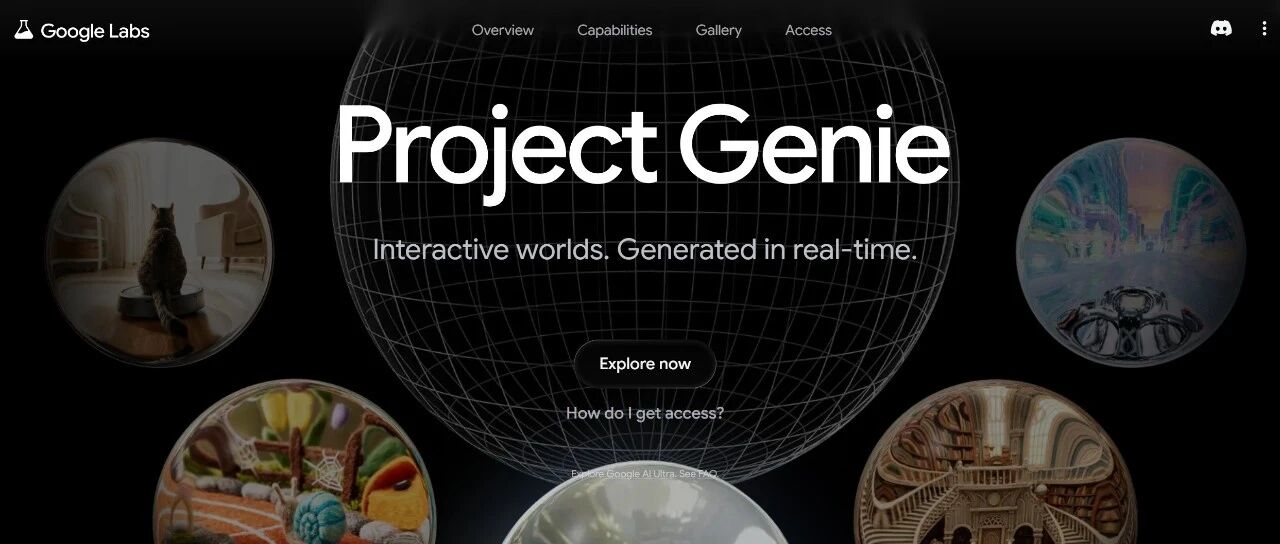
Core Viewpoint - Google has launched "Project Genie," a groundbreaking world model prototype that allows users to create interactive virtual worlds with just a sentence or an image, marking a significant advancement in the field of artificial general intelligence (AGI) [2][12]. Group 1: Project Genie Overview - Project Genie is built on the latest world model, Genie 3, and utilizes a self-regressive generation mechanism to create environments based on user descriptions and actions, rather than pre-recorded content [10][11]. - The quality of the generated virtual worlds is significantly higher than previous research demos, approaching that of mature gaming products, with a resolution of approximately 720p and a frame rate of 20-24 frames per second [7][16]. - The application potential of world models is vast, including areas such as autonomous driving simulations, environmental understanding for embodied intelligence, game development, film production, and interactive education [13][14]. Group 2: User Interaction and Experience - Users can select from predefined templates or fully customize their environments and characters, allowing for a unique virtual world creation experience [20][23]. - The system allows for real-time interaction, with a maximum exploration time of 60 seconds per generated world, and can remember key changes made by users for up to one minute [17][19]. - Despite its innovative features, early user experiences have highlighted limitations, such as low-quality generated worlds, simple structures, and occasional input delays affecting the overall experience [15][32]. Group 3: Future Implications and Concerns - The launch of Project Genie has sparked discussions about its potential impact on the gaming industry, with concerns that it may lead to job losses among game developers [30]. - Critics have pointed out that the generated worlds can lack depth and complexity, with limited interactive elements and occasional inconsistencies in the virtual environment [32][34]. - Google emphasizes that Genie is not a game engine but rather a tool for enhancing creativity and accelerating prototyping, with ongoing improvements expected as user feedback is collected [35][40]. Group 4: Development and Collaboration - The development of Project Genie involved extensive collaboration across various Google teams, highlighting the company's ability to integrate advanced technologies into user-friendly applications [48][51]. - The team acknowledges that while the current model has limitations, it represents a significant step towards creating interactive and immersive virtual experiences [41][46]. - Future iterations of the model aim to expand its capabilities and applications, particularly in entertainment and education, with a focus on personalized learning experiences [55][57].

GPT-5.2破解数论猜想获陶哲轩认证!OpenAI副总裁曝大动作:正改模型核心设计,吊打90%研究生但难出颠覆性发现
AI前线· 2026-01-29 10:07
Core Viewpoint - OpenAI has launched Prism, a new AI research tool powered by GPT-5.2, aimed at enhancing scientific research collaboration and efficiency, now available for free to all ChatGPT personal account users [2][3]. Group 1: OpenAI's Strategic Move - OpenAI's entry into the scientific research field is seen as a response to the growing importance of AI in academia, with the goal of empowering scientists to conduct advanced research by 2030 [2][3]. - The establishment of the OpenAI for Science team indicates a focused effort to explore how large language models (LLMs) can assist researchers and optimize tools for scientific support [2][3]. Group 2: Model Capabilities and Limitations - Kevin Weil, OpenAI's VP, acknowledges that while current models can accelerate research by preventing time wastage on solved problems, they are not yet capable of making groundbreaking discoveries [4][5]. - The latest version, GPT-5.2, has shown significant improvement, achieving a 92% accuracy rate in the GPQA benchmark, surpassing the performance of 90% of graduate students [7][8]. Group 3: Research Applications and Feedback - Researchers have reported that GPT-5 can assist in brainstorming, summarizing papers, and planning experiments, significantly reducing the time needed for data analysis [13][14]. - Feedback from various scientists indicates that while GPT-5 can provide valuable insights, it still makes basic errors, and its role is more about integrating existing knowledge rather than generating entirely new ideas [14][15]. Group 4: Future Directions and Enhancements - OpenAI is working on two main optimizations for GPT-5: reducing confidence in its answers to promote humility and enabling the model to fact-check its outputs [4][19]. - The goal is to create a collaborative workflow where the model can serve as its own verifier, enhancing the reliability of its contributions to scientific research [19][20].