QYResearch

Search documents
中国高压连接器市场现状研究分析与发展前景预测报告
QYResearch· 2025-09-22 04:13
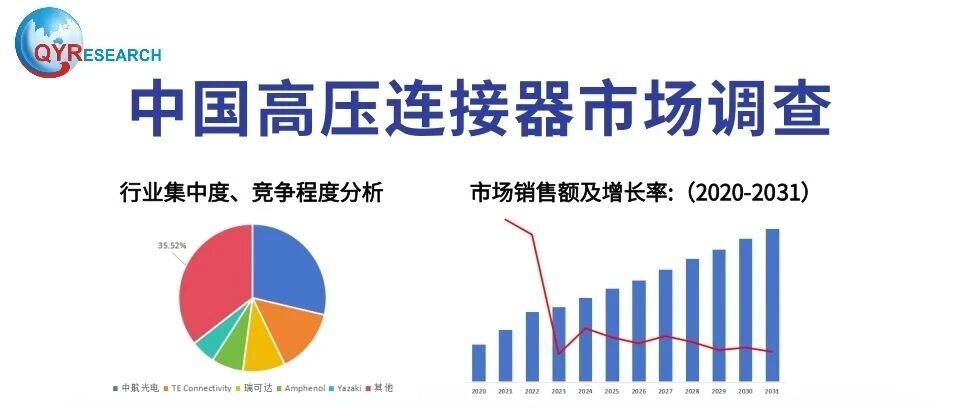
Core Viewpoint - The high-voltage connector market in China is experiencing significant growth, driven by the rapid development of the new energy vehicle (NEV) industry and technological advancements in high-voltage charging systems [5][12]. Market Size and Trends - In 2024, the market size of high-voltage connectors in China reached 19,909.19 million yuan, projected to grow to 36,166.88 million yuan by 2031, with a compound annual growth rate (CAGR) of 8.64% [5]. - The transition to 800V and above high-voltage platforms is becoming mainstream in NEVs, necessitating connectors with higher voltage resistance and safety features [5][7]. Key Manufacturers - Major players in the Chinese high-voltage connector market include AVIC Optoelectronics, TE Connectivity, Amphenol, and others, with the top three companies holding approximately 52.11% market share in 2024 [6]. - The market is primarily dominated by terminal types, with square terminal connectors accounting for 71.52% of the market size in 2024 [6]. Industry Development Trends - The industry is moving towards higher voltage and efficiency, with NEVs transitioning from 400V to 800V platforms, which reduces thermal loss by about 30% and decreases harness weight by approximately 40% [7]. - There is a growing demand for smart and multifunctional integration in connectors, driven by advancements in intelligent driving technologies [7][10]. Barriers to Entry - High technical barriers exist due to the complex nature of high-voltage connectors, which require expertise in materials science, precision manufacturing, and electromagnetic field control [11]. - Certification barriers are significant, as connectors must meet stringent safety standards, making it challenging for new entrants to gain market access [11]. Driving Factors - The rapid growth of the NEV industry in China is a primary driver for the demand for high-voltage connectors, with increasing penetration rates in the automotive sector [12]. - Government policies supporting carbon neutrality and smart manufacturing are further boosting the market for high-voltage connectors [12]. Emerging Applications - Beyond NEVs, high-voltage connectors are increasingly used in 5G and 6G network infrastructure, industrial automation, and smart grid applications, expanding their market demand [13]. Constraints - The high difficulty of research and development in high-voltage connectors poses challenges for domestic companies, particularly against established international competitors [14]. - Market competition is intense, with leading international firms dominating the high-end market, necessitating continuous improvement in technology and market share for domestic players [14].

行业聚焦:全球超薄平嵌冰箱市场头部企业份额调研(附Top10 厂商名单)
QYResearch· 2025-09-22 04:13
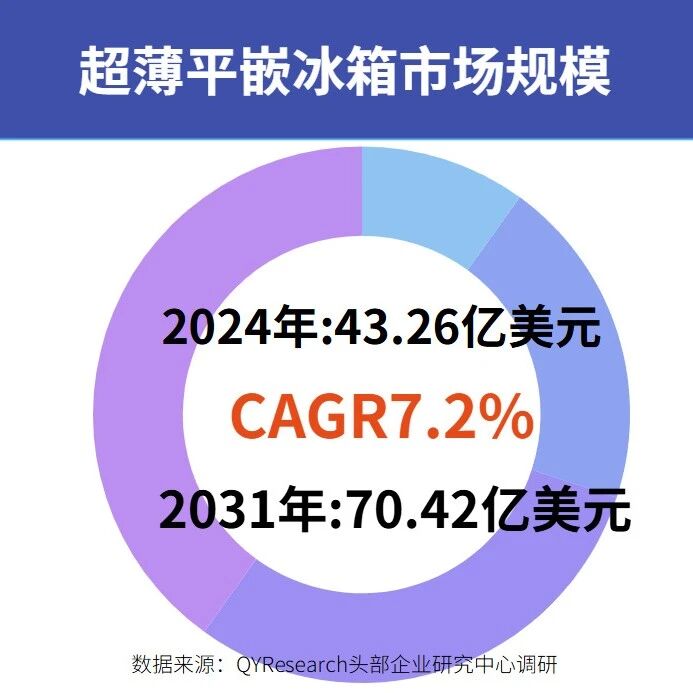
Core Viewpoint - The ultra-thin built-in refrigerator market is experiencing steady growth driven by the increasing demand from modern urban households, luxury apartments, and high-end kitchen renovations that prioritize space efficiency and seamless aesthetics [3]. Market Overview - The global ultra-thin built-in refrigerator market is projected to reach USD 4.326 billion in 2024 and is expected to grow to USD 7.042 billion by 2031, with a compound annual growth rate (CAGR) of 7.2% from 2025 to 2031 [3]. Industry Development Trends - The core trend is seamless integration to meet the needs of modern "integrated kitchens," with designs becoming thinner (typically not exceeding 60 cm in depth) and matching standard cabinet sizes [7]. - There is a growing emphasis on energy efficiency and precise cooling, with manufacturers adopting ultra-thin compressors and optimized evaporator structures to meet top-tier energy standards [7]. - The market is shifting towards emerging regions, driven by the renovation demands of the middle class, particularly in second-tier cities in China and Southeast Asia [7]. Development Opportunities - The booming high-end and renovation market presents significant opportunities, with ultra-thin built-in refrigerators becoming key selling points in luxury real estate and high-end residential projects [8]. - Technological innovations in materials and manufacturing processes are creating differentiation opportunities, such as lightweight composite materials and 3D printing for custom components [8]. - Government policies promoting green appliances are benefiting the industry, with strict energy efficiency standards opening new channels for brands that meet or exceed these requirements [8]. Challenges - High costs and technical barriers exist due to reliance on specialized components and precision manufacturing processes, limiting price flexibility and making market entry difficult for small and medium enterprises [9]. - Intense competition and price pressure from global giants and regional brands are squeezing profit margins, particularly in the mid-range market [9]. - The need for professional on-site measurement and installation complicates the maintenance and repair processes, increasing costs and potential customer complaints [9].
行业聚焦:全球超细沉淀硫酸钡市场头部企业份额调研(附Top10 厂商名单)
QYResearch· 2025-09-22 04:13
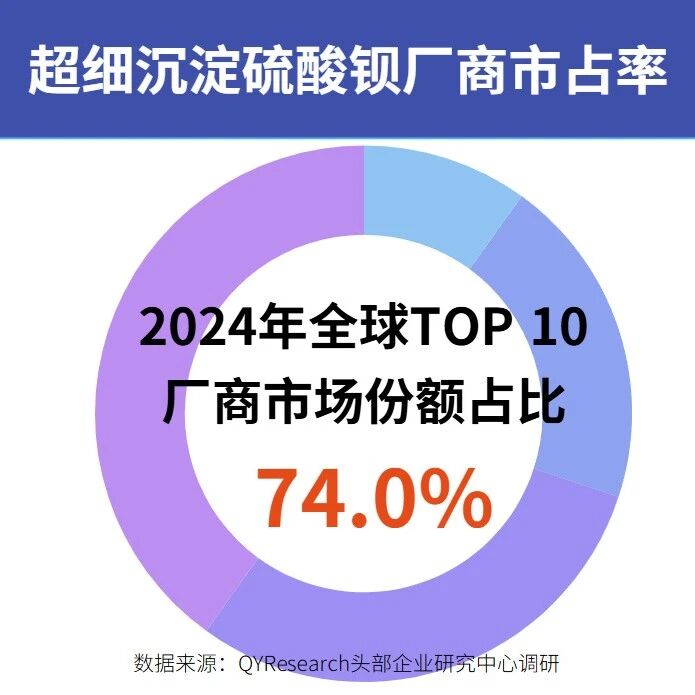
Core Viewpoint - The global market for ultrafine precipitated barium sulfate is projected to reach approximately $45.8 billion by 2031, with a compound annual growth rate (CAGR) of 6.4% over the next few years [1][3]. Market Overview - The top 10 manufacturers of ultrafine precipitated barium sulfate hold about 74.0% of the market share as of 2024, with D50:0.3μm+ being the dominant product type [3][5]. - The primary application market for ultrafine precipitated barium sulfate is in coatings and paints, accounting for approximately 57% of demand [5]. Driving Factors - The industry is transitioning from traditional industrial-grade products to high-tech ultrafine and modified products, with around 20-30 manufacturers in China focusing on technological upgrades to enhance product purity and performance [6][10]. - Ultrafine precipitated barium sulfate is becoming a functional filler alternative to titanium dioxide, allowing downstream industries to reduce costs by substituting 5%-20% of titanium dioxide usage [11]. Obstacles - Rising production costs, including labor, energy, and key raw materials, are squeezing profit margins, making it difficult for companies to pass on these costs to downstream customers [12]. - The existence of various production processes leads to inconsistencies in product standards, complicating the selection process for downstream customers [13]. - Downstream customers face significant verification costs and technical risks when switching to ultrafine precipitated barium sulfate, resulting in inertia and reluctance to change suppliers [14]. Industry Chain Analysis - The upstream supply chain consists of raw material suppliers, including barite, sulfuric acid, and sodium sulfate, with a relatively fragmented market and low overall profit margins [15]. - The midstream production of ultrafine precipitated barium sulfate is concentrated in Asia and Europe, with local manufacturers gaining a competitive edge in the mid-to-low-end product market [15]. - The downstream market primarily serves the coatings and paints, plastics, and rubber industries, with coatings being the largest application area [15].
行业聚焦:全球AI全息助手市场头部企业份额调研(附Top10 厂商名单)
QYResearch· 2025-09-22 04:13
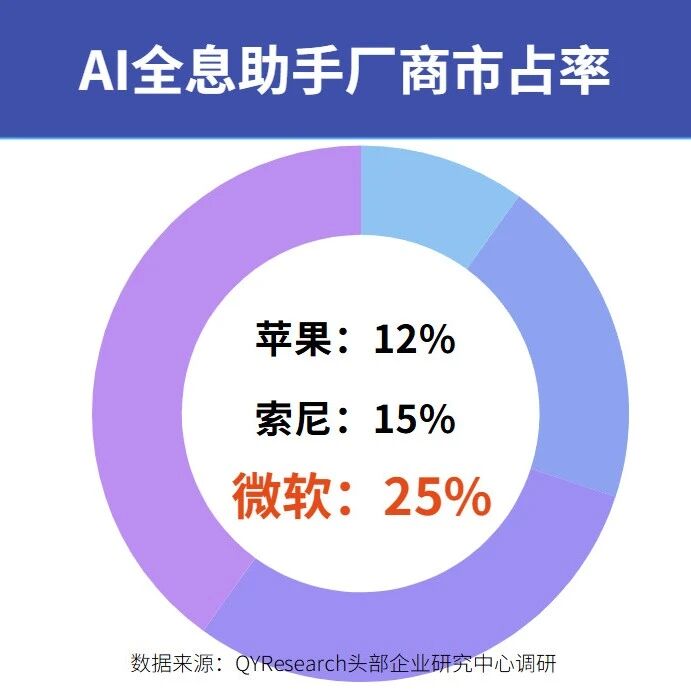
Core Viewpoint - The AI holographic assistant market is rapidly growing, expected to increase from approximately $1.826 billion in 2024 to about $5.697 billion by 2031, with North America leading the market due to mature technology and commercial applications [1]. Market Overview - The global AI holographic assistant market is projected to grow significantly, with North America being the dominant region, followed by Europe and the Asia-Pacific [1][2]. Key Players - Microsoft holds about 25% market share, leading the global market with its HoloLens and enterprise AI assistants. Sony follows with approximately 15%, while Apple is expected to capture around 12% with its Vision Pro. Google and Meta each hold about 10% market share [6]. Industry Chain Analysis - **Upstream**: Semiconductor manufacturers (NVIDIA, AMD), optical and display suppliers (Sony, LG), and sensor and lens manufacturers provide the hardware foundation and core computing capabilities [7]. - **Midstream**: AI algorithm developers, holographic display manufacturers, and system integrators combine hardware and software to realize complete holographic assistant functionalities [8]. - **Downstream**: Applications in healthcare, education, retail, and enterprise collaboration provide end-users with holographic interaction experiences [9]. Development Trends - Future AI holographic assistants will integrate multimodal interaction technologies, including voice recognition, gesture control, eye tracking, and facial expression recognition for a more immersive user experience [10]. - The advancement of edge computing and AI collaboration will enable real-time data processing and AI inference on devices, reducing latency and improving response times [10]. - Customized applications for industries such as healthcare, education, and retail will enhance the development of specialized holographic assistants [10]. - Decreasing hardware costs and the proliferation of wearable devices will drive market expansion towards consumer segments [10]. - AI holographic assistants will merge with cloud computing and virtual collaboration platforms for enhanced remote work and education experiences [10]. Market Opportunities - There is a growing demand for immersive training and remote collaboration due to the acceleration of digital transformation in global enterprises [11]. - High-precision holographic assistants can facilitate surgical simulations, preoperative planning, and remote diagnostics, adding significant value to the healthcare sector [12]. - Holographic displays and virtual try-ons in retail can enhance user experience and increase sales conversion rates [13]. - Holographic interactive teaching can boost student engagement, while research institutions can utilize holographic assistants for complex experimental simulations [14]. - The combination of holographic assistants with AI content generation can lead to new entertainment modes, such as virtual idols and immersive games [15]. Challenges - High technical barriers exist due to the integration of holographic display, AI algorithms, sensors, and interaction technologies [16]. - The high cost of hardware components, such as high-resolution displays and 3D sensors, limits large-scale adoption [16]. - Data privacy and security concerns regarding user behavior and biometric data collection are critical issues [16]. - The lack of standardized protocols and data formats affects interoperability across different manufacturers [16]. - Insufficient high-quality holographic content and application ecosystems restrict user experience and market adoption [16]. - User education costs may hinder the adoption of new technologies as users need to adapt to operating holographic assistants [16]. Entry Barriers - **Technical Barriers**: Developing high-quality AI holographic assistants requires core technological capabilities in AI algorithms, 3D displays, deep sensing, image processing, and real-time rendering [17]. - **Financial Barriers**: High R&D and production costs, including hardware procurement and software development, typically require investments ranging from tens of millions to over a hundred million dollars [17]. - **Market Barriers**: Established brands like Microsoft, Sony, and Apple dominate the market, making it challenging for new entrants to build brand recognition and customer trust [18]. - **Content Ecosystem Barriers**: The long development cycle for high-quality holographic content limits new entrants from providing comprehensive solutions [19]. - **Regulatory Barriers**: Compliance with AI regulations and data protection laws poses challenges for new entrants [20].




全球与中国4G监控摄像头市场现状及未来发展趋势
QYResearch· 2025-09-18 03:51
Core Viewpoint - The 4G surveillance camera market is experiencing rapid growth driven by increasing security awareness and the demand for wireless monitoring solutions, particularly in remote areas and temporary sites. The transition towards 5G and AI integration is expected to further enhance the capabilities and applications of these cameras [3][5][18]. Product Definition and Statistical Scope - 4G surveillance cameras provide a wireless monitoring solution that enables remote video surveillance without the need for wiring, making them ideal for remote areas and temporary sites. The improvement in 4G network coverage and data transmission rates has significantly enhanced image quality and stability [3][5]. Current Industry Analysis - The demand for 4G surveillance cameras is rapidly increasing, particularly in areas lacking fixed network infrastructure. Since 2020, the demand for these cameras in construction, traffic, and emergency management projects has grown by over 23% year-on-year [7]. - The competition among manufacturers is intensifying, with many small and medium-sized companies entering the market. However, the lack of unified technical standards has led to significant differences in product stability and service quality [8]. - The cost of communication modules has been decreasing, contributing to the affordability of 4G surveillance cameras. Prices have dropped from over $100 to below $60, especially for 1080p models, expanding the market to households and small businesses [9]. - Cloud services and platform integration are still in the early stages, with many brands lacking cohesive cloud management solutions. Leading companies are developing integrated solutions that combine AI recognition and cloud storage [10][11]. Development Trends - The industry is shifting from simple image capture to intelligent recognition, with AI capabilities becoming standard in 4G surveillance cameras. This transition is expected to reduce data transmission pressure and backend computing costs [13]. - There is a growing trend towards low-power, solar-powered, and fully wireless solutions, particularly for deployment in remote areas. These innovations are favored in emergency response and temporary enforcement scenarios [14]. - The market is diversifying into consumer-grade and industrial-grade segments, with distinct features and pricing strategies for each [15]. - The integration of 4G surveillance cameras with 5G and AIoT technologies is becoming a long-term development focus, enhancing their functionality and positioning within smart security systems [16]. Global Market Overview - The global 4G surveillance camera market is projected to reach $1.122 billion in sales by 2024 and grow to $2.467 billion by 2031, with a compound annual growth rate (CAGR) of 11.96% from 2025 to 2031 [18]. - China is leading the market, expected to account for 58.63% of global sales in 2024, driven by urbanization and the demand for wireless monitoring in rural areas [20]. - The market is dominated by a few key players, including Hikvision and Dahua, which together hold 63.42% of the market share [20]. Product Type and Application Analysis - In 2024, 4MP (1440p) products will dominate the market with a share of 53.33%, followed by 1080p products at 31.23%. The demand for higher resolution products like 4K is expected to grow as hardware costs decrease [21]. - The public safety sector is the largest application area for 4G surveillance cameras, accounting for 41.26% of the market, followed by commercial and residential security [21]. Regional Market Distribution - North America and Europe represent significant markets, accounting for 15.69% and 14.03% respectively. Emerging markets in Southeast Asia and India are expected to see substantial growth due to rapid urbanization and economic development [22].



行业聚焦:全球预制模块化管架市场头部企业份额调研(附Top10 厂商名单)
QYResearch· 2025-09-18 03:51
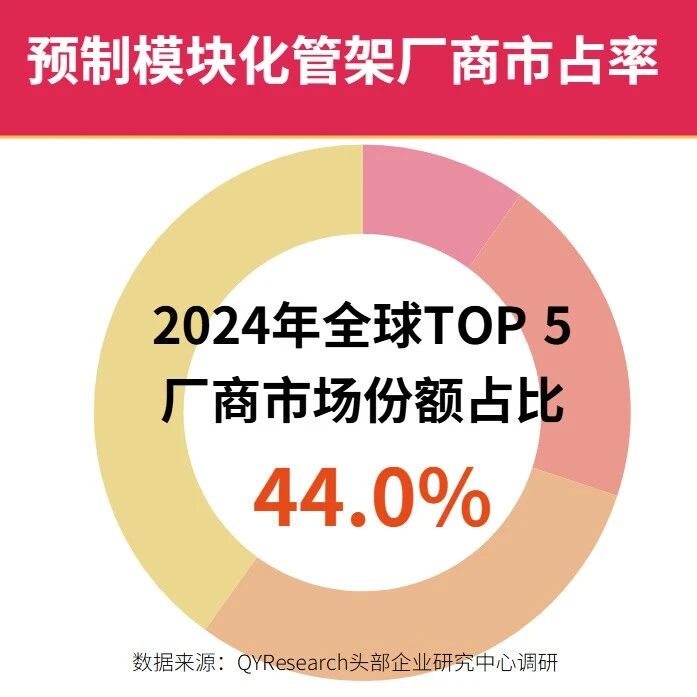
Core Viewpoint - The pre-fabricated modular pipe rack market is expected to reach USD 580 million by 2031, with a compound annual growth rate (CAGR) of 6.4% in the coming years [1]. Market Overview - The global pre-fabricated modular pipe rack market is experiencing significant growth due to its advantages in cost, time, safety, and quality control, making it increasingly favored in large industrial and infrastructure projects [10]. - The market is driven by the global energy transition investments, including liquefied natural gas export terminals, hydrogen plants, combined cycle power plants, and nuclear modernization, which require extensive piping and cable support structures [10]. Key Players - Major manufacturers in the global pre-fabricated modular pipe rack market include Mecwide Group, SafeRack, Pioneer Pipe, Greenberry Industrial, and Roeslein & Associates, with the top five companies holding approximately 44.0% market share in 2024 [7][16]. Market Segmentation - The market is segmented by product type and application, with significant demand arising from sectors such as power, oil and gas, and chemical industries [9][16]. Driving Factors - The increasing demand for modular pipe racks is attributed to their standardized design and rapid deployment capabilities, essential for large infrastructure projects like power plants and refineries [11]. - The integration of advanced digital tools such as Building Information Modeling (BIM), 3D CAD, and digital twins enhances stakeholder coordination, reduces rework, and ensures dimensional accuracy, supporting complex piping layouts [10]. Challenges - The traditional energy sector's expansion, particularly in oil and gas pipelines, necessitates corrosion-resistant and high-strength pipe rack support systems [11]. - The cost reduction associated with pre-fabrication in factories lowers on-site labor, equipment rental, and project duration costs, making it suitable for budget-sensitive projects [11].
行业聚焦:全球电商产品摄影市场头部企业份额调研(附Top10 厂商名单)
QYResearch· 2025-09-18 03:51
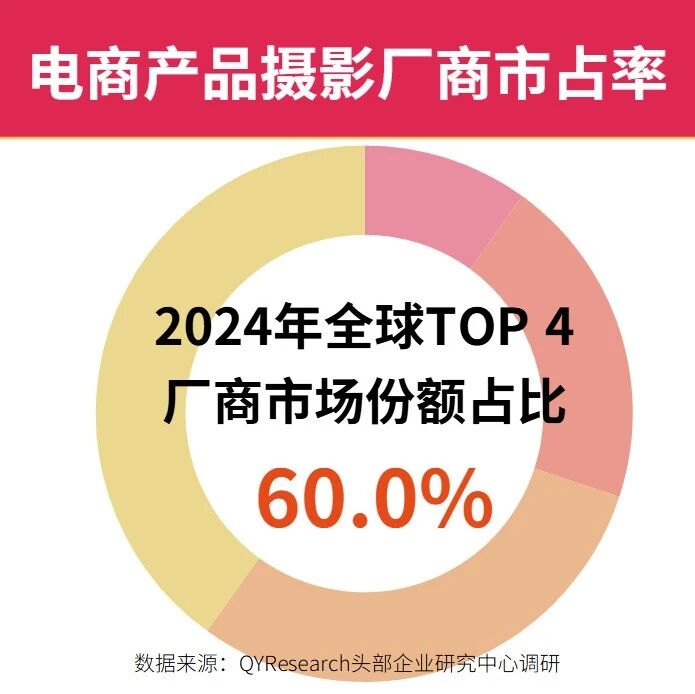
Core Insights - The article discusses the automation of e-commerce product photography through robotics and various photographic techniques to enhance productivity and efficiency in the industry [1] - The global e-commerce product photography market is projected to reach $400 million by 2031, with a compound annual growth rate (CAGR) of 12.4% over the coming years [1] Market Overview - E-commerce product photography is a branch of e-commerce focused on creating high-quality, commercially viable product images for online sales [1] - The market is expected to grow significantly, driven by the increasing demand for visual content as consumers shift from physical stores to online shopping [9] Key Market Players - Major global manufacturers in the e-commerce product photography sector include Orbitvu, Ortery, PhotoRobot, Packshot Creator, and Iconasys [6] - The top four manufacturers are estimated to hold approximately 60.0% of the market share in 2024 [6] Market Drivers - The explosive growth of global e-commerce is a primary driver for the increasing demand for product photography [9] - Modern shoppers expect immersive and aesthetically pleasing visual experiences, with 93% of consumers indicating that visual appearance is a key factor in their purchasing decisions [9] - The affordability of imaging technology, AI tools, and cloud editing platforms has made high-quality product photography more accessible than ever [10] Challenges - High production costs for professional photography pose a significant challenge, especially for startups and small to medium-sized enterprises (SMEs) [11] - The time required for setting up studios, shooting, and post-production can lead to increased costs and delays in product availability [11] - In some cases, automation may not be the best solution for specific products or industries that require artistic photography [11][14]
行业聚焦:全球智能手机摄像头执行器市场头部企业份额调研(附Top10 厂商名单)
QYResearch· 2025-09-18 03:51
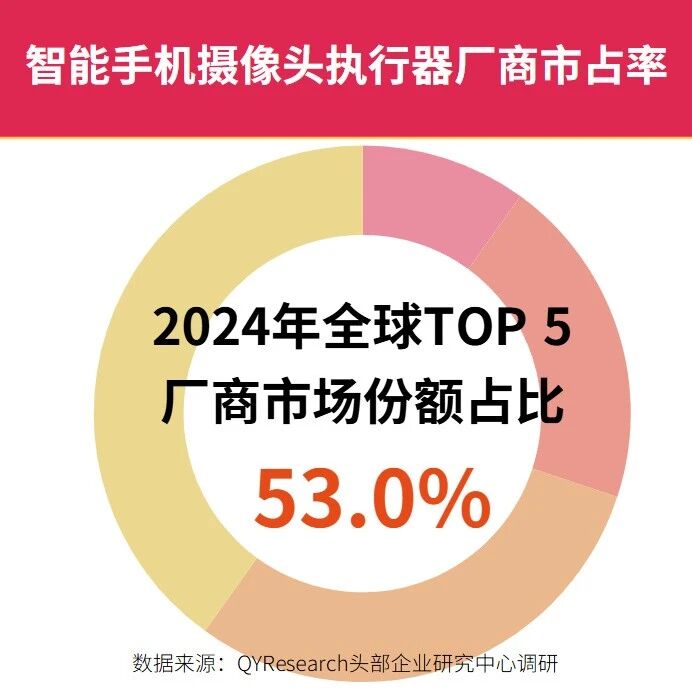
Core Viewpoint - The global smartphone camera actuator market is projected to reach USD 5.41 billion by 2031, with a compound annual growth rate (CAGR) of 3.9% from 2025 to 2031 [1]. Market Overview - The smartphone camera actuator is a micro-precision driving device used for automatic focusing (AF), optical image stabilization (OIS), and zoom functions [1]. - The market is dominated by VCM (Voice Coil Motor), which holds approximately 77.9% of the market share [6][5]. - The mid-range smartphone segment is the largest downstream market, accounting for about 52.6% of the demand [9][6]. Key Players - Major manufacturers in the global smartphone camera actuator market include Alps Alpine, MinebeaMitsumi, TDK, Jahwa Electronics, Samsung Electro-Mechanics, ActRO, and LG Innotek, among others [5][18]. - The top five manufacturers are expected to hold around 53.0% of the market share in 2024 [5]. Market Drivers - The growth of the smartphone camera actuator market is driven by the long-term trend of imaging upgrades in high-end and mid-range smartphones, with increasing reliance on high-performance actuators to ensure image quality [12]. - Consumer demand for mobile imaging experiences, including 4K/8K video recording and night scene optimization, is a significant growth factor [12]. - The rise of new smartphone forms, such as foldable screens and AI computational photography, is also boosting actuator demand [12]. Downstream Demand Trends - There is a growing emphasis on smartphone imaging capabilities among consumers, prompting brands to adopt higher-end camera module solutions [14]. - The penetration of triple-camera setups and beyond is expected to become standard in mid-to-high-end models, increasing the demand for actuators in terms of quantity and performance [14]. - The proliferation of AR/VR, social media short videos, and e-commerce live streaming is expanding the application scenarios for mobile imaging, driving the market towards higher precision, faster response times, and lower energy consumption [14].
行业聚焦:全球生物固氮市场头部企业份额调研(附Top10 厂商名单)
QYResearch· 2025-09-17 04:03
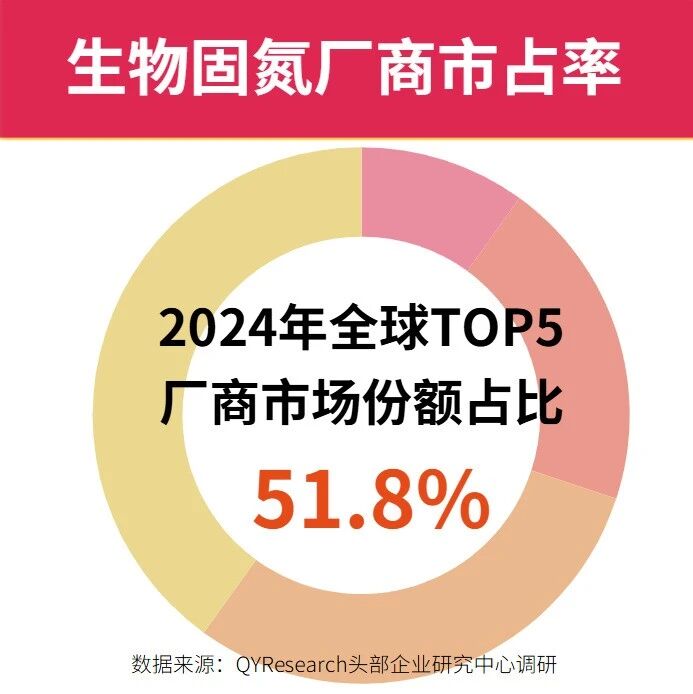
Core Viewpoint - The global bio-nitrogen fixation (BNF) market is projected to reach $0.6 billion by 2031, with a compound annual growth rate (CAGR) of 8.8% in the coming years [3][12]. Market Overview - The bio-nitrogen fixation market is primarily driven by the increasing demand for sustainable agriculture, as farmers shift from synthetic nitrogen fertilizers to bio-fertilizers and microbial nitrogen-fixing agents [12]. - The top five manufacturers in the global bio-nitrogen fixation market hold approximately 51.8% of the market share [6]. Product Segmentation - Self-fixing nitrogen products dominate the market, accounting for about 58.6% of the total market share [8]. - Agriculture is the largest downstream market, representing approximately 57.9% of the demand for bio-nitrogen fixation products [10]. Industry Challenges - A significant constraint in the bio-nitrogen fixation market is its reliance on specific microbial strains and environmental conditions, which can lead to variability in performance and predictability in large-scale agricultural applications [13]. Industry Opportunities - The growing demand for organic food and sustainable agricultural practices presents opportunities for the adoption of bio-nitrogen fixation products, which can help reduce environmental pollution and improve soil health [14]. Value Chain Analysis - The bio-nitrogen fixation industry consists of upstream (microbial strain research and selection), midstream (production and process optimization of bio-nitrogen agents), and downstream (agricultural applications and ecological restoration) segments, driven by both technological advancements and market demand [17].
行业聚焦:全球AI服务器PCB市场头部企业份额调研(附Top10 厂商名单)
QYResearch· 2025-09-17 04:03
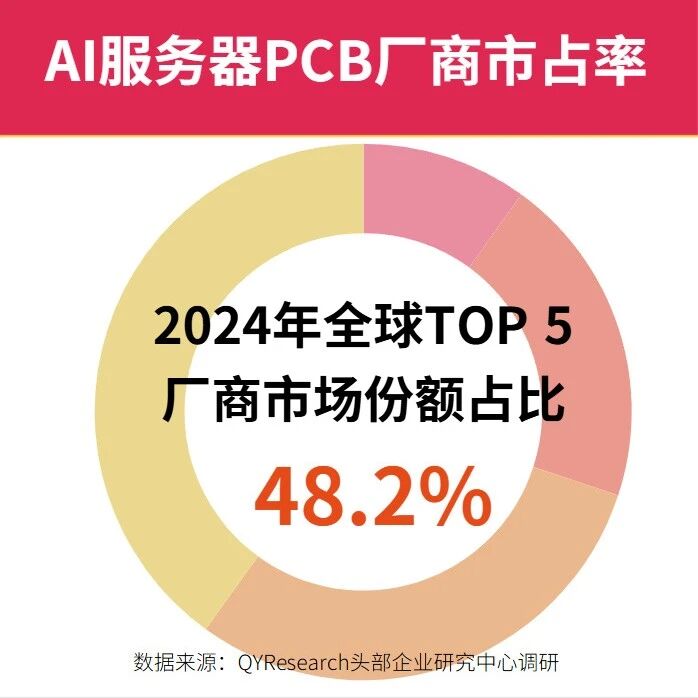
Core Viewpoint - The global AI server PCB market is projected to reach $12.08 billion by 2031, with a compound annual growth rate (CAGR) of 6.7% in the coming years [1]. Market Overview - The AI server PCB market is primarily driven by the surge in demand for AI-optimized servers and the rapid expansion of data centers and cloud infrastructure [11]. - The top five manufacturers hold approximately 48.2% of the market share, with major players including Guanghe Technology, Jianding Technology, and Jinxiang Electronics [6][16]. Product Type Segmentation - Multi-layer PCBs dominate the market, accounting for about 58.4% of the total share [8]. - High-density interconnect (HDI) boards are also significant in the product mix [16]. Application Segmentation - Data centers and cloud computing represent the largest downstream market, capturing approximately 49.5% of the demand for AI server PCBs [9]. Industry Drivers and Challenges - The explosive growth of generative AI and AI-driven workloads is a key driver for unprecedented demand for AI servers [11]. - Challenges include maintaining signal integrity for high-speed interconnections and the high costs associated with materials and manufacturing processes [11]. Industry Opportunities - The need for high-speed interconnections presents opportunities for advanced PCB technologies, such as HDI, SLP, and mSAP, which meet the requirements for high layer counts and low-loss materials [12]. Industry Chain Structure - The industry chain consists of upstream raw materials (e.g., copper-clad laminates, copper foil), midstream PCB manufacturers focusing on high-performance products, and downstream applications in AI server manufacturers and cloud computing [15].