中关村储能产业技术联盟

Search documents
哈密能源集团100MW/400MWh全钒液流储能项目并网运行
中关村储能产业技术联盟· 2025-08-09 01:46
Core Viewpoint - The Hami Energy Group's 100MW/400MWh vanadium flow battery energy storage project has officially commenced operation, marking a significant advancement in long-duration energy storage technology in the region [2][3]. Group 1: Project Overview - The project is the first independent vanadium flow energy storage benchmark project in Hami City, utilizing advanced flow battery technology with a storage capacity of 400,000 kWh, sufficient to meet the daily electricity needs of 80,000 households [2]. - The project was completed in just 148 days, filling a gap in the large-scale application of long-duration energy storage technology in the autonomous region [3]. - The energy storage system operates at a normal temperature and pressure environment of 35-45°C, eliminating flammability and explosion risks, with a cycle life exceeding 20,000 times and a design lifespan of 20-25 years, which is more than three times that of lithium-ion batteries [3]. Group 2: Technical and Economic Impact - The energy station can charge 400,000 kWh and discharge 270,000 kWh daily, significantly enhancing the capacity for renewable energy consumption [3]. - The project is expected to increase the utilization rate of renewable energy generation by approximately 8% annually, equivalent to absorbing an additional 360 million kWh of green electricity and reducing carbon emissions by about 300,000 tons [4]. - The new vanadium flow energy storage station, with a capacity of 400 MWh, acts as a "super battery," effectively stabilizing fluctuations in renewable energy generation and improving the stability and economic efficiency of the "Xinjiang electricity export" channel [3][4]. Group 3: Future Developments - Hami Energy Group is also developing a smart manufacturing base for vanadium flow battery storage equipment in collaboration with Dalian Rongke, which will fill a gap in the group's energy storage business and promote the application of vanadium flow storage technology [2][3]. - Following the addition of the new energy storage project, Hami's total energy storage capacity will exceed 1 million kW, reaching 1.13 million kW [4].


400MWh!特斯拉获西班牙储能大单
中关村储能产业技术联盟· 2025-08-09 01:46
Core Viewpoint - Matrix Renewables, backed by TPG Rise, is advancing its lithium-ion battery storage projects in Spain, focusing on environmental and administrative approvals for two significant facilities in Huesca province, each with a capacity of 100MW [2][3]. Group 1: Project Details - The two facilities will have a total storage capacity of approximately 407.264 MWh, enabling full power discharge for four hours [3]. - Each facility will utilize 104 Tesla Megapack 2 XL container units, organized into 52 dual-module units, supported by 26 transformers, with each inverter providing an AC output power of 0.979MW [3]. - The construction budget for each facility is estimated at around €62 million [3]. Group 2: Company Overview - Matrix Renewables has a diverse portfolio of renewable energy, storage, and green hydrogen projects, totaling 15.5GW across Europe, Latin America, and North America by 2024 [3]. - In Chile, the company has deployed 52 projects with a combined capacity of 412MW [3].


PPT分享 | 2025年储能政策半年观察
中关村储能产业技术联盟· 2025-08-09 01:46
Core Viewpoint - The article discusses the rapid development and transformation of the energy storage industry in China, highlighting the shift from a "strong allocation-driven" model to a "market-driven" approach, driven by new policies and market mechanisms [4][20][68]. Group 1: National Macro Policy Analysis - The introduction of the "Document No. 136" prohibits unreasonable cost allocation to new energy and makes energy storage configuration non-mandatory for new projects, promoting a market-driven demand for energy storage [4][20]. - The establishment of the "1+6" electricity market system is underway, which includes basic rules for electricity market operations and various trading mechanisms [4][23]. - The innovation of market operation models is accelerating, with energy storage being encouraged in applications like virtual power plants and zero-carbon parks under the 2030 carbon peak target [4][29]. Group 2: Various Energy Storage Policies - The participation of energy storage in the spot market is accelerating, with several provinces transitioning to formal operations and conducting trial runs [5][46]. - Significant adjustments in auxiliary service market prices have been observed, with many regions lowering peak compensation prices and transitioning to a single compensation mechanism [5][47]. - The "Document No. 136" has led to the cancellation of mandatory energy storage configurations, resulting in a decline in revenue for independent energy storage stations [5][49]. Group 3: Market Development and Subsidies - Over 200 energy storage subsidy policies have been released across more than 20 provinces, with 19 new policies introduced by mid-2025 [6][56]. - The development of virtual power plants is gaining momentum, with several provinces issuing specific policies and achieving significant dispatch capabilities [6][56]. Group 4: Regional Policy and Economic Analysis - By mid-2025, 26 provinces have set energy storage targets exceeding 86.6 GW, with several provinces already surpassing their "14th Five-Year Plan" installation goals [38]. - The total production value target for energy storage across nearly 30 provinces is over 3 trillion yuan, with some provinces setting additional targets for 2027 [38]. Group 5: Safety Management and International Competition - The national level has emphasized the importance of safety management in energy storage, with multiple policies released to enhance safety standards and regulatory responsibilities [31][72]. - The international market is becoming increasingly competitive, with tariffs and green trade policies affecting the energy storage supply chain [33][72].

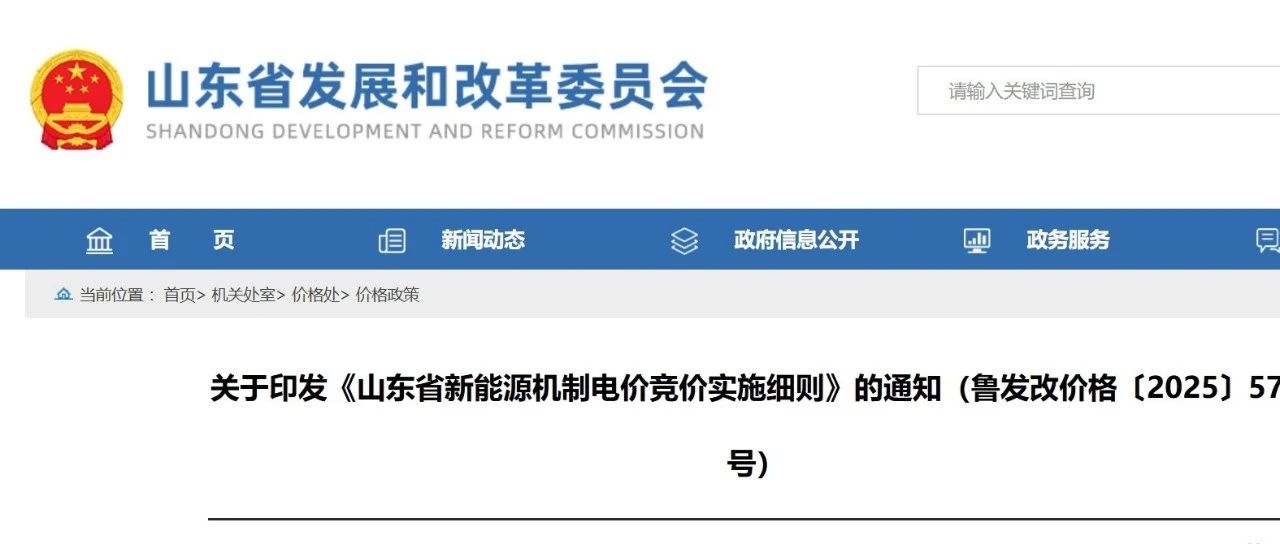
全国首个新能源机制电价竞价细则发布
中关村储能产业技术联盟· 2025-08-08 09:37
Core Viewpoint - The article discusses the implementation details of the new pricing mechanism for renewable energy projects in Shandong Province, focusing on the competitive bidding process for wind and solar power projects set to be operational between June 1 and December 31, 2025 [2][9]. Bidding Parameters - The total scale of the mechanism electricity is set at 9.467 billion kWh, with wind power accounting for 8.173 billion kWh and solar power for 1.294 billion kWh [3]. - The minimum bidding submission rate for both wind and solar projects is established at 125% [4]. - The mechanism electricity ratio is set at 70% for wind projects and 80% for solar projects [5]. - The bidding price limits are defined, with a maximum of 0.35 yuan per kWh for both wind and solar, and a minimum of 0.094 yuan for wind and 0.123 yuan for solar [5]. Execution Period - The execution period for deep-sea wind power is set at 15 years, while other projects will have a 10-year period [6]. Calculation of Mechanism Electricity - Specific formulas for calculating mechanism electricity for various types of projects are provided, including land-based wind, offshore wind, and both centralized and distributed solar power [6][7]. Bidding Subject - The bidding participants must be projects that have been completed and those expected to be operational by December 31 of the following year, which have not previously been included in the mechanism pricing [8][15]. Bidding Organization - The bidding will be organized separately for different technology types, such as solar and deep-sea wind, unless there is a lack of effective competition [8][24]. Bidding Volume - The annual new electricity volume included in the mechanism will be determined based on the completion of renewable energy consumption responsibilities and user affordability [23]. Bidding Process - The bidding process is scheduled to be organized annually in October, with the first bidding taking place in August 2025 [31]. Guarantee Mechanism - Requirements for performance guarantees are specified for both operational and non-operational projects, with specific amounts calculated based on project capacity and bidding parameters [35][36]. Conclusion - The implementation details aim to promote high-quality development of renewable energy in Shandong Province, ensuring a structured and competitive bidding process for future projects [9][39].
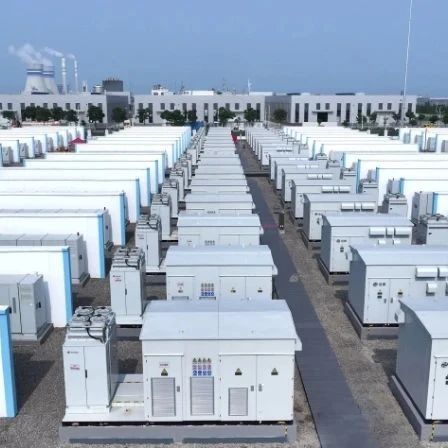
再创江苏第一!远景交易型储能助力射阳电站“收益+保供”双领跑
中关村储能产业技术联盟· 2025-08-08 09:37
Core Viewpoint - The article highlights the significant role of energy storage systems, particularly the Yuanjing Shiyang 250MW/500MWh energy storage station, in supporting the Jiangsu power grid during peak demand periods, showcasing its operational efficiency and revenue generation capabilities [2][5][6]. Group 1: Energy Demand and Supply - On July 7, 2025, Jiangsu's peak electricity load reached 152 million kW, marking a historical high due to extreme temperatures [2]. - The Jiangsu Energy Bureau has intensified the operational support for energy storage stations to meet a maximum output of 60.47 million kW from wind and solar energy [2]. Group 2: Performance of Yuanjing Shiyang Energy Storage Station - The Yuanjing Shiyang energy storage station achieved a monthly discharge of 22.4 million kWh during peak summer demand, leading the province in both revenue and supply capability [2]. - The station's utilization rate reached 99.22%, with revenue improvements of 10-15% compared to similar facilities in the region [5]. Group 3: Technological Innovations and Efficiency - The station employs a fully self-developed smart trading energy storage system, enhancing component reliability and design consistency [5]. - It features AI-driven liquid cooling technology, reducing energy consumption by over 50% and maintaining an annual efficiency above 86% [5]. Group 4: Revenue Generation Strategies - The revenue of energy storage stations is highly dependent on trading strategies, with precise peak period predictions and planned maintenance being crucial for maximizing returns [5]. - The integration of AI in operational and trading strategies has led to a revenue increase of 15-20% compared to traditional methods, generating over 10 million yuan for every 100 MWh over its lifecycle [6]. Group 5: Market Context and Future Outlook - The advancements of the Yuanjing Shiyang station align with Jiangsu's ongoing energy market reforms, aiming for comprehensive provincial electricity spot market coverage by 2025 [6]. - The station's successful operational practices provide valuable insights for the development of the energy storage industry both in Jiangsu and nationwide [6].
5.98GW/19.89GWh!新疆电网储能装机创新高
中关村储能产业技术联盟· 2025-08-08 09:37
Core Viewpoint - The article highlights the significant growth in energy storage capacity in Xinjiang, reaching a record high of 12.41 million kilowatts and 41.21 million kilowatt-hours, marking a year-on-year increase of 93.3% [2] Group 1: Energy Storage Capacity - As of the end of July, Xinjiang's energy storage capacity has reached 12.41 million kilowatts, with an increase of 5.98 million kilowatts in the first seven months of the year [2] - This capacity is equivalent to providing a "giant cooling power source" for 2 million households, supporting continuous air conditioning for approximately 30 hours [2] - The energy storage system has played a crucial role during peak electricity demand periods, releasing 570 million kilowatt-hours in the first half of the year, a year-on-year increase of 890% [2] Group 2: Renewable Energy Integration - The integration of renewable energy sources such as wind and solar power is increasing, presenting challenges to the stability of electricity supply in Xinjiang [2] - The article emphasizes the necessity of advancing new energy storage technologies to ensure reliable electricity supply [2] - Various energy storage technologies are being developed, including photovoltaic + storage, wind + storage, and independent storage systems [2] Group 3: Technological Developments - Xinjiang has achieved a breakthrough in energy storage technology, surpassing 10 million kilowatts in installed capacity, becoming the leader in the western region of China [3] - A diverse range of energy storage technologies is now present, including lithium iron phosphate, all-vanadium flow batteries, flywheels, and supercapacitors [3] Group 4: Future Events - The 10th Western Energy Storage Forum is scheduled to be held in Inner Mongolia on August 19-20, 2025, alongside various related events [3]

欧洲专利诉讼频发!中国光伏/储能企业如何规避风险?免费报名→
中关村储能产业技术联盟· 2025-08-08 09:37
Core Viewpoint - The European renewable energy market is rapidly expanding, driven by government policies and increasing market demand for energy transition solutions [2]. Group 1: Market Dynamics - The European market for renewable energy, including solar, storage, electric vehicles, and wind power, is experiencing accelerated growth due to strong governmental support [2]. - As Chinese renewable energy companies expand internationally, they face intensified patent competition and intellectual property disputes in Europe [3]. Group 2: Legal Challenges - Chinese enterprises frequently encounter patent lawsuits and intellectual property barriers when entering the European market [4]. - The article emphasizes the need for effective offensive and defensive strategies to mitigate potential intellectual property litigation risks and seize market opportunities [4]. Group 3: Expert Insights - The Zhongguancun Energy Storage Industry Technology Alliance has invited attorney Ru Yanfeng from the U.S. firm Finnegan to share insights on patent litigation strategies for Chinese companies in the European renewable energy market [4]. - Ru Yanfeng has extensive experience in patent writing and application in Europe and the U.S., and will focus on the patent landscape, injunctions, and recent developments in European courts and the Unified Patent Court (UPC) [4]. Group 4: Event Details - A seminar is scheduled for August 27, 2025, from 10:00 AM to 12:00 PM, to discuss the patent litigation strategies for Chinese enterprises in the European renewable energy market [5][6]. - The event will be conducted via Tencent Meeting, and participation is encouraged from professionals in the renewable energy sector, research institutions, and power generation groups [7].

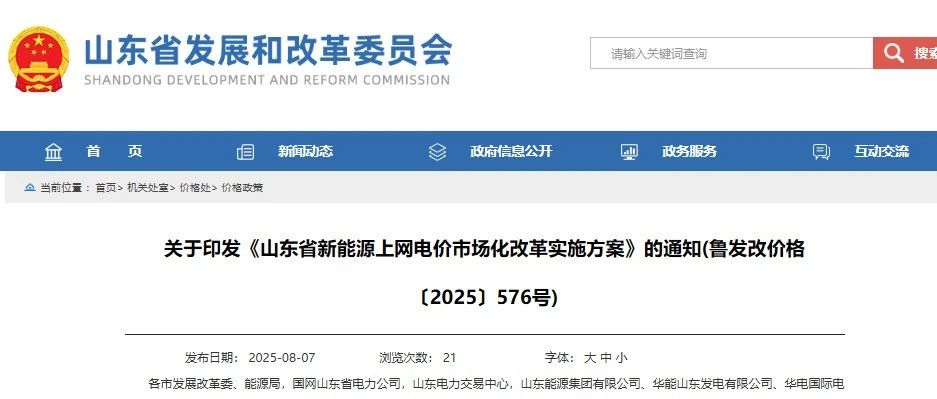
正式发布!山东“136号文”优化发电侧容量补偿机制,存量0.3949元/kWh
中关村储能产业技术联盟· 2025-08-07 10:32
Core Viewpoint - The article discusses the implementation of the "Shandong Province New Energy Grid Price Marketization Reform Implementation Plan," which aims to promote the high-quality development of new energy by allowing all new energy projects to participate in market transactions and have their grid prices determined by market forces [8][20]. Group 1: Price Mechanism - The plan establishes a price mechanism that allows all new energy projects to participate in market transactions, with the grid price determined by market forces [9][20]. - For existing new energy projects that commence operation before June 1, 2025, the mechanism price will be set at a maximum of 0.3949 yuan per kilowatt-hour (including tax) [10][21]. - New energy projects starting after June 1, 2025, will have their mechanism price determined through competitive pricing methods [10][21]. Group 2: Market Trading Mechanism - The plan includes improvements to the long-term market, spot market, and auxiliary service market trading mechanisms, optimizing capacity compensation mechanisms and standardizing cost compensation mechanisms [12][20]. - New energy projects can participate in spot trading, and their prices will be settled based on market prices [13][20]. - The capacity compensation mechanism will provide compensation based on the total demand for electricity, including standby capacity, and will be determined by a capacity supply-demand coefficient [14][36]. Group 3: Risk Prevention Mechanism - The plan emphasizes the establishment of a comprehensive information disclosure system for the electricity market, covering various trading types and time dimensions [16][20]. - A price monitoring system will be implemented to track price fluctuations and ensure the stability of the electricity market [17][20]. - The plan includes a cost investigation system for power generation units to support the stable operation of the electricity market and optimize pricing mechanisms [18][20]. Group 4: Implementation Measures - The Shandong Provincial Development and Reform Commission will develop supporting implementation details and ensure the orderly execution of the plan [19][20]. - The State Grid Shandong Electric Power Company will build a bidding platform and assist in the bidding process for new energy projects [19][20]. - Communication with various market participants will be strengthened to promote policy understanding and consensus [19][20].
安徽独立新型储能:2025年保供支持补贴0.2元/kWh,充放电按现货实时电价结算
中关村储能产业技术联盟· 2025-08-07 09:20
Core Viewpoint - The article discusses the draft notice for the operation and settlement of new energy storage in Anhui Province, aiming to promote high-quality development and establish a robust operational mechanism for new energy storage [2][9]. Group 1: Operational Mechanism - The notice outlines scenarios where new energy storage should be directly called upon by the power dispatching agency, particularly during power supply shortages or grid safety risks [4][5]. - Independent new energy storage will have its charging and discharging prices settled based on real-time market prices at the time of dispatch [5]. Group 2: Financial Support and Subsidies - For the total discharge amount of independent new energy storage in July, August, and December 2025, a subsidy of 0.2 yuan per kilowatt-hour will be provided; for January, July, August, and December 2026, the subsidy will be 0.1 yuan per kilowatt-hour [5][9]. - The financial settlement will follow a "monthly settlement" principle, with subsidies temporarily funded from peak electricity price funds [5]. Group 3: Implementation Timeline - The notice is set to be trialed from a specified date in 2025 until December 31, 2026, with adjustments made according to national and provincial policy changes during the trial period [5].

会议预告 | 第五届储能安全研讨会将于10月在天津召开
中关村储能产业技术联盟· 2025-08-07 09:20
Core Viewpoint - The global energy structure is rapidly transitioning towards clean and low-carbon solutions, with energy storage emerging as a core technology for new power systems, leading to a wave of large-scale development [2] Conference Information - The Fifth Energy Storage Safety Seminar will be held on October 16-17, 2025, in Tianjin, coinciding with the 130th anniversary of Tianjin University and the 60th anniversary of the Tianjin Fire Research Institute [2] - The seminar aims to create a platform for technical exchange, deepen industry-academia-research collaboration, and focus on safety issues to support the sustainable development of the energy storage industry [2] Organizing Structure - The seminar is organized by the Zhongguancun Energy Storage Industry Technology Alliance, the Tianjin Fire Research Institute of the Ministry of Emergency Management, and the National Energy Storage Technology Integration Innovation Platform of Tianjin University [3] Participating Units - The event will invite government departments, universities, research institutes, design institutes, power grid companies, energy storage system integrators, battery manufacturers, insurance institutions, testing and certification agencies, fire enterprises, and safety solution providers [5] Previous Events Review - The Fourth International Energy Storage Safety Seminar was held on August 26, 2024, in Suzhou, with over 500 attendees discussing safety development in the context of large-scale energy storage [8] - The Third Energy Storage Safety Forum took place on August 25, 2023, in Qingdao, focusing on safety evaluation technologies for lithium-ion battery energy storage [8] About the Tianjin Fire Research Institute - Established in 1965, the Tianjin Fire Research Institute specializes in fire rescue scientific research and has become a prominent institution in the field of fire safety technology in China [9] About Tianjin University - Founded in 1895, Tianjin University is the first modern university in China and has made significant contributions to national economic and social development, cultivating over 300,000 high-level talents [11]