量子位

Search documents
AI智能编程新框架,节省一半时间就能“聪明”地写代码丨上海AI Lab&华师大
量子位· 2025-10-17 09:45
Core Insights - The article discusses the limitations of existing large language models in machine learning engineering, particularly in optimizing code and algorithms, despite their ability to generate correct code [1][2] - It introduces AutoMLGen, a new intelligent programming framework that combines general large model inference with domain knowledge to enhance machine learning tasks [3][6] Group 1: AutoMLGen Framework - AutoMLGen features a self-developed Monte Carlo Graph Search (MCGS) that allows for dynamic fusion of branches and nodes, breaking the isolation of traditional Monte Carlo Tree Search (MCTS) [4][13] - The framework consists of three main modules: a domain knowledge base, Monte Carlo Graph Search, and a fine-grained operator library, creating a self-evolving loop from experience guidance to intelligent exploration and solution refinement [10][12] Group 2: Performance Metrics - AutoMLGen achieved a 36.4% average medal rate and an 18.7% gold medal rate on the MLE-Bench leaderboard, using only half the standard computation time (12 hours), showcasing its efficiency and effectiveness [21][22] - In the MLE-Bench-Lite test, AutoMLGen maintained a significant performance advantage over existing methods, demonstrating consistent performance and excellent generalization capabilities [21][23] Group 3: Mechanisms of Improvement - The framework's domain knowledge base allows the intelligent agent to quickly transition from "zero experience" to a more knowledgeable state, enhancing decision-making in model selection and feature processing [11][12] - MCGS promotes continuous evolution of the intelligent agent through mechanisms such as intra-branch evolution, cross-branch reference, and multi-branch aggregation, leading to more efficient and robust search processes [14][16][24] Group 4: Future Prospects - The emergence of AutoMLGen signifies a shift in AI capabilities, enabling autonomous exploration and continuous improvement in complex engineering and algorithm design tasks [31] - The integration of memory and collaboration mechanisms is expected to evolve AutoMLGen into an "AI engineering partner," laying the groundwork for higher levels of intelligence and self-improvement in AI systems [31]


400元遥操95%机械臂!上海交大推出开源项目U-Arm,打造通用、低成本的人机遥操作接口
量子位· 2025-10-17 09:45
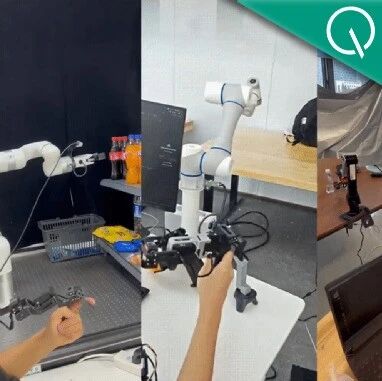
Core Viewpoint - Shanghai Jiao Tong University has launched an open-source remote operation project called U-Arm, which can be built for only 400 CNY and is compatible with 95% of mainstream robotic arms [4][3]. Cost Efficiency and System Design - Traditional remote operation systems are often expensive, with systems like the ALOHA project costing over 20,000 USD [2]. - U-Arm offers a low-cost solution that significantly reduces expenses while maintaining efficiency [4][15]. - The hardware design of U-Arm has been optimized to lower costs and improve maintainability and lifespan [14][15]. Compatibility and Usability - U-Arm is designed to work with three main structural configurations of robotic arms, allowing users to easily plug and play by selecting the appropriate hardware for their specific robotic arm type [8][16]. - The system has been validated on various robotic arms, including XArm6, Dobot CR5, and ARX R5 [10]. Performance and Efficiency - In experiments involving five different grasping tasks, U-Arm demonstrated a 39% reduction in average operation time compared to using a game controller [23]. - While U-Arm showed a decrease in success rates for precision tasks like can stacking, the overall efficiency gains in data collection were deemed acceptable trade-offs [24][23]. Data Quality and Natural Motion - U-Arm is capable of producing more natural motion trajectories compared to traditional controllers, which aids in better model convergence during training [25][27]. - The project has made all hardware and software resources available on GitHub, promoting further development and collaboration in the field [27].
奖金20万,首个视频生成一致性全球挑战赛启动!北大牛津等联手推出,昇腾平台复现额外加分
量子位· 2025-10-17 09:45
Core Viewpoint - The CVM Video Generation Consistency Challenge aims to address the critical issue of consistency in AI video generation, facilitating the transition from fragmented generation to coherent logical world construction [3][4]. Group 1: Challenge Overview - The challenge is organized by multiple prestigious universities, including Peking University, Oxford University, and the National University of Singapore, and will be showcased during AAAI 2026 [1][6]. - The primary goal is to establish an authoritative and standardized evaluation system in the field of video generation, moving from mere technical demonstrations to reliable and usable AI-generated content [6]. Group 2: Key Issues in Video Generation - Current video generation models face significant challenges, including logical breaks, temporal and spatial inconsistencies, and abrupt changes in character appearance, stemming from insufficient mastery of world knowledge consistency, shot consistency, and identity ID consistency [5][4]. Group 3: Competition Structure - The competition features two main tracks: the Consistency Track for algorithm researchers and the Creativity Track open to all creators [10][12]. - The Consistency Track focuses on three dimensions of consistency: world knowledge consistency, shot consistency, and element ID consistency [12]. - The Creativity Track allows participants to use various tools without restrictions on model, theme, or duration, with video submissions evaluated based on social media engagement [13]. Group 4: Prizes and Participation - The main track offers a grand prize of 200,000 RMB for the champion, while the creativity track has a 10,000 RMB prize for the winner [10][13]. - Participants must submit videos for the preliminary round and model weights and code for the finals, with additional points awarded for successful reproduction on Huawei's Ascend platform [13]. Group 5: Timeline and Registration - Registration deadline is November 15, 2025, with the preliminary round on December 25, 2025, and finals on January 12, 2026 [14].

人工智能年度榜单火热报名中!五大奖项,寻找AI+时代的先锋力量
量子位· 2025-10-17 09:45
组委会 发自 凹非寺 量子位|公众号 QbitAI 为了让更多从业者感受智能浪潮的跃迁,也为了给予更多同行同路人掌声与鼓舞,我们将正式启动 「2025人工智能年度榜单」评选报名 。 这是量子位人工智能年度榜单的 第8年 。八年来,我们见证了技术的突破与落地,产业的融合与重塑,也见证了一批又一批推动时代前行的 企业、人物与产品。 让我们共同见证年度之星,点亮未来的方向。 企业榜 产品榜 人物榜 2025 人工智能年度 焦点人物 详细评选标准及报名方式如下。 在人工智能重新定义一切的时代里,智能技术已不再是单一工具,而是产业与社会协同进化的驱动力。我们期待通过这场年度评选,去发现并 致敬那些真正引领变革、开拓边界的探索者与实践者。 本次评选将从 企业 、 产品 、 人物 三大维度,设立五类奖项。欢迎企业踊跃报名! 评选标准 : 1、注册地在中国,或主营业务主要面向中国市场; 2、主营业务属于人工智能及相关产业,或已将人工智能广泛应用于主营业务,并在细分领域居于行业领先地位; 3、具备成熟的产品或服务,已获得实际客户应用及市场认可; 4、近一年在技术创新、产品落地、市场拓展或商业模式上取得显著突破。 1、 业务能力 ...

全球OCR最强模型仅0.9B!百度文心衍生模型刚刚横扫4项SOTA
量子位· 2025-10-17 09:45
Core Insights - The article highlights the launch of Baidu's new self-developed multi-modal document parsing model, PaddleOCR-VL, which achieved a score of 92.6 on the OmniDocBench V1.5 leaderboard, ranking first globally in comprehensive performance [1][11]. Model Performance - PaddleOCR-VL, with a parameter count of 0.9 billion, excels in four core capabilities: text recognition, formula recognition, table understanding, and reading order, achieving state-of-the-art (SOTA) results in all dimensions [3][12][13]. - The model supports 109 languages and maintains high recognition accuracy even in complex formats, breaking traditional OCR limitations [14][16]. Technical Specifications - The model is designed for complex document structure parsing, capable of understanding logical structures, table relationships, and mathematical expressions in documents [5][6]. - PaddleOCR-VL utilizes a two-stage architecture for document layout analysis and fine-grained recognition, enhancing stability and efficiency in handling complex layouts [36][37]. Industry Impact - PaddleOCR-VL is positioned as a critical tool in various industries, including finance, education, and public services, facilitating digital transformation and process automation [51][52]. - The model's capabilities allow it to serve as a "document work assistant," integrating seamlessly into workflows to improve efficiency and reduce costs [52][56]. Competitive Landscape - The model's performance challenges the notion that only large models can achieve high effectiveness, demonstrating that a well-structured, focused model can outperform larger counterparts in practical applications [48][49]. - PaddleOCR-VL represents a significant advancement in Baidu's multi-modal intelligence strategy, marking a milestone in the global document parsing landscape [57][58].


阿里云神秘团队曝光:AI时代的新蓝军
量子位· 2025-10-17 09:45
金磊 发自 凹非寺 量子位 | 公众号 QbitAI 想象这样一个场景: 一个AI智能体在帮你处理邮件,一封看似正常的邮件里,却用一张图片的伪装暗藏指令。AI在读取图片时被悄然感染,之后它发给其他AI或人 类的所有信息里,都可能携带上这个病毒,导致更大范围的感染和信息泄露。 这不是科幻电影,而是正在发生的现实—— 错误与攻击 ,正在从"人为传播"跨越到 "智能体之间的自我扩散" ,攻击模式正在从以人为中心 的传播,转向以AI为载体的自主传播。 因为已经有研究人员成功创造出第一代AI蠕虫(Morris II),实现了AI之间的传染。 这种攻击不再是传统意义上攻破服务器、盗取数据,而是通过语言、图片等媒介,污染和操纵AI的"思维",让它从一个高效的助手,变成一个 可以被远程操控的提线木偶。 这正是大模型时代最独特、也最危险的挑战。 当AI接入企业的千万个工作流,打破了过去封闭系统的安全边界时,它的 "天真" 就成了最致命的弱点。 一个代码漏洞可能让系统宕机,但一个思维漏洞,则可能让一个无所不知的AI,变成传播虚假信息、输出偏见仇恨、甚至泄露核心机密的工 具。 传统的安全法则在这里已然失灵。 传统蓝军习惯于寻找代码 ...


小米最新大模型成果!罗福莉现身了
量子位· 2025-10-17 04:58
Core Viewpoint - Xiaomi's latest AI research paper, co-authored with Peking University, focuses on improving stability and efficiency in large model reinforcement learning using a new method called Rollout Routing Replay (R3) [2][7][49]. Group 1: Research Background - The collaboration between Xiaomi's AI team and Peking University has led to significant advancements in AI, particularly in the area of reinforcement learning [2][4]. - The paper addresses challenges in the Mixture of Experts (MoE) architecture, which can lead to instability during training due to routing mechanisms [8][25]. Group 2: Methodology - The proposed R3 method aims to stabilize the training process by locking the routing distribution during inference and replaying it during training, ensuring consistency between the two phases [28][30]. - Additionally, the research introduces a routing mask to cache routing decisions alongside context, enhancing computational efficiency [34][35]. Group 3: Experimental Results - Experiments conducted on the Qwen3-30B-A3B model show that R3 consistently outperforms other methods across various metrics, indicating improved overall performance [40][41]. - The stability of training has significantly improved, with R3 maintaining a smoother performance curve compared to traditional methods [43][46]. Group 4: Authors and Contributions - The first author, Wenhan Ma, is a researcher at Xiaomi's LLM-Core team, while the two corresponding authors are Luo Fuli and Professor Sui Zhifang from Peking University, both of whom have notable contributions to the field [51][56][61].


技能英伟达桌面超算,加入苹果Mac Studio快爆了:推理速度飙升至277%
量子位· 2025-10-17 04:58
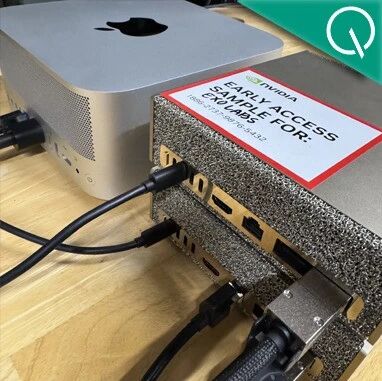
Core Viewpoint - EXO Labs has developed a new framework that enhances large model inference speed by combining NVIDIA's DGX Spark with Apple's M3 Ultra, achieving a speedup of up to 2.77 times for model deployment [1][5][18]. Group 1: Technology and Implementation - The framework utilizes a PD (Prefill and Decode) separation approach, where DGX Spark handles the Prefill phase due to its high computational power, while M3 Ultra manages the Decode phase, benefiting from its high memory bandwidth [11][18]. - The Prefill phase's computational demand grows quadratically with prompt length, while the Decode phase is primarily limited by memory bandwidth, making the separation of tasks advantageous [8][11]. - EXO Labs employs a streaming transmission method for KV cache, allowing for overlapping computation and data transfer between the two devices, which minimizes communication costs [16][18]. Group 2: Performance Metrics - The combination of DGX Spark and M3 Ultra results in significant performance improvements: Prefill speed increases to 3.79 times that of M3 Ultra alone, and Decode speed improves to 3.37 times that of DGX Spark [18][19]. - The overall performance metrics show that the combined system reduces total processing time to 2.32 seconds, achieving a speedup of 2.8 times compared to using M3 Ultra alone [19]. Group 3: Industry Context - NVIDIA is also exploring similar PD separation techniques with its upcoming Rubin CPX platform, which will utilize a compute-intensive processor for Prefill and a high-bandwidth memory chip for Decode [20]. - The recent delivery of DGX Spark systems to notable figures in the tech industry indicates a growing interest and investment in advanced AI inference technologies [22]. - Apple's latest M5 chip shows improvements in AI performance, but comparisons suggest that M3 Ultra may hold more value in the current landscape of AI hardware [26][30].


AGI今天起有了量化标准!Bengio牵头定义,当前进度条58%
量子位· 2025-10-17 04:58
Core Viewpoint - The article presents a measurable definition of Artificial General Intelligence (AGI) as an AI that can match or exceed the cognitive versatility and proficiency of a well-educated adult, emphasizing the need for comprehensive evaluation across multiple cognitive domains [2][4]. Evaluation Framework - A quantitative method was designed to assess the distance of current AI from AGI, referencing the Cattell-Horn-Carroll (CHC) theory, which breaks down human cognitive abilities into ten independent yet interconnected core cognitive domains [6][8]. - The assessment includes a question bank of over 500 items, with a scoring system where a total score of 100 indicates AGI level, and higher scores reflect closer proximity to AGI [8][9]. Current AI Performance - The evaluation revealed that while AI has made significant progress, it still falls short of AGI, with GPT-4 scoring only 27 and GPT-5 scoring 58, indicating a 115% increase over two years but still below the passing line of 100 [10][11][13]. - Current AI shows strong performance in knowledge, reading and writing, and mathematics, with GPT-5 scoring above 8 in these areas, reflecting its strengths in knowledge retention and symbolic processing [18][21][22]. Cognitive Shortcomings - Significant deficiencies were identified in foundational cognitive areas such as perception, memory, and reasoning, which cannot be compensated for by merely increasing data scale [23][30]. - In the visual and auditory domains, both GPT-4 and GPT-5 performed poorly, with GPT-4 scoring 0 and GPT-5 only achieving minimal recognition capabilities [24][26]. - Long-term memory storage and retrieval were also highlighted as critical weaknesses, with both models unable to demonstrate effective long-term information retention [27][29]. Misleading Capabilities - Some AI models appear to possess multi-tasking abilities but are essentially masking their shortcomings through technical means, such as expanding context windows, which do not equate to true long-term memory [30][32]. - The evaluation framework specifically excludes external tools, focusing solely on the intrinsic cognitive capabilities of AI systems, thereby revealing the limitations of models that rely on external knowledge sources [33][34].

首款国产eSIM手机来了
量子位· 2025-10-17 01:04
Core Viewpoint - OPPO has launched the Find X9 series, featuring the first domestic eSIM smartphone and advanced camera capabilities, including 8K photography and AI functionalities [1][3][25]. Group 1: Product Features - The Find X9 series includes the Pro version, which is the first to support eSIM technology among domestic smartphones [1]. - It is equipped with a 200-megapixel camera and features the world's first 8K full-focus ultra-high-definition photography and 4K Live photo capabilities [3][26]. - The Pro version introduces the Hasselblad 200-megapixel telephoto lens, becoming the first mobile imaging lens to receive Hasselblad optical certification [5][37]. Group 2: AI Functionalities - The Find X9 series incorporates dual physical AI buttons for quick access to AI memory and real-time dialogue features [6][10]. - The "One-Click AI Flash Memory" function allows users to capture key information easily, with upgrades in ColorOS 16 enhancing this capability [12][13]. - The "One-Click Question Screen" feature has evolved into "Real-Scene AI Dialogue," enabling users to interact with the AI by pointing at objects in real-time [23]. Group 3: Pricing and Availability - The standard version of the Find X9 starts at 4399 yuan, while the Pro version starts at 5299 yuan, with sales commencing on the 22nd [6][8]. - The pricing positions the Find X9 competitively against other flagship models from brands like Apple and Xiaomi [42][43].