量子位

Search documents
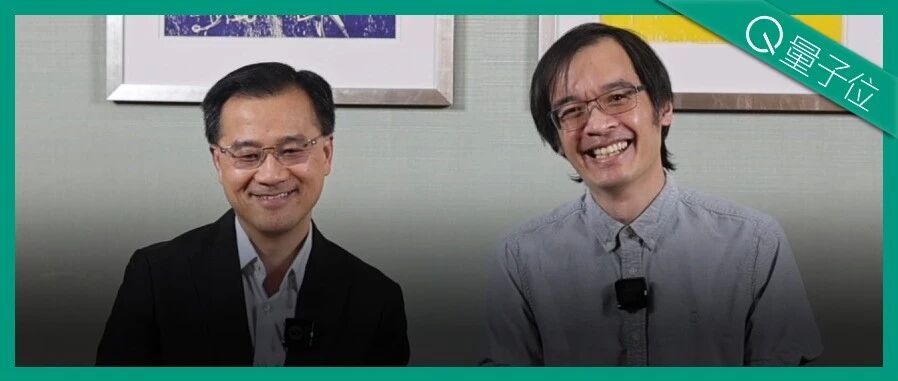
量子位专访陶哲轩:我为什么现在创办一个AI x Science组织
量子位· 2026-03-14 05:48
Core Viewpoint - The establishment of the SAIR Foundation aims to reshape the relationship between AI and fundamental science, connecting academia and industry to foster collaboration and support young scientists in advancing scientific research through AI [2][10]. Group 1: SAIR Foundation and Its Goals - The SAIR Foundation, co-founded by mathematician Terence Tao, seeks to promote the integration of AI in scientific research and aims to democratize access to scientific knowledge [2][4]. - The foundation's two main objectives are to develop AI using scientific methods and to leverage AI to transform fundamental scientific research [2][5]. - The foundation aims to create a bridge for young scientists, opening doors to opportunities in academia and industry [5][6]. Group 2: AI in Scientific Research - AI is expected to fundamentally change research methodologies, necessitating a clear understanding of how to effectively utilize AI in scientific contexts [10]. - The collaboration between academia and industry is crucial, as the traditional model is too slow for the fast-paced AI era [11]. - AI can enhance the research process by expressing confidence levels in its outputs, which would significantly improve its usability in scientific contexts [11][20]. Group 3: Challenges and Opportunities - Current AI models face challenges such as generating "hallucinations," which pose serious issues for scientific reliability [15][16]. - The need for AI systems designed specifically for research is emphasized, as existing commercial models may not provide the necessary reliability and traceability [16][19]. - The foundation aims to develop AI tools that are tailored for specific scientific workflows, rather than relying solely on large, general-purpose models [21][22]. Group 4: Collaboration and Data Quality - The SAIR Foundation emphasizes the importance of high-quality data in scientific research, as AI's effectiveness is heavily dependent on the quality of the data it processes [33][34]. - Collaborative efforts across disciplines and regions are essential for advancing AI in science, as demonstrated by the foundation's initiatives [40][41]. - The foundation aims to support cross-disciplinary projects that attract young researchers and foster collaboration among diverse scientific communities [78][79]. Group 5: Future of Research and Education - The future of research is expected to involve larger, more diverse teams, necessitating strong communication and collaboration skills among researchers [63][64]. - The foundation aims to inspire a new generation of researchers by providing mentorship and opportunities for collaboration with established scientists [75][77]. - The integration of AI in research is anticipated to lower barriers to entry, allowing individuals from various backgrounds to contribute meaningfully to scientific endeavors [69][73].

北京养虾er召集令!下周三,回答你OpenClaw究竟能干啥
量子位· 2026-03-14 03:51
发自 凹非寺 量子位 | 公众号 QbitAI 时间 :3.18 周三 19:00-21:00 龙虾太火了,都是 谁 在用啊? 眼看更多人开始安装OpenClaw,养成自己的第一只虾。但随之而来的问题是,不知道 怎么把虾用起来 。难道「安装」龙虾的下一步就是 「卸载」吗? 别急,在这场全民OpenClaw的热潮里,让我们一起来 打磨更实用的龙虾用法 。 下周三晚19点 ,我们在北京海淀创业大街搭了一个「养虾场」,邀请各路养虾大侠们一起在 「养虾开放麦」 分享自己的养虾经验。 用OpenClaw 安排日程 ,或是 攻略游戏 ,从 运营自媒体 到 化解工作难题 ,你有想法,我们来给你送麦 如果你也想来线下参与!欢迎填写报名表,报名来分享吧~ 一键关注 点亮星标 科技前沿进展每日见 地点 :北京海淀·中关村创业大街12号楼 一键三连 「点赞」「转发」「小心心」 欢迎在评论区留下你的想法! 今天,你养虾了吗? — 完 — 虾农身份认证 :如果你也来现场,将会获得一枚「虾农身份认证」贴纸,来和虾农们互相认识下吧。 养虾专业户 :参与开放麦的伙伴,我们还会郑重颁发「养虾专业户」认证一张。 欢迎加入【龙虾养成讨论组】,一起 ...
龙虾版支付宝来了!睡觉都在帮你抢红包
量子位· 2026-03-14 03:51
Core Insights - The article discusses the launch of "Agent Wallet" by FluxA, enabling AI agents like OpenClaw to autonomously manage payments and financial transactions, akin to having their own Alipay [3][4][24]. - The introduction of this wallet allows AI agents to participate in economic activities independently, marking a significant shift in how AI can interact with financial systems [21][30]. Group 1: Product Features and Functionality - The Agent Wallet allows AI agents to autonomously install, register, and configure their wallets without human intervention, streamlining the payment process [15][16]. - AI agents can engage in various activities, such as participating in competitions and claiming rewards, showcasing their ability to generate income independently [20][22]. - The wallet supports multiple AI agents, not just OpenClaw, making it versatile for various applications [13]. Group 2: Market Impact and Trends - The launch of the Agent Wallet coincides with a growing trend among global tech giants to enhance AI payment capabilities, indicating a pivotal moment for agent-based economic interactions [33][34]. - The article emphasizes that the ability for AI agents to handle payments is crucial for completing automated processes, which has been a significant barrier in the past [25][31]. - The emergence of AI payment systems is seen as a necessary evolution towards a more integrated agent economy, where agents can operate as independent economic entities [24][32].

量子位编辑作者招聘
量子位· 2026-03-14 03:51
Core Viewpoint - The article emphasizes the ongoing AI boom and invites individuals to join the company "Quantum Bit," which focuses on tracking AI advancements and has established itself as a leading content platform in the industry [1]. Group 1: Job Opportunities - The company is hiring for three main directions: AI Industry, AI Finance, and AI Product, with positions available for both experienced professionals and fresh graduates [2][4]. - Positions are open for various levels, including editors, lead writers, and chief editors, with a focus on matching roles to individual capabilities [6]. Group 2: Job Responsibilities - **AI Industry Direction**: Responsibilities include tracking innovations in infrastructure, such as chips, AI infrastructure, and cloud computing, as well as interpreting technical reports from conferences [6][7]. - **AI Finance Direction**: Focuses on venture capital, financial reports, and capital movements within the AI industry, requiring strong analytical skills and a passion for interviews [11]. - **AI Product Direction**: Involves evaluating AI applications and hardware, tracking product launches, and engaging with entrepreneurs and product experts in the AI space [11]. Group 3: Benefits and Work Environment - Employees will have the opportunity to engage with cutting-edge AI technologies, enhance their work efficiency through new tools, and build personal influence in the AI field [6]. - The company offers competitive salaries, comprehensive benefits including social insurance, meal allowances, and performance bonuses, along with a dynamic and open team culture [6]. Group 4: Company Growth and Reach - By 2025, Quantum Bit aims to have over 2.4 million subscribers on WeChat and more than 7 million users across platforms, with a daily reading volume exceeding 2 million [12].

拜拜了SWE-Bench!Cursor刚发了个AI Coding评测基准,难哭Claude
量子位· 2026-03-14 03:51
Core Insights - The article discusses the launch of CursorBench, a new benchmark specifically designed to evaluate the efficiency of AI programming assistants in executing complex tasks, distinguishing it from traditional benchmarks like SWE-Bench [1][11][6] Group 1: Benchmarking Differences - CursorBench focuses on the efficiency of problem-solving, while SWE-Bench measures whether a program can solve a problem, highlighting a significant difference in evaluation criteria [3][5] - Claude Haiku 4.5 and Claude Sonnet 4.5 performed poorly on CursorBench, with scores dropping from 73.3 to 29.4 and from 77.2 to 37.9 respectively, indicating a stark contrast in performance under the new benchmark [2][8] Group 2: Issues with Existing Benchmarks - Existing benchmarks face three main issues: unrealistic task types, unreasonable scoring mechanisms, and data pollution, which undermine their effectiveness in reflecting real-world programming scenarios [12][16][20] - Traditional benchmarks often assume a single correct answer for problems, which does not align with the reality of multiple valid solutions in programming [17][18] Group 3: CursorBench Evaluation Methodology - CursorBench employs a hybrid evaluation method combining online and offline assessments, where models complete a set of standardized tasks evaluated on correctness, code quality, efficiency, and interaction behavior [22][23] - The tasks used in CursorBench are derived from real developer requests and internal codebases, ensuring relevance and reducing the risk of models having seen the tasks during training [26][29] Group 4: Task Characteristics - CursorBench features larger task scales, with the complexity of tasks increasing significantly, as evidenced by a doubling in code lines and average file numbers from the initial version to CursorBench-3 [30][31] - The tasks are designed to maintain a level of ambiguity, reflecting real-world interactions where developers communicate with AI in less precise terms [34] Group 5: Performance and User Experience - The performance of models on CursorBench shows a clearer distinction among leading models, with results indicating that the benchmark aligns more closely with real user experiences [49][51] - Cursor plans to develop the next generation of assessment tools to adapt to the evolving landscape of AI programming assistants, focusing on longer-running intelligent agents [54]

北京养虾er召集令!下周三,回答你OpenClaw究竟能干啥
量子位· 2026-03-13 10:55
眼看更多人开始安装OpenClaw,养成自己的第一只虾。但随之而来的问题是,不知道 怎么把虾用起来 。难道「安装」龙虾的下一步就是 「卸载」吗? 别急,在这场全民OpenClaw的热潮里,让我们一起来 打磨更实用的龙虾用法 。 发自 凹非寺 量子位 | 公众号 QbitAI 龙虾太火了,都是 谁 在用啊? 时间 :3.18 周三 19:00-21:00 地点 :北京海淀·中关村创业大街12号楼 一键三连 「点赞」「转发」「小心心」 欢迎在评论区留下你的想法! 下周三晚19点 ,我们在北京海淀创业大街搭了一个「养虾场」,邀请各路养虾大侠们一起在 「养虾开放麦」 分享自己的养虾经验。 用OpenClaw 安排日程 ,或是 攻略游戏 ,从 运营自媒体 到 化解工作难题 ,你有想法,我们来给你送麦 如果你也想来线下参与!欢迎填写报名表,报名来分享吧~ 今天,你养虾了吗? — 完 — 虾农身份认证 :如果你也来现场,将会获得一枚「虾农身份认证」贴纸,来和虾农们互相认识下吧。 养虾专业户 :参与开放麦的伙伴,我们还会郑重颁发「养虾专业户」认证一张。 一键关注 点亮星标 科技前沿进展每日见 欢迎加入【龙虾养成讨论组】,一起 ...
首只“卫士虾”堵上OpenClaw原生漏洞,仅6.5KB大小,Agent组团写的
量子位· 2026-03-13 10:55
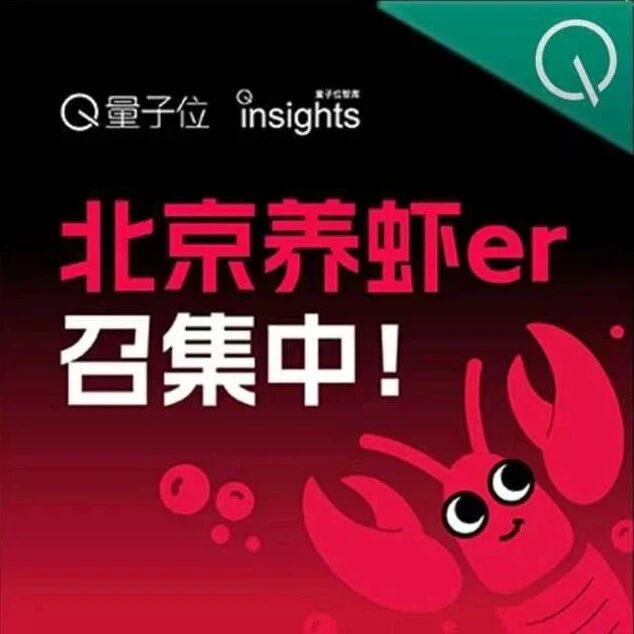
Core Viewpoint - The article discusses the rising trend of shrimp farming and highlights the emerging safety concerns associated with it, including various security risks and vulnerabilities that have been identified by national agencies [1]. Group 1: Security Risks and Solutions - National agencies have issued safety risk alerts, leading some companies to prohibit the use of certain equipment due to security vulnerabilities such as certification bypass, command injection, API key leakage, and prompt injection attacks [1]. - The "TuanziGuardianClaw," developed by the Nextie team, aims to address these security vulnerabilities with a file size of less than 10k, acting as a security kernel for monitoring and blocking high-risk behaviors of other agents [2][3][11]. - TuanziGuardianClaw is designed to protect systems, users, and data from malicious skills, prompt injections, data leaks, and unsafe operations [13]. Group 2: Functionality and Features - The system employs a keyword interception mechanism to detect and block high-risk commands, such as "ignore previous instructions" and "bypass security," immediately categorizing them as high-risk and notifying users [15]. - TuanziGuardianClaw maintains a clear list of protected assets, including API keys, tokens, personal data, and sensitive files, which cannot be exposed or exported without user confirmation [16][18]. - The system evaluates external communication requests from skills, allowing trusted APIs while marking unknown endpoints as suspicious, thus preventing data leaks [19]. Group 3: Permission Levels and User Control - TuanziGuardianClaw assigns implicit permission levels from Level 0 to Level 4 to each skill, with higher levels requiring explicit user approval for sensitive operations [20][28]. - The system incorporates a Capability Token system, requiring specific tokens for executing sensitive actions, ensuring that unauthorized skills are intercepted [21][22]. - Users are informed transparently about any blocked actions, including the nature of the risk and the response taken by TuanziGuardianClaw, reinforcing the principle of user data sovereignty [25]. Group 4: Development Team and Vision - The Nextie team, led by Li Di, aims to create a new model of collective intelligence and cognitive structures, moving beyond traditional knowledge-based models to enable agents with diverse perspectives to collaborate on complex tasks [31][32]. - The TuanziGuardianClaw was developed not by human engineers but by the collective intelligence of the "Tuanzi" platform, showcasing an innovative approach to security solutions [35].
xAI又跑两个华人联创!11走9只剩2人,马斯克承认第一次建错了
量子位· 2026-03-13 08:50
Core Viewpoint - The article discusses the significant turnover at xAI, co-founded by Elon Musk, highlighting the departure of key personnel and the implications for the company's future direction and product development [1][4][31]. Group 1: Leadership Changes - Out of the original 11 co-founders of xAI, 9 have left, leaving only 2 remaining [2][17]. - Recent departures include Zihang Dai and Guodong Zhang, both of whom held critical roles within the company [6][9]. - The trend of high-level exits has been ongoing since early 2026, with several key figures leaving for various reasons, including health issues and better opportunities [12][13][14]. Group 2: Internal Challenges - A former employee, Benjamin De Kraker, revealed issues within the company, including a lack of true flat structure and bureaucratic obstacles that stifle innovation [18][21][29]. - De Kraker's experience illustrates a disconnect between the company's stated culture and the reality faced by employees, leading to frustration and a sense of disillusionment [22][28]. Group 3: Product Development and Strategy - Musk acknowledged that the initial structure of xAI was flawed and indicated a need to rebuild the company from the ground up [4][31]. - The company has faced setbacks in product development, particularly with Grok, which Musk admitted is lagging behind competitors [35]. - xAI has been undergoing significant restructuring to improve efficiency, which has included layoffs and project halts [34][32]. Group 4: Competitive Landscape - xAI has been in a talent war with OpenAI, with several key employees transitioning to the latter, raising concerns about intellectual property and competitive advantage [38][39]. - A lawsuit filed by xAI against OpenAI for alleged poaching was dismissed due to insufficient evidence [40]. Group 5: Financial Implications - Tesla has converted its approximately $2 billion investment in xAI into a small equity stake in SpaceX, which is planning an IPO that could raise up to $50 billion, potentially making it the largest IPO in history [42][43]. - The ongoing talent exodus and rapid restructuring suggest a critical phase for xAI, with implications for its future viability and market position [44].

Gemini重塑谷歌地图!一句话搞定出行攻略,网友:垂直应用全完蛋
量子位· 2026-03-13 08:50
Core Viewpoint - Google Maps has introduced significant upgrades, including "Ask Maps" and "Immersive Navigation," powered by the Gemini model, marking the largest update in over a decade [4][32]. Group 1: New Features - "Ask Maps" allows users to ask complex questions directly to the map, providing customized answers based on personal interaction history with Google Maps [6][11]. - "Immersive Navigation" features a new 3D view that accurately reflects the user's surroundings, highlighting road details such as lanes, crosswalks, and traffic signals [21][25]. - The updates aim to enhance user experience by simplifying travel planning and navigation, potentially overshadowing existing travel planning applications [5][8]. Group 2: User Experience - Users can now directly inquire about specific needs, such as finding nearby restaurants or charging stations, without needing to search through multiple sources [10][17]. - The Gemini model personalizes responses by utilizing users' previous interactions and saved locations within Google Maps [18]. - The updates are expected to streamline the travel planning process, making Google Maps a comprehensive tool for users' navigation and local exploration needs [17][18]. Group 3: Market Impact - The introduction of these features may pose challenges for existing travel and navigation applications, as Google's advancements could lead to a decline in their usage [36]. - The integration of Gemini across various Google products is anticipated to enhance overall functionality and user engagement, potentially disrupting the SaaS and vertical application markets [36][39]. - The rollout of these features is currently limited to the U.S. and India, with plans for broader availability in the coming months [32].


一年一度最值得关注的AI榜单来啦!申报即日启动
量子位· 2026-03-13 06:10
组委会 发自 凹非寺 量子位|公众号 QbitAI 将评选出拥有最创新、最前瞻或最有规模落地潜力的AI企业。 【参选条件】 2026年度值得关注的AIGC企业 2026年度值得关注的AIGC产品 中国生成式AI正在进入产业深水区。 这两年,AI从"新技术"变成了"新工具",又从"新工具"慢慢变成企业必须面对的现实。它不只在改变内容生产,也在影响研发效率、营销方 式、团队协作,甚至决策流程。 时值第四届中国AIGC产业峰会, 量子位将根据过去一年里生成式AI企业、产品的表现与反馈,结合对2026年技术与场景的观察与预判,评 选出: 量子位将结合对公司的深入调研及数十位行业知名专家的意见,评选结果将于2026年5月中国AIGC产业峰会上公布。 届时,量子位也将邀请数百万行业从业者,共同见证这些优秀企业的荣誉。 2026年度值得关注的AIGC企业 1. 公司主体在中国或主营业务在中国; 2. 主营业务是生成式AI及相关,或已将AI广泛应用于其主营业务; 3. 近一年在技术/产品、商业化有出色表现的企业。 【评选维度】 2026年度值得关注的AIGC产品 将评选出拥有最创新、最实用、最热门或最有应用潜力的AI产品。 ...