具身智能之心

Search documents
模拟大脑功能分化!Fast-in-Slow VLA,让“快行动”和“慢推理”统一协作
具身智能之心· 2025-07-13 09:48
Core Viewpoint - The article discusses the introduction of the Fast-in-Slow (FiS-VLA) model, a novel dual-system visual-language-action model that integrates high-frequency response and complex reasoning in robotic control, showcasing significant advancements in control frequency and task success rates [5][29]. Group 1: Model Overview - FiS-VLA combines a fast execution module with a pre-trained visual-language model (VLM), achieving a control frequency of up to 117.7Hz, which is significantly higher than existing mainstream solutions [5][25]. - The model employs a dual-system architecture inspired by Kahneman's dual-system theory, where System 1 focuses on rapid, intuitive decision-making, while System 2 handles slower, deeper reasoning [9][14]. Group 2: Architecture and Design - The architecture of FiS-VLA includes a visual encoder, a lightweight 3D tokenizer, and a large language model (LLaMA2-7B), with the last few layers of the transformer repurposed for the execution module [13]. - The model utilizes heterogeneous input modalities, with System 2 processing 2D images and language instructions, while System 1 requires real-time sensory inputs, including 2D images and 3D point cloud data [15]. Group 3: Performance and Testing - In simulation tests, FiS-VLA achieved an average success rate of 69% across various tasks, outperforming other models like CogACT and π0 [18]. - Real-world testing on robotic platforms showed success rates of 68% and 74% for different tasks, demonstrating superior performance in high-precision control scenarios [20]. - The model exhibited robust generalization capabilities, with a smaller accuracy decline when faced with unseen objects and varying environmental conditions compared to baseline models [23]. Group 4: Training and Optimization - FiS-VLA employs a dual-system collaborative training strategy, enhancing System 1's action generation through diffusion modeling while retaining System 2's reasoning capabilities [16]. - Ablation studies indicated that the optimal performance of System 1 occurs when sharing two transformer layers, and the best operational frequency ratio between the two systems is 1:4 [25]. Group 5: Future Prospects - The authors suggest that future enhancements could include dynamic adjustments to the shared structure and collaborative frequency strategies, which would further improve the model's adaptability and robustness in practical applications [29].


MuJoCo明天即将开课啦!从0基础到强化学习,再到sim2real
具身智能之心· 2025-07-13 09:48
Core Viewpoint - The article discusses the unprecedented advancements in AI, particularly in embodied intelligence, which is transforming the relationship between humans and machines. Major tech companies are competing in this revolutionary field, which has the potential to significantly impact various industries such as manufacturing, healthcare, and space exploration [1][2]. Group 1: Embodied Intelligence - Embodied intelligence is characterized by machines that can understand language commands, navigate complex environments, and make intelligent decisions in real-time [1]. - Leading companies like Tesla, Boston Dynamics, OpenAI, and Google are actively developing technologies in this area, emphasizing the need for AI systems to have both a "brain" and a "body" [1][2]. Group 2: Technical Challenges - Achieving true embodied intelligence presents significant technical challenges, including the need for advanced algorithms and a deep understanding of physical simulation, robot control, and perception fusion [2][4]. - MuJoCo (Multi-Joint dynamics with Contact) is highlighted as a key technology in overcoming these challenges, serving as a high-fidelity training environment for robot learning [4][6]. Group 3: MuJoCo's Role - MuJoCo is not just a physics simulation engine; it acts as a crucial bridge between the virtual and real worlds, enabling robots to learn complex motor skills without risking expensive hardware [4][6]. - The advantages of MuJoCo include simulation speeds hundreds of times faster than real-time, the ability to conduct millions of trials in a virtual environment, and successful transfer of learned strategies to the real world through domain randomization [6][8]. Group 4: Research and Development - Numerous cutting-edge research studies and projects in robotics are based on MuJoCo, with major tech firms like Google, OpenAI, and DeepMind utilizing it for their research [8]. - Mastery of MuJoCo positions researchers and engineers at the forefront of embodied intelligence technology, providing them with opportunities to participate in this technological revolution [8]. Group 5: Practical Training - A comprehensive MuJoCo development course has been created, focusing on both theoretical knowledge and practical applications within the embodied intelligence technology stack [9][11]. - The course is structured into six weeks, each with specific learning objectives and practical projects, ensuring a solid grasp of key technical points [15][17]. Group 6: Course Projects - The course includes six progressively challenging projects, such as building a smart robotic arm, implementing vision-guided grasping systems, and developing multi-robot collaboration systems [19][27]. - Each project is designed to reinforce theoretical concepts through hands-on experience, ensuring participants understand both the "how" and the "why" behind the technologies [30][32]. Group 7: Career Development - Completing the course equips participants with a complete embodied intelligence technology stack, enhancing their technical, engineering, and innovative capabilities [31][33]. - Potential career paths include roles as robotics algorithm engineers, AI research engineers, or product managers, with competitive salaries ranging from 300,000 to 1,500,000 CNY depending on the position and company [34].
头部互联网具身实验室招募:多模态大模型、机器人多模态交互、强化学习等算法岗位
具身智能之心· 2025-07-13 05:03
Core Viewpoint - The company is recruiting for various positions related to embodied intelligence, focusing on multimodal large models, robotic multimodal interaction, and reinforcement learning, indicating a strong emphasis on innovation and application in the robotics field [1][3][5]. Group 1: Job Descriptions - **Embodied Multimodal Large Model Researcher**: Responsible for developing core algorithms for embodied intelligence, including multimodal perception, reinforcement learning optimization, and world model construction [1]. - **Robotic Multimodal Interaction Algorithm Researcher**: Focuses on researching multimodal agents, reasoning planning, and audio-visual dialogue models to innovate and apply robotic interaction technologies [3]. - **Reinforcement Learning Researcher**: Engages in exploring multimodal large models and their applications in embodied intelligence, contributing to the development of next-generation intelligent robots [5]. Group 2: Job Requirements - **Embodied Multimodal Large Model Researcher**: Requires a PhD or equivalent experience in relevant fields, with strong familiarity in robotics, reinforcement learning, and multimodal fusion [2]. - **Robotic Multimodal Interaction Algorithm Researcher**: Candidates should have a master's degree or higher, excellent coding skills, and a solid foundation in algorithms and data structures [4]. - **Reinforcement Learning Researcher**: Candidates should have a background in computer science or related fields, with a strong foundation in machine learning and reinforcement learning [6]. Group 3: Additional Qualifications - Candidates with strong hands-on coding abilities and awards in competitive programming (e.g., ACM, ICPC) are preferred [9]. - A keen interest in robotics and participation in robotics competitions are considered advantageous [9].
具身目标导航是怎么找到目标并导航的?
具身智能之心· 2025-07-13 04:13
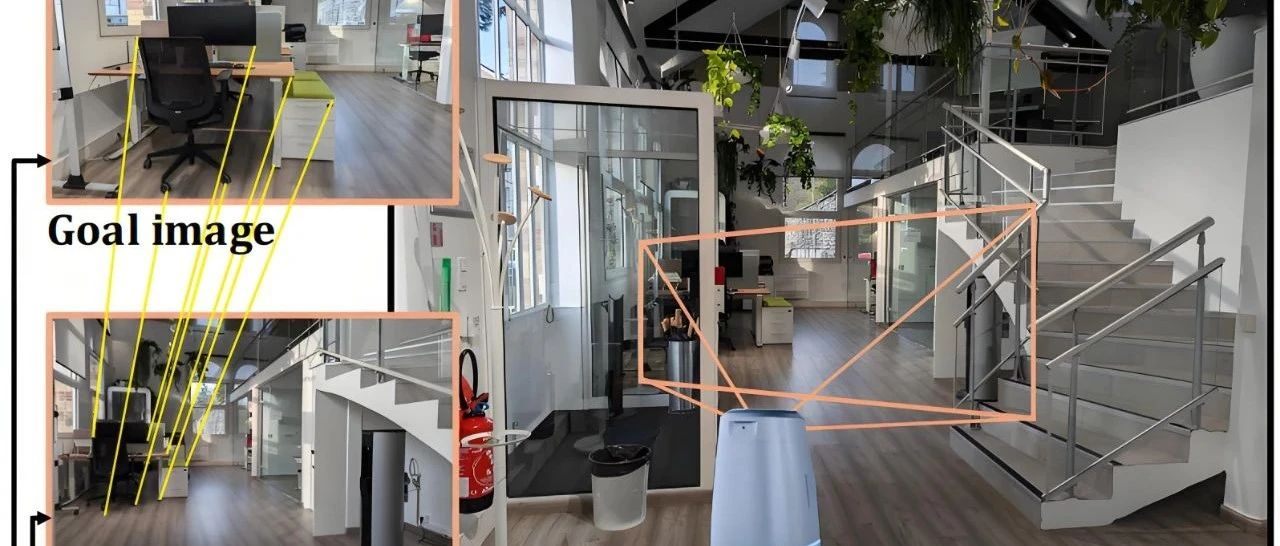
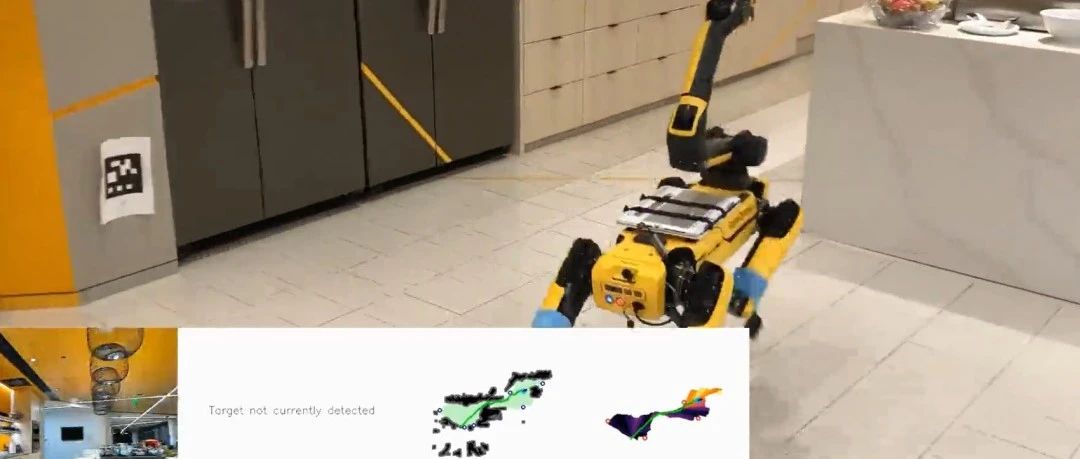
Core Viewpoint - The article discusses the evolution of robot navigation technology from traditional mapping and localization to large model-based navigation, which includes visual language navigation (VLN) and goal navigation. VLN focuses on following instructions, while goal navigation emphasizes understanding the environment to find paths independently [1][4]. Group 1: Visual Language Navigation (VLN) - VLN is fundamentally a task of following instructions, which involves understanding language commands, perceiving the environment, and planning movement strategies. The VLN robot system consists of a visual language encoder, environmental history representation, and action strategy modules [2]. - The key challenge in VLN is how to effectively compress information from visual and language inputs, with current trends favoring the use of large-scale pre-trained visual language models and LLMs for instruction breakdown and task segmentation [2][3]. - The learning of strategy networks has shifted from pattern extraction from labeled datasets to distilling effective planning information from LLMs, marking a significant research focus [3]. Group 2: Goal Navigation - Goal navigation extends VLN by requiring agents to autonomously explore and plan paths in unfamiliar 3D environments based solely on target descriptions, such as coordinates or images [4]. - Unlike traditional VLN, goal-driven navigation systems must transition from "understanding instructions to finding paths" by autonomously parsing semantics, modeling environments, and making dynamic decisions [6]. Group 3: Commercial Applications and Demand - Goal-driven navigation technology has been industrialized in various verticals, such as terminal delivery, where it combines with social navigation algorithms to handle dynamic environments. Examples include Meituan's delivery robots and Starship Technologies' campus delivery robots [8]. - In sectors like healthcare, hospitality, and food service, companies like 嘉楠科技, 云迹科技, and Aethon have deployed service robots for autonomous delivery, enhancing service efficiency [8]. - The development of humanoid robots has led to an increased focus on adapting navigation technology for home services, care, and industrial logistics, creating significant job demand in the navigation sector [9]. Group 4: Learning and Knowledge Challenges - Both VLN and goal navigation require knowledge across multiple domains, including natural language processing, computer vision, reinforcement learning, and graph neural networks, making the learning path challenging for newcomers [10].
具身智能之心多模态大模型交流群成立啦!
具身智能之心· 2025-07-12 13:59
扫码加入微信交流群,未经允许,群内不能发广告,否则全平台拉黑处理。如果群已满,欢迎添加小助理 微信CLmovingup邀请入群,备注"具身大模型+入群"! 如果您是多模态大模型相关方向(V+L、V+L+触觉等),正在从事具身相关模型的微调、部署、量化、轻 量化等工作,欢迎加入我们一起交流! 具身智能之心多模态大模型技术交流群来啦,欢迎相关方向的同学加入交流! ...
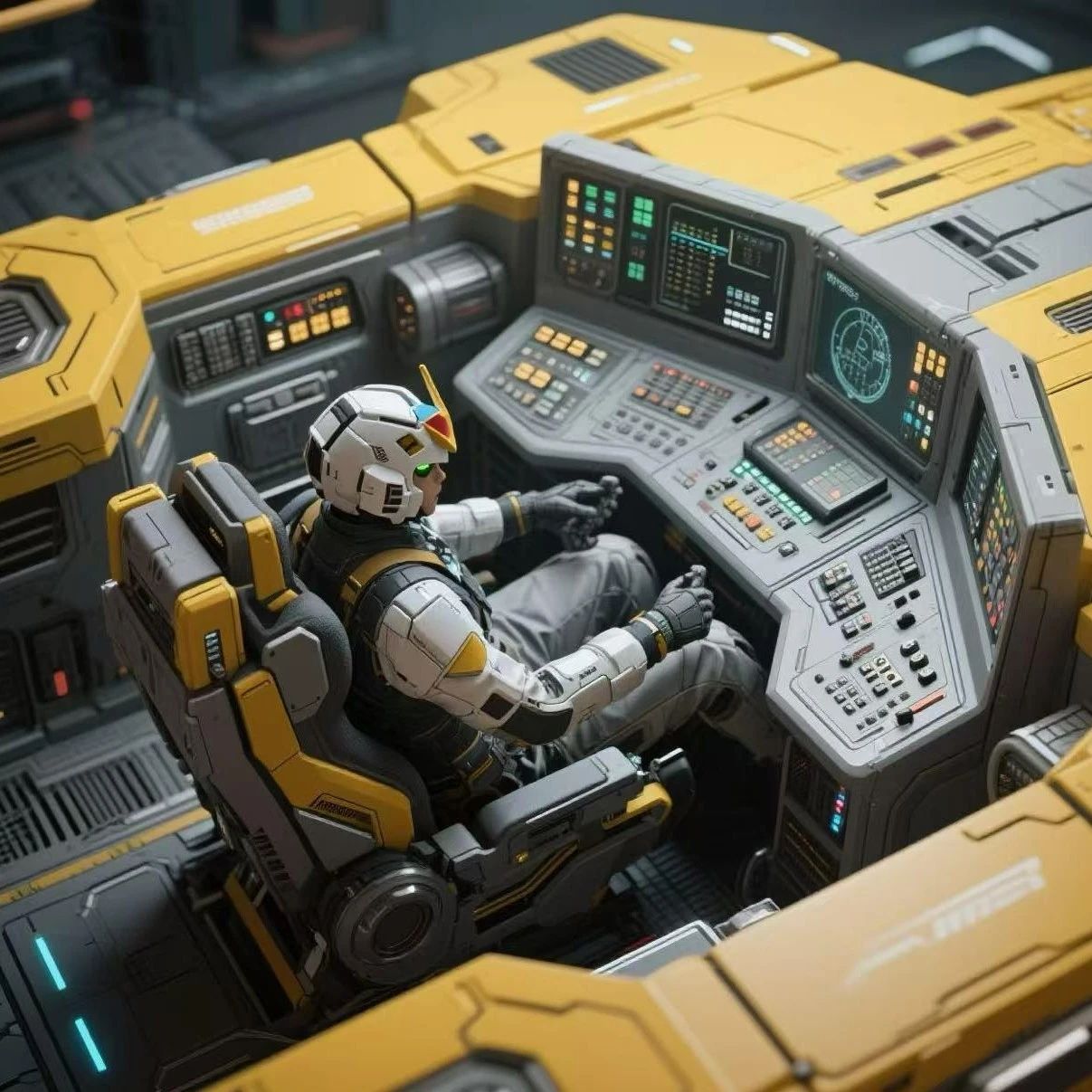
倒计时2天,即将开课啦!从0基础到强化学习,再到sim2real
具身智能之心· 2025-07-12 13:59
Core Viewpoint - The article discusses the rapid advancements in embodied intelligence, highlighting its potential to revolutionize various industries by enabling robots to understand language, navigate complex environments, and make intelligent decisions [1]. Group 1: Embodied Intelligence Technology - Embodied intelligence aims to integrate AI systems with physical capabilities, allowing them to perceive and interact with the real world [1]. - Major tech companies like Tesla, Boston Dynamics, OpenAI, and Google are competing in this transformative field [1]. - The potential applications of embodied intelligence span manufacturing, healthcare, service industries, and space exploration [1]. Group 2: Technical Challenges - Achieving true embodied intelligence presents unprecedented technical challenges, requiring advanced algorithms and a deep understanding of physical simulation, robot control, and perception fusion [2]. Group 3: Role of MuJoCo - MuJoCo (Multi-Joint dynamics with Contact) is identified as a critical technology for embodied intelligence, serving as a high-fidelity simulation engine that bridges the virtual and real worlds [3]. - It allows researchers to create realistic virtual robots and environments, enabling millions of trials and learning experiences without risking expensive hardware [5]. - MuJoCo's advantages include high simulation speed, the ability to test extreme scenarios safely, and effective transfer of learned strategies to real-world applications [5]. Group 4: Research and Industry Adoption - MuJoCo has become a standard tool in both academia and industry, with major companies like Google, OpenAI, and DeepMind utilizing it for robot research [7]. - Mastery of MuJoCo positions entities at the forefront of embodied intelligence technology [7]. Group 5: Practical Training and Curriculum - A comprehensive MuJoCo development course has been created, focusing on practical applications and theoretical foundations within the embodied intelligence technology stack [9]. - The course includes project-driven learning, covering topics from physical simulation principles to deep reinforcement learning and Sim-to-Real transfer techniques [9][10]. - Six progressive projects are designed to enhance understanding and application of various technical aspects, ensuring a solid foundation for future research and work [14][15]. Group 6: Expected Outcomes - Upon completion of the course, participants will gain a complete embodied intelligence technology stack, enhancing their technical, engineering, and innovative capabilities [25][26]. - Participants will develop skills in building complex robot simulation environments, understanding core reinforcement learning algorithms, and applying Sim-to-Real transfer techniques [25].

武汉大学&北理工等SOTA方案!DEGround:增强具身三维环境中的语境理解
具身智能之心· 2025-07-12 13:59
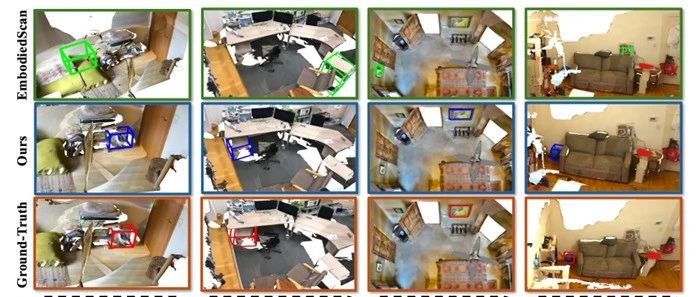
点击下方 卡片 ,关注" 具身智能 之心 "公众号 一、你的3D Grounding 模型真的work吗? 在具身智能系统中,智能体需要依靠第一视角的3D感知算法来理解周边环境。作为其中的核心任务之一,Embodied 3D Grounding是指根据ego-centric的RGB- D图像序列以及语言描述在三维空间中定位目标对象,要求模型能够融合语言与三维视觉信息,准确识别出语句中所指代的物体。当前主流方法多采用两阶段策 略,即先利用检测模型提取三维区域特征,再进行语言引导的grounding微调。这自然引出一个疑问: 第二阶段这种针对 Grounding 的微调,其效果究竟如何,它 真的work吗? 令人颇感意外的是,实证结果显示,即便是当前最先进的Grounding模型,其实际表现也远未达到预期。相反,那些完全未接受语言监督、仅依赖目标类别进行筛 选的检测模型,在Grounding任务的评估中竟取得了更优的结果。具体而言,考虑到任务中的语言指令为模板生成,本文通过规则解析提取出目标物体的类别标 签,之后使用该类别从检测模型中筛选对应预测框,直接作为Grounding的输出。理论上,这种做法缺乏语言理解过 ...
从本体到数据,从VLA到VLN!一个近2000人的具身社区,大家在这里抱团取暖
具身智能之心· 2025-07-11 09:47
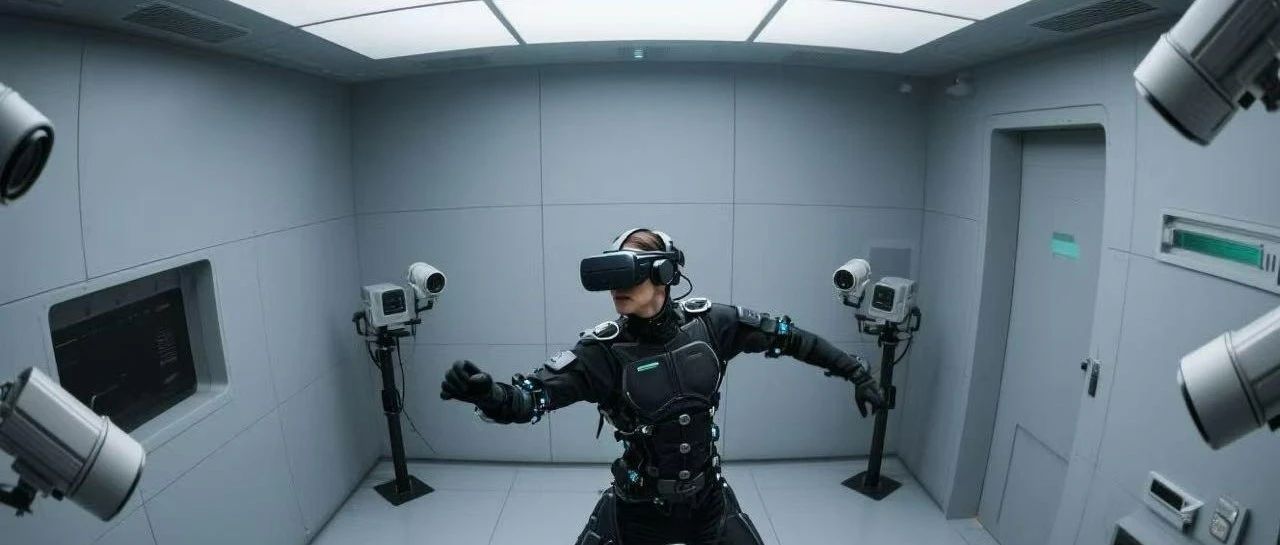
Core Insights - The article highlights the growth and development of the embodied intelligence community, aiming to expand to a scale of 2000 members, showcasing various projects and initiatives in the field [1][5]. Group 1: Community Development - The community has witnessed significant advancements with the introduction of various projects such as ACT, RDT-1/RDT-2, CogACT, OpenVLA, π0, and π0.5 [1]. - A total of over 30 technical routes have been organized internally to assist members in finding benchmarks, reviews, and learning pathways, significantly reducing search time [1]. - The community has invited numerous industry experts to engage with members, providing opportunities for Q&A sessions and discussions on the latest developments in embodied intelligence [1]. Group 2: Job Opportunities and Networking - The community has established a job referral mechanism with multiple embodied intelligence companies, facilitating members in submitting their resumes to desired companies [2]. - Members are encouraged to join the community to connect with nearly 200 companies and institutions in the embodied intelligence sector, fostering collaboration and knowledge sharing [5]. Group 3: Educational Resources - The community has compiled a wealth of resources for newcomers, including over 40 open-source projects and nearly 60 datasets related to embodied intelligence [11]. - Various learning paths have been outlined, covering topics such as reinforcement learning, multi-modal large models, and robot navigation, catering to both beginners and advanced members [11][12]. - Regular discussions and sharing sessions are held to address common questions in the field, such as robot simulation platforms and imitation learning for humanoid robots [12]. Group 4: Industry Insights - The community provides a comprehensive overview of domestic and international embodied intelligence companies, covering various sectors such as education, logistics, and healthcare [17]. - Members have access to a collection of industry reports and academic papers, enabling them to stay updated on the latest trends and applications in embodied intelligence [19]. - The community also offers insights into the latest advancements in robotics, including navigation, planning, and multi-modal model integration [41][49].
从近30篇具身综述中!看领域发展兴衰(VLA/VLN/强化学习/Diffusion Policy等方向)
具身智能之心· 2025-07-11 00:57
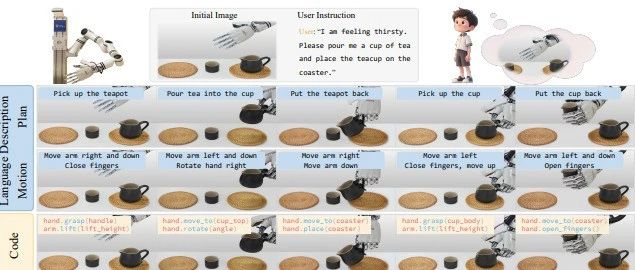
Core Insights - The article provides a comprehensive overview of various surveys and research papers related to embodied intelligence, focusing on areas such as vision-language-action models, reinforcement learning, and robotics applications [1][2][3][4][5][6][8][9] Group 1: Vision-Language-Action Models - A survey on Vision-Language-Action (VLA) models highlights their significance in autonomous driving and human motor learning, discussing progress, challenges, and future trends [2][3][8] - The exploration of VLA models emphasizes their applications in embodied AI, showcasing a variety of datasets and methodologies [5][8][9] Group 2: Robotics and Reinforcement Learning - Research on foundation models in robotics addresses applications, challenges, and future directions, indicating a growing interest in integrating AI with robotic systems [3][4] - Deep reinforcement learning is identified as a key area with real-world successes, suggesting its potential for enhancing robotic capabilities [3][4] Group 3: Multimodal and Generative Approaches - The article discusses multimodal fusion and vision-language models, which are crucial for improving robot vision and interaction with the environment [6][8] - Generative artificial intelligence in robotic manipulation is highlighted as an emerging field, indicating a shift towards more sophisticated AI-driven solutions [6][8] Group 4: Datasets and Community Engagement - The article encourages engagement with a community focused on embodied intelligence, offering access to a wealth of resources, including datasets and collaborative projects [9]
DreamVLA:全球首个“世界知识预测”VLA模型,操作成功率近八成
具身智能之心· 2025-07-10 13:16
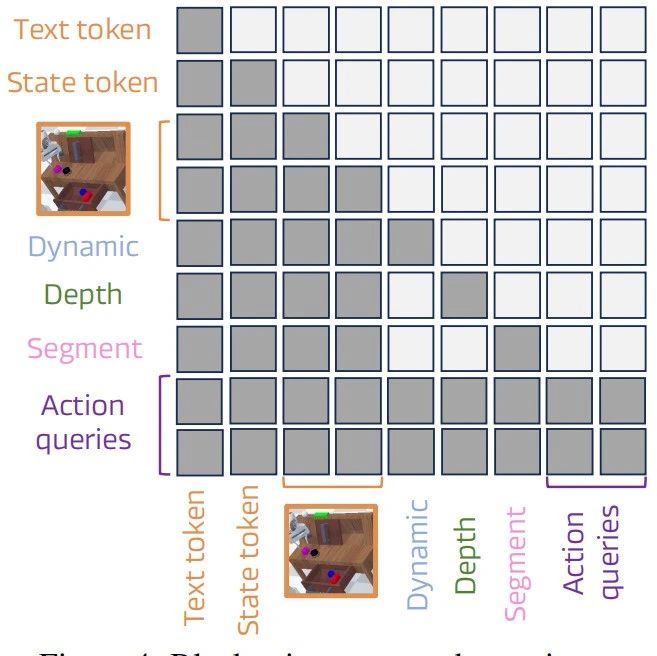
Core Insights - The article discusses the potential of Vision-Language-Action (VLA) models in enhancing robotic operations through the integration of image generation and action prediction, highlighting the limitations of existing methods in forming a closed-loop perception-prediction-action cycle [3][16] - DreamVLA is introduced as a model that predicts comprehensive world knowledge to improve robotic performance, focusing on dynamic areas, depth perception, and high-level semantic features [4][5][16] Research Background and Motivation - Current VLA models are limited by image-based predictions, leading to information redundancy and a lack of critical world knowledge such as dynamics, spatial, and semantic understanding [3] - DreamVLA aims to construct a more effective perception-prediction-action loop by predicting comprehensive world knowledge, thereby enhancing the interaction between robots and their environment [3] Model Design Core Ideas - DreamVLA focuses on three core features: dynamic area prediction, depth perception, and high-level semantic features, which are essential for task execution [4][5] - Dynamic area prediction utilizes optical flow models to identify moving regions in a scene, optimizing the model's focus on task-critical areas [4] - Depth perception is achieved through depth estimation algorithms, providing 3D spatial context, while high-level semantic features are integrated from various visual models to enhance future state understanding [5] Structural Attention and Action Generation - A block structural attention mechanism is employed to separate queries into dynamic, depth, and semantic sub-queries, preventing cross-type knowledge leakage and maintaining clear representations [6] - The diffusion Transformer decoder is used to separate action representations from shared latent features, transforming Gaussian noise into action sequences through iterative self-attention and denoising processes [8] Experimental Results and Analysis - In benchmark tests, DreamVLA achieved an average task length of 4.44, outperforming other methods such as RoboVLM and Seer [9][10] - Real-world experiments with the Franka Panda robotic arm showed an average success rate of 76.7%, significantly higher than baseline models [10] Ablation Study Insights - The contribution of different knowledge types was analyzed, revealing that dynamic area prediction provided the most significant performance gain, while depth and semantic cues offered smaller, yet valuable, improvements [11] - Predicting future knowledge outperformed merely reconstructing current information, indicating that prediction provides better guidance for actions [12] - The block structural attention mechanism improved average task length from 3.75 to 4.44, demonstrating its effectiveness in reducing cross-signal interference [13] Core Contributions and Limitations - DreamVLA reconfigures VLA models into a perception-prediction-action framework, providing comprehensive foresight for planning through the prediction of dynamic, spatial, and high-level semantic information [16] - The model is currently limited to parallel gripper operations and relies on RGB data, with plans to incorporate more diverse data types and enhance generalization and robustness in future developments [15][16]