具身智能之心

Search documents
物理模拟器与世界模型驱动的机器人具身智能综述
具身智能之心· 2025-07-15 13:49
Core Insights - The article emphasizes the significance of "Embodied Intelligence" in the pursuit of General Artificial Intelligence (AGI), highlighting the need for intelligent agents to perceive, reason, and act in the physical world [3][5] - The integration of physical simulators and world models is identified as a promising pathway to enhance the capabilities of robots, enabling them to transition from merely "doing" to "thinking" [3][5] Summary by Sections 1. Introduction to Embodied Intelligence - Embodied Intelligence focuses on intelligent agents that can autonomously perceive, predict, and execute actions in complex environments, which is essential for achieving AGI [5] 2. Key Technologies - Two foundational technologies, physical simulators and world models, are crucial for developing robust embodied intelligence. Physical simulators provide safe and efficient environments for training, while world models enable internal representations of the environment for predictive planning and adaptive decision-making [5] 3. Research Contributions - The article reviews recent advancements in learning embodied intelligence through the fusion of physical simulators and world models, analyzing their complementary roles in enhancing agent autonomy, adaptability, and generalization capabilities [5] 4. Robot Capability Classification - A five-level capability classification system for intelligent robots is proposed, ranging from IR-L0 (basic execution) to IR-L4 (fully autonomous), covering dimensions such as autonomy, task handling, environmental adaptability, and social cognition [8][15] 5. Core Technology Review - The article systematically reviews the latest technological advancements in legged locomotion, manipulation control, and human-robot interaction, emphasizing the importance of these capabilities in the development of intelligent robots [8] 6. Physical Simulator Comparison - A comparative analysis of mainstream simulation platforms (Webots, Gazebo, MuJoCo, Isaac Gym/Sim) is provided, focusing on their physics engine accuracy, rendering quality, and sensor component support, along with future optimization directions [13][19] 7. World Model Architecture and Applications - The article discusses representative structures of world models, including predictive networks and generative models, and their applications in embodied intelligence, particularly in autonomous driving and articulated robots [14][20]

重磅直播!RoboTwin2.0:强域随机化双臂操作数据生成器与评测基准集
具身智能之心· 2025-07-15 13:49
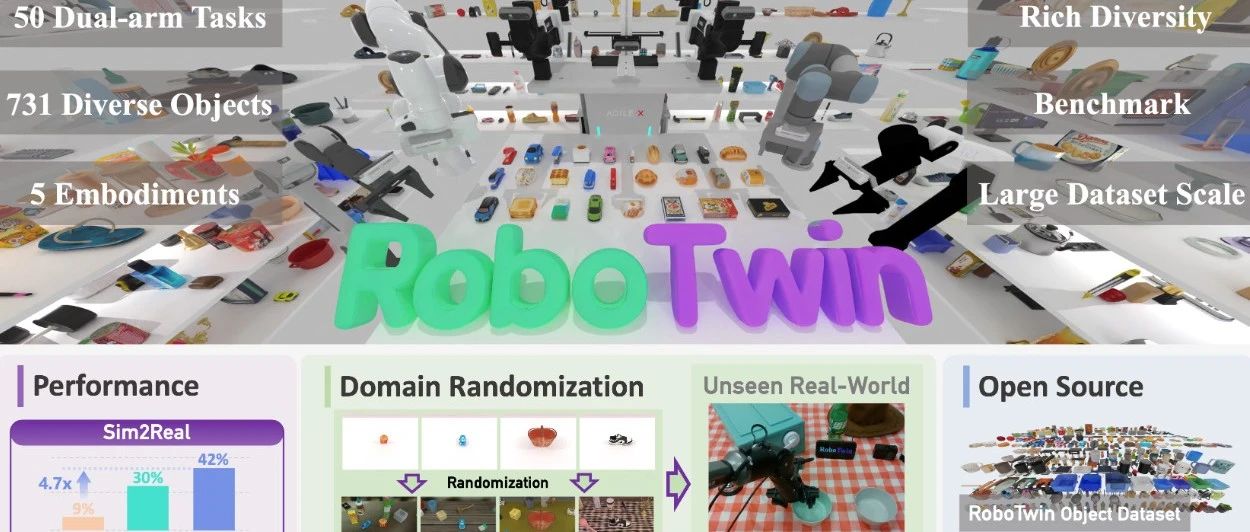
Core Viewpoint - The article discusses the challenges and advancements in training dual-arm robots for complex tasks, emphasizing the need for efficient data collection and simulation methods to enhance their operational capabilities [2]. Group 1: Challenges in Dual-Arm Robot Training - Dual-arm robots play a crucial role in collaborative assembly, tool usage, and object handover in complex scenarios, but training them to perform general operations like VLA faces multiple bottlenecks [2]. - The cost and time required to scale up the collection of real demonstration data are high, making it difficult to cover a wide range of tasks, object shapes, and hardware variations [2]. - Existing simulation methods lack efficient and scalable expert data generation techniques for new tasks, and their domain randomization designs are too superficial to accurately simulate the complexities of real environments [2]. Group 2: Advancements and Solutions - The article highlights the introduction of UniVLA, which efficiently utilizes multi-source heterogeneous data to construct a general and scalable action space for robots [5]. - The CVPR champion solution, BridgeVLA, reportedly improves real machine performance by 32%, showcasing advancements in robot navigation and motion control in real-world scenarios [4].
为什么纯人形VLA方案很少?这些公司的方案是哪些?
具身智能之心· 2025-07-15 09:39
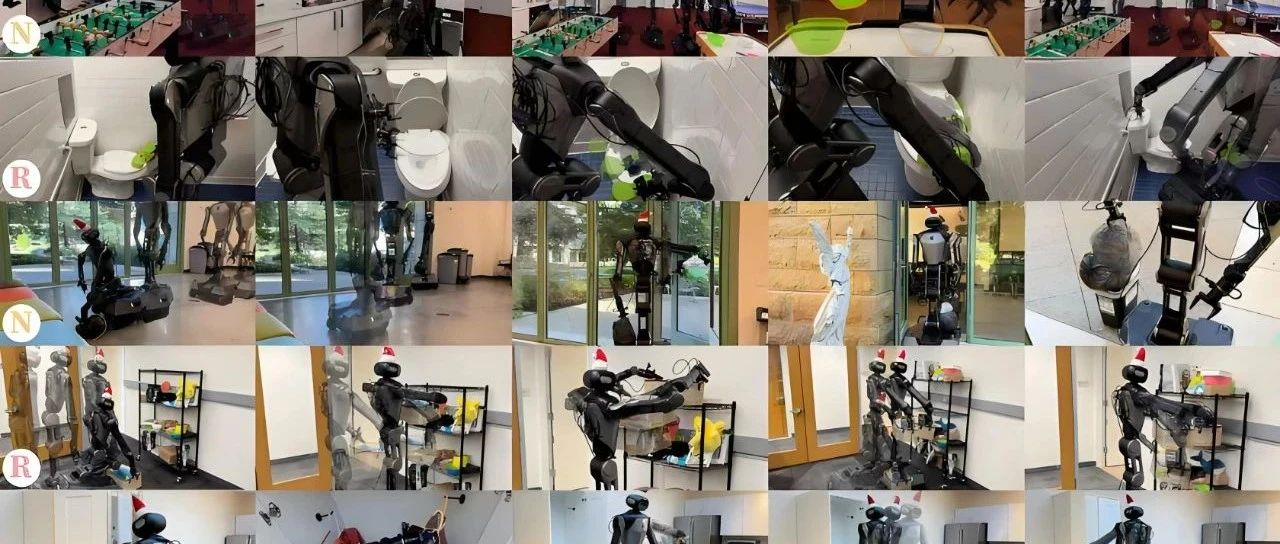
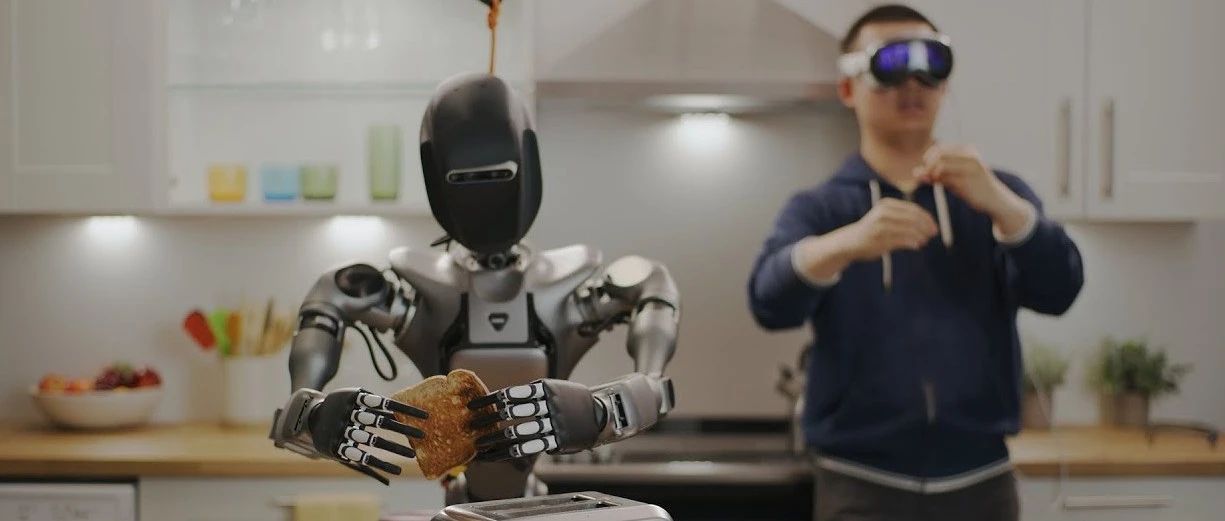
Core Viewpoint - The current focus in the industry is on mechanical arm VLA (Vision-Language Agents) for tasks like mobile grabbing and placing, while humanoid and quadrupedal VLA are facing challenges in job applications due to complexity and data collection issues [1] Group 1: Application of VLA in Industry - Mechanical arm VLA is primarily used for simple tasks that rely on visual input, supplemented by tactile or force sensors, making them easier to implement [1] - Humanoid robots face difficulties in data collection and have high control complexity, with a single dexterous hand potentially having 20 degrees of freedom, and the entire body nearing 100 degrees of freedom [1] - Many leading companies are adopting reinforcement learning (RL) to train humanoid VLA for complex tasks, but the generalization and flexibility of humanoid models remain insufficient compared to mechanical arms [1] Group 2: Future Directions - A promising approach for the future may involve a hybrid architecture combining VLA for high-level task planning and RL for low-level motion optimization, which is currently a focus for many companies [1] - There is an increasing number of job openings in unicorn companies that are pursuing breakthroughs in this combined direction [1]
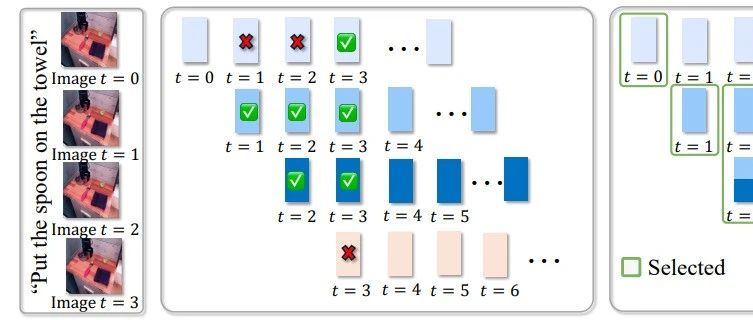
TACTILE-VLA:激活VLA模型的物理知识以实现触觉泛化(清华大学最新)
具身智能之心· 2025-07-15 07:55
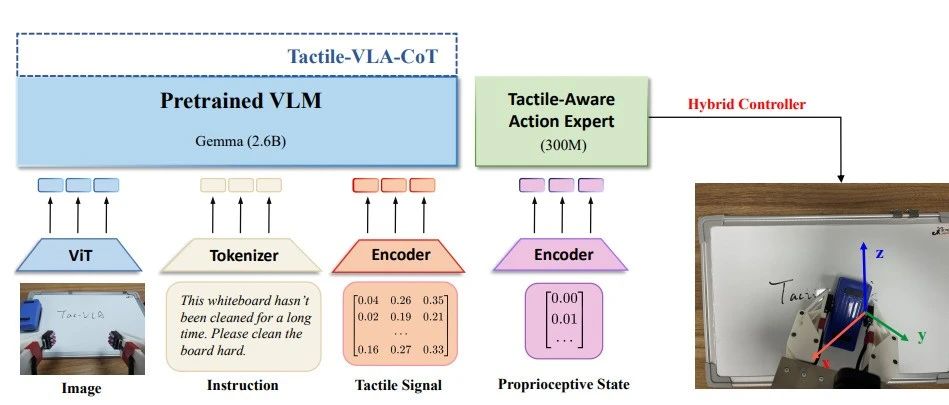
Core Insights - The article discusses the development of Tactile-VLA, a model that integrates visual, language, action, and tactile perception to enhance robotic capabilities in contact-intensive tasks [2][6]. Group 1: Background and Core Issues - Visual-language-action (VLA) models have strong semantic understanding and cross-modal generalization capabilities, but they struggle in contact-intensive scenarios due to a lack of tactile perception [2][6]. - Tactile perception provides critical feedback in physical interactions, such as friction and material properties, which are essential for tasks requiring fine motor control [2][6]. Group 2: Key Innovations and Research Goals - The core finding is that VLA models contain prior knowledge of physical interactions, which can be activated by connecting this knowledge with tactile sensors, enabling zero-shot generalization in contact-intensive tasks [6][7]. - Tactile-VLA framework introduces tactile perception as a primary modality, allowing for direct mapping from abstract semantics to physical force control [7]. - The mixed position-force controller innovatively converts force targets into position adjustment commands, addressing the challenge of coordinating position and force control [7]. Group 3: Architecture and Mechanisms - Tactile-VLA's architecture includes four key modules: instruction adherence to tactile cues, application of tactile-related common sense, adaptive reasoning through tactile feedback, and a multi-modal encoder for unified token representation [12][13]. - The mixed position-force control mechanism ensures precision in position while allowing for fine-tuned force adjustments during contact tasks [13]. - The Tactile-VLA-CoT variant incorporates a chain of thought (CoT) reasoning mechanism, enabling robots to analyze failure causes based on tactile feedback and autonomously adjust strategies [13][14]. Group 4: Experimental Validation and Results - Three experimental setups were designed to validate Tactile-VLA's capabilities in instruction adherence, common sense application, and adaptive reasoning [17]. - In the instruction adherence experiment, Tactile-VLA achieved a success rate of 35% in USB tasks and 90% in charger tasks, significantly outperforming baseline models [21][22]. - The common sense application experiment demonstrated Tactile-VLA's ability to adjust interaction forces based on object properties, achieving success rates of 90%-100% for known objects and 80%-100% for unknown objects [27]. - The adaptive reasoning experiment showed that Tactile-VLA-CoT could successfully complete a blackboard task with an 80% success rate, demonstrating its problem-solving capabilities through reasoning [33].
机器人与具身控制WBC和MPC方法汇总
具身智能之心· 2025-07-14 11:15
Core Viewpoint - The article discusses two primary control methods for humanoid robots: Model Predictive Control (MPC) and Whole-Body Control (WBC), highlighting their applications and advancements in the field of robotics [3][4]. Group 1: Model Predictive Control (MPC) - MPC is an integrated system designed for real-time control of humanoid robots, with significant developments noted in various research papers from 2013 to 2023 [3]. - Key papers include "Model Predictive Control: Theory, Computation, and Design" (2017) and "Model predictive control of legged and humanoid robots: models and algorithms" (2023), which provide foundational theories and algorithms for MPC [3]. Group 2: Whole-Body Control (WBC) - WBC is a framework that enables humanoid robots to operate effectively in human environments, with foundational work dating back to 2006 [4]. - Important contributions include "Hierarchical quadratic programming: Fast online humanoid-robot motion generation" (2014) and "Optimization-based locomotion planning, estimation, and control design for the atlas humanoid robot" (2015), which focus on motion generation and control design [4].

从本体到数据,从VLA到VLN!大家在这里抱团取暖
具身智能之心· 2025-07-14 11:15
Core Viewpoint - The article highlights the growth and development of the embodied intelligence community, emphasizing the establishment of a platform for knowledge sharing and collaboration among professionals in the field [1][11]. Group 1: Community Development - The community aims to reach a scale of 2000 members, reflecting significant growth in interest and participation in embodied intelligence [1]. - Various technical routes have been organized internally, providing resources for newcomers and experienced individuals to enhance their knowledge and skills [1][7]. - The community has invited numerous industry experts to engage with members, facilitating discussions on current trends and challenges in embodied intelligence [1]. Group 2: Job Opportunities - The community has established a job referral mechanism with multiple companies in the embodied intelligence sector, allowing members to submit their resumes for potential job openings [2][16]. - Members are encouraged to connect with nearly 200 companies and institutions to discuss the latest industry and academic developments [5][16]. Group 3: Educational Resources - A comprehensive collection of over 30 technical routes and 40+ open-source projects has been compiled to assist members in their learning journey [11][26]. - The community provides access to various datasets, simulation platforms, and learning materials tailored for different aspects of embodied intelligence [30][32]. - Regular discussions and forums are held to address common questions and share insights on topics such as robot simulation, imitation learning, and decision-making processes [12][66]. Group 4: Industry Insights - The community aggregates research reports and industry analysis related to embodied intelligence, enabling members to stay informed about advancements and applications in the field [19][24]. - A directory of domestic and international companies involved in embodied intelligence is available, covering various sectors such as education, logistics, and healthcare [17].
智源全面开源具身大脑RoboBrain 2.0与大小脑协同框架RoboOS 2.0:刷新10项评测基准
具身智能之心· 2025-07-14 11:15
Core Insights - The article discusses the release of RoboBrain 2.0 and RoboOS 2.0, highlighting their advancements in embodied intelligence and multi-agent collaboration capabilities [2][3][30]. Group 1: RoboBrain 2.0 Capabilities - RoboBrain 2.0 overcomes three major capability bottlenecks: spatial understanding, temporal modeling, and long-chain reasoning, significantly enhancing its ability to understand and execute complex embodied tasks [4]. - The model features a modular encoder-decoder architecture that integrates perception, reasoning, and planning, specifically designed for embodied reasoning tasks [9]. - It utilizes a diverse multimodal dataset, including high-resolution images and complex natural language instructions, to empower robots in physical environments [12][18]. Group 2: Training Phases of RoboBrain 2.0 - The training process consists of three phases: foundational spatiotemporal learning, embodied spatiotemporal enhancement, and chain-of-thought reasoning in embodied contexts [15][17][18]. - Each phase progressively builds the model's capabilities, from basic spatial and temporal understanding to complex reasoning and decision-making in dynamic environments [15][18]. Group 3: Performance Benchmarks - RoboBrain 2.0 achieved state-of-the-art (SOTA) results across multiple benchmarks, including BLINK, CV-Bench, and RoboSpatial, demonstrating superior spatial and temporal reasoning abilities [21][22]. - The 7B model scored 83.95 in BLINK and 85.75 in CV-Bench, while the 32B model excelled in various multi-robot planning tasks [22][23]. Group 4: RoboOS 2.0 Framework - RoboOS 2.0 is the first open-source framework for embodied intelligence SaaS, enabling lightweight deployment and seamless integration of robot skills [3][25]. - It features a cloud-based brain model for high-level cognition and a distributed module for executing specific robot skills, enhancing multi-agent collaboration [27]. - The framework has been optimized for performance, achieving a 30% improvement in overall efficiency and reducing average response latency to below 3ms [27][29]. Group 5: Open Source and Community Engagement - Both RoboBrain 2.0 and RoboOS 2.0 have been fully open-sourced, inviting global developers and researchers to contribute to the embodied intelligence ecosystem [30][33]. - The initiative has garnered interest from over 20 robotics companies and top laboratories worldwide, fostering collaboration in the field [33].
VLA之外,具身+VA工作汇总
具身智能之心· 2025-07-14 02:21
Core Insights - The article focuses on advancements in embodied intelligence and robotic manipulation, highlighting various research projects and methodologies aimed at improving robotic capabilities in real-world applications [2][3][4]. Group 1: 2025 Research Initiatives - Numerous projects are outlined for 2025, including "Steering Your Diffusion Policy with Latent Space Reinforcement Learning" and "Chain-of-Action: Trajectory Autoregressive Modeling for Robotic Manipulation," which aim to enhance robotic manipulation through advanced learning techniques [2][3]. - The "BEHAVIOR Robot Suite" is designed to streamline real-world whole-body manipulation for everyday household activities, indicating a focus on practical applications of robotics [2]. - "You Only Teach Once: Learn One-Shot Bimanual Robotic Manipulation from Video Demonstrations" emphasizes the potential for efficient learning methods in robotic training [2][3]. Group 2: Methodologies and Techniques - The article discusses various methodologies such as "Adaptive 3D Scene Representation for Domain Transfer in Imitation Learning" and "Learning the RoPEs: Better 2D and 3D Position Encodings with STRING," which aim to improve the adaptability and efficiency of robotic systems [2][3][4]. - "RoboGrasp: A Universal Grasping Policy for Robust Robotic Control" highlights the development of a versatile grasping policy that can be applied across different robotic platforms [2][3]. - "Learning Dexterous In-Hand Manipulation with Multifingered Hands via Visuomotor Diffusion" showcases advancements in fine motor skills for robots, crucial for complex tasks [4]. Group 3: Future Directions - The research emphasizes the importance of integrating visual and tactile feedback in robotic systems, as seen in projects like "Adaptive Visuo-Tactile Fusion with Predictive Force Attention for Dexterous Manipulation" [7]. - "Zero-Shot Visual Generalization in Robot Manipulation" indicates a trend towards developing robots that can generalize learned skills to new, unseen scenarios without additional training [7]. - The focus on "Human-to-Robot Data Augmentation for Robot Pre-training from Videos" suggests a shift towards leveraging human demonstrations to enhance robotic learning processes [7].
SURPRISE3D:首创复杂3D场景空间推理数据集,突破语义捷径依赖瓶颈
具身智能之心· 2025-07-13 09:48
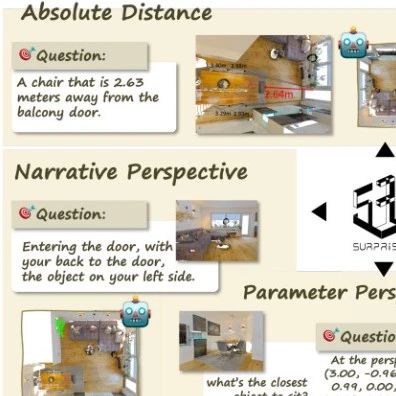
Core Viewpoint - The article emphasizes the importance of spatial reasoning in embodied AI and robotics, highlighting the limitations of existing 3D vision-language benchmarks and the need for a new standard that effectively evaluates spatial reasoning capabilities [3][4][5]. Group 1: Background and Limitations - Spatial reasoning is essential for intelligent agents to navigate and interact in real environments, requiring an understanding of 3D spatial layouts and context [3]. - Current 3D vision-language benchmarks fail to capture and assess spatial reasoning effectively, leading to models relying on semantic shortcuts rather than true spatial understanding [4]. - Three main limitations of existing benchmarks are identified: over-reliance on explicit queries, limited and shallow reasoning coverage, and template-driven or simplistic spatial queries [4]. Group 2: SURPRISE3D Dataset - SURPRISE3D is introduced as a new benchmark that combines linguistic intricacy with geometric complexity, featuring over 900 richly annotated indoor environments and more than 200,000 query-object mask pairs [5][6]. - The dataset's queries are designed to be implicit, ambiguous, and semantically lightweight, compelling models to rely on reasoning rather than recognition [5]. - Empirical evaluations show that even the most advanced existing 3D foundational models struggle on this dataset, indicating a significant innovation space for improving spatial reasoning capabilities [5][6]. Group 3: Query Types and Annotation Process - The dataset includes complex spatial queries that require various types of reasoning, such as narrative perspective, parametric perspective, relative position, and absolute distance [11][12]. - The annotation process involves dual workflows focusing on spatial reasoning and common-sense/human intention reasoning, ensuring a rich and complementary set of queries [16][18]. - Quality control measures include human verification and a multi-stage review process to ensure high-quality annotations [21][22]. Group 4: Experimental Results and Insights - Baseline models were evaluated for their effectiveness in spatial reasoning tasks, revealing that overall spatial reasoning capabilities are weaker than knowledge reasoning capabilities [26]. - After fine-tuning on the SURPRISE3D dataset, all models showed significant improvements in reasoning abilities, particularly in spatial reasoning, with average performance enhancements of approximately three times [28]. - The findings suggest that current methods have substantial room for improvement in spatial reasoning, highlighting important directions for future research [29].
EmbodyX最新!VOTE:集成投票&优化加速VLA模型的通用框架,吞吐量加速35倍!
具身智能之心· 2025-07-13 09:48
Core Insights - The article discusses the limitations of existing VLA models in generalizing to new objects and unfamiliar environments, prompting the development of a more efficient action prediction method called VOTE [4][6][9]. Group 1: Background and Motivation - The challenge of creating a universal robotic strategy that can handle diverse tasks and real-world interactions has been a core focus in robotics research [6]. - VLA models have shown excellent performance in familiar environments but struggle with generalization in unseen scenarios, leading to the exploration of methods to enhance robustness [7][8]. Group 2: VOTE Methodology - VOTE is introduced as a lightweight VLA model that optimizes trajectory using an ensemble voting strategy, significantly improving inference speed and reducing computational costs [9][14]. - The model eliminates the need for additional visual modules and diffusion techniques, relying solely on the VLM backbone and introducing a special token <ACT> to streamline action prediction [9][18]. - The action sampling technique employs an ensemble voting mechanism to enhance model performance by aggregating predictions from previous steps, thus improving stability and robustness [22][23]. Group 3: Performance and Evaluation - Experimental results indicate that VOTE achieves state-of-the-art performance, with a 20% increase in average success rate on the LIBERO task suite and a 3% improvement over CogACT on the SimplerEnv WidowX robot [9][28]. - The model demonstrates a 35-fold increase in throughput on edge devices like NVIDIA Jetson Orin, showcasing its efficiency for real-time applications [9][31]. - VOTE's performance is superior to existing models, achieving a throughput of 42Hz on edge platforms while maintaining minimal memory overhead [31][32].