具身智能之心

Search documents
CEED-VLA:实现VLA模型4倍推理加速,革命性一致性蒸馏与早退解码技术!
具身智能之心· 2025-07-10 13:16
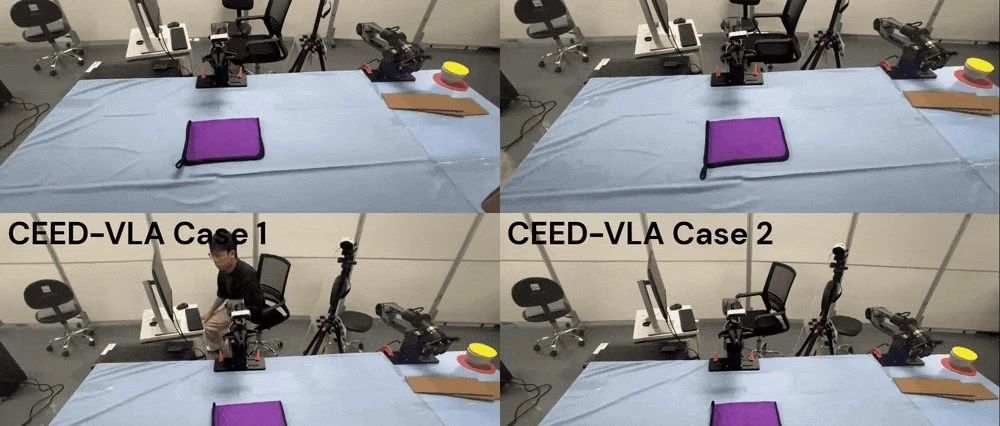
Core Viewpoint - The article discusses the development of a new model called CEED-VLA, which significantly enhances the inference speed of visual-language-action models while maintaining operational performance, making it suitable for high-frequency dexterous tasks [2][30]. Group 1: Model Development - The CEED-VLA model is designed to accelerate inference through a general method that improves performance across multiple tasks [2]. - The model incorporates a consistency distillation mechanism and mixed-label supervision to enable accurate predictions of high-quality actions from various intermediate states [2][6]. - The Early-exit Decoding strategy is introduced to address inefficiencies in the Jacobi decoding process, achieving up to 4.1× inference speedup and over 4.3× execution frequency [2][15]. Group 2: Experimental Results - Simulations and real-world experiments demonstrate that CEED-VLA significantly improves inference efficiency while maintaining similar task success rates [6][30]. - The model shows a speedup of 2.00× compared to the teacher model and achieves a higher number of fixed tokens, indicating improved performance [19][20]. - In real-world evaluations, CEED-VLA successfully completes dexterous tasks, achieving a success rate exceeding 70% due to enhanced inference speed and control frequency [30][31].

双非同学竟然是这样发第一篇CVPR的!
具身智能之心· 2025-07-10 13:16
Core Insights - The article highlights the success story of a student who, despite lacking guidance, managed to publish a paper in CVPR25 through proactive efforts and support from a service provider [1] - The emphasis is placed on the importance of taking initiative and being diligent in research endeavors [1] Group 1: Student Success Case - A student with no guidance successfully published a paper in CVPR25 after 10 months of communication, experimentation, and writing [1] - The student's proactive approach and willingness to work hard were crucial to overcoming the lack of mentorship [1] Group 2: Service Offerings - The company offers comprehensive support for research and publication, covering various stages from idea generation to submission [1] - Specific research areas for guidance include large models, visual language navigation, reinforcement learning, and more [1] - The service provides tiered pricing based on the level of the paper, including top conferences and journals, as well as various academic categories [2]
MuJoCo实战教程即将开课啦!从0基础到强化学习,再到sim2real
具身智能之心· 2025-07-10 08:05
Core Viewpoint - The article discusses the rapid advancements in embodied intelligence, highlighting its potential to revolutionize various industries such as manufacturing, healthcare, and space exploration through robots that can understand language, navigate complex environments, and make intelligent decisions [1]. Group 1: Embodied Intelligence Technology - Embodied intelligence aims to integrate AI systems with physical capabilities, allowing them to perceive and interact with the physical world [1]. - Major tech companies like Tesla, Boston Dynamics, OpenAI, and Google are competing in this transformative field [1]. - The core challenge in achieving true embodied intelligence lies in the need for advanced algorithms and a deep understanding of physical simulation, robot control, and perception fusion [2]. Group 2: Role of MuJoCo - MuJoCo (Multi-Joint dynamics with Contact) is identified as a critical technology for embodied intelligence, serving as a high-fidelity simulation engine that bridges the virtual and real worlds [3]. - It allows researchers to conduct millions of trials in a simulated environment, significantly speeding up the learning process while minimizing hardware damage risks [5]. - MuJoCo's advantages include advanced contact dynamics algorithms, high parallel computation capabilities, and a variety of sensor models, making it a standard tool in both academia and industry [5][7]. Group 3: Practical Applications and Learning - A comprehensive MuJoCo development course has been created, focusing on practical applications and theoretical foundations within the embodied intelligence technology stack [9]. - The course includes project-driven learning, covering topics from physical simulation principles to deep reinforcement learning and Sim-to-Real transfer techniques [9][10]. - Participants will engage in six progressively complex projects, enhancing their understanding of robot control, perception, and collaborative systems [16][21]. Group 4: Course Structure and Target Audience - The course is structured into six modules, each with specific learning objectives and practical projects, ensuring a solid grasp of key technical points [13][17]. - It is designed for individuals with programming or algorithm backgrounds, graduate and undergraduate students focusing on robotics or reinforcement learning, and those interested in transitioning to the field of embodied robotics [28].

找了具身算法岗位!怎么过HR面试这关?如何谈薪和battle?
具身智能之心· 2025-07-10 03:36
最近有社招的同学面到了HR环节,最终因为变现不是很出色被筛下来了,很可惜!今天,我们不谈技术,就 分享下在面试过程中,HR这个环节应该怎么面? HR最想考察的是什么? 我们沟通下来,HR最看重的无外乎以下几点: hr 最想要的人就是:稳定,忠诚,容易合作,善于沟通! 态度良好,负责。 HR面试常问的问题有哪些? 1)沟通,综合能力判断: 请做一个简单的自我介绍。关键点:谦逊,自信,建议总分结构,逻辑清晰,优势突出。 介绍一下你的优点和缺点。 关键点: 真诚,谦虚,不要过多,褒义中带贬义,沟通上还需加强,技术上爱钻 牛角尖等。 2)稳定性类问题: 你为什么离开上家公司。关键点: 不说不稳定,不要仇视上家公司,从客观的原因分析,最好是被动的。 找工作看中的点。关键点: 往应聘公司特点上靠,成长,机会。 为什么要来我们公司。关键点:结合招聘公司的实际情况,成长收获,看好贵司。 3)沟通&态度类问题: 如果和主管有冲突或者意见,当如何处理?关键点:可以多从自己身上找原因,每个人看问题视角不一样,主 管可能更多注整体和全局。 1)稳定性:工作稳定,工作负责(不要1年一次跳槽,你就是能力再强,也不敢要) 2)思维上:逻辑 ...

有几个Top具身公司的大模型、强化学习、VLA和具身导航岗位!
具身智能之心· 2025-07-10 03:36
Core Viewpoint - The article discusses job opportunities in the fields of multimodal large models, reinforcement learning, and navigation, highlighting positions in a unicorn company with ample funding [1]. Group 1: Multimodal Large Models - Job locations are in Beijing and Shenzhen with a salary range of 40k-80k/month [2]. - Responsibilities include developing cutting-edge algorithms for embodied intelligent multimodal large models applicable in various indoor and outdoor scenarios, focusing on framework design, model optimization, and training for navigation and operation tasks [2]. - Candidates should have a master's degree or higher in computer science, artificial intelligence, robotics, or control engineering, along with extensive experience in robot perception, navigation, and AI large models [3]. - Preferred qualifications include experience with algorithms related to multimodal large models in robot navigation and a solid foundation in algorithm development and engineering implementation [3][4]. Group 2: Reinforcement Learning - Job location is in Beijing with a salary range of 40k-80k/month [5]. - Specific job descriptions and requirements are not detailed in the provided text [5]. Group 3: Embodied Navigation Algorithms - Job location is in Shenzhen with a salary range of 30k-60k/month [6]. - The role involves researching and developing algorithms for embodied intelligence, focusing on the integration of multimodal data into planning and achieving end-to-end mapping from data to actions [6]. Group 4: Additional Qualifications - Candidates should have a strong foundation in machine learning, deep learning, and reinforcement learning, with the ability to conduct independent research in embodied intelligence and related fields [7]. - Experience in publishing papers in top conferences and journals is a plus, along with strong coding skills and participation in robotics competitions [7].

具身数采方案一览!遥操作和动捕的方式、难点和挑战(2w字干货分享)
具身智能之心· 2025-07-09 14:38
Core Viewpoint - The discussion focuses on the concept of remote operation (遥操作) in the context of embodied intelligence, exploring its significance, advancements, and future potential in robotics and human-machine interaction [2][15][66]. Group 1: Definition and Importance of Remote Operation - Remote operation is not a new concept; it has historical roots in military and aerospace applications, but its relevance has surged with the rise of embodied intelligence [5][15]. - The emergence of embodied intelligence has made remote operation crucial for data collection and human-robot interaction, transforming it into a mainstream approach [17][66]. - The concept of remote operation is evolving, with discussions on how it can enhance human capabilities and provide a more intuitive interface for controlling robots [15][66]. Group 2: Experiences and Challenges in Remote Operation - Various types of remote operation experiences were shared, including surgical robots and remote-controlled excavators, highlighting the diversity of applications [6][21]. - The challenges of remote operation include latency issues, the complexity of control, and the need for intuitive human-machine interfaces [34][69]. - The discussion emphasized the importance of minimizing latency in remote operation systems to enhance user experience and operational efficiency [34][56]. Group 3: Future Directions and Innovations - The future of remote operation may involve a combination of virtual and physical solutions, such as using exoskeletons for realistic feedback and pure visual systems for ease of use [38][40]. - Innovations like the ALOHA system are prompting the industry to rethink robot design and operational frameworks, potentially leading to significant advancements in remote operation technology [103][106]. - The integration of brain-machine interfaces could represent the ultimate solution for overcoming current limitations in remote operation, allowing for seamless communication between humans and machines [37][99].

灵活迅捷,开发友好,魔法原子最新人形机器人 Z1 来了
具身智能之心· 2025-07-09 14:38
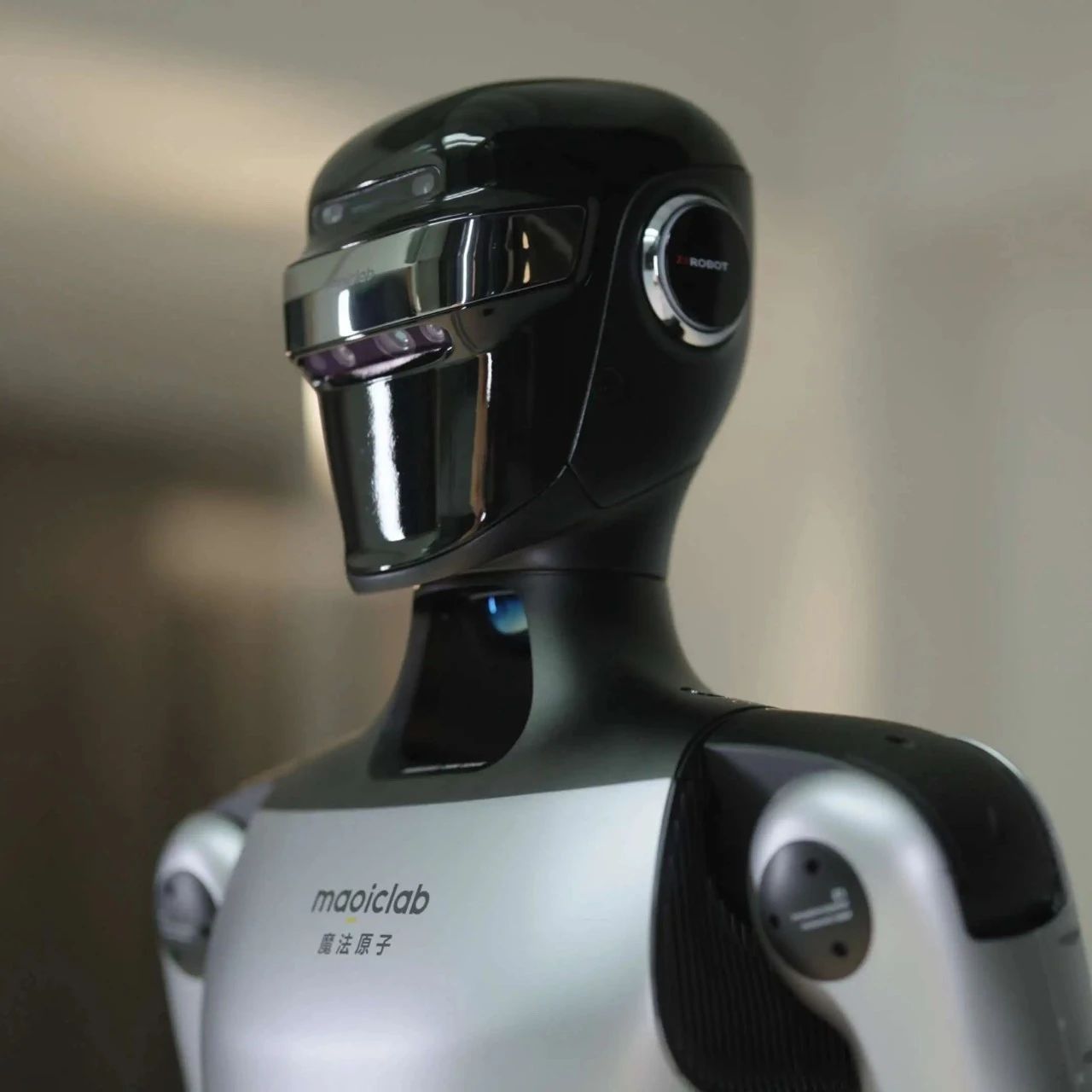
Core Viewpoint - MagicLab's new bipedal humanoid robot, MagicBot Z1, redefines the value of humanoid robots through a combination of high-performance hardware, an open AI ecosystem, and diverse application scenarios [1][15]. Group 1: Product Features - MagicBot Z1 features a self-developed high-performance joint module with 24 basic degrees of freedom, expandable to 49 degrees, and a maximum joint torque exceeding 130 N.m, enabling advanced movements like "large disturbance impact recovery" and "continuous getting up" [1]. - The robot is constructed from high-strength aluminum alloy and engineering plastics, enhancing its durability and resistance to falls and wear, ensuring stable performance even after impacts [5]. - Equipped with a variety of sensors including 3D LiDAR, depth cameras, and stereo cameras, MagicBot Z1 can autonomously navigate complex environments, making it suitable for applications in family companionship, commercial explanations, and specialized uses [7]. Group 2: Developer Support - MagicLab provides a developer platform that allows developers to master new actions in just 20 minutes, accelerating training speed and enhancing the humanoid nature of movements [9]. - The robot's robust motion control algorithms enable it to adapt to various terrains, ensuring rapid deployment in different scenarios [9]. Group 3: Interaction Capabilities - MagicBot Z1 features human-like emotional interaction capabilities, utilizing rich visual and tactile perception to create a multi-modal interaction system, transforming the robot from a mere tool into a life companion [13]. Group 4: Market Positioning - As a comprehensive embodiment of world perception, full-body movement, dexterous operation, and physical interaction, MagicBot Z1 sets a new benchmark in the humanoid robot industry, offering high-value solutions for research, education, commercial services, industrial operations, and family companionship [15]. - The product line includes a standard version for enthusiasts and a developer version that allows customization for various applications, promoting innovation and exploration in different industry scenarios [15]. Group 5: Company Background - MagicLab is a leading company in embodied intelligence technology, focusing on the research, production, and industrial application of humanoid robots, with a self-developed hardware and software stack [16]. - The company has completed two rounds of financing totaling over 250 million yuan within six months, with funds primarily allocated for research and development of embodied intelligence technology and industrial/commercial applications [17].
VLA爆发!从美国RT-2到中国FiS-VLA,机器人的终极进化
具身智能之心· 2025-07-09 14:38
Core Viewpoint - The article emphasizes the rapid evolution and significance of Vision-Language-Action (VLA) models in the field of embodied intelligence, highlighting their potential to revolutionize human-robot interaction and the robotics industry as a whole [4][6][17]. Group 1: VLA Model Development - VLA models are becoming the core driving force in embodied intelligence, gaining traction among researchers and companies globally [7][8]. - Google recently released the first offline VLA model, enabling robots to perform tasks without internet connectivity [9]. - The emergence of the Fast-in-Slow (FiS-VLA) model in China represents a significant advancement, integrating fast and slow systems to enhance robotic control efficiency and reasoning capabilities [10][12]. Group 2: Academic and Industry Trends - There has been an explosive growth in academic papers related to VLA, with 1,390 papers published this year alone, accounting for nearly half of all related research [14]. - The VLA technology is facilitating the transition of robots from laboratory settings to real-world applications, indicating its vast potential [16][17]. Group 3: Key Innovations and Breakthroughs - The RT-2 model from Google marked a pivotal moment in VLA development, introducing a unified model architecture that integrates visual, language, and action modalities [38][40]. - The RoboMamba model, developed in China, significantly improved efficiency and reasoning capabilities in VLA models, achieving a threefold increase in inference speed compared to mainstream models [52][48]. - OpenVLA, another significant model, demonstrated superior performance in various tasks while being more efficient than previous models, achieving a 16.5% higher success rate than RT-2 [57][58]. Group 4: Future Directions and Implications - The introduction of the π series models aims to enhance VLA's generalization capabilities, allowing robots to perform complex tasks with minimal training [62][70]. - The FiS-VLA model represents a breakthrough in real-time control, achieving an 11% improvement in success rates in real environments compared to existing methods [114]. - The advancements in VLA technology are paving the way for robots to operate effectively in diverse environments, marking a significant step towards achieving Artificial General Intelligence (AGI) [127][123].



智元先于宇树上市?星海图最新A轮融资超1亿美元
具身智能之心· 2025-07-09 03:30
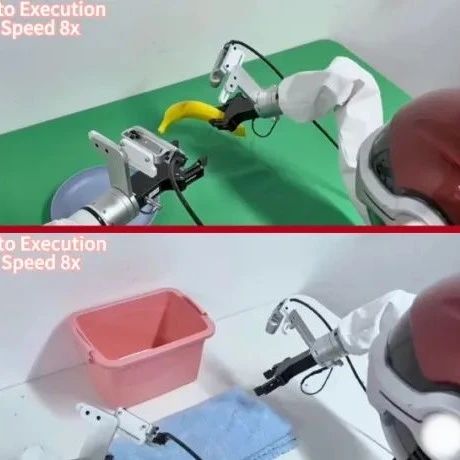
Group 1 - The core viewpoint of the article highlights the acquisition of 63.62% of shares in Shangwei New Materials by Zhiyuan Robotics, marking a significant move in the robotics industry and potentially becoming a landmark merger case in the A-share market [1] - Zhiyuan Robotics has developed three major robot families, with expected shipments reaching thousands by 2025, indicating strong growth potential in various commercial applications [1] - The acquisition is positioned as a notable event following the release of the "National Nine Articles" and "Merger Six Articles," emphasizing the importance of new productivity enterprises in the A-share market [1] Group 2 - The domestic robotics sector has seen a surge in activity this year, with frequent financing and IPO announcements, indicating a vibrant investment landscape [2] - Starry Sky Technology has successfully completed two rounds of strategic financing, raising over $100 million, showcasing the increasing investor interest in robotics [3]
具身智能论文速递 | 强化学习、VLA、VLN、世界模型等~
具身智能之心· 2025-07-08 12:54
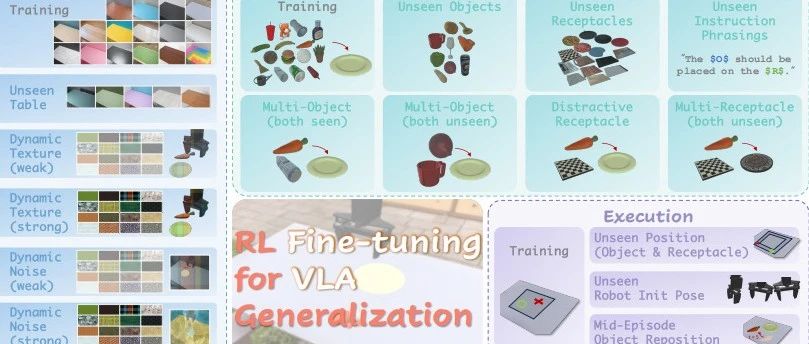
Core Insights - The article discusses advancements in Vision-Language-Action (VLA) models through reinforcement learning (RL) techniques, specifically the Proximal Policy Optimization (PPO) algorithm, which significantly enhances the generalization capabilities of these models [2][4]. Group 1: VLA Model Enhancements - The application of PPO has led to a 42.6% increase in task success rates in out-of-distribution (OOD) scenarios [2]. - Semantic understanding success rates improved from 61.5% to 75.0% when encountering unseen objects [2]. - In dynamic interference scenarios, success rates surged from 28.6% to 74.5% [2]. Group 2: Research Contributions - A rigorous benchmark was established to evaluate the impact of VLA fine-tuning methods on generalization across visual, semantic, and execution dimensions [4]. - PPO was identified as superior to other RL algorithms like GRPO and DPO for VLA fine-tuning, with discussions on adapting these algorithms to meet the unique needs of VLA [4]. - An efficient PPO-based fine-tuning scheme was developed, utilizing a shared actor-critic backbone network, VLA model preheating, and minimal PPO training iterations [4]. - The study demonstrated that RL's generalization capabilities in VLA for semantic understanding and entity execution outperformed supervised fine-tuning (SFT), while maintaining comparable visual robustness [4]. Group 3: NavMorph Model - The NavMorph model was introduced as a self-evolving world model for vision-and-language navigation in continuous environments, achieving a success rate of 47.9% in unseen environments [13][15]. - The model incorporates a World-aware Navigator for inferring dynamic representations of the environment and a Foresight Action Planner for optimizing navigation strategies through predictive modeling [15]. - Experiments on mainstream VLN-CE benchmark datasets showed that NavMorph significantly enhanced the performance of leading models, validating its advantages in adaptability and generalization [15].