具身智能之心

Search documents
3天搞定机械臂上的VLA完整部署:算法&项目实践
具身智能之心· 2025-07-01 12:07
Core Viewpoint - The concept of "embodied intelligence" has been officially included in the 2025 government work report, highlighting its significance in current research by enterprises and educational institutions [1]. Group 1: Challenges in Implementation - Researchers and engineers face challenges when deploying algorithms from simulation environments to hardware, primarily due to insufficient engineering practice and a lack of thorough understanding of classic methods and imitation learning [2]. - These challenges hinder the effective integration of various methods, resulting in suboptimal deployment and performance of VLA algorithms on robotic arms, which obstructs the application of embodied intelligence in real-world scenarios [2]. Group 2: Training Program - Deep Blue Academy has partnered with notable figures and companies to launch an offline training camp focused on robotic arm operation and grasping, aimed at bridging the gap between simulation and real-world application [3]. - The training camp offers hands-on experience with real robotic arms and covers key technologies such as motion planning, visual feedback, imitation learning, and VLA, ensuring a comprehensive understanding of the "perception - decision - control" process [5]. Group 3: Course Highlights - The program emphasizes a full-stack technology loop, providing training from algorithms to hardware engineering capabilities [16]. - It features immersive project practice supported by the hardware platform of Songling Robotics, promoting deep integration of academia and industry resources [16]. - The course adopts a high-density small class format, ensuring intensive technical training and personalized guidance over three days [16]. Group 4: Target Audience - The training is designed for undergraduate and graduate students in robotics and automation-related fields, as well as R&D engineers in the field of robotic arms and embodied intelligence [18].


从感知能力提升到轻量化落地,具身这条路还要走很长一段时间~
具身智能之心· 2025-06-30 12:21
Group 1 - The core viewpoint of the article emphasizes the explosive growth of the embodied intelligence industry by 2025, driven by technological advancements and application traction, which shape both the technical roadmap and commercialization pathways [1] - Upgrades in perception capabilities and multimodal integration are crucial for the development of embodied technology, with a focus on tactile perception, particularly in dexterous hands, enhancing operational precision and feedback [1] - Large model-driven algorithms are enhancing robots' understanding of the world, particularly in humanoid robots, by improving perception, autonomous learning, and decision-making capabilities [1] Group 2 - The establishment of a comprehensive technical community for embodied intelligence aims to provide a platform for academic and engineering discussions, with members from renowned universities and leading companies in the field [6] - The community has compiled over 40 open-source projects and nearly 60 datasets related to embodied intelligence, along with various technical learning pathways to facilitate entry and advancement in the field [6][12] - Regular discussions within the community cover topics such as robot simulation platforms, imitation learning in humanoid robots, and hierarchical decision-making [7] Group 3 - The community offers various benefits, including access to exclusive learning videos, job recommendations, and opportunities for industry networking [11][8] - A comprehensive collection of reports on embodied intelligence, including large models and humanoid robots, is available to keep members updated on industry developments [14] - The community also provides resources on robot navigation, control, and various technical aspects of embodied intelligence, aiding in foundational learning [16][50]
当无人机遇到AI智能体:多领域自主空中智能和无人机智能体综述
具身智能之心· 2025-06-30 12:17
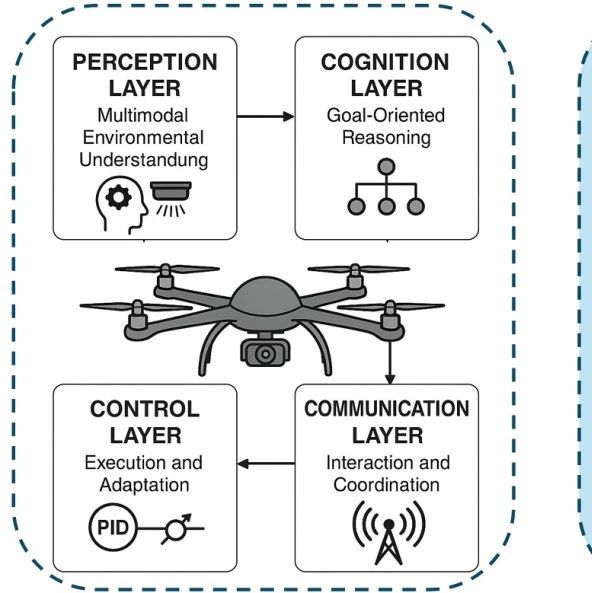
Core Insights - The article discusses the evolution of Unmanned Aerial Vehicles (UAVs) into Agentic UAVs, which are characterized by autonomous reasoning, multimodal perception, and reflective control, marking a significant shift from traditional automation platforms [5][6][11]. Research Background - The motivation for this research stems from the rapid development of UAVs from remote-controlled platforms to complex autonomous agents, driven by advancements in artificial intelligence (AI) [6][7]. - The increasing demand for autonomy, adaptability, and interpretability in UAV operations across various sectors such as agriculture, logistics, environmental monitoring, and public safety is highlighted [6][7]. Definition and Architecture of Agentic UAVs - Agentic UAVs are defined as a new class of autonomous aerial systems with cognitive capabilities, situational adaptability, and goal-directed behavior, contrasting with traditional UAVs that operate based on predefined instructions [11][12]. - The architecture of Agentic UAVs consists of four core layers: perception, cognition, control, and communication, enabling autonomous sensing, reasoning, action, and interaction [12][13]. Enabling Technologies - Key technologies enabling the development of Agentic UAVs include: - **Perception Layer**: Utilizes a suite of sensors (RGB cameras, LiDAR, thermal sensors) for real-time semantic understanding of the environment [13][14]. - **Cognition Layer**: Acts as the decision-making core, employing techniques like reinforcement learning and probabilistic modeling for adaptive control strategies [13][14]. - **Control Layer**: Converts planned actions into specific flight trajectories and commands [13][14]. - **Communication Layer**: Facilitates data exchange and task coordination among UAVs and other systems [13][14]. Applications of Agentic UAVs - **Precision Agriculture**: Agentic UAVs are transforming precision agriculture by autonomously identifying crop health issues and optimizing pesticide application through real-time data analysis [17][18]. - **Disaster Response and Search and Rescue**: These UAVs excel in dynamic environments, providing real-time adaptability and autonomous task reconfiguration during disaster scenarios [20][21]. - **Environmental Monitoring**: Agentic UAVs serve as intelligent, mobile environmental sentinels, capable of monitoring rapidly changing ecosystems with high spatial and temporal resolution [22][23]. - **Urban Infrastructure Inspection**: They offer a transformative approach to infrastructure inspections, enabling real-time damage detection and adaptive task planning [24]. - **Logistics and Smart Delivery**: Agentic UAVs are emerging as intelligent aerial couriers, capable of executing complex delivery tasks with minimal supervision [25][26]. Challenges and Limitations - Despite the transformative potential of Agentic UAVs, their widespread application faces challenges related to technical constraints, regulatory hurdles, and cognitive dimensions [43].
WorldVLA:世界模型实现视觉-动作双向增强,抓取精度显著提升
具身智能之心· 2025-06-30 12:17
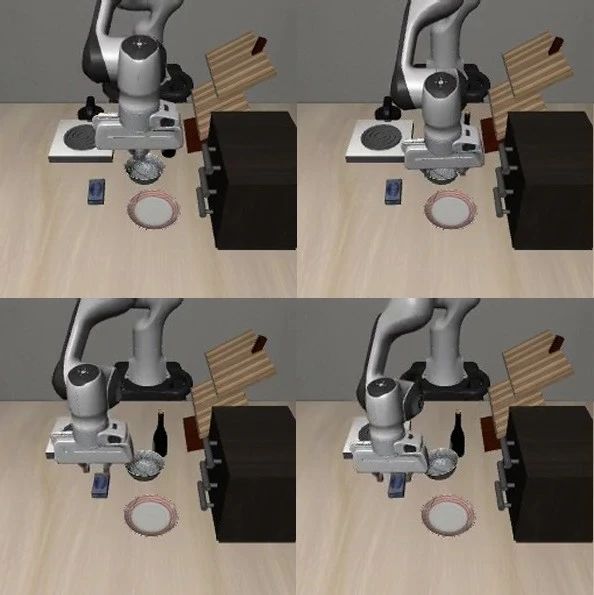
Core Insights - The article introduces WorldVLA, a self-regressive action world model that integrates action and image understanding and generation, outperforming independent action and world models [3][6][8]. Group 1: WorldVLA Overview - WorldVLA combines visual-language-action (VLA) models and world models in a single framework, enhancing performance through mutual reinforcement between the two components [3][6]. - The model utilizes three independent tokenizers for images, text, and actions, sharing the same vocabulary to unify cross-modal understanding and generation [6][14]. - An attention mask strategy is proposed to mitigate error propagation in action sequence generation, significantly improving performance in action block generation tasks [7][31]. Group 2: Model Architecture and Training - The architecture consists of an action model and a world model, where the action model generates actions based on image observations and language instructions, while the world model predicts future states based on observed sequences and actions [11][13]. - Training involves mixing action model data and world model data to enhance action generation, with the world model providing a better understanding of environmental physics [15][20]. - The loss function combines cross-entropy losses from both models, balancing contributions due to the disparity in token counts [20]. Group 3: Experimental Results - WorldVLA shows a 4% higher success rate in grasping tasks compared to similar action models and a 10% reduction in Fréchet Video Distance (FVD) compared to standard world models [7][26]. - The model's performance improves with higher image resolutions, which is crucial for tasks requiring high operational precision [26]. - The integration of the world model significantly enhances the action model's performance by providing a better understanding of the underlying physical dynamics [28]. Group 4: Attention Mask and Performance - The proposed attention mask allows for parallel generation of multiple actions, reducing dependency on previous actions and alleviating error accumulation [19][31]. - The model's performance is optimized by using two historical image frames as input, balancing task success rates and computational efficiency [32]. Group 5: Pre-training and Future Potential - Pre-training the action model with world model data significantly improves grasping performance, highlighting the potential of leveraging general world knowledge to enhance specific task performance in robotics [35].
重磅直播!CVPR冠军方案BridgeVLA,真机性能提升32%
具身智能之心· 2025-06-30 12:17
Core Viewpoint - The article emphasizes the shift in live streaming and content acquisition towards embodied intelligence, highlighting the importance of knowledge sharing and community engagement in the digital landscape [1] Group 1 - The transition of live streaming platforms towards more interactive and intelligent content delivery methods is discussed, indicating a trend towards personalized user experiences [1] - The role of community-driven platforms in enhancing user engagement and content quality is highlighted, suggesting that companies should focus on building strong user communities [1] - The potential for embodied intelligence to revolutionize content creation and consumption is explored, with implications for future business models in the industry [1] Group 2 - The article outlines the competitive landscape of the live streaming industry, noting key players and their strategies for content acquisition and user retention [1] - It provides insights into user behavior trends, indicating a growing preference for interactive and immersive content experiences among audiences [1] - The impact of technological advancements on content delivery and user engagement is analyzed, suggesting that companies must adapt to stay relevant in a rapidly evolving market [1]

UCLA提出PEVA:具身Agents的世界模型时代
具身智能之心· 2025-06-30 03:47
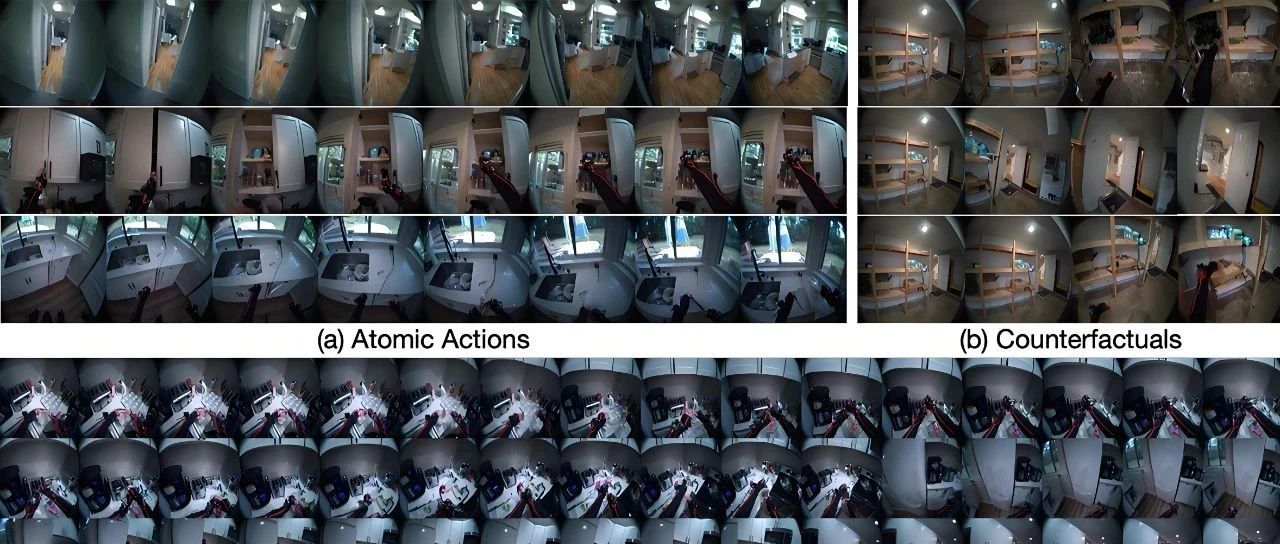
Core Insights - The article discusses the fundamental challenges in understanding the relationship between physical actions and visual perception in embodied agents, emphasizing the importance of full-body movements in altering first-person visual input for effective environmental interaction and long-term planning [3][4]. Group 1: Background and Motivation - The existing world models, such as speed-controlled navigation models, have significant limitations that hinder the physical interaction capabilities of agents in real-world scenarios [3]. - The proposed PEVA model introduces a more robust simulation environment by predicting first-person videos based on full-body 3D poses as conditional signals [3]. Group 2: Key Innovations - A structured representation of full-body actions is achieved by defining actions as a 48-dimensional vector, integrating global body movement and local joint rotations while preserving hierarchical relationships [4]. - The model addresses the simplification of action representation, the decoupling of visual and action changes, and the lack of long-term dependencies in existing methods [5]. Group 3: Model Architecture and Training - The PEVA model employs a conditional diffusion Transformer architecture, enhancing the representation of actions and improving computational efficiency through lightweight action embeddings [7][10]. - The model's training incorporates random time skips and sequence-level training to maintain temporal coherence and address long-term action modeling [10][11]. Group 4: Evaluation Protocol - A four-tier evaluation framework is proposed to systematically validate the model's capabilities, including long-term prediction, single-frame prediction, atomic action decomposition, and planning ability [11][12]. Group 5: Key Results - The PEVA model significantly outperforms baseline models in various metrics, demonstrating superior performance in perceptual quality (LPIPS), semantic consistency (DreamSim), and generation quality (FID) [18][19]. - The model's ability to predict atomic actions shows a 15% lower prediction error compared to navigation tasks, indicating its effectiveness in fine-grained control [22]. Group 6: Limitations and Future Directions - The model currently relies on static environment assumptions and does not account for dynamic object interactions, limiting its applicability [27]. - Future research directions include enhancing interaction realism through object-centered representations and exploring closed-loop control and multi-agent collaboration [27].
具身智能入门必备的技术栈:从零基础到强化学习与Sim2Real
具身智能之心· 2025-06-30 03:47
Core Insights - The article emphasizes that the field of AI is at a transformative juncture, particularly with the rise of embodied intelligence, which allows machines to understand and interact with the physical world [1][2]. Group 1: Embodied Intelligence - Embodied intelligence is defined as AI systems that not only possess a "brain" but also have a "body" capable of perceiving and altering the physical environment [1]. - Major tech companies like Tesla, Boston Dynamics, OpenAI, and Google are actively developing technologies in this revolutionary field [1]. - The potential impact of embodied intelligence spans across various industries, including manufacturing, healthcare, and space exploration [1]. Group 2: Technical Challenges - Achieving true embodied intelligence presents unprecedented technical challenges, requiring advanced algorithms and a deep understanding of physical simulation, robot control, and perception fusion [2][4]. - MuJoCo (Multi-Joint dynamics with Contact) is highlighted as a critical technology in this domain, serving as a high-fidelity simulation engine that bridges the virtual and real worlds [4][6]. Group 3: MuJoCo's Role - MuJoCo allows researchers to create realistic virtual robots and environments, enabling millions of trials and learning experiences without risking expensive hardware [6]. - The simulation speed of MuJoCo can be hundreds of times faster than real-time, significantly accelerating the learning process [6]. - MuJoCo has become a standard tool in both academia and industry, with major companies utilizing it for robot research [7]. Group 4: Practical Training - A comprehensive MuJoCo development course has been developed, focusing on practical applications and theoretical foundations in embodied intelligence [8][9]. - The course is structured into six modules, each with specific learning objectives and practical projects, ensuring a solid grasp of the technology [10][12]. - Projects range from basic robotic arm control to complex multi-agent systems, providing hands-on experience in real-world applications [14][21]. Group 5: Target Audience and Outcomes - The course is designed for individuals with programming or algorithm backgrounds looking to enter the field of embodied robotics, as well as students and professionals seeking to enhance their practical skills [27][28]. - Upon completion, participants will have a complete skill set in embodied intelligence, including proficiency in MuJoCo, reinforcement learning, and real-world application of simulation techniques [27][28].

港科大 | LiDAR端到端四足机器人全向避障系统 (宇树G1/Go2+PPO)
具身智能之心· 2025-06-29 09:51
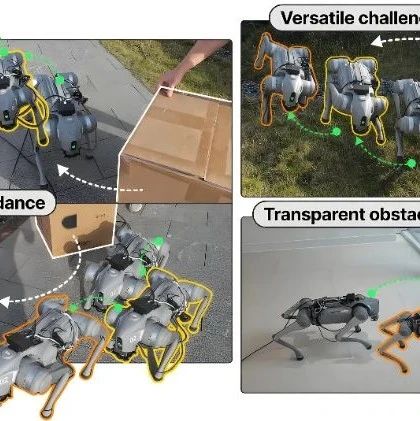
Core Viewpoint - The article discusses the Omni-Perception framework developed by a team from the Hong Kong University of Science and Technology, which enables quadruped robots to navigate complex dynamic environments by directly processing raw LiDAR point cloud data for omnidirectional obstacle avoidance [2][4]. Group 1: Omni-Perception Framework Overview - The Omni-Perception framework consists of three main modules: PD-RiskNet perception network, high-fidelity LiDAR simulation tool, and risk-aware reinforcement learning strategy [4]. - The system takes raw LiDAR point clouds as input, extracts environmental risk features using PD-RiskNet, and outputs joint control signals, forming a complete closed-loop control [5]. Group 2: Advantages of the Framework - Direct utilization of spatiotemporal information avoids information loss during point cloud to grid/map conversion, preserving precise geometric relationships from the original data [7]. - Dynamic adaptability is achieved through reinforcement learning, allowing the robot to optimize obstacle avoidance strategies for previously unseen obstacle shapes [7]. - Computational efficiency is improved by reducing intermediate processing steps compared to traditional SLAM and planning pipelines [7]. Group 3: PD-RiskNet Architecture - PD-RiskNet employs a hierarchical risk perception network that processes near-field and far-field point clouds differently to capture local and global environmental features [8]. - The near-field processing uses farthest point sampling (FPS) to reduce data density while retaining key geometric features, and employs gated recurrent units (GRU) to capture local dynamic changes [8]. - The far-field processing uses average down-sampling to reduce noise and extract spatiotemporal features from distant environments [8]. Group 4: Reinforcement Learning Strategy - The obstacle avoidance task is modeled as an infinite horizon discounted Markov decision process, with state space including the robot's kinematic information and historical LiDAR point cloud sequences [10]. - The action space directly outputs target joint positions, allowing the policy to learn the mapping from raw sensor inputs to control signals without complex inverse kinematics [11]. - The reward function incorporates obstacle avoidance and distance maximization rewards to encourage the robot to seek open paths while penalizing deviations from target speeds [13][14]. Group 5: Simulation and Real-World Testing - The framework was validated against real LiDAR data collected using the Unitree G1 robot, demonstrating high consistency in point cloud distribution and structural integrity between simulated and real data [21]. - The Omni-Perception tool showed significant advantages in rendering efficiency, maintaining linear growth in rendering time as the number of environments increased, unlike traditional methods which exhibited exponential growth [22]. - In various tests, the framework achieved a 100% success rate in static obstacle scenarios and demonstrated superior performance in dynamic environments compared to traditional methods [26][27].
下半年CCF-A/B类会议窗口期收窄,发一篇具身论文还来得及吗?
具身智能之心· 2025-06-29 09:51
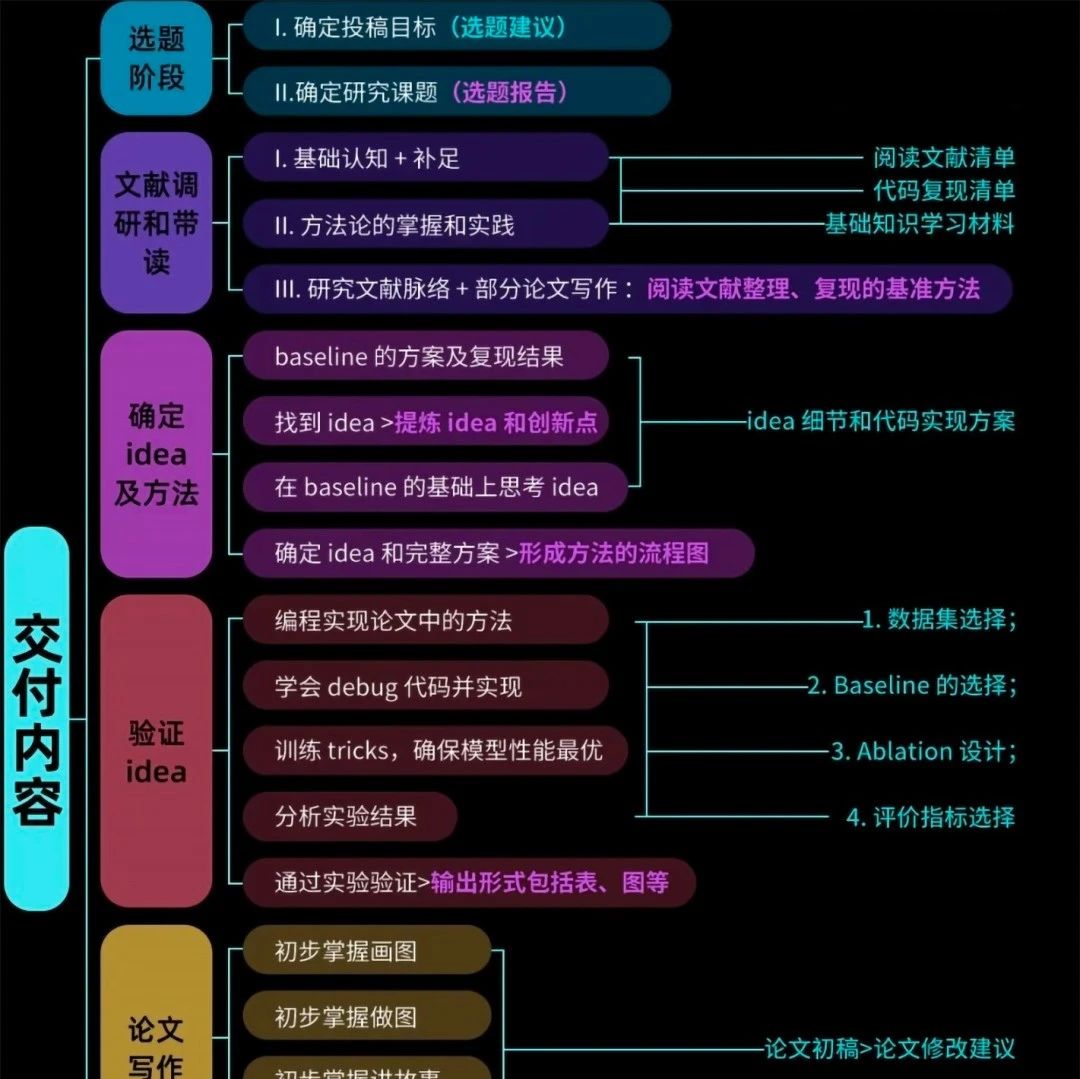
Core Viewpoint - The article emphasizes the importance of timely submission of research papers to key conferences, particularly for researchers in autonomous driving and embodied AI, and highlights the challenges faced in ensuring high-quality submissions under time constraints [1]. Group 1: Pain Points Addressed - The program targets students who lack guidance from mentors, have fragmented knowledge, and need a clear understanding of the research process [3][4]. - It aims to help students establish research thinking, familiarize themselves with research processes, and master both classic and cutting-edge algorithms [3]. Group 2: Phases of Guidance - **Topic Selection Phase**: Mentors assist students in brainstorming ideas or providing direct suggestions based on their needs [5]. - **Experiment Phase**: Mentors guide students through experimental design, model building, parameter tuning, and validating the feasibility of their ideas [7][12]. - **Writing Phase**: Mentors support students in crafting compelling research papers that stand out to reviewers [9][13]. Group 3: Course Structure and Duration - The total guidance period varies from 3 to 18 months depending on the target publication's tier, with specific core guidance and maintenance periods outlined for different categories [22][26]. - For CCF A/SCI 1区, the core guidance consists of 9 sessions, while for CCF B/SCI 2区 and CCF C/SCI 3区, it consists of 7 sessions each [22]. Group 4: Additional Support and Resources - The program includes personalized communication with mentors through dedicated groups for idea discussions and course-related queries [24]. - Students receive comprehensive training on research paper submission methods, literature review techniques, and experimental design methodologies [23][28].
中科院自动化所最新综述!VLA模型后训练与类人运动学习的共性
具身智能之心· 2025-06-29 09:51
Core Viewpoint - The article discusses the post-training strategies of Vision-Language-Action (VLA) models from the perspective of human motor skill learning, emphasizing the need for robots to undergo a post-training phase to adapt to specific tasks and environments, similar to how humans learn skills through practice and experience [4][5][9]. Summary by Sections 1. Introduction to VLA Models - VLA models integrate visual perception, language understanding, and action generation, enabling robots to interact with their environment effectively. However, their out-of-the-box performance is often insufficient for complex real-world applications, necessitating a post-training phase to refine their capabilities [8][9]. 2. Post-Training Strategies - The article categorizes VLA model post-training strategies into three dimensions: environment perception, embodiment (body awareness), and task understanding. This classification mirrors the key components of human motor learning, facilitating targeted improvements in specific model capabilities [10][12]. 3. Environmental Perception Enhancement - Strategies include enhancing the model's ability to perceive and adapt to various operational environments, utilizing cues from the surroundings to inform actions, and optimizing visual encoding for task-specific scenarios [12][13]. 4. Body Awareness and Control - The post-training strategies focus on developing internal models that predict body state changes, improving the model's ability to control robotic movements through feedback mechanisms inspired by human motor control [14]. 5. Task Understanding and Planning - The article highlights the importance of breaking down complex tasks into manageable steps, akin to human learning processes, to enhance the model's understanding of task objectives and improve operational planning [14]. 6. Multi-Component Integration - Effective skill acquisition in humans involves synchronizing multiple learning components. Similarly, VLA models benefit from integrating various strategies to optimize performance across different dimensions [14]. 7. Challenges and Future Trends - Despite advancements, challenges remain in enabling robots to learn and adapt like humans. Key areas for future research include improving kinematic models, optimizing action output structures, and enhancing human-robot interaction through expert knowledge integration [16][17][18]. 8. Continuous Learning and Generalization - The need for continuous learning capabilities is emphasized, as current VLA models often struggle with retaining previously learned skills. Future research should focus on developing algorithms that allow for lifelong learning and better generalization in open environments [22]. 9. Safety and Explainability - The article underscores the importance of safety and explainability in robotic decision-making, advocating for research into interpretable AI and safety mechanisms to ensure reliable operation in diverse scenarios [22].